New experience for Stephanie

When dairy cows or goats have their babies, the calves and kids are raised away from the mothers.

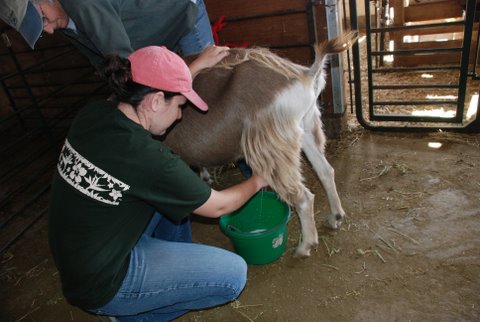
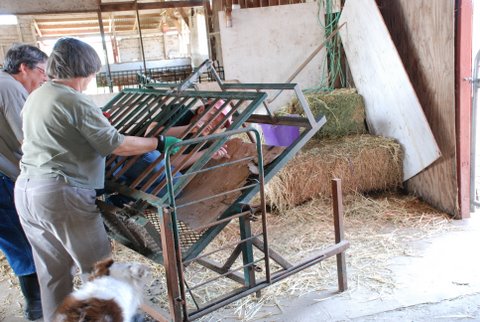
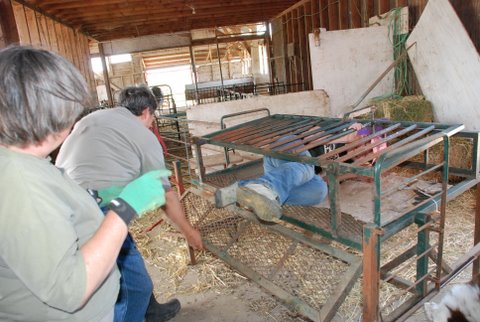
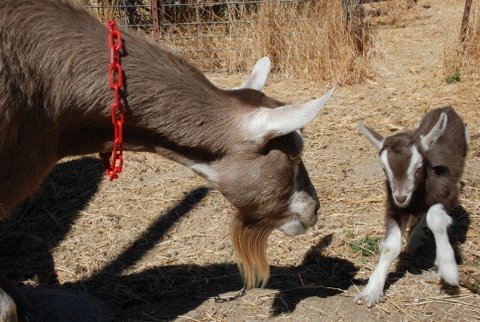
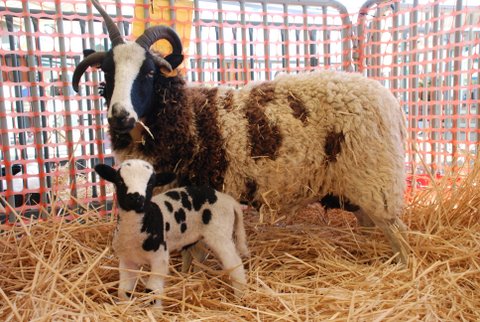
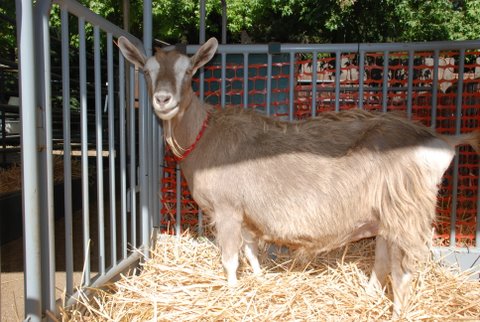
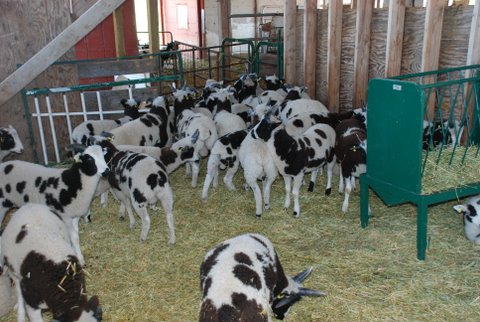
Stephanie gets a chance to raise her baby. Stephanie is one of Chris’ original goats and I bred her to kid at the State Fair Nursery. I’m not in the goat business and  don’t want to bottle-raise a kid,  so I’m letting Stephanie take care of her baby. Stephanie potentially will produce far more milk than her single kid can handle, so for her health and the health of the kid, I am monitoring her production. I didn’t feed grain prior to the birth and she is not getting grain now because I don’t want to encourage more milk production. So far it seems that the kid is nursing from just one side so I am milking the other side once/day.

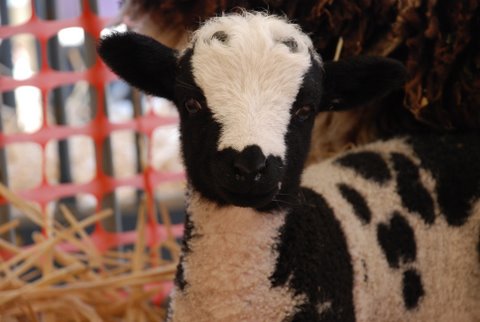
This is Paulette who lambed at the fair with these nice twins.

State Fair Wrap-Up

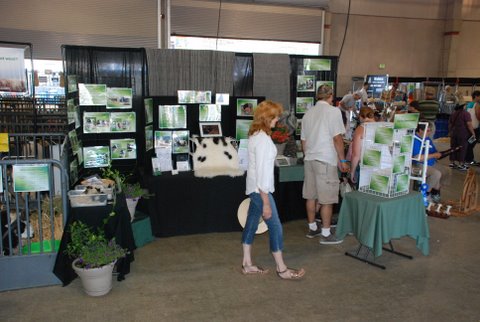
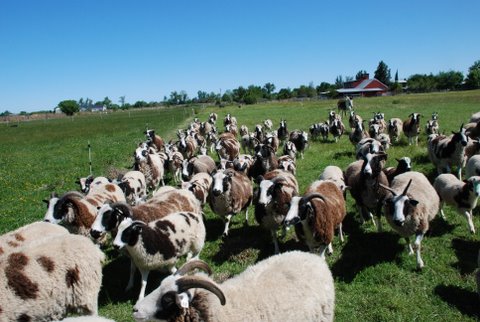
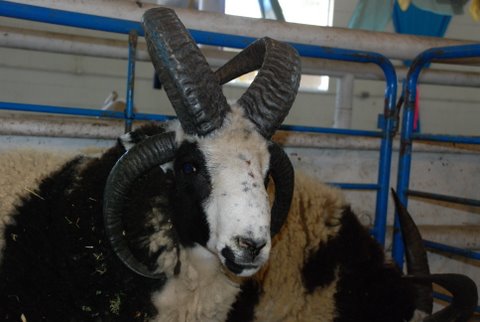
The CA State Fair is still open but the sheep show was just through yesterday. Between having sheep with horns, putting up a lot of signs and visuals, and demonstrating, our area is the busiest in the sheep barn. I think I talked to more people here than I talk to all the rest of the year.

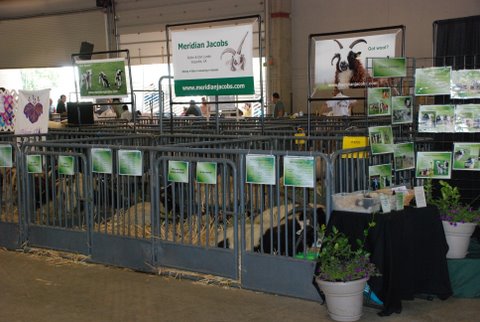
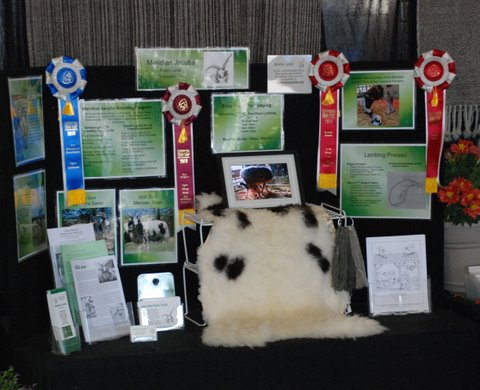
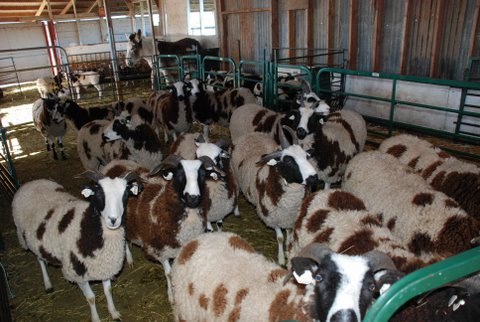
Here are my  sheep pens. I was shorted one sheep pen so I couldn’t use all the large signs I had made. Small signs on the gates answer the most frequently asked questions: “Why are some of the sheep covered?”  “Is he normal?” (on the adult ram pen), “Are these sheep or goats?”, and “Where are the pigs?”

This is the other part of the display.

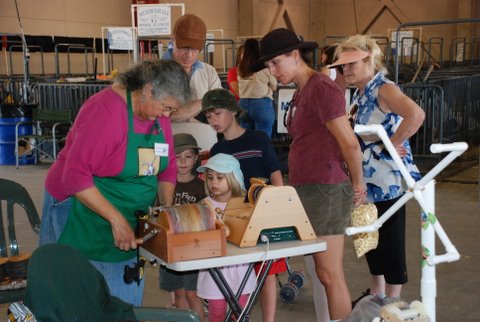
I truly appreciate help from friends. This year Joan came on Sunday and Monday and shared the task of Educating the Public.

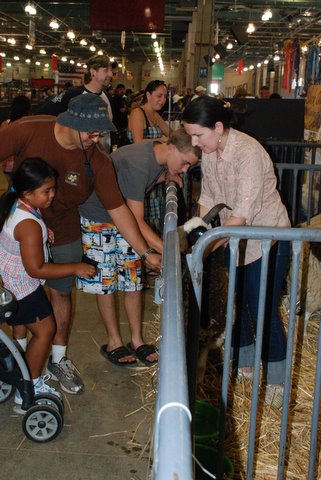
On Sunday Shelby helped let people pet the sheep and helped me show. Jackie was there also, but I don’t have photos. She took all the show rings photos.

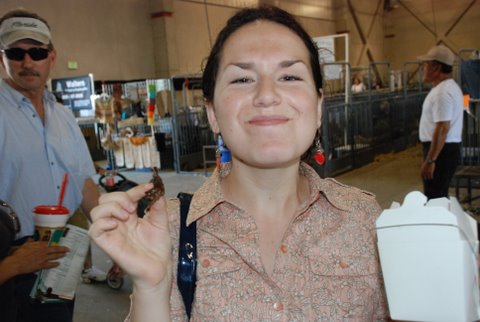
Shelby went out looking for deep fried Snickers or something like that but came back with chocolate-covered bacon. As weird as it sounds it actually wasn’t bad but just one bite made me incredibly thirsty.

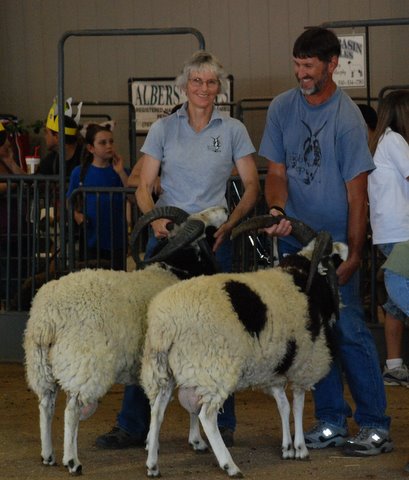
Dan likes to avoid the show ring, but he was pressed into service this year, starting with the yearling ram show.

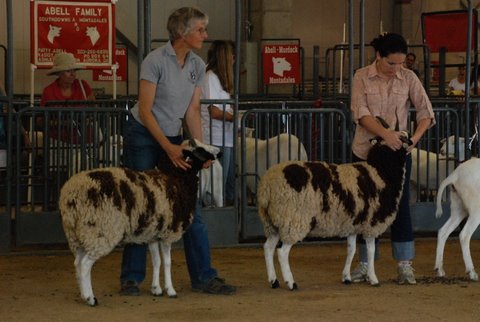
This is Shelby helping show the yearling ewes.

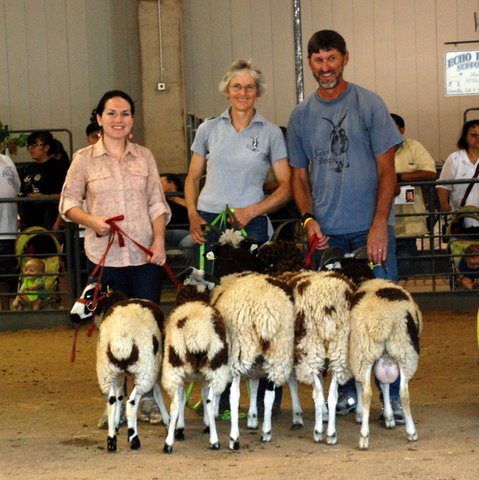
This is our flock entry–4 ewes and one ram.

I chose the young ram, Meridian Granite, for this entry because I think the judge liked him the best of my sheep. Granite placed third in his class, just behind the Tunis sheep. Those of us in this show have decided that 3rd is the new 1st. This year the “Primitive & American Breeds Show” entries were Tunis (meat breed) , Shetlands, Jacobs, Icelandics, and St. Croix (a hair sheep). That’s a tough class to judge and I don’t know if any of us will ever get to first or second as long as the Tunis breeder comes. Not only is the breed hard to compete against in a traditional show, but this breeder shows all over and has a very competitive flock.

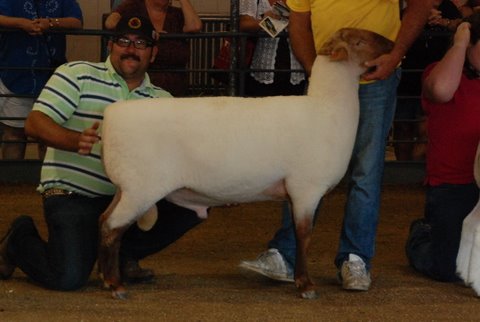
Here is the champion Tunis ram. Hard to compete with that. The judge, however, said that he thought my fleeces were the nicest Jacob fleeces that he has seen. He commented several times about the fleeces, so I was pleased with that.

I know it’s going to be hard to win with my sheep so I’m trying very hard to win with my display.

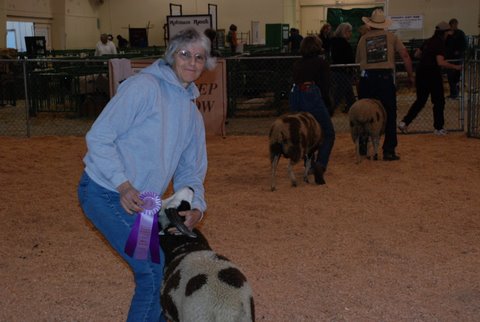
I ended up with some fancy ribbons after all…and some good prize money. That’s Best Program and overall second in the Open Sheep Show Best Marketing Program,  second in Sheep Herdsman, and Best Educational Presentation over all the livestock exhibits at the fair this week. I put a lot of work into this and spent 10 -12 hours at my sheep exhibit each day but it paid off in these awards.

State Fair-Day 2

This is Day 2 for the sheep show at the State Fair, but a couple of my ewes have been there longer. Mary lambed there a few days ago with this nice ram lamb.

Stephanie is also at the fair waiting to kid.

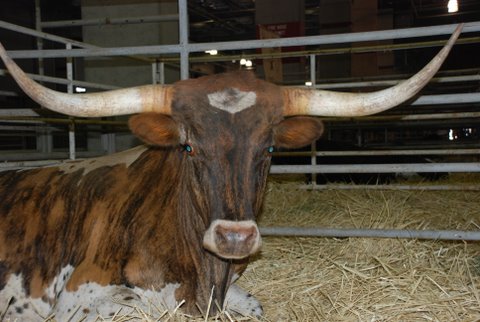
The longhorns are always at the fair white the sheep are there. There are not as many as previous years and that’s too bad. They’re sure fun to see.

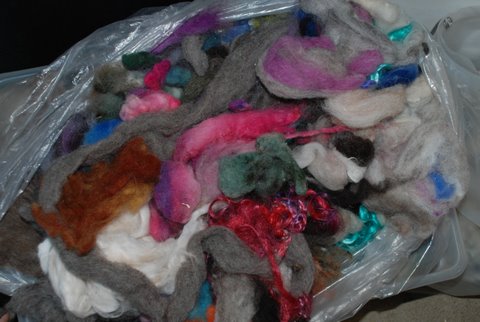
I have been staying at my sheep area all day  because I have a large display and am competing for awards for that. So today I took my drum carder and my electric spinner. I also took a bag of odds and ends that I’ve been waiting to send to the mill to blend with other wool. I decided that I’d do it at the fair. So this is what I’m starting with. It includes all the little bits and pieces that are left over from classes, samples from breeders, old dye projects, etc. There is mohair, Angora bunny, alpaca, silk, glitz, and a huge variety of wool.

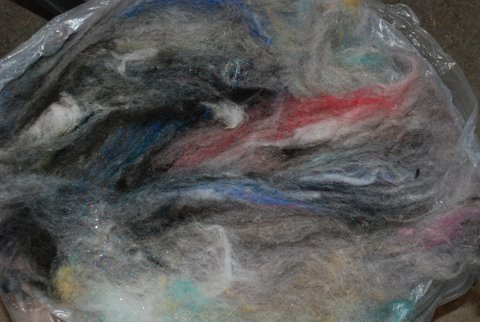
These are some of the carded batts. I started spinning it tonight at the fair. I think I’ll ply it with a gray yarn and weave a blanket.

More photos tomorrow.

Wool samples, wet dogs, and a turkey!
I posted a photo of my rams yesterday. Here are the wool photos:

This is the fleece of Meridian Tioga.

Here is Kenleigh’s Savor’s wool. Tioga’s wool is crimpy and soft. Savor’s wool is lofty without visible crimp. Both are good fleeces for spinning, but have different character.

Portrait of Savor.

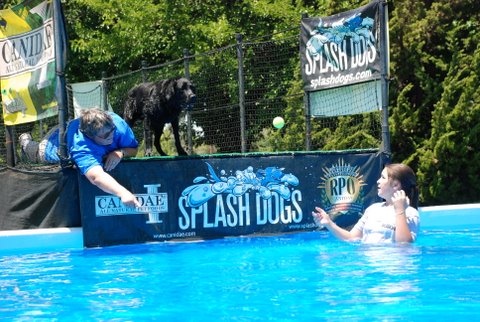
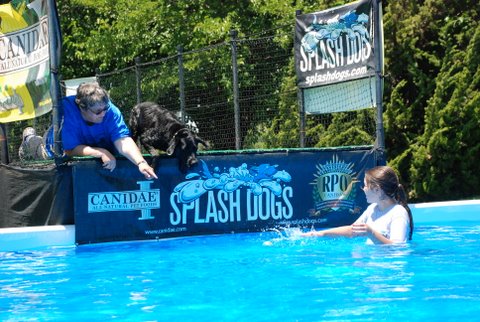
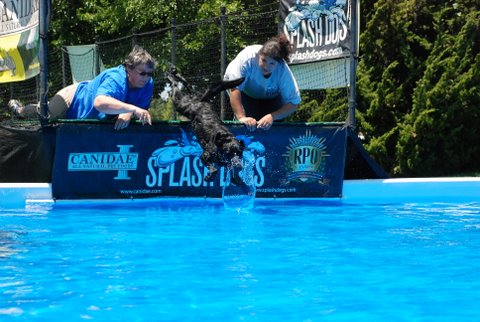
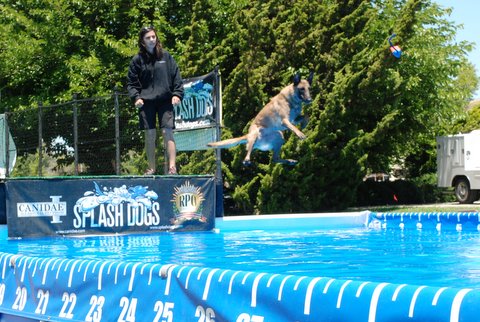
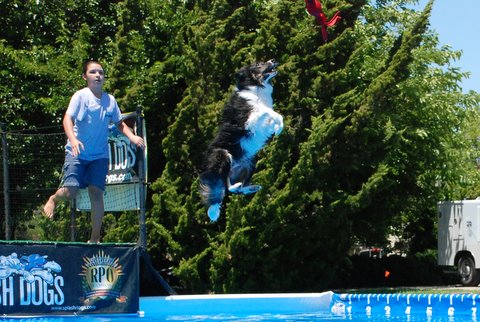
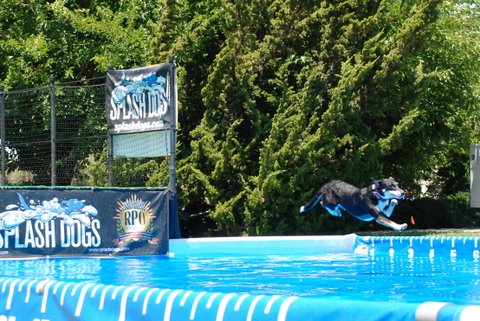
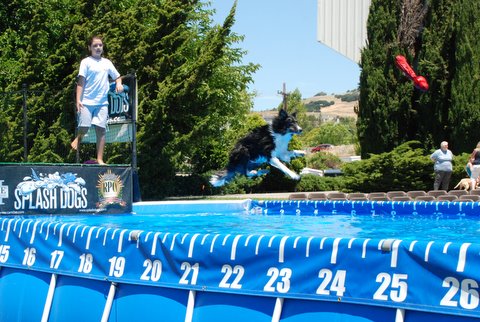
Jackie came back to the fair today to help out with the SplashDog performance and give her dog,  Ringo a lesson. These are photos of Ringo learning the game.

And here are some of the pros:

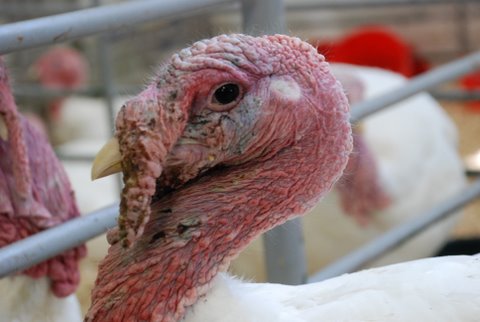
Obviously NOT a dog.

Fun with Friends at Black Sheep Gathering

What a fun weekend! Three friends and I traveled to Eugene, Oregon for Black Sheep Gathering. This is such a cool event. Sheep show, vendors, classes, and fun events all under one roof.

Everything is packed, sheep are in the truck, and we are ready to leave.

I took only lambs for the show, but was pleased to win first place in a large ram lamb class. My ram lamb, Meridian Granite, went on to win Reserve Grand Champion ram. I’ll be showing him at the Solano County Fair on Wednesday.

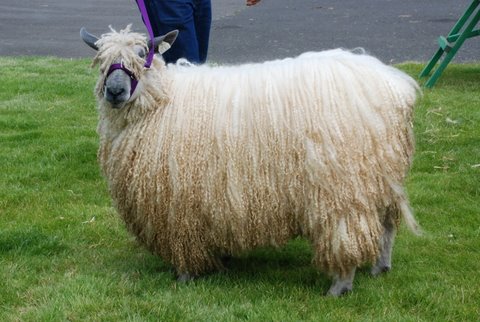
There is a huge variety of sheep at BSG. This Wensleydale  was quite an attention-getter.

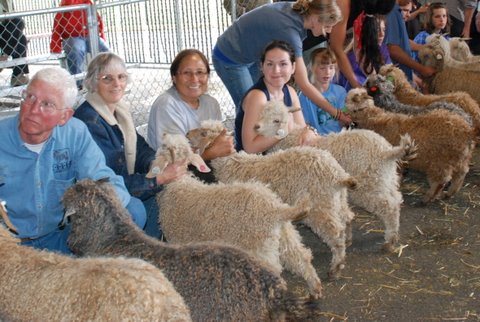
Black Sheep Gathering isn’t just for sheep. Shelby helped another friend, Julie, show her goats and I even got in the show-ring for one class.

Each of us took advantage of the classes that were offered. Chris took a sock knitting class and ended up with an almost-finished baby sock.

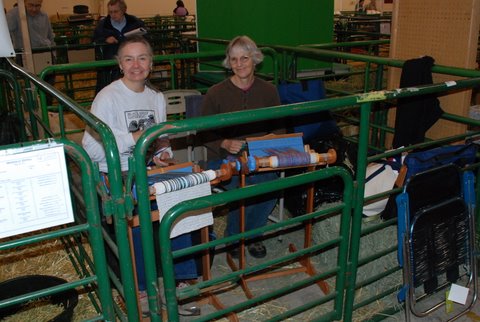
We also all brought plenty of projects to fill time.

One of the highlights of the weekend was the Spinners’ Lead. This entry involves wearing (or displaying) something that you have hand felted or handspun and showing off the animal (or a representative) from which the fiber came. Jackie worked non-stop for several weeks to spin enough yarn for this knitted ruana. Then she helped halter break the lambs and, finally, knit and felted a grain bow. I wore the blanket that keeps my side of the bed warm in the winter and a knit cap. At the last minute I decided to accessorize the ensemble and weave wrist warmers (for me and the sheep) and an i-pod pouch. I also made the lamb’s halter out of my wool, using my rope machine. Jackie won the non-owner division and was awarded a bag full of prizes.

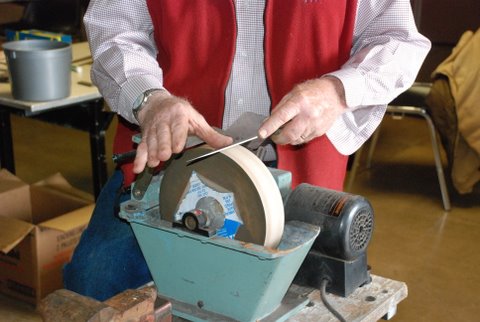
Last, but not least, I took a sharpening class on Saturday. I got lucky and the instructor used some of my dull equipment for his demos.

What a great weekend spending a relaxed time with friends. I will have BSG on the calendar for next year.

I’ll race you to breakfast!

I’m pleased with the pasture this year, especially considering the number of sheep I have grazing. One 5-acre pasture is subdivided with electric fence (NZ spider fence) into 8 paddocks, each of which can be split in half using electric net fencing. There is one other 2-acre piece that I split in half. Here is the paddock the sheep went into yesterday.

If you go to the “prescribed burning” tag on the right you will see this same paddock (looking from the other direction). See all the dry grass? There was so much tall, rank dallis-grass that there was no green feed growing up through it. We burned it two years ago and with proper grazing I’m able to keep the dallis-grass in check and there is a lot of trefoil and other desirable plants. In the photo above it’s those clumps that are the dallis-grass. The sheep eat it readily if it’s kept in an early vegetative stage.

This is after I opened the net-fence at the end of this paddock and the sheep are going into the new one.

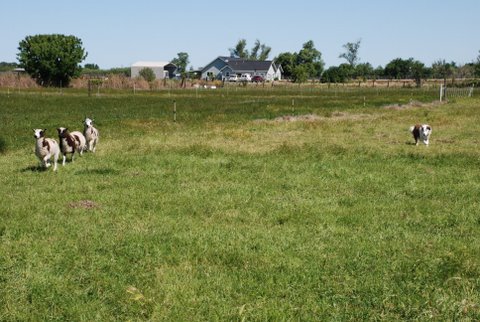
A few lambs who didn’t get all the way around the fence and then started following the ewes back up the fence line on the wrong side. Now Rusty gets to help.

You can easily see the difference between the paddock they were just on and the new one. A paddock is not overgrazed by putting a lot of animals on it; it’s overgrazed by time. Once a pasture is eaten low it needs to rest. If the animals continue to graze it as the new growth occurs, there will be negative impact on the root system and it will take much longer for the plants to recover. So the trick is to eat the paddock evenly and then move the sheep to a new paddock. By concentrating the sheep on a small area they eat all the plants, not just the ones they like best. This also helps with parasite control. right now with the lambs getting so big I’m moving the sheep every day or two. If I go through all the paddocks too quickly I may need to hold the sheep off and feed them in the barn for a little bit. I will probably try to coincide that with my next irrigation when I have to have sheep off the pasture anyway.

Another fence-line photo.

Entries for Solano County Fair were due this week so I needed to figure out who to enter. It was fun to separate out all my yearlings for a look. You get a different feel for the sheep when you get them out of the main group and I hadn’t had a look at the yearlings as a group since they were lambs last year.

This is most of the 19 yearlings in the flock. There are some really nice sheep with with great fleece in this group. I narrowed the field down more and more until I chose my show sheep. (drum roll please….) And the winners are…

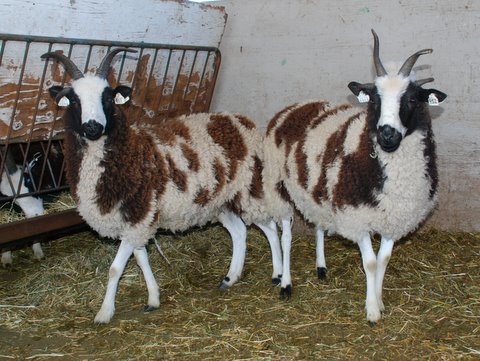
…Dazzle and Spring. They both have nice conformation, good size, and consistent fleeces. I have entered these two, the two yearling rams, and 4 lambs. Does anyone want to come help me show? It’s June 22-24, a few days after Black Sheep Gathering.

Sorting lambs

Today was the day to start evaluating lambs. I need to choose lambs for shows, for sale, and the ones that I want to keep. When they are all together and mixed up with the ewes I have a hard time comparing them. Two friends came over today to help with sorting and to find out the criteria I use to select lambs for sale or show.

Rusty and Mobi hoped that they would get to help also.

First we separated the ewe and ram lambs. Then we separated the 2 horn and 4 horn ewes. I sorted out some that I have decided to keep and some that will not be registered because they are too light. We narrowed the field down to lambs that I will offer for sale and/or will show. I need to figure out which lambs to take to Black Sheep Gathering in June, the Solano Co. Fair in June, and the CA State Fair in July.

This is the group of 4-horn ewe lambs that  are available for sale or show.

This is the group of ram lambs before we started sorting them.

The ewe lambs were glad to head back to the pasture.

Irrigation time again

I live on the western edge of the Central Valley in CA.  We get winter rain and it’s dry all summer. The only way that things stay green here is through irrigation. One reason that we wanted this property was because it was part of the Solano Irrigation District and we could get irrigation water without having an ag well.

When I order water the water tender opens a valve at the west end of this ditch (left in the photo). This is not on our property, but the water flows down this ditch and then onto our property by opening the valve at this end.

The water flows through a pipe that goes under the fence and the water comes up in this standpipe and out the hole into the ditch in the pasture.

This view is still looking west. The water is starting to flow from the standpipe down the ditch at the north end of the property. The ditch turns south and gets the water to the rest of the pasture. The ditch is supposed to have high enough sides that the water is contained and only flows out where I dig a cut-out that lets the water into the pasture. The idea is to open a few areas at a time and be able to fill those cut-outs in as you open more. Ideally the pasture would have just the right amount of slope so that the water would flow evenly. Easier said than done. One problem with our place is that we don’t have the equipment to re-ditch the property. I’m using the same ditch that we had dug (by a neighbor with a tractor and ditcher) when we first started here. I see the alfalfa farmers re-ditch every time they irrigate and I’m jealous. I’ve looked into a pipeline system in which there wouldn’t be a ditch, but a buried pipe with valves that could be open and shut to control the irrigation. Unfortunatly the cost is completely unrealistic for my business. So I keep plugging away with the shovel and hoping for the best.

That is a mowed alfalfa field on the north (top of the photo) and our property is the green field. The standpipe is in the northwest corner of the property and the ditch in one of the photos above is along the north fenceline. You can see the water flowing down the ditch going south and that part of the pasture is already flooded. The sheep have to be in the corrals and barn when I’m irrigating. (So I have to feed them hay for several days every 3-4 weeks. I usually have the water on for 36 hours, but it takes several days for the field to drain enough to turn the sheep back out.)

That ditch that takes the water south dead-ends on this ditch that runs east-west and carries water to the other 5 acres. This view shows the south west corner of the property.

Here is the south east corner. I strip graze this 5 acre pasture. The strips run north-south and are separated by a 3-wire electric fence. You can make out the strips in this photo. See that black thing towards the top? That’s a portable water trough that I plug into the water pipeline that we installed a couple of years ago. The water trough is on one of the fencelines. I have just finished grazing the strips on either side of the water trough. The next two strips are more lush. They are ready to be grazed next. Notice the very pale green in the strip above the water trough? This strip is hard to irrigate and for several years I couldn’t get much water on it. That light green color is medusahead–a very unpalatable grass. Ideally I think burning it would be good, but I don’t think I can do that. We just bought a better heavy-duty weed-eater and I think I’m going to try to stay on top of the medusahead by using the weed-eater. I hope that I can make an impact on it this year. It renders that strip of the pasture unuseable. I noticed tonight that my irrigation water was getting there. I hope that if I can keep the medushead at bay then something else will start growing there.