Cosmos flowers are gorgeous and the cosmos dye is one of the most reliable and easy-to-use natural dyes I have found.
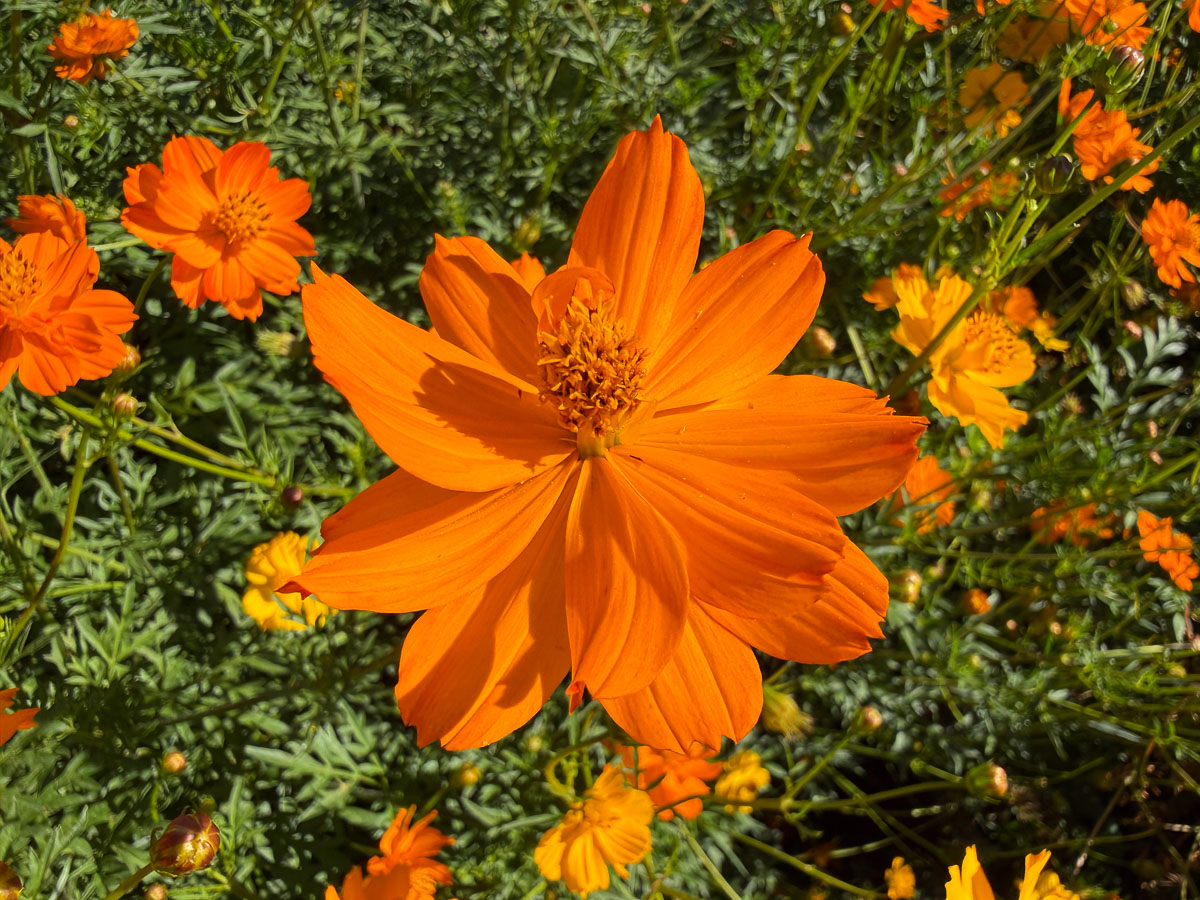
I have grown cosmos in my dye garden for at least three years. I don’t plant them now. They are already growing by springtime, and at that point there are so many that I need to thin them aggressively.
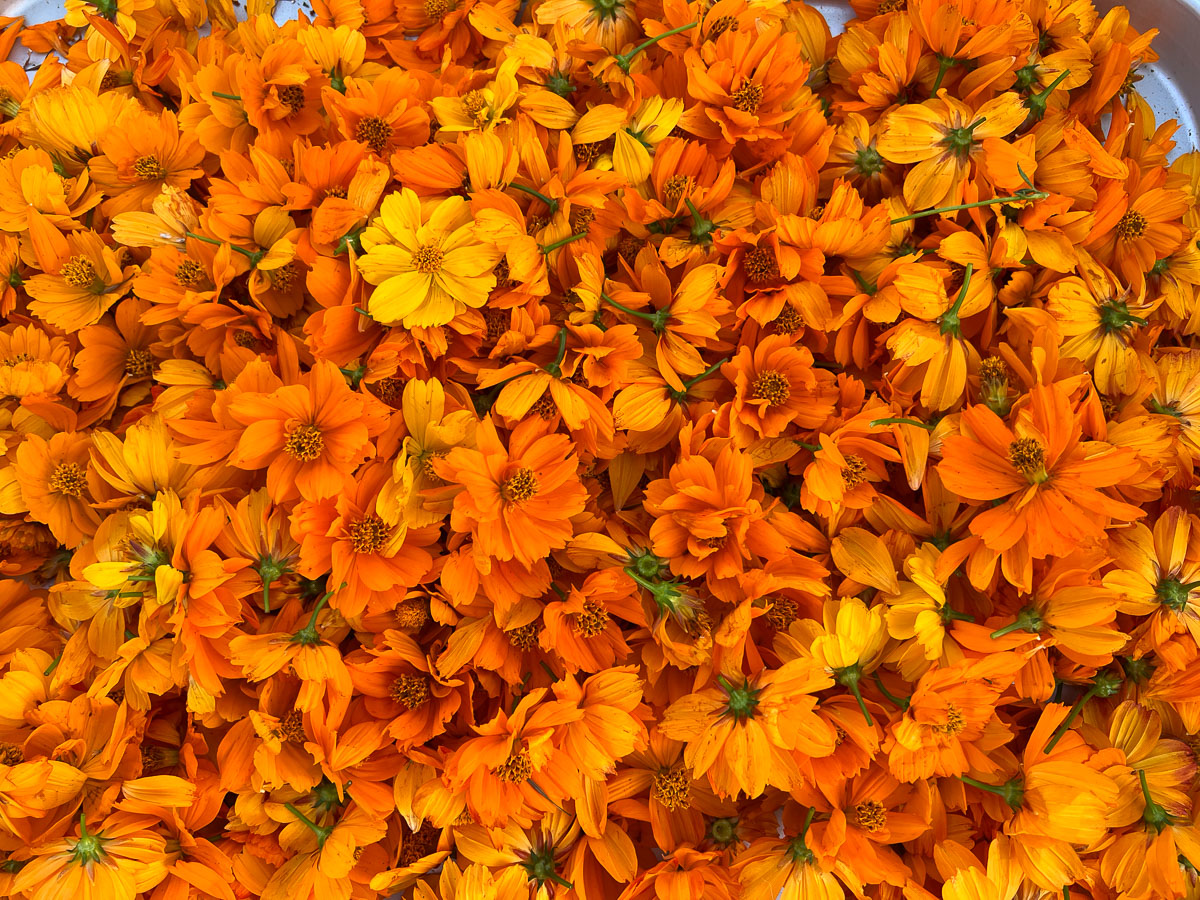
I pick off the flowers every three days or so to keep them flowering. I use some myself and I dry the rest to package for sale.
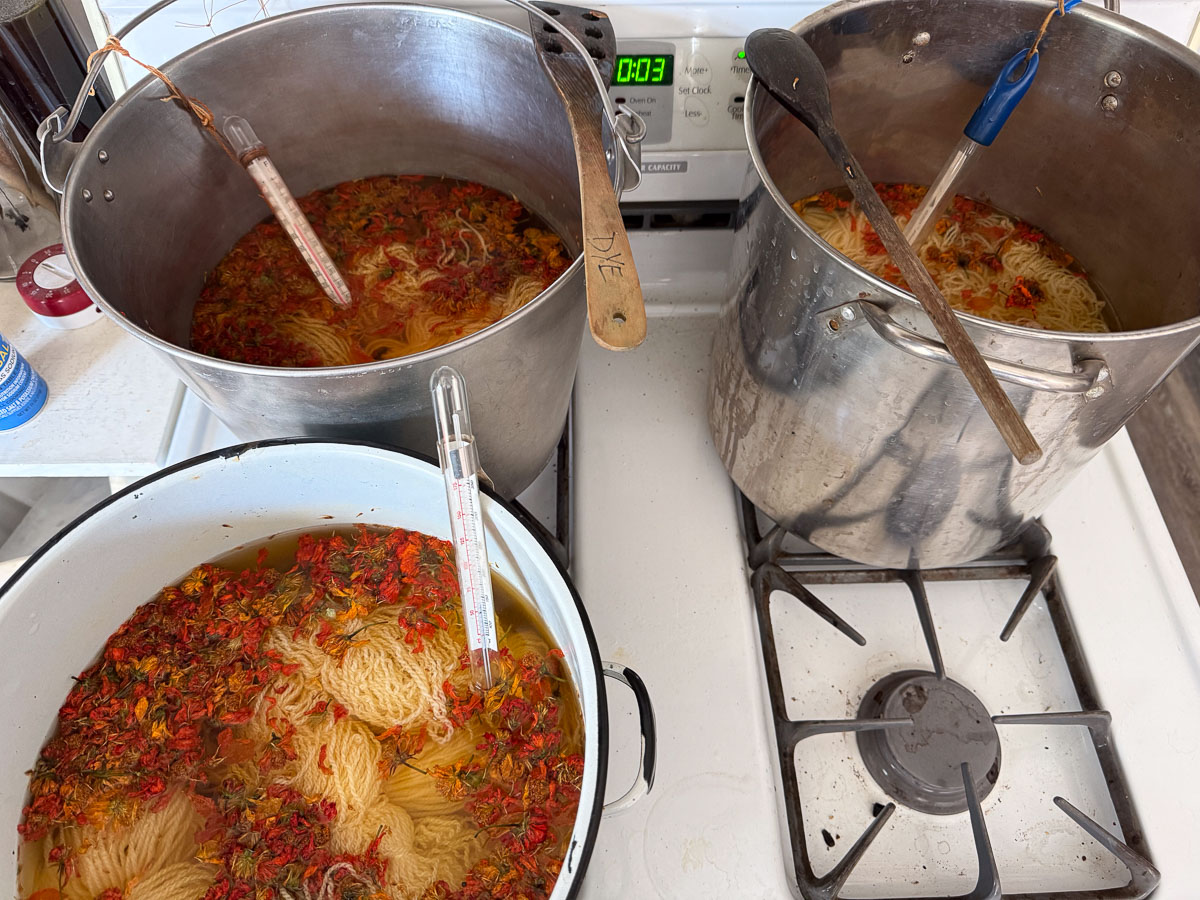
I wanted to do as valid a test as I could for this year’s cosmos collection. The three pots have two skeins each–Brown Sheep Co. Nature Spun wool yarn and Timm Ranch wool yarn. Nature Spun is U.S. grown and spun and Timm Ranch is even more local, five miles away.
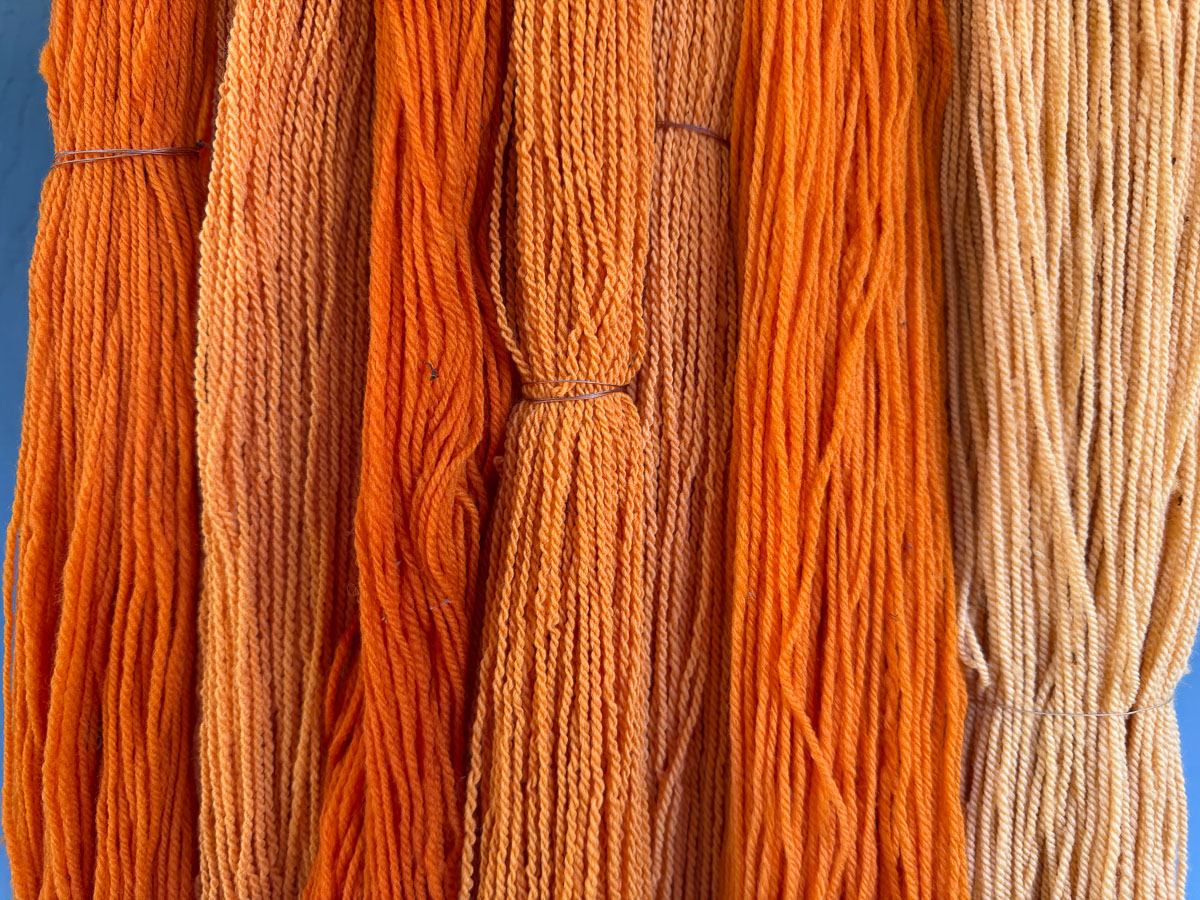
These are the yarns in no particular order after hanging them to dry.
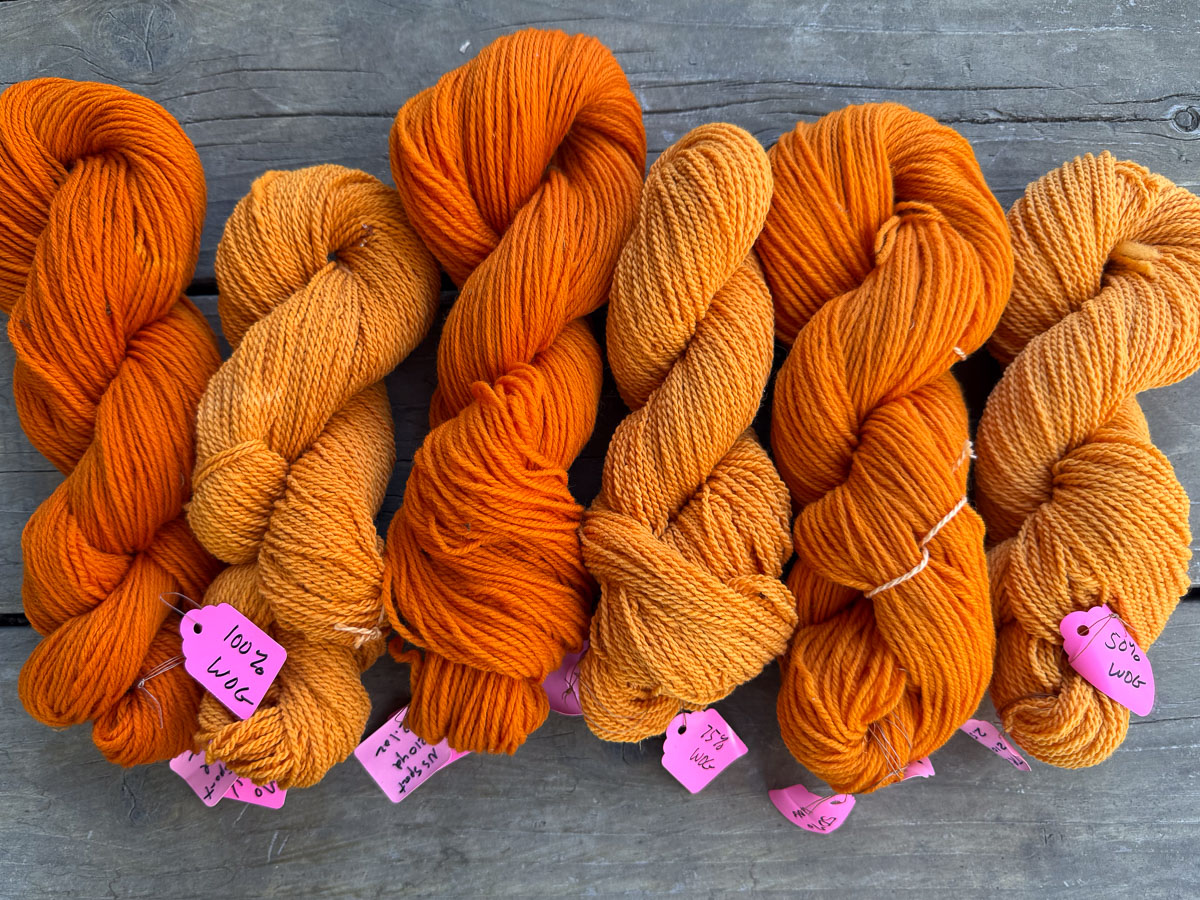
I’m glad that I kept such good track of the yarns and the process because I was surprised by what I found. Each pair of yarns in this photo were in the same dye pot. The darker yarns are Nature Spun and the lighter yarns are Timm Ranch. They all had the exact same treatment. In fact I had tied each pair of skeins so they stayed together through the whole process including the final rinse.
Every time I picked flowers I weighed them fresh and dried. I used all those values to calculate the ratio of dry to fresh flowers and found that dried flowers are 18% of the weight of fresh flowers. If I want to use 100% WOG (weight of goods) I would use 10.2 grams dried flowers for a two ounce skein. To dye with 75% WOG, use 7.65 grams, and to dye with 50% WOG, use 5.1 grams dried flowers. I wound 210 yards from cones for each skein, based on the yards/pound of Nature Spun yarn. The actual weight of each Timm Ranch (TR) skein was 2.3 ounces for 210 yards. I used the actual weight to calculate the amount of flowers for each pot.
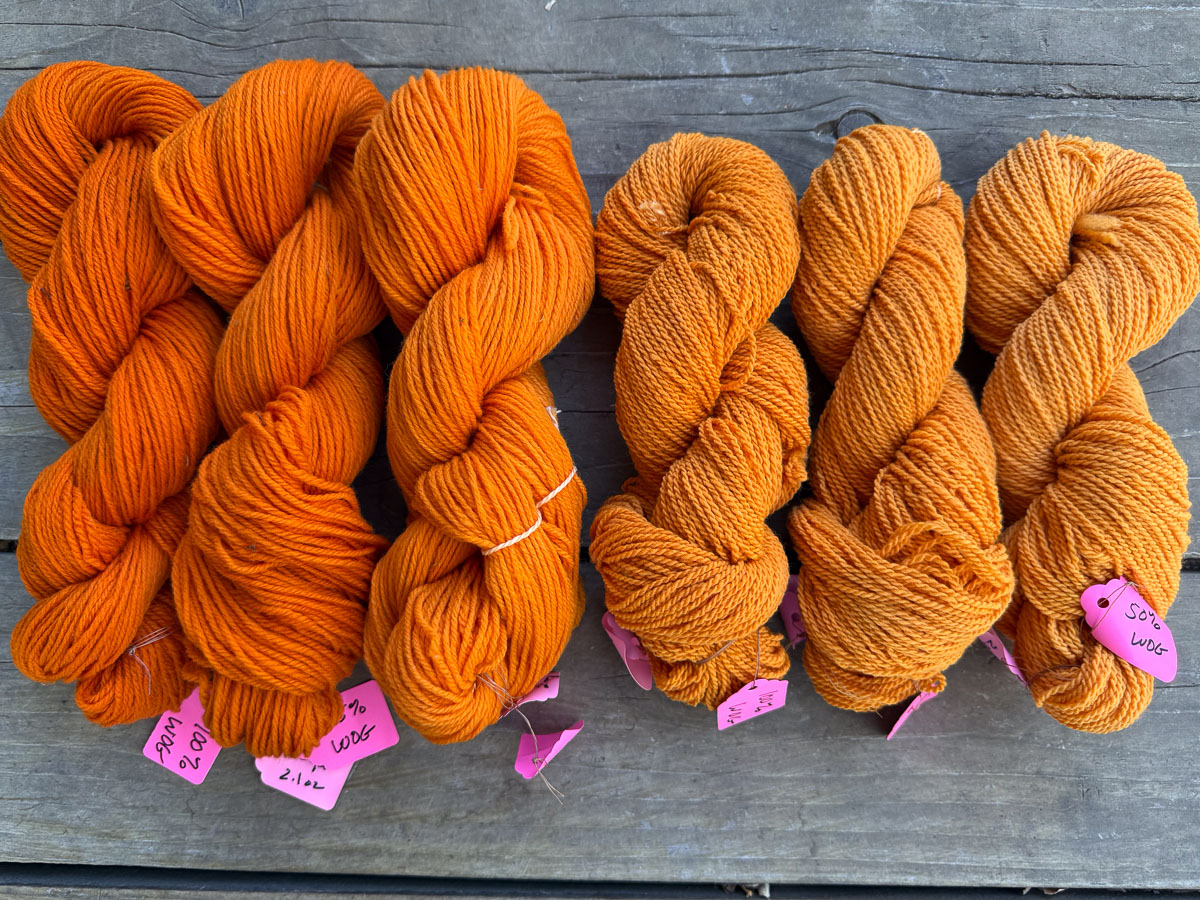
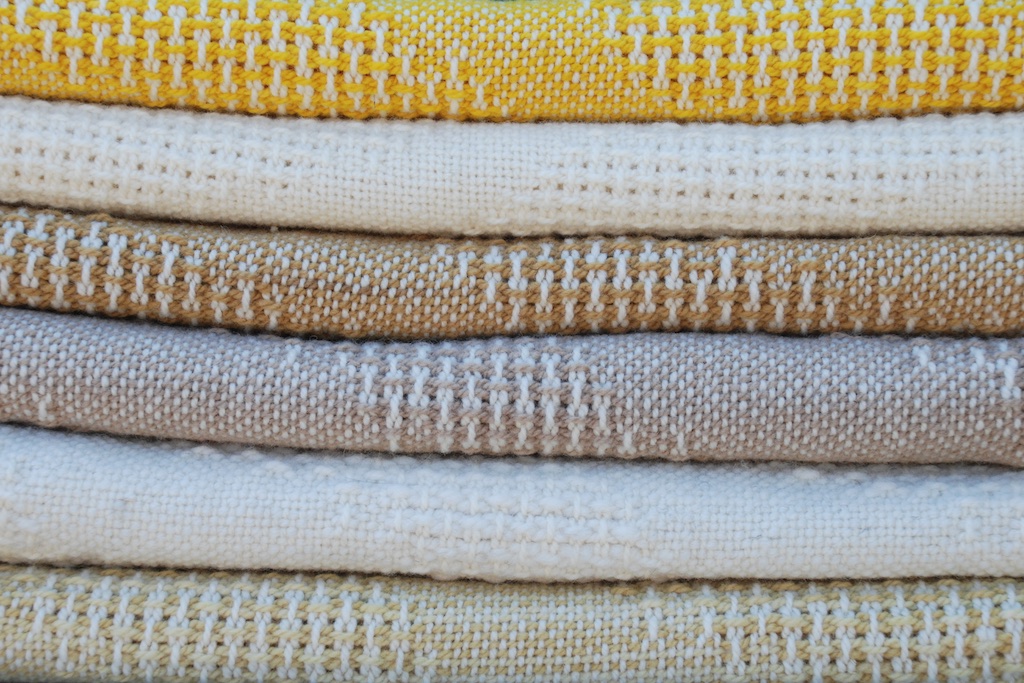
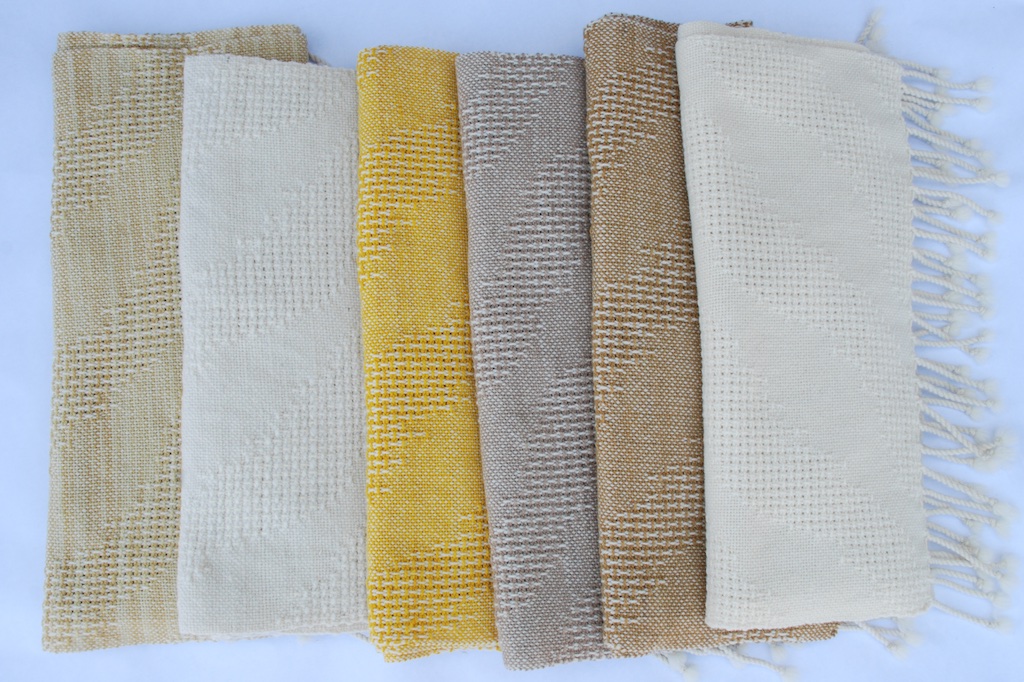
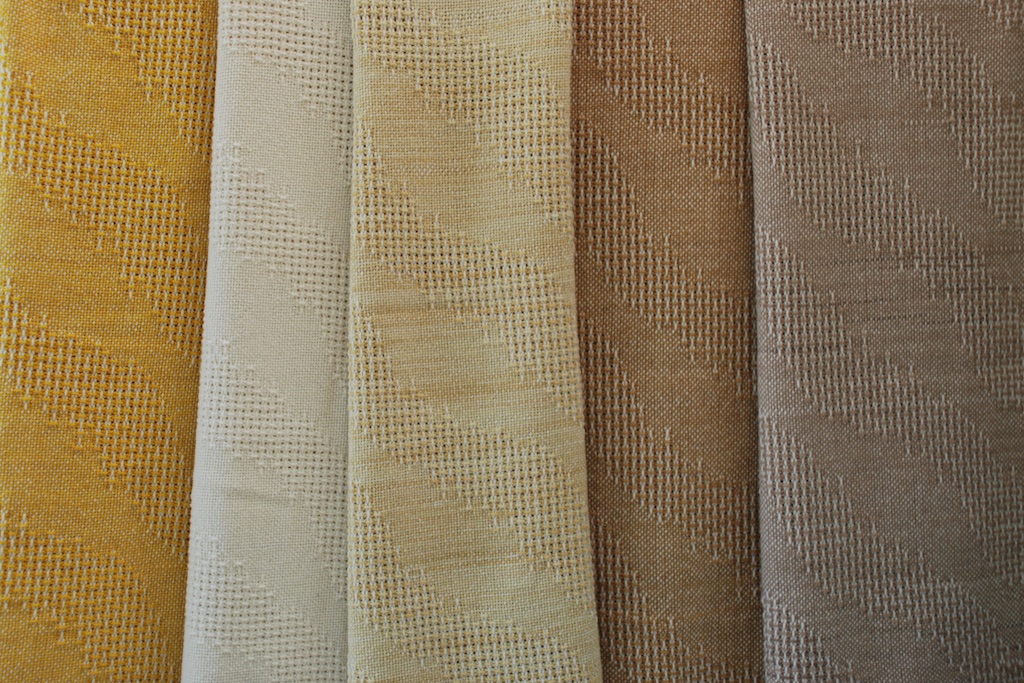
Here they are grouped by type of yarn. I can’t see a difference between the 100% WOG and 75% WOG dye pots. The third skein of each group (50% WOG) is somewhat lighter, but not by much. That dye pot had little color left in it at the end. It looked as though there was still dye in the 100% WOG pot and after I finished rinsing these six skeins I added a four ounce skein that was already mordanted.
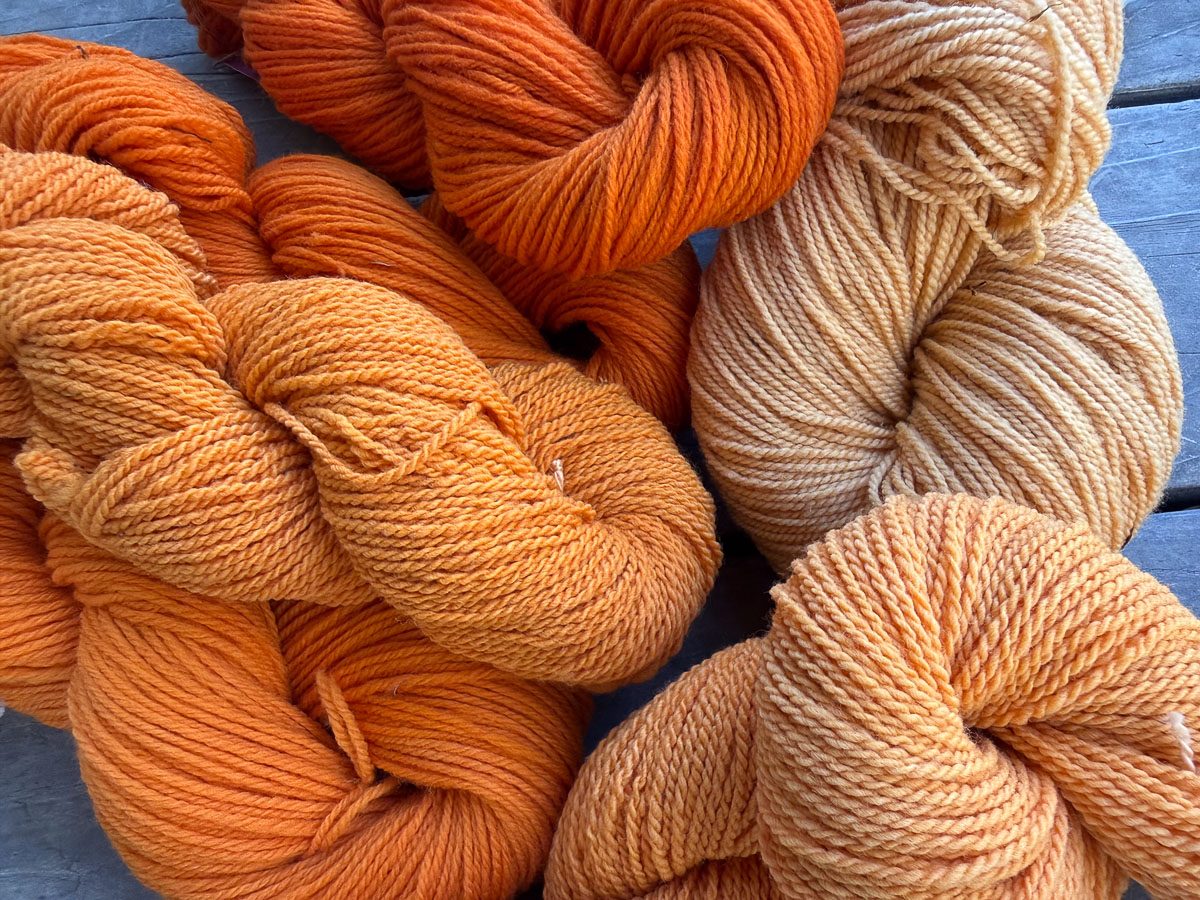
That four ounce skein is the one at the top right in this photo.
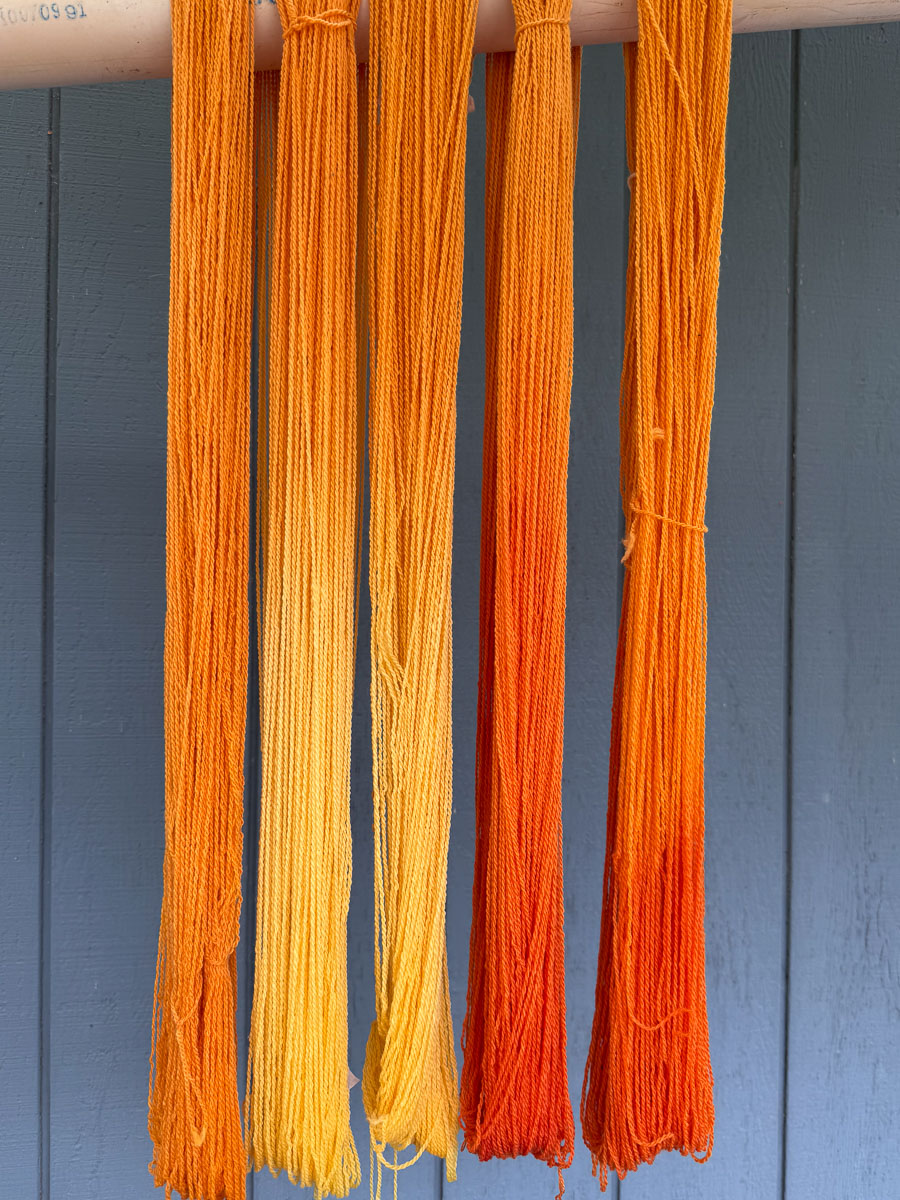
For more fun with cosmos try shifting parts of the skein with a dip in base or acid. This was a previous batch that I dyed. These are all TR yarn and the skein on the left is right from the dye pot. The middle two were dipped in a dilute lemon juice solution and the two on the right were dipped in a solution with the addition of washing soda. Yay!!!
The previous batch of cosmos dye flowers are sold out. I will have the new ones at Lambtown and on the website sometime next week.
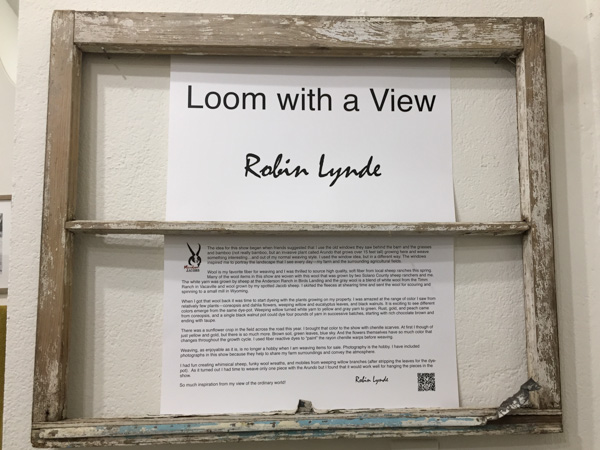 As I said in one of the previous posts this theme started with the idea of using the old windows that were around here. As you enter the gallery you see the title and the Artist’s Statement. If you want to read that click here.
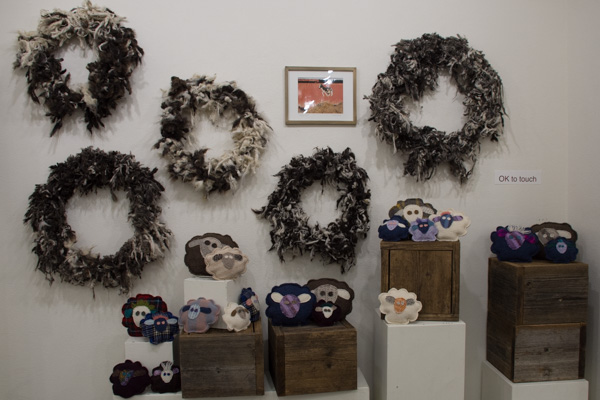 This is the wall to the right…
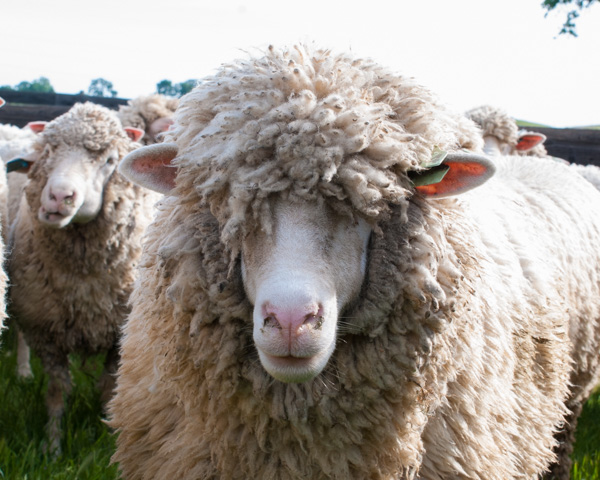
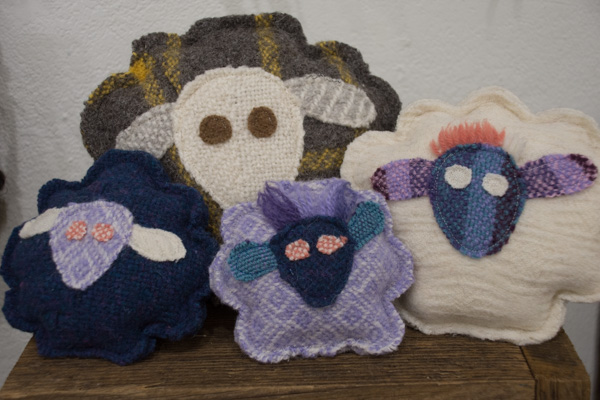 …and these are some of the sheep.
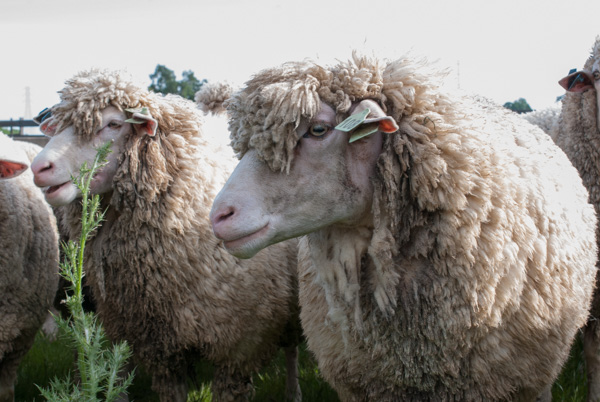
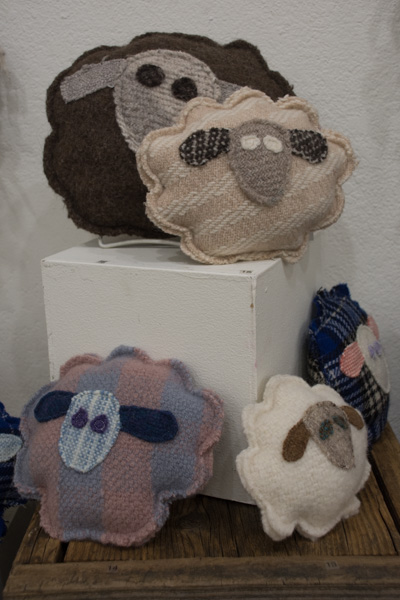 More sheep.
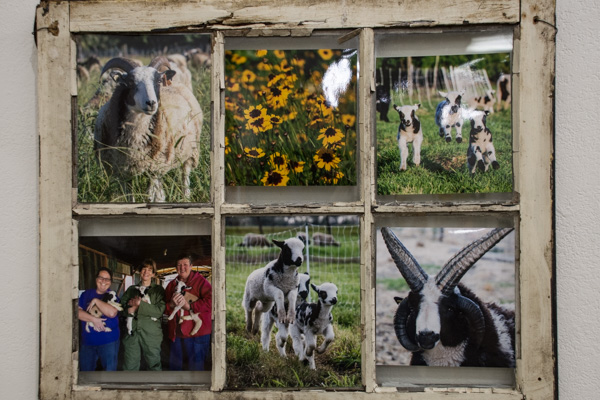 Continuing around the gallery there is this collection of photos. I used two of these six-pane windows to display photos and give a feel for the farm. These are not for sale because they are too rotten (people have asked) but some of the photos have been matted or framed and are for sale.
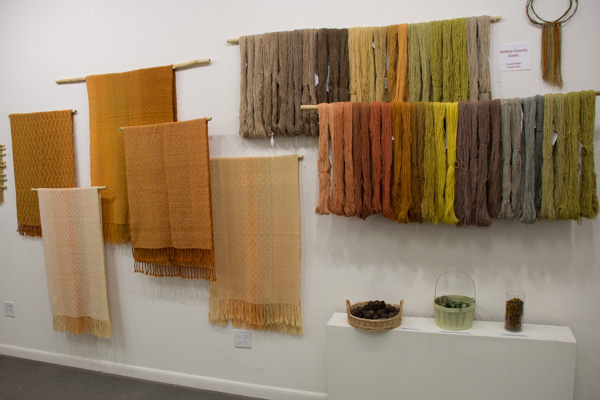 This is the Solano Colors wall and the yarns are the
 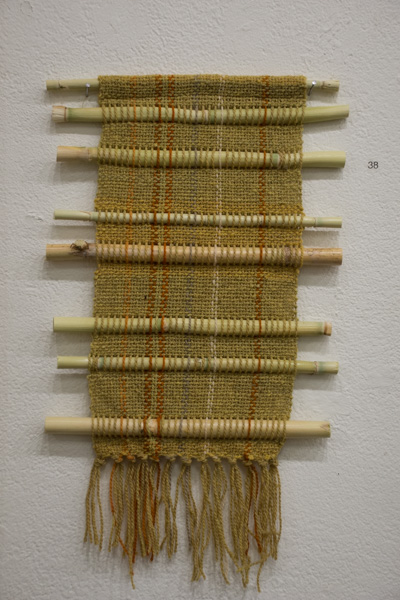 If you look at the previous photo again you’ll see that the shawls and the yarn are hanging on what looks like bamboo. I decided to use the Arundo (an invasive species that grows on our north border and had big hollow stalks like bamboo) for hanging the pieces in the show. It was in keeping with the rest of the props (stuff found on the farm), I have an infinite supply of it, I could cut it to any size, and it is free. The perfect solution! Originally I had planned to use the Arundo for weaving, but I just didn’t get to it. On the morning I was to set up the show I got up early with a lot on my mind. I got out the loom that I had already warped for this and I wove this piece. It inspires me to do more because I think it is very cool.
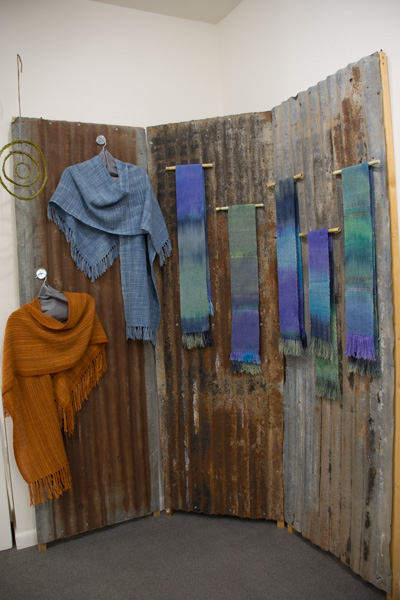 Moving on around the room this is the next grouping. Those scarves were woven on a space-dyed warp that I dyed a few years ago and found in a box on the shelf. Do you see something hanging to the left?
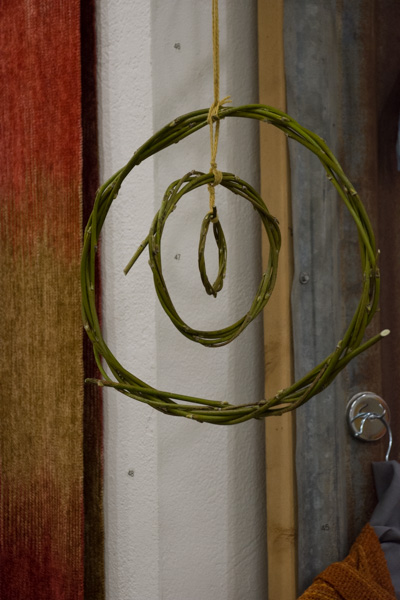 I wanted to do something interesting with the weeping willow branches after stripping the leaves for the dye pots. I tried weaving with them but I think I like this mobile best.
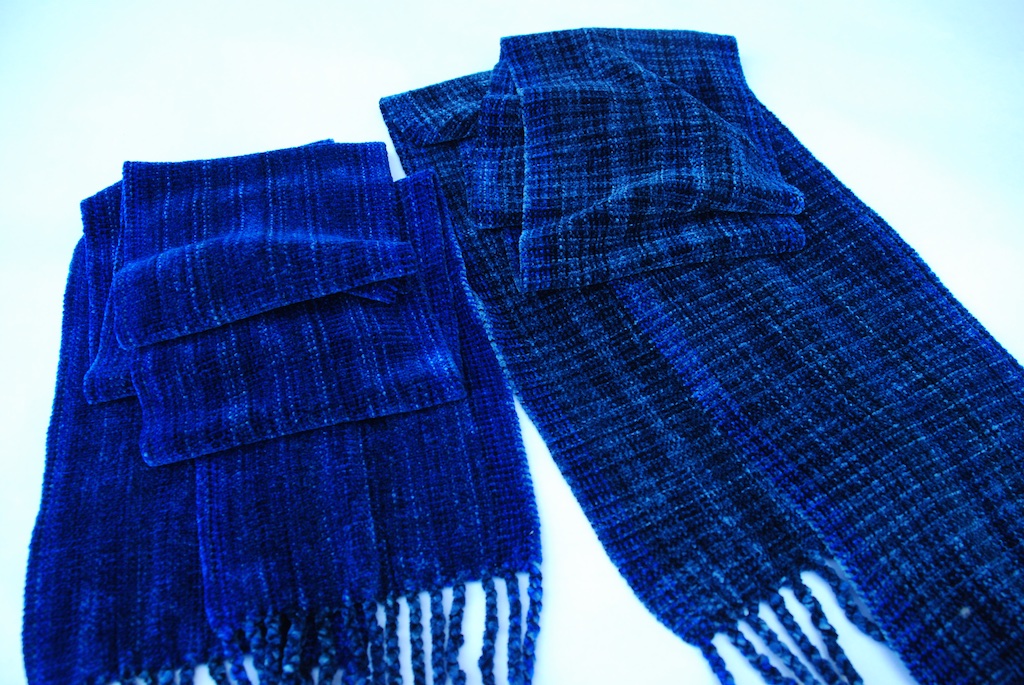
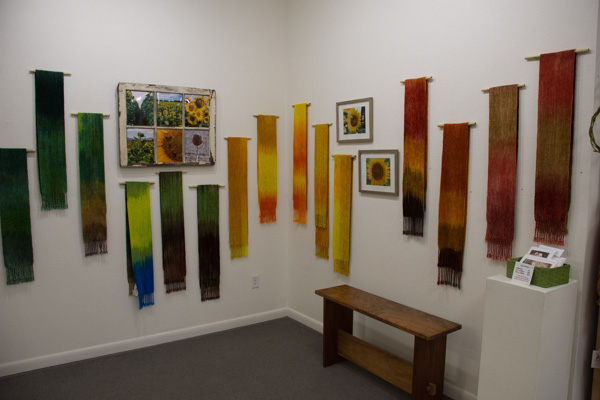 The Sunflower wall is around the corner. These are rayon chenille scarves in the colors of the sunflower field that was Across the Road last summer. I didn’t just stick with the yellows and oranges of the flowers but included all the colors of the fields.
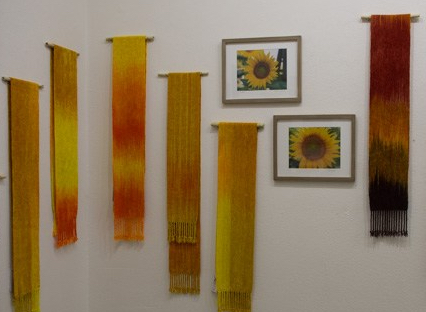 Here is a closer view of the flower scarves.
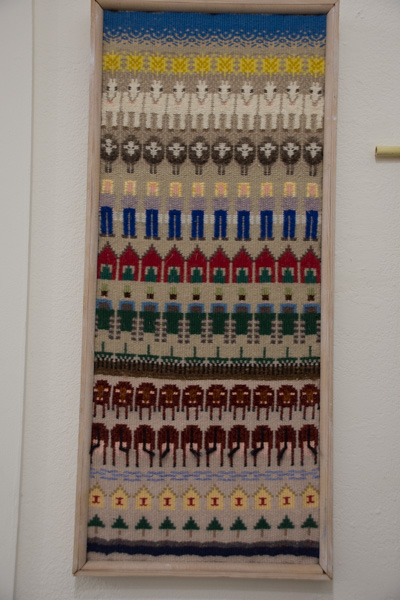 In addition to the window pane photo collage, I included this piece that is not for sale. I wove this years ago when we lived and worked on our family dairy.
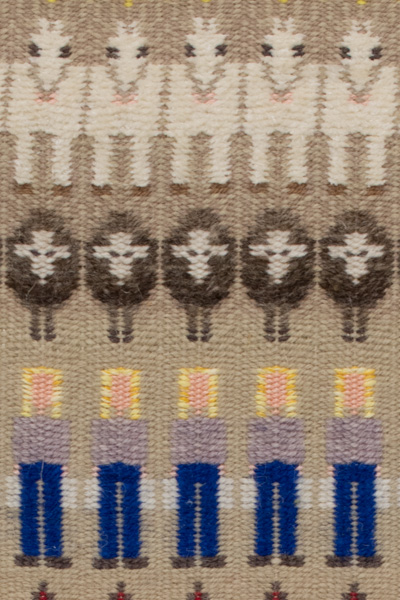 This close-up includes my daughter carrying milk buckets, my sheep, and our pony.
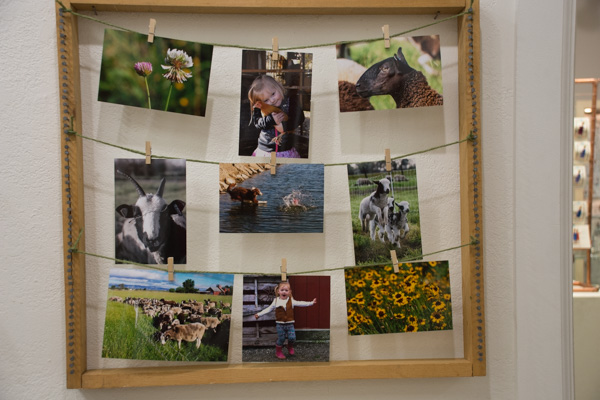 Here is another farm photo collection.
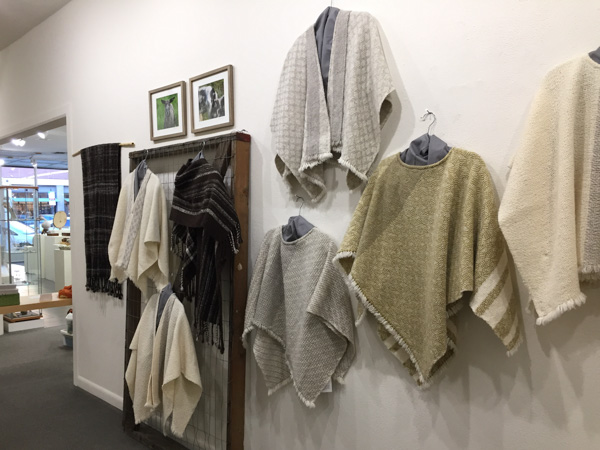 These ponchos and ruanas use the same yarns as the Solano Colors wall, but mostly in natural sheep colors. There are also a couple of handspun Jacob pieces here.
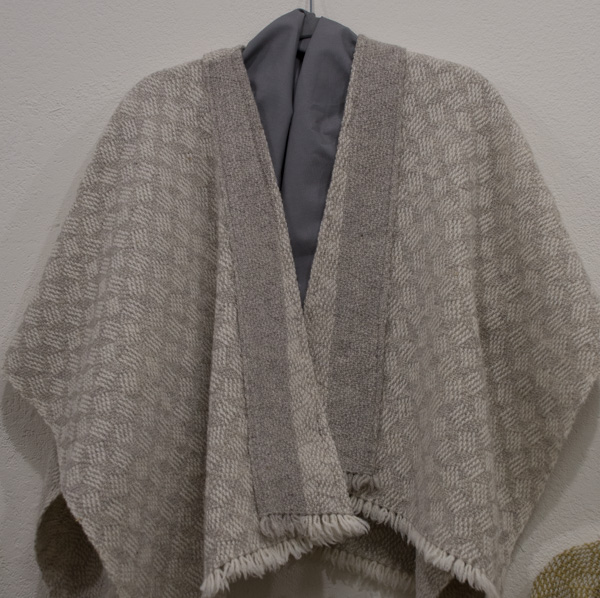 Close up of a ruana.
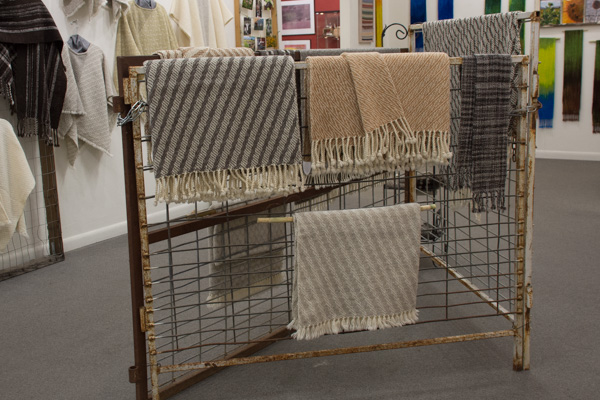 The display in the center of the room is really panels out of my sheep trailer. I used them to hang my blankets and some scarves.
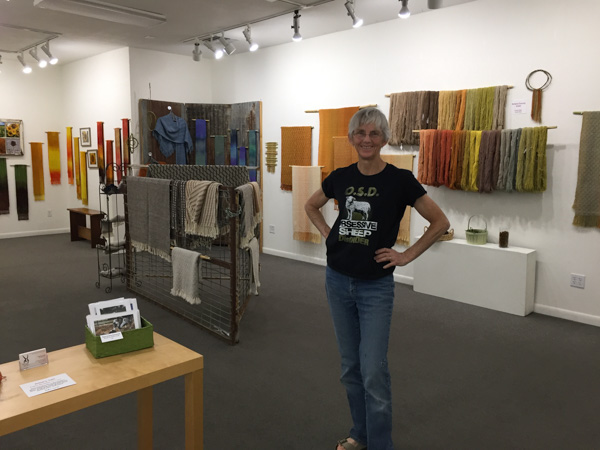 Here is an overall view of the room…
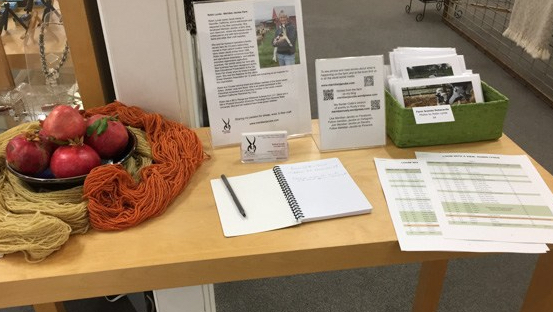 …and this is the table in the doorway when you come in. The notebook is for visitors’ comments. I’d love to see your comments as well.