Green Grass

Now that it’s warm the grass is growing and the pasture has finally dried out enough to put the sheep out. However, there was a break in the electric fence and I couldn’t turn the sheep out until I fixed it. I finally got to that today.

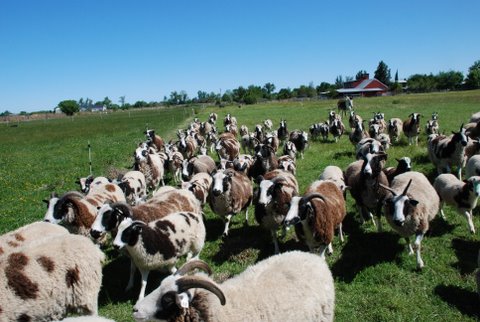
“Can’t you hurry up and let us out?”

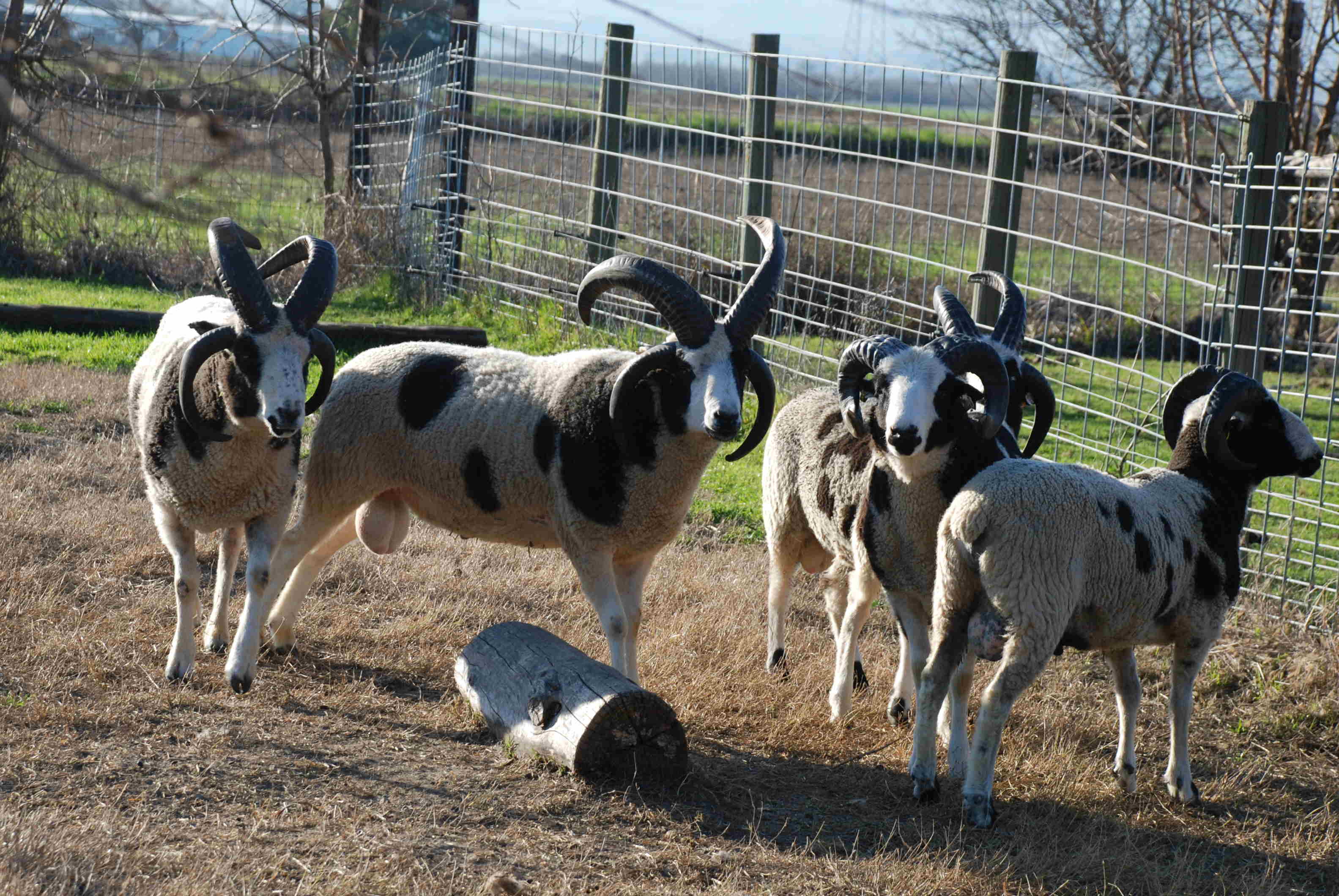
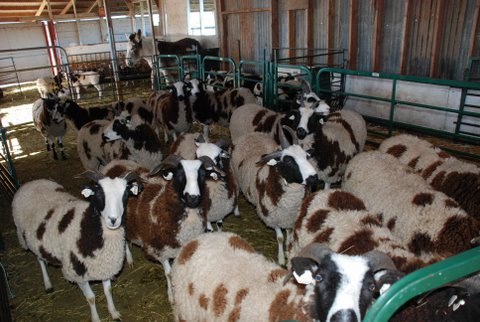
The rams are left behind in their bachelor quarters.

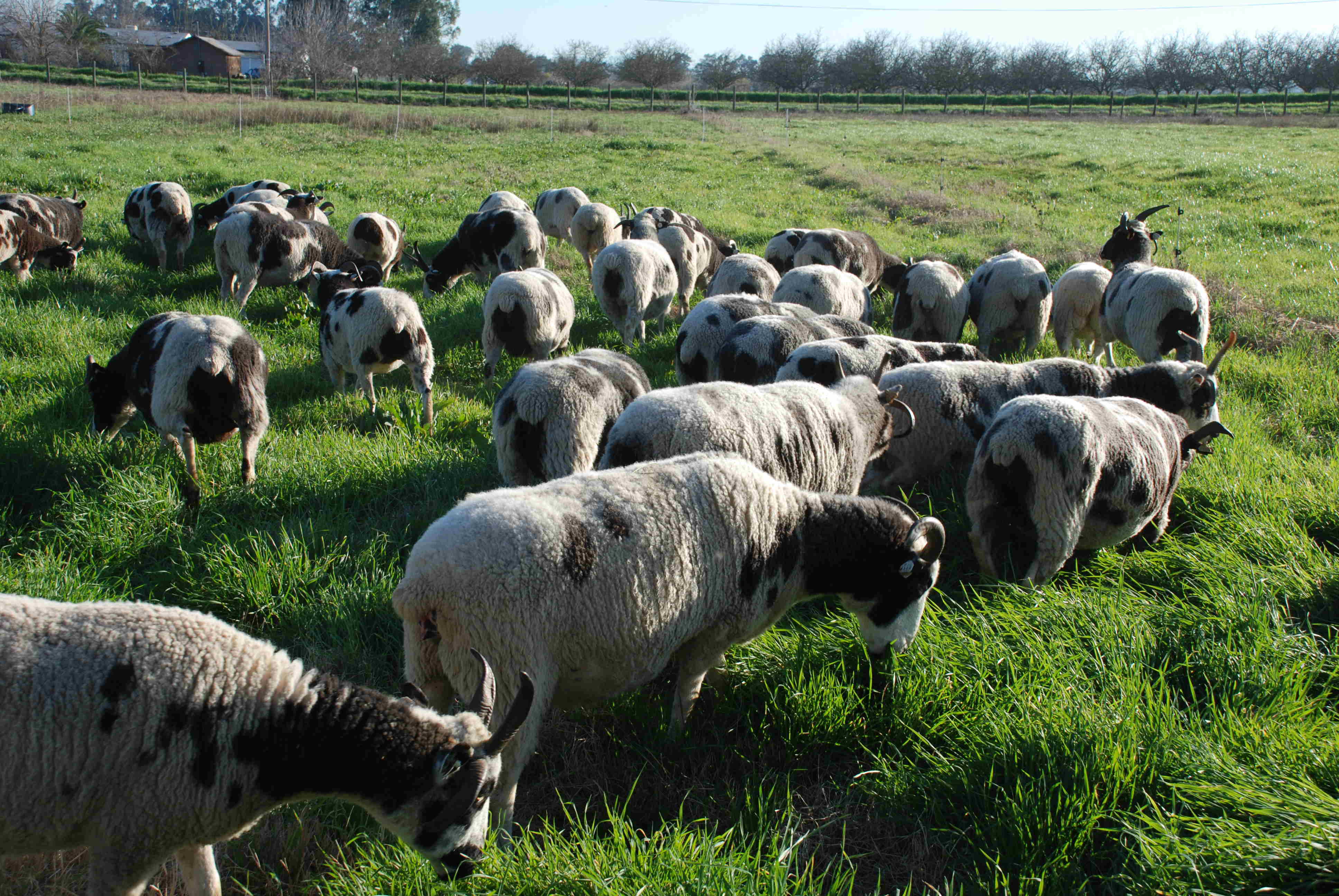
I’ll race you to breakfast!

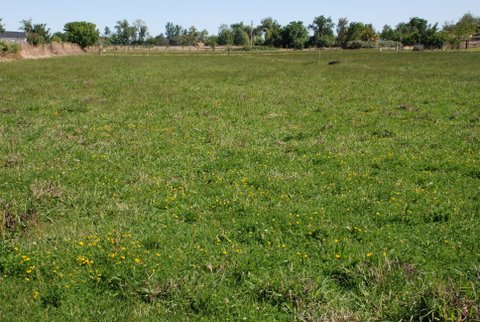
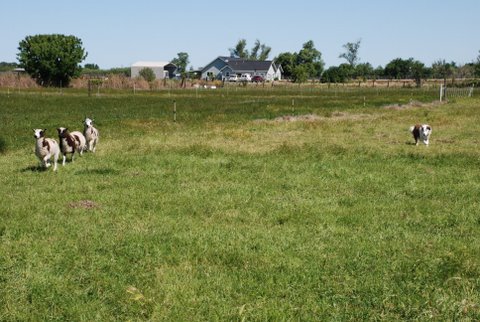
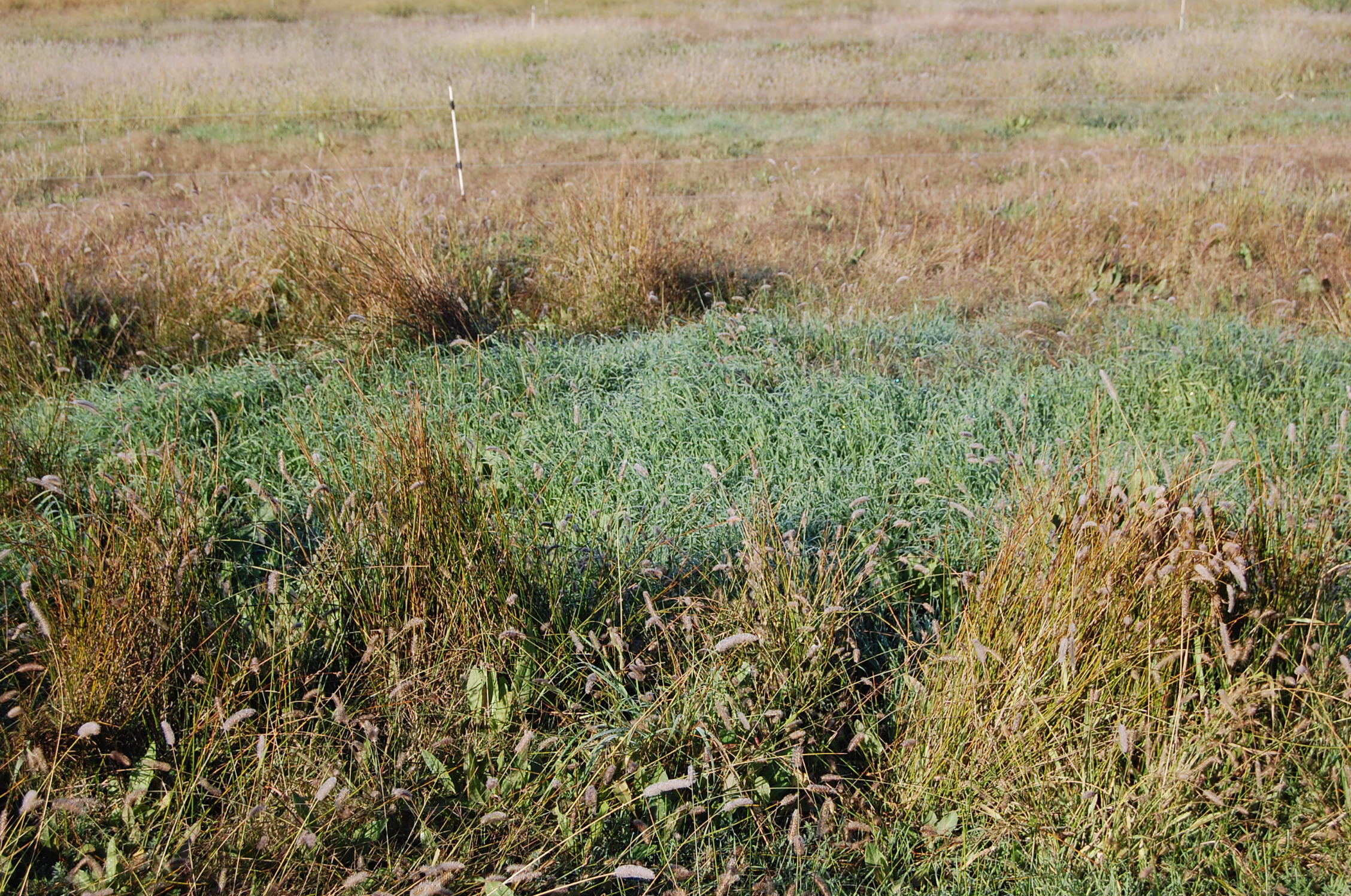
I’m pleased with the pasture this year, especially considering the number of sheep I have grazing. One 5-acre pasture is subdivided with electric fence (NZ spider fence) into 8 paddocks, each of which can be split in half using electric net fencing. There is one other 2-acre piece that I split in half. Here is the paddock the sheep went into yesterday.

If you go to the “prescribed burning” tag on the right you will see this same paddock (looking from the other direction). See all the dry grass? There was so much tall, rank dallis-grass that there was no green feed growing up through it. We burned it two years ago and with proper grazing I’m able to keep the dallis-grass in check and there is a lot of trefoil and other desirable plants. In the photo above it’s those clumps that are the dallis-grass. The sheep eat it readily if it’s kept in an early vegetative stage.

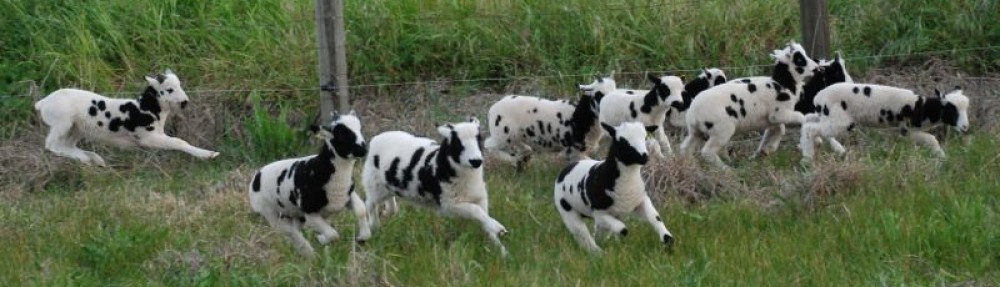
This is after I opened the net-fence at the end of this paddock and the sheep are going into the new one.

A few lambs who didn’t get all the way around the fence and then started following the ewes back up the fence line on the wrong side. Now Rusty gets to help.

You can easily see the difference between the paddock they were just on and the new one. A paddock is not overgrazed by putting a lot of animals on it; it’s overgrazed by time. Once a pasture is eaten low it needs to rest. If the animals continue to graze it as the new growth occurs, there will be negative impact on the root system and it will take much longer for the plants to recover. So the trick is to eat the paddock evenly and then move the sheep to a new paddock. By concentrating the sheep on a small area they eat all the plants, not just the ones they like best. This also helps with parasite control. right now with the lambs getting so big I’m moving the sheep every day or two. If I go through all the paddocks too quickly I may need to hold the sheep off and feed them in the barn for a little bit. I will probably try to coincide that with my next irrigation when I have to have sheep off the pasture anyway.

Another fence-line photo.

Entries for Solano County Fair were due this week so I needed to figure out who to enter. It was fun to separate out all my yearlings for a look. You get a different feel for the sheep when you get them out of the main group and I hadn’t had a look at the yearlings as a group since they were lambs last year.
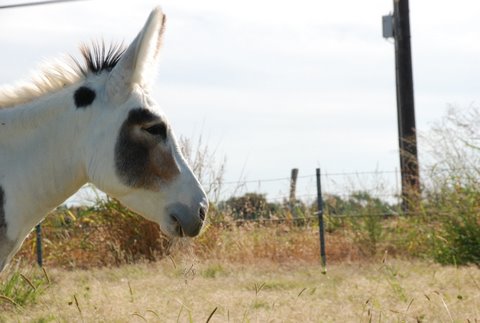
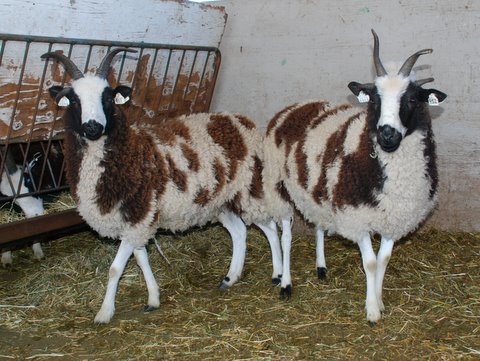
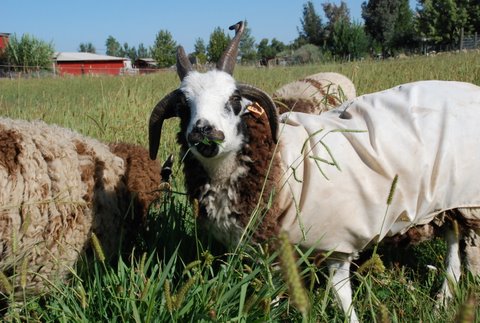
This is most of the 19 yearlings in the flock. There are some really nice sheep with with great fleece in this group. I narrowed the field down more and more until I chose my show sheep. (drum roll please….) And the winners are…

…Dazzle and Spring. They both have nice conformation, good size, and consistent fleeces. I have entered these two, the two yearling rams, and 4 lambs. Does anyone want to come help me show? It’s June 22-24, a few days after Black Sheep Gathering.

Irrigation time again

I live on the western edge of the Central Valley in CA.  We get winter rain and it’s dry all summer. The only way that things stay green here is through irrigation. One reason that we wanted this property was because it was part of the Solano Irrigation District and we could get irrigation water without having an ag well.
When I order water the water tender opens a valve at the west end of this ditch (left in the photo). This is not on our property, but the water flows down this ditch and then onto our property by opening the valve at this end.

The water flows through a pipe that goes under the fence and the water comes up in this standpipe and out the hole into the ditch in the pasture.

This view is still looking west. The water is starting to flow from the standpipe down the ditch at the north end of the property. The ditch turns south and gets the water to the rest of the pasture. The ditch is supposed to have high enough sides that the water is contained and only flows out where I dig a cut-out that lets the water into the pasture. The idea is to open a few areas at a time and be able to fill those cut-outs in as you open more. Ideally the pasture would have just the right amount of slope so that the water would flow evenly. Easier said than done. One problem with our place is that we don’t have the equipment to re-ditch the property. I’m using the same ditch that we had dug (by a neighbor with a tractor and ditcher) when we first started here. I see the alfalfa farmers re-ditch every time they irrigate and I’m jealous. I’ve looked into a pipeline system in which there wouldn’t be a ditch, but a buried pipe with valves that could be open and shut to control the irrigation. Unfortunatly the cost is completely unrealistic for my business. So I keep plugging away with the shovel and hoping for the best.

That is a mowed alfalfa field on the north (top of the photo) and our property is the green field. The standpipe is in the northwest corner of the property and the ditch in one of the photos above is along the north fenceline. You can see the water flowing down the ditch going south and that part of the pasture is already flooded. The sheep have to be in the corrals and barn when I’m irrigating. (So I have to feed them hay for several days every 3-4 weeks. I usually have the water on for 36 hours, but it takes several days for the field to drain enough to turn the sheep back out.)

That ditch that takes the water south dead-ends on this ditch that runs east-west and carries water to the other 5 acres. This view shows the south west corner of the property.

Here is the south east corner. I strip graze this 5 acre pasture. The strips run north-south and are separated by a 3-wire electric fence. You can make out the strips in this photo. See that black thing towards the top? That’s a portable water trough that I plug into the water pipeline that we installed a couple of years ago. The water trough is on one of the fencelines. I have just finished grazing the strips on either side of the water trough. The next two strips are more lush. They are ready to be grazed next. Notice the very pale green in the strip above the water trough? This strip is hard to irrigate and for several years I couldn’t get much water on it. That light green color is medusahead–a very unpalatable grass. Ideally I think burning it would be good, but I don’t think I can do that. We just bought a better heavy-duty weed-eater and I think I’m going to try to stay on top of the medusahead by using the weed-eater. I hope that I can make an impact on it this year. It renders that strip of the pasture unuseable. I noticed tonight that my irrigation water was getting there. I hope that if I can keep the medushead at bay then something else will start growing there.
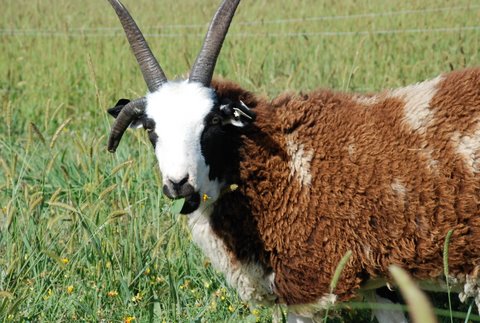
I guess I won’t quit my day job.

I thought that maybe I would switch jobs and be a wildife photographer. Here are some photos I took in the pasture the other day. This marsh hawk (birder friend, Claire, tells me that it is a northern harrier, but marsh hawk is the name I remember) was flying around the pasture, would land, and then as I stealthily snuck up on him, would take flight again.

Same with the egret. The hawk is on the ground and the egret comes in for a landing.  I don’t have a very long lens so this is the best I can do before they take off again.

So I guess I’d better keep at the fiber business and just use wildlife photography as a side-line!

Some of this weeks scarves:

These first three have supplementary warp of various odds and ends.

More log cabin scarves:

These are the same except that one has a bleached white yarn and the other has an ivory yarn.

A friend and I did an impromptu dye session this week.

She dyed yarn and I dyed fiber.


What’s for Breakfast?

I moved the sheep to a new section of pasture this morning.

grazing 1-w

They immediately buried their heads. This is like a salad bar for the sheep–something for everyone. In the photo below you can see clover, trefoil (yellow flower), Dallis grass (broad-leaf grass), yellow foxtail (that grass with the foxtail-looking head), bermudagrass, dock, and other plants.

grazing 2-w

Some of these plants make summer grazing tough. The bermuda and yellow foxtail are late summer grasses and take over the pasture, crowding more desirable plants.  The sheep choose to eat the plants they like and leave the less desirable ones.That’s why, to graze properly, you put more livestock on a small area and move them frequently. When the sheep are in a small area they eat even  the less palatable plants while eating the ones they really like. Then you move them to the next area. This also helps with control of internal parasites.

Dallis grass has been a problem too. It is a perennial grass that originated in South America and can be a good pasture grass if grazed properly. If I can’t keep it grazed low it gets so tall and coarse that the sheep won’t touch it. Then it takes over and nothing else can grow. If you go back to older posts in the blog you’ll see where last year at this time I was doing everything I could think of to get the sheep to eat the thick stand of dallis grass. In the spring we finally burned it.

So what did I see in the salad bar pasture this morning?

grazing 3-donkey-w

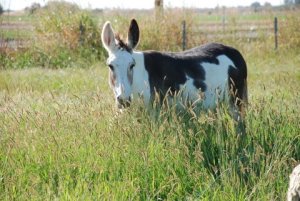
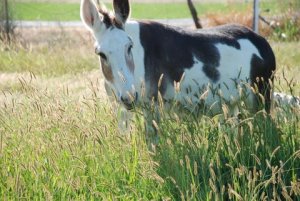
Amaryllis went right for the yellow foxtail! Nobody else eats that.grazing 4-donkey-w

Here is another undesirable plant. This grass is medusahead. It is an annual grass that grows in dry areas and has these nasty seed heads. Sheep don’t want to eat it even when it is still green. The medusahead started growing in this side of the pasture when I couldn’t get irrigation water to this area. The last few times I irrigated I have been more successful at getting water here so that’s why it’s green underneath. I hope that if I’m successful at irrigating this area next year the medusahead won’t be able to take over.

grazing-8 medusahd-w

But look who is eating it!

grazing 8-donkey-w

So what are the sheep eating?

grazing 7-w

This is Della with her mouth full of dallis grass. (That’s the dallis grass seed head in the foreground.)

grazing 10-w

Ebony is eating trefoil and dock.

grazing-11-w

Linda is eating dallis grass.

grazing-13-goat-w

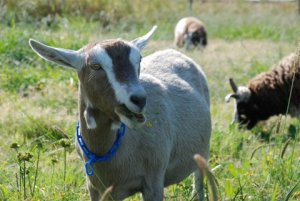
The goat, Chloe, is eating trefoil and…

grazing-14-goat-w

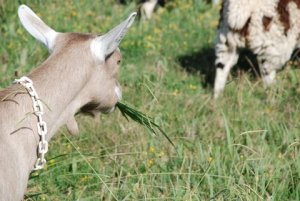
Jasmine is eating dallis grass.

One way to join me in a “pasture-walk” and photo shoot is to join the Farm Club and spend some time here. It’s on my website–see the link on the right.

Pasture observations

Are you going to get tired of reading my pasture observations? Hey, it’s what I do. When you raise livestock on the land then you are really a grass farmer first…or should be. My first observation this morning was the dew on the grass that I have learned is called yellow foxtail. It is one of the late summer grasses that is NOT desirable. The sheep don’t like to eat it which is why you see so much in the field. But it did look pretty this morning.

dew-on-foxtail11

dew-on-foxtail21

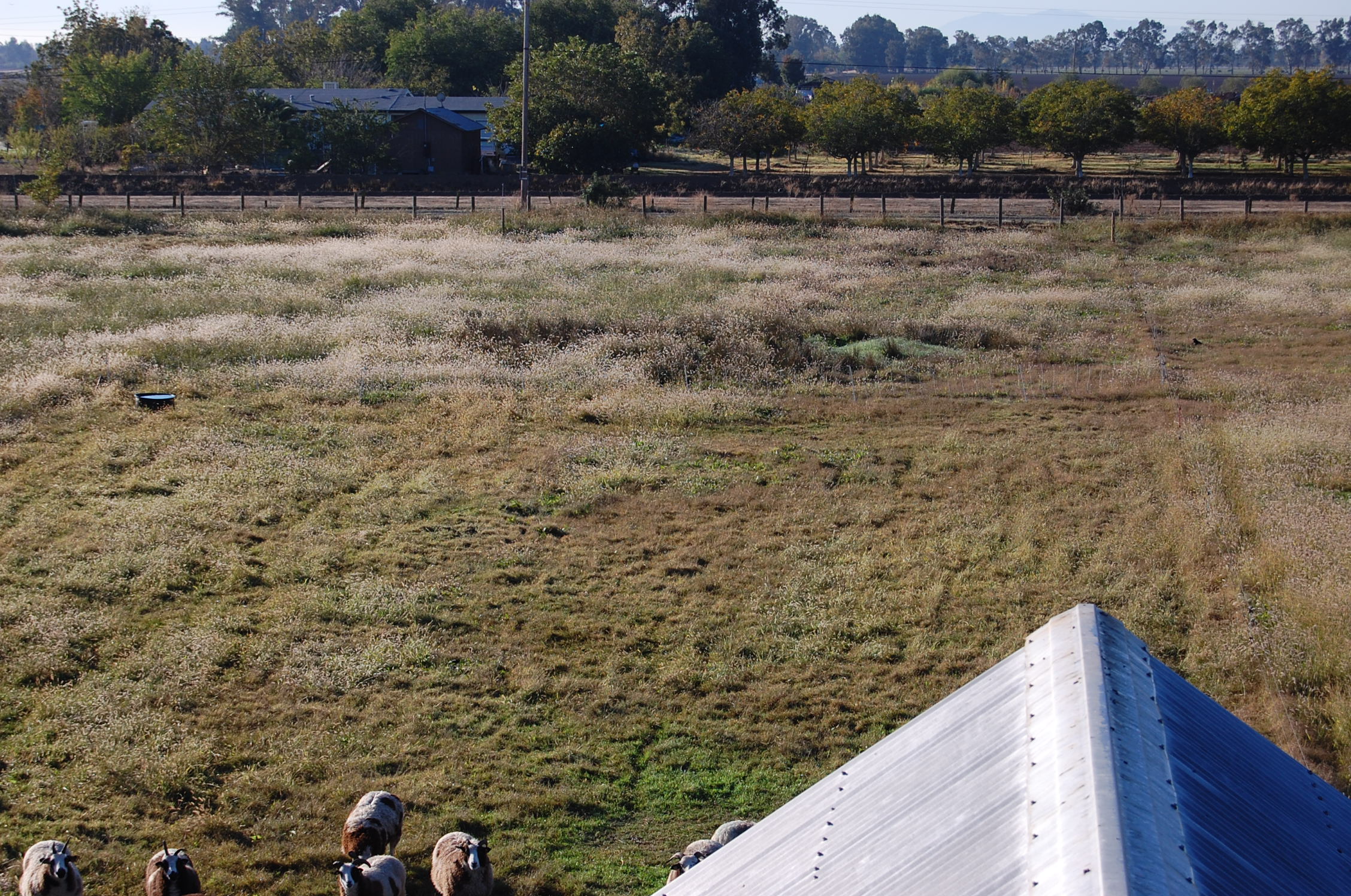
Another observation is what has happened to our crop circle. Our crop circle is not like the ones you may have read about. If you see our place from above (which we can do even in the flat Sacramento Valley now that my husband has built a 2 story barn with an additional tower) then you see this area in the middle of the pasture that is a different type of plant. It is some kind of reed, another undesirable plant and one that indicates poor drainage.

 crop-circle

Do you see that darker area in the middle of the pasture? That’s the reed. But do you also see the bright green part of it on the right? That’s new annual grass that is outgrowing anything else in the pasture right now. This summer my brother built a prototype shade structure that I could move around to various parts of the pasture. That is where I had the shade while the sheep were in that part of the pasture. A few days of trampling that reed opened that area up to allow grass to grow now that it has started to rain. Here is a closeup.

crop-circle-5 

I have more observations, but I’m going to put them in another post. The last couple of times that I included a lot of photos it fouled up the format of not only those posts but all the previous ones too.