Our 8 day road trip was almost over. We spent Monday night and Tuesday morning in Mesa Verde National Park but needed to be home on Wednesday. We decided to drive through Four Corners and Monument Valley–it wasn’t much out of the way and Dan had never seen the area (and I had been there just once).
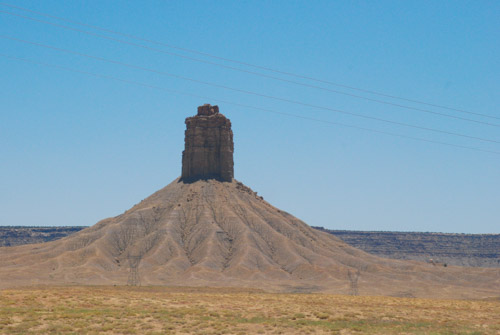
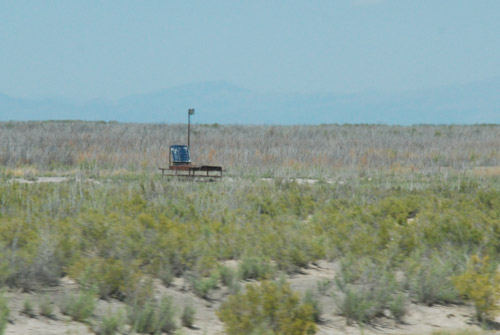
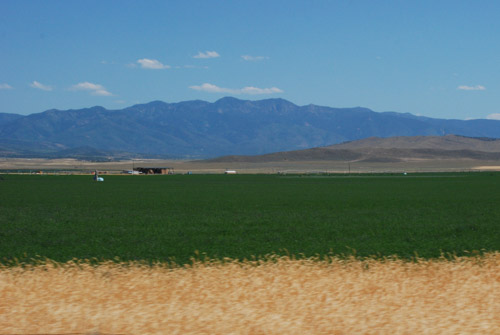
Most of the photos in this post were taken from the truck window at 70 mph. I found that I could sometimes roll the window down (yes, roll, there are no push buttons in this truck), sometimes remove the lens cap, and sometimes turn the camera on, but not always all three of those things.
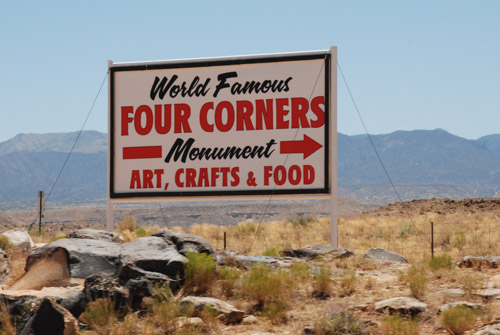
Four Corners is notable for being the only place in the United States where four states meet. It is also marks a boundary between the Navajo Nation and the Ute Mountain Ute Tribe Reservation. The Navajo Nation runs the Four Corners Monument as a tourist attraction.
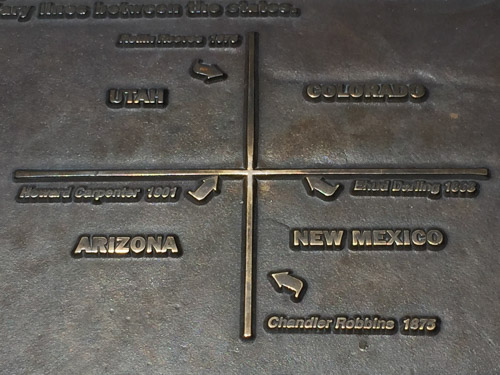
This is not the actual monument, but part of a sign about the surveying that began in the 1860’s. Wikipedia says, “the origins of the state boundaries marked by the monument occurred just prior to, and during, the American Civil War, when the United States Congress acted to form governments in the area to combat the spread of slavery to the region.”
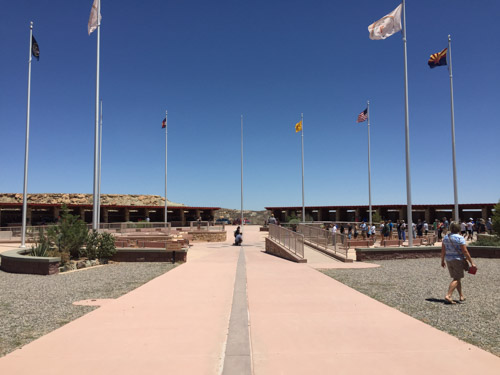
The marker itself is in the center of this courtyard. Notice the line of people to the right. They are all waiting to take their photos over the marker. We didn’t join them, but walked around the outside where there are stalls in which Navajo and Ute members sell souvenirs. Then we got back on the road.
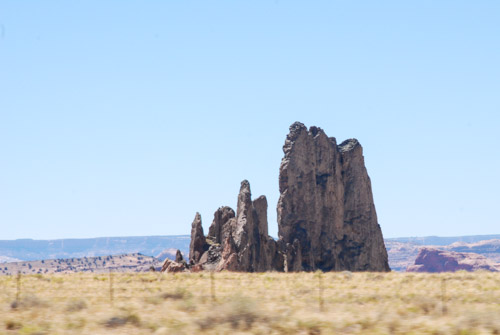
We took Highway 160 southwest to Kayenta where we turned north on Highway 163 to head back to Moab, but drive through part of Monument Valley. Wikipedia: “Monument Valley is a region of the Colorado Plateau characterized by a cluster of vast sandstone buttes, the largest reaching 1,000 ft above the valley floor…Director John Ford used the location for a number of his best-known films, and thus, in the words of critic Keith Phipps, ‘its five square miles have defined what decades of moviegoers think of when they imagine the American West.’ “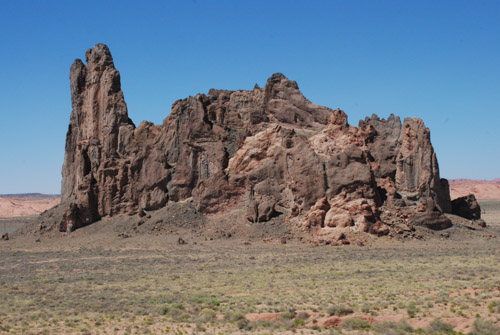
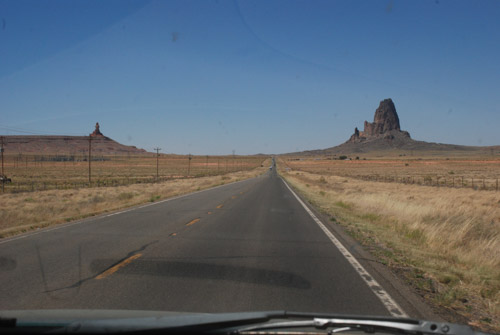
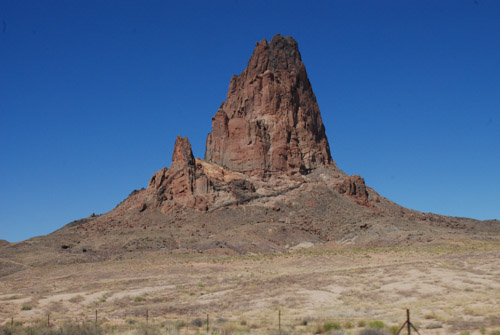
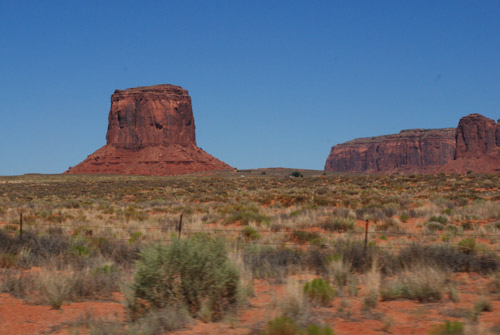
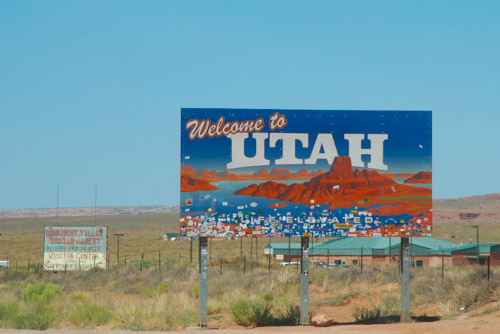
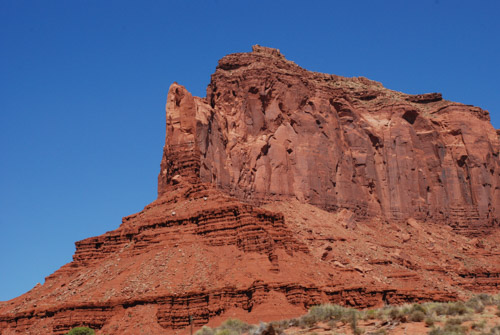
Spectacular country for it’s rock formations. A tough place to live on the land.
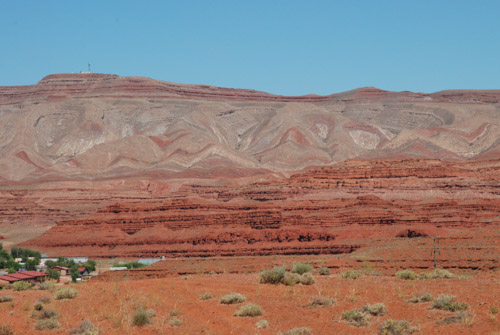
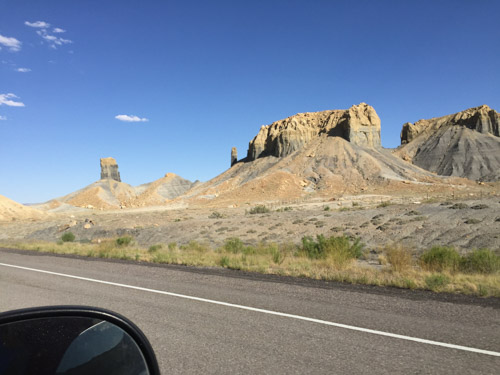
This rock formation kept us entertained for many miles as we drove closer and closer to it. I think it is just north of Bluff, Utah. I have googled a variety of words to describe this near both Bluff and Mexican Hat, Utah, but I don’t see any photos like this.
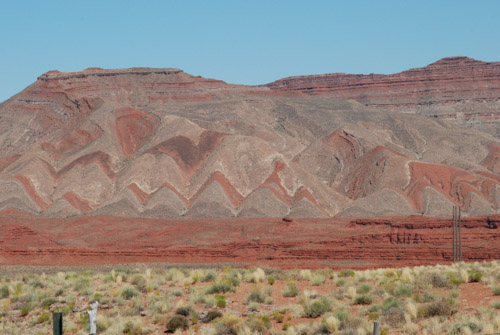
I do know the highway roughly followed the course of the San Juan River between those two towns. The rock formations that show up on-line are the Mexican Hat for which the small town is named and…
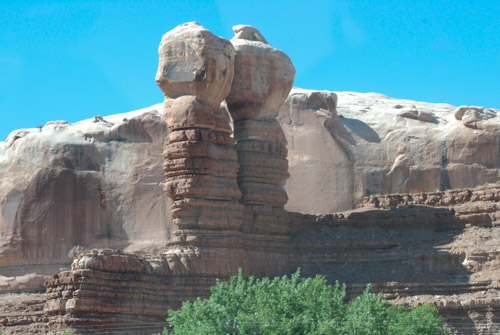
…Navajo Twin Rocks near the town of Bluff.
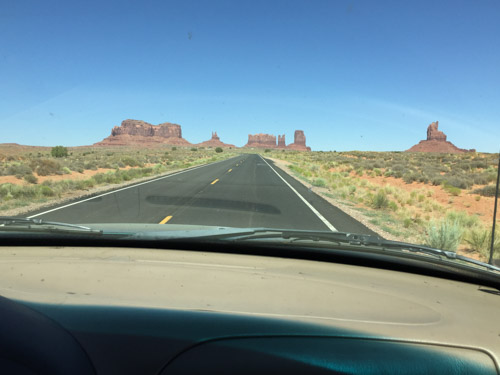
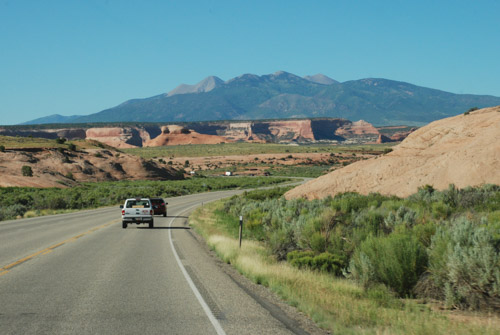
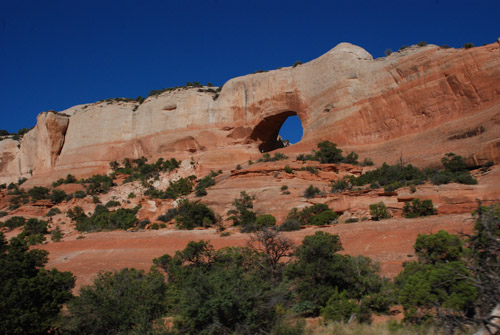
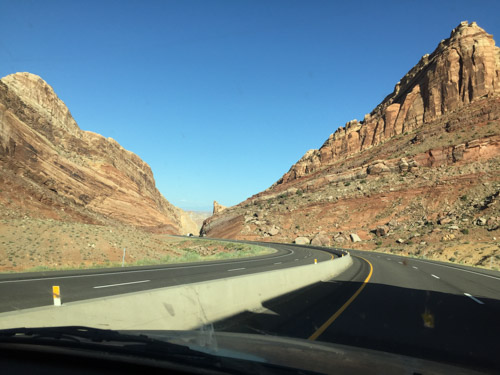
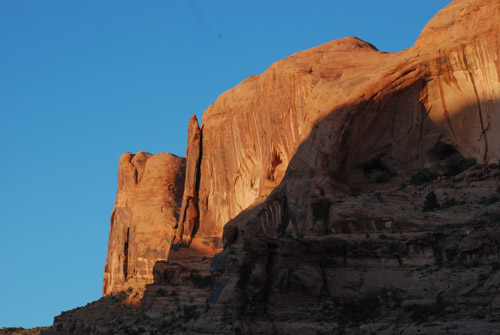
We continued to see red rock formations as we drove north toward Moab.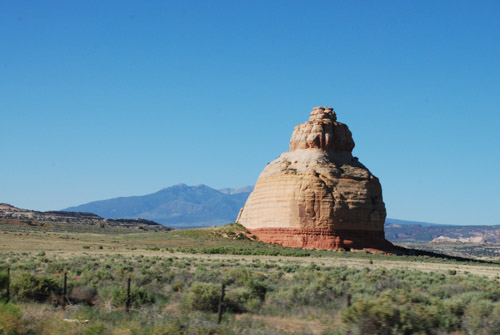
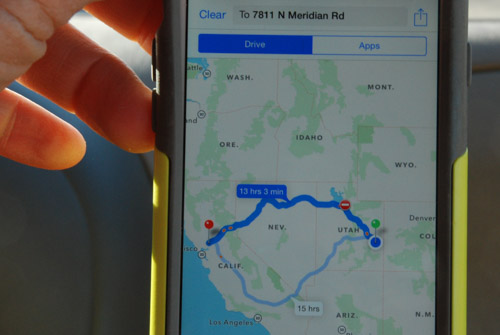
We hadn’t started the trip in Moab, but we’d been there just four or five days ago. I checked to see how long it would take to get home. I couldn’t get the phone to show me the route that we planned to take. We were headed to Highway 50 to cut straight across Nevada.
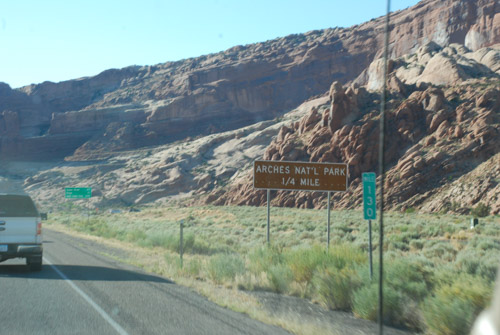
We passed Arches National Monument where we’d spent a day hiking…
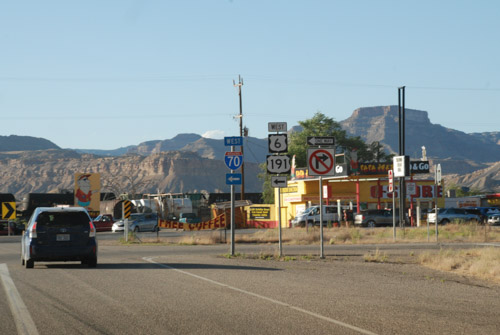
…and picked up Highway 50 at Crescent Junction.
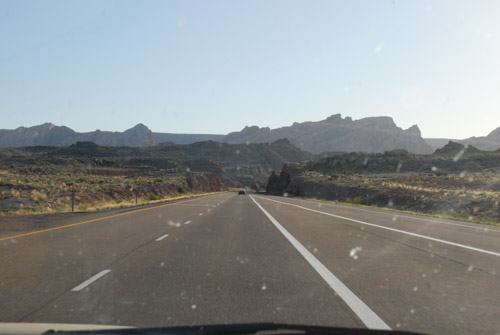
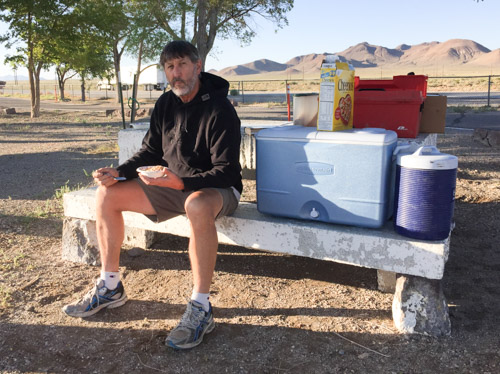
The plan was to drive west until we needed to stop.
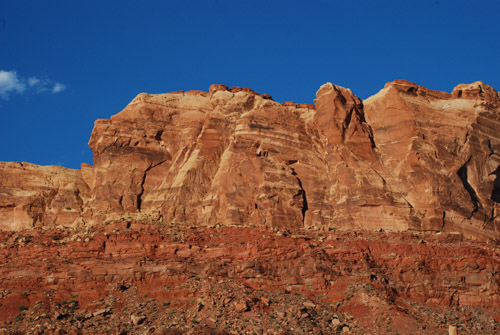
We’d seen some of this spectacular country but it looks different going the other direction.
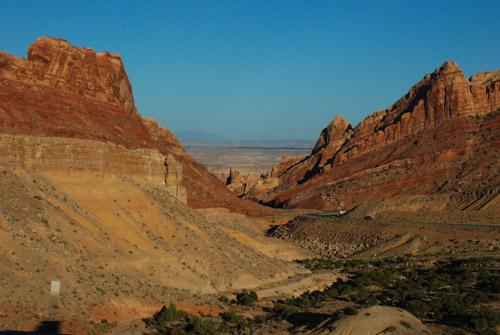
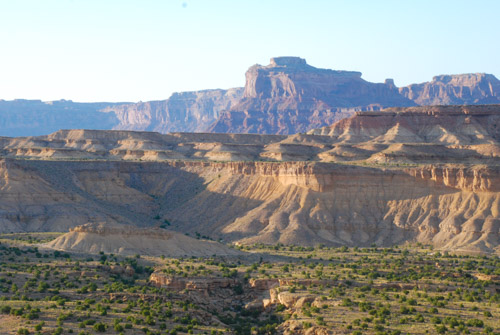
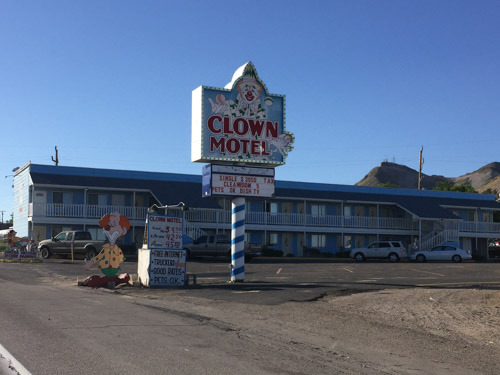
We drove until it was took dark to take photos and then we kept driving.
To be continued…









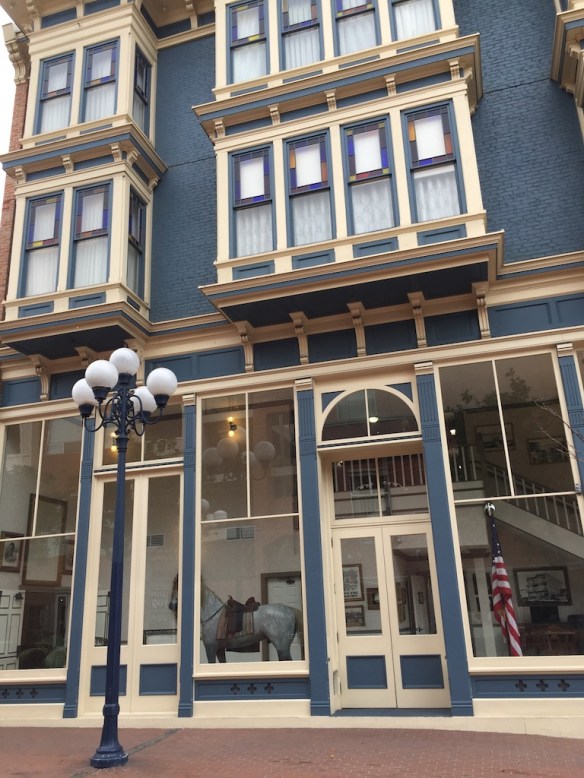 This is the beautiful Horton Grand Hotel…
 …and this is Sunshine, a paper-mache horse who stands in the lobby. He came from the saddle shop that was on the ground floor of the neighboring less formal hotel. The hotels were built in the mid 1800’s but the saddle shop originated in 1912. Wickipedia says: “Both hotels were scheduled for demolition in the 1970s when the City of San Diego purchased them to build the Horton Plaza shopping center on the site. The hotels were dismantled brick by brick, with each brick numbered, catalogued, and stored. In 1986 the hotels were rebuilt into an entirely new hotel at the present location at Fourth Street and Island Avenue.”
 Our room was lovely.
 What fun to decorate a hotel like this. The furniture was all old so I assume it was found at estate sales and flea markets. We even had a fireplace (gas so no wool hauling).
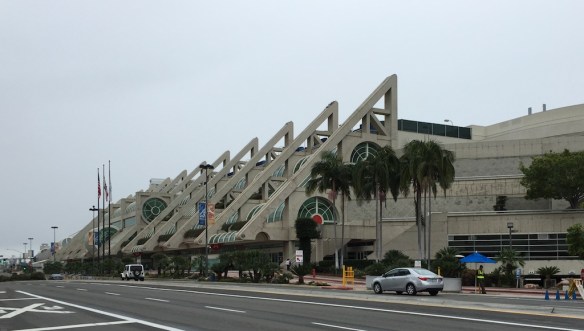 We spent a lot of our time at the San Diego Convention Center.
 Here is a message to be read on the way there. This quote in context of time and author if quite serious. In my world the last sentence has particular meaning and is serious enough in my life, if not with as profound a meaning.
  Fun view while going up the escalator in the Convention Center.
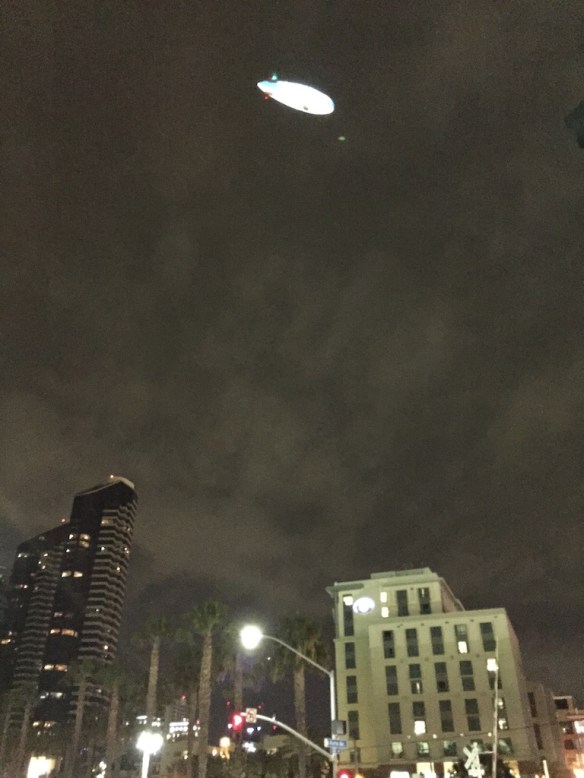 Leaving the hotel at night. This is the Gas Lamp District, kind of like Old Sac is for Sacramento.
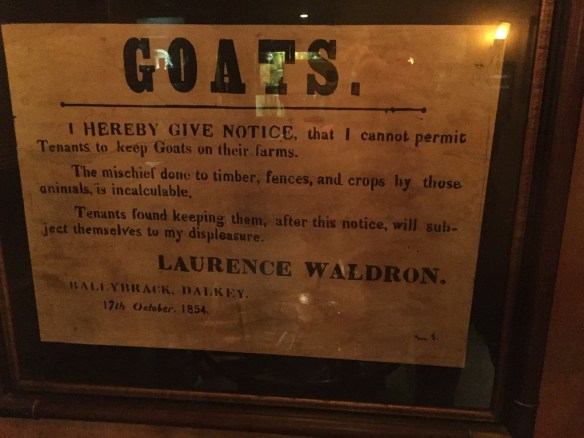 We ate one night at The Field, an Irish pub, while listening to Irish music and dancers. This sign caught my notice.
 But first I found some new equipment. These are prototypes of cool little sample looms designed by author and teacher, Liz Gipson. The unique thing about these looms is that they will be produced in 8, 10, and 12 epi versions, enabling quick sampling of yarns at those setts (and at 4, 5, and 6 epi). There are a few other gadgets I am purchasing here as well.
 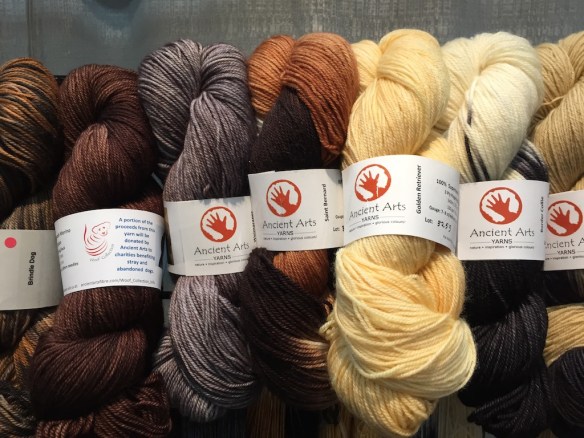 This is the Meow and Woof collection from Ancient Arts Yarns. Each yarn has a photo of the cat or dog that inspired the color. I strayed from my “buy American” plan because I was so enamored with these. They were spun in Italy and are sold by a Canadian company and a percentage of sales goes to dog and cat rescue groups. I have wove a scarf out of the calico cat yarn–that is another post.
 I already
 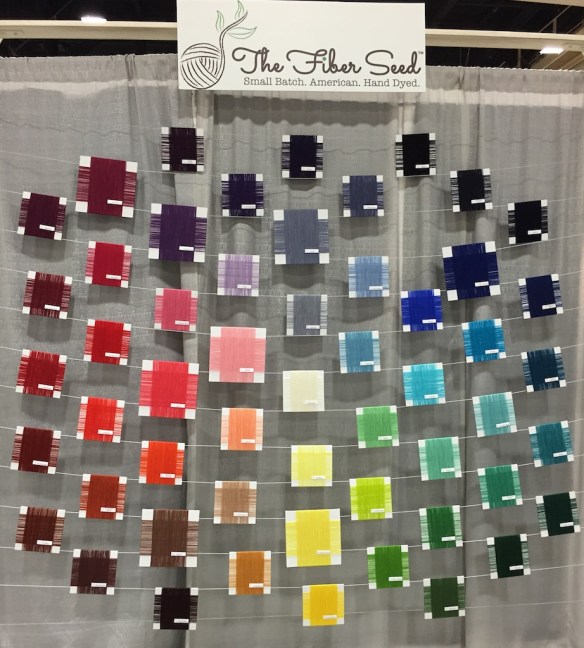 The Fiber Seed will be a new yarn for me. They have some wonderful gradient yarns put together in kits. I’ll get those as well as some of the solids and variegated yarns.
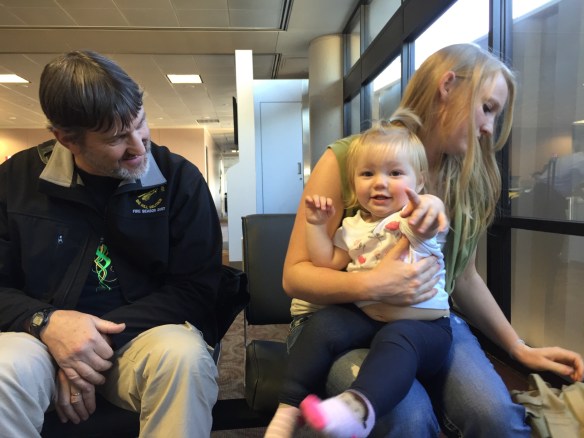 …and met up with Katie, Kurtis, and Kirby who flew in from Austin. We all boarded the next plane for an almost 7 hour flight to Kona, which is where my father-in-law lives. I have been there only one other time.
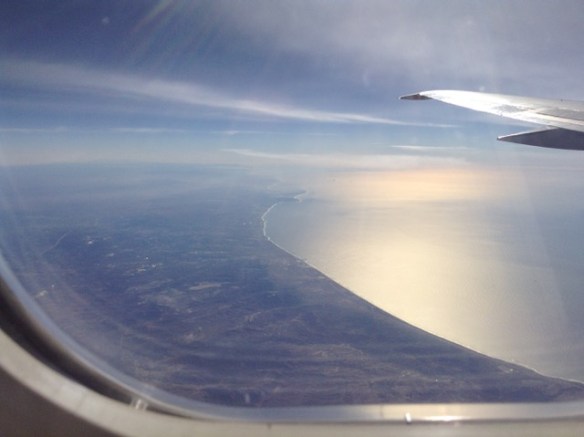 Leaving the California coast. I have this naive feeling that if the plane had to go down it would be better to be over land because you could find an airport or highway or somewhere to land.
 There is an awful lot of water before you get to Hawaii.
 But what an amazing site!
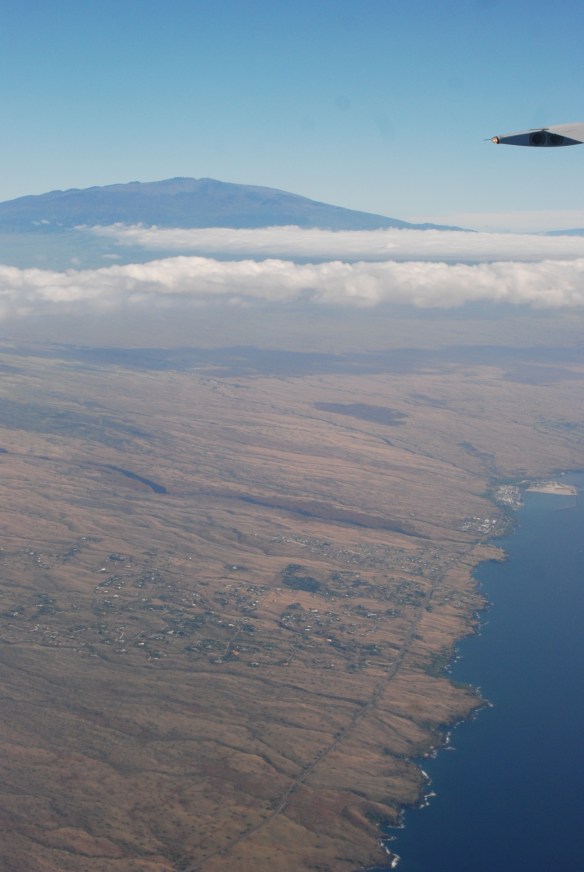 The contrast between the wet side and the dry side is amazing from the air.
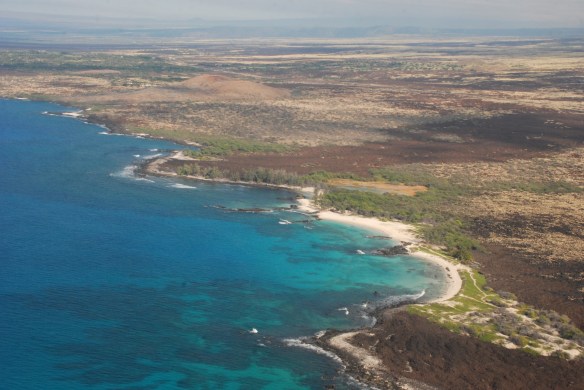 The airport is in Kona on the dry side. That is also where my father-in-law lives. Love those colors in the ocean.
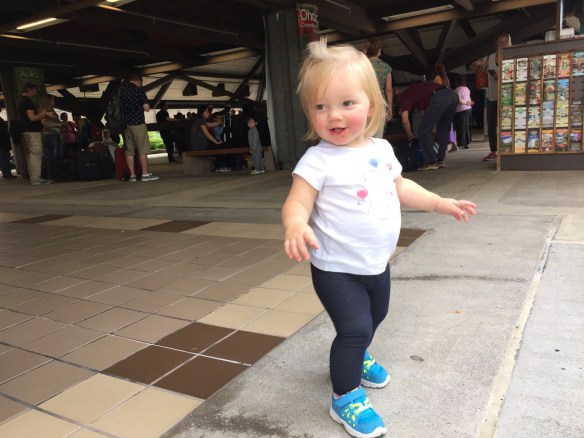 Unleashing a 16-month old after being constrained for so many hours.
 She found this grate fascinating. Hmmm. I don’t think she had to travel 3000 miles to find one of those.
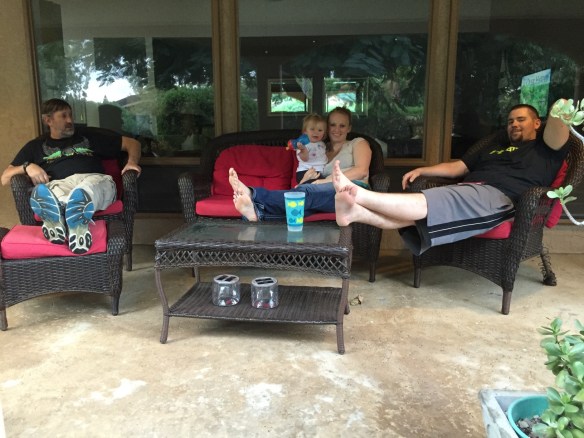 Relaxing at the house that we rented. The rest of the family will show up over the next couple of days.


 We were entertained by following our map books. We started out with California and Nevada. I think we picked up Idaho somewhere on the way. Later we found Montana and Wyoming in a used bookstore in Jackson, WY. Eventually we found Oregon in a bookstore in Pendleton. We found these books to be a way to keep the travel interesting even in the broad stretches of “nothing” in the high desert landscapes. There are always geological formations, land features, mines or mountain-tops with names and the books offer much more detail as far as land ownership and dirt roads than regular road maps. The books came in particularly useful when we wanted to camp along the way and find roads into Forest Service land. (Yes, I also have an iPhone and I use it, but there is not always service and sometimes it’s just easier to see the whole thing on one page.)


 Meridian Jacobs' Blog