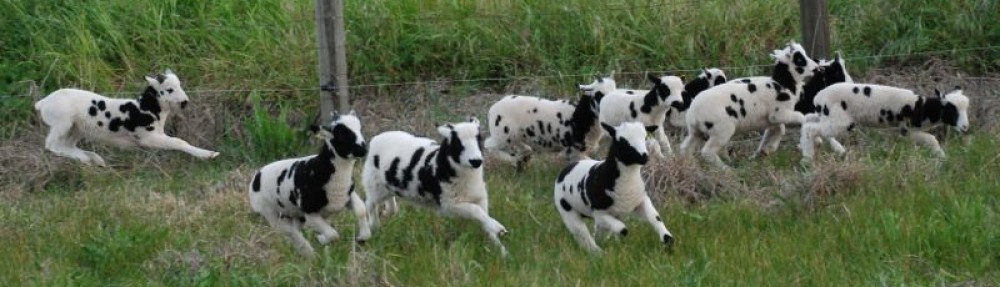
It’s California’s Central Valley. If we don’t irrigate in the summer we have only dry grass. We used to try and irrigate every three weeks. Now we have the soil moisture sensors to help with the decision.
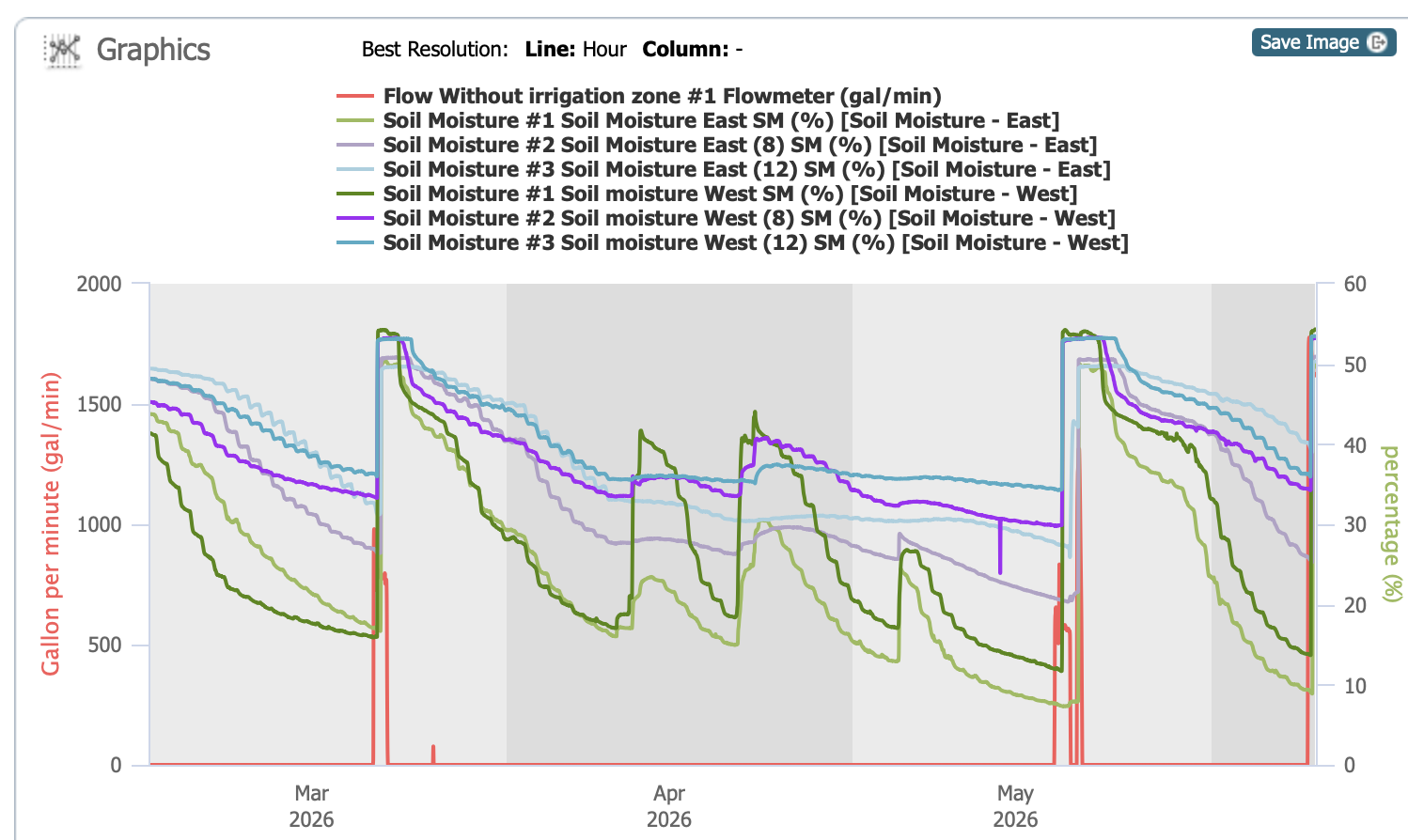
There are two sensors. The both show moisture at 4″(green), 8″(purple), and 12″ (blue) depths. The dark colors are the west sensor and the light colors are the one more towards the east. Red is water flow through the system when we irrigate. I’m showing three months for perspective. Notice the green lines rising (more on the west) in the middle of April. My records show 1″ of rain followed by 1.5″ about ten days later. I didn’t record the one in early May. So that amount of rain impacted the top layer of the soil, but doesn’t do much for the lowest level
It should rain in March, but it did not. When we irrigated in late March we had more water than we could use. We had asked for a certain time period and had to pay for that amount of water whether we needed it or not.
There are problems with too much water:
1. We are paying for what we don’t need.
2. Farms are given an allocation at the beginning of the season based on irrigated acreage. We don’t know what the weather will be like through the year. It was unusual for the irrigation district to fill the canals and offer water in March, but farmers needed the water. However, now that allocation has to last us until we get rain again.
3. Just as in your garden you don’t want plants to be underwater and flooded for too long.
4. Mosquitoes!
So when it came time to irrigate again, we had probably waited a little too long. We asked for the same amount of water (1-1/2 acre feet) but for less time. This is the story I told about that irrigation. Part 1.and Part 2. There was a big problem. It took all day to get across short checks on the north and we were able to get the water back in the pipeline two days later to finish and the water tender said he’d give us more. The graph below shows that sequence a little better. When you compare it to the graph above it looks as though the amount of water the sensor measures on May 18 is less than for the March irrigation, but I’m surprised that it made that much difference.
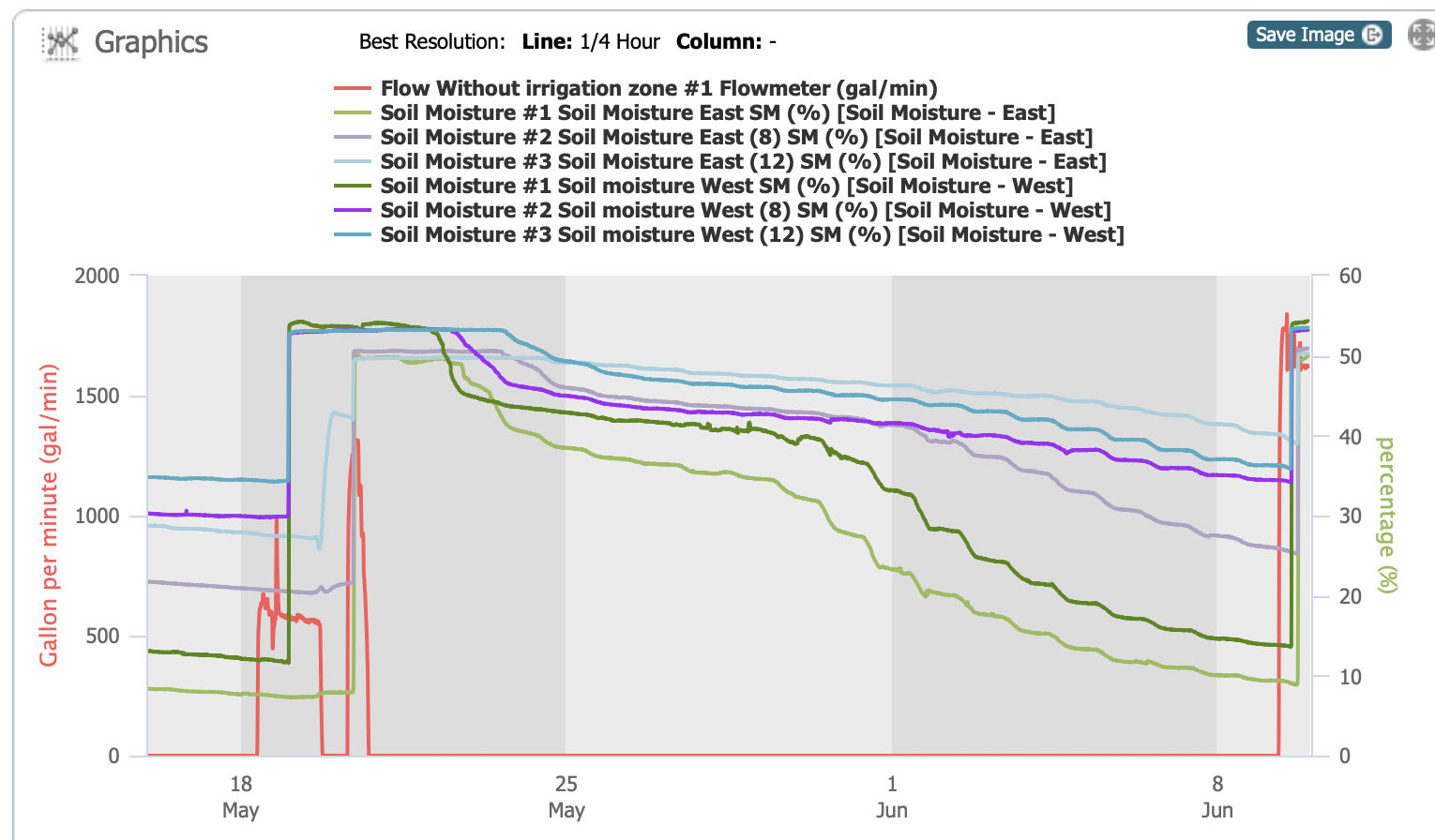
So here we are three weeks later. Look at the green lines on that graph. We asked for 2′ of water for about 28 hours.
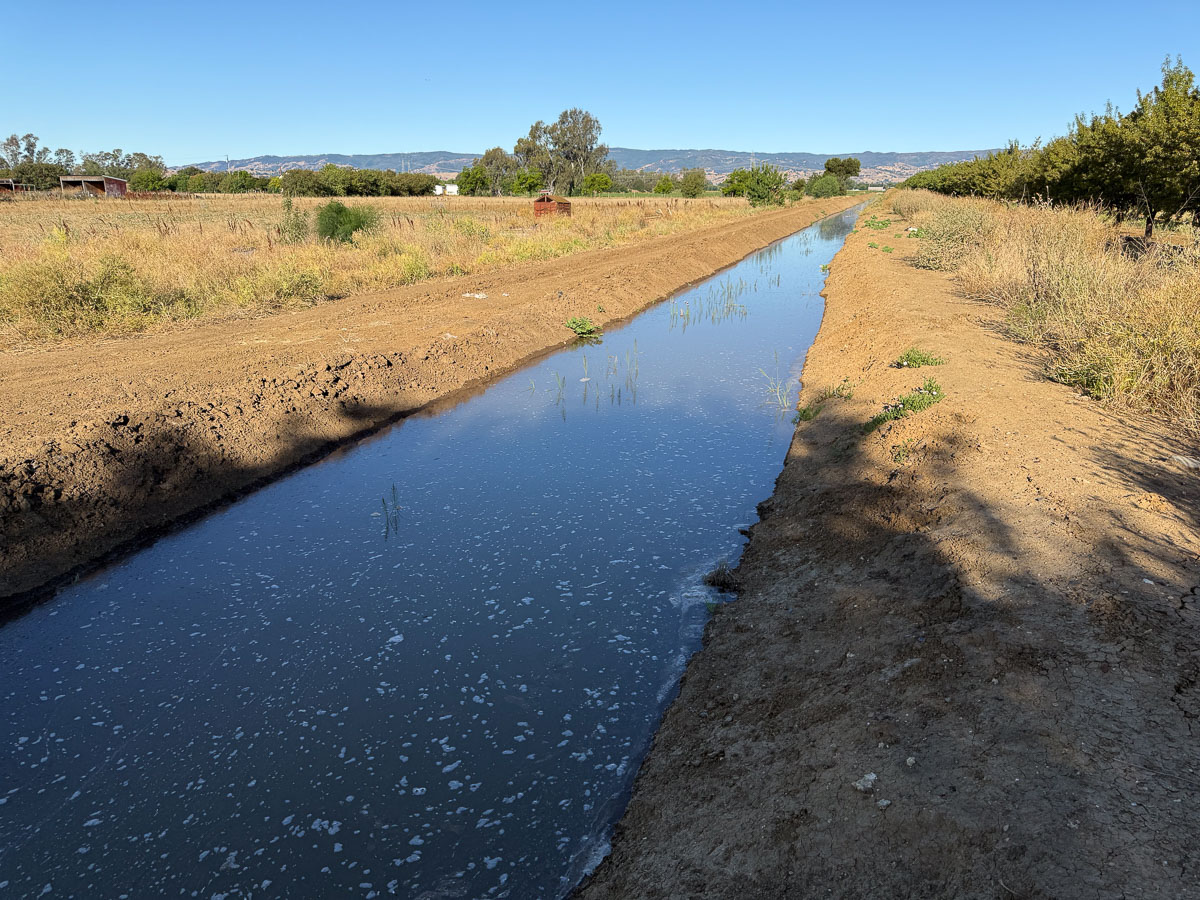
This is the canal that flows into our system.
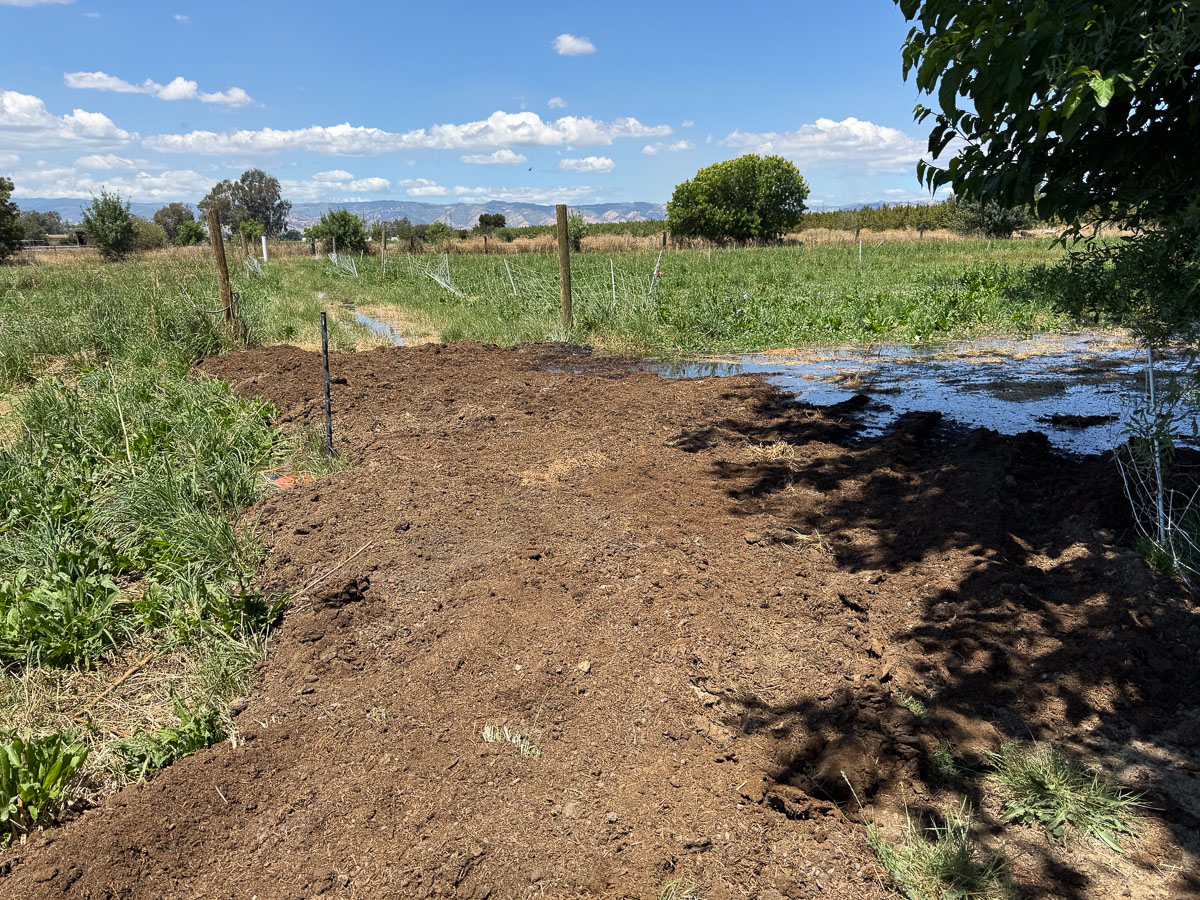
This is where Dan had added tractor loads of compost to the lane at the south end of #7 North. That has seemed to be a low spot, the water from the north stays there, and the valve for the south part (you can barely see it where the black plastic post is) flows backwards into the low spot.
Those top seven checks were fully irrigated before noon and I was ready to open the valves to the south. Then I found myself wanting to deal with the dry grass that was serving as a mulch on those north paddocks. We don’t need the clover and trefoil covered ups with mulch.
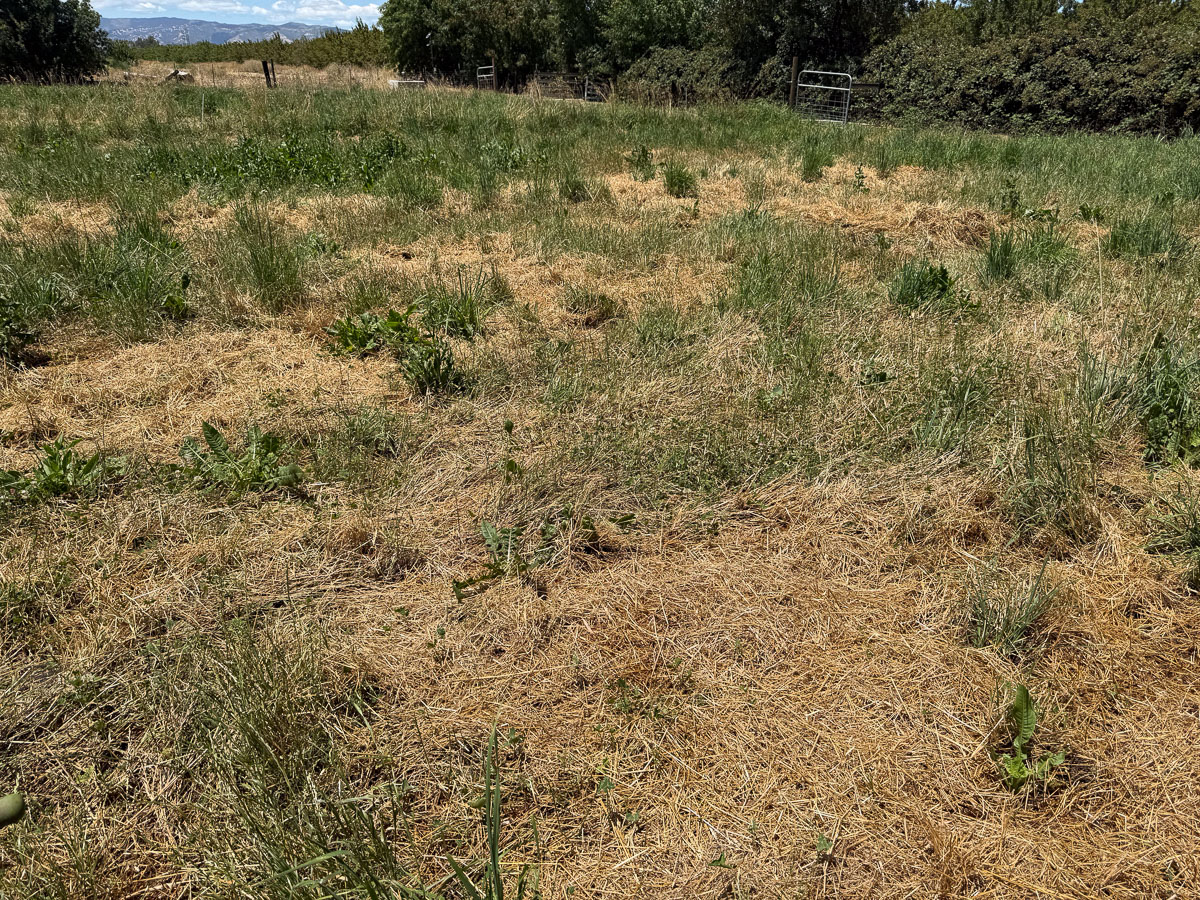
This seems ridiculous but I took a large rake out there and attempted to rake the dried grass off the pasture. I know I did this last year. The grass was floating and I could rake piles. This time it was different. A although Dan had mowed, only a fraction of this is that superficial grass. A lot is still rooted. Not that it will grow again, but it’s more difficult to remove.
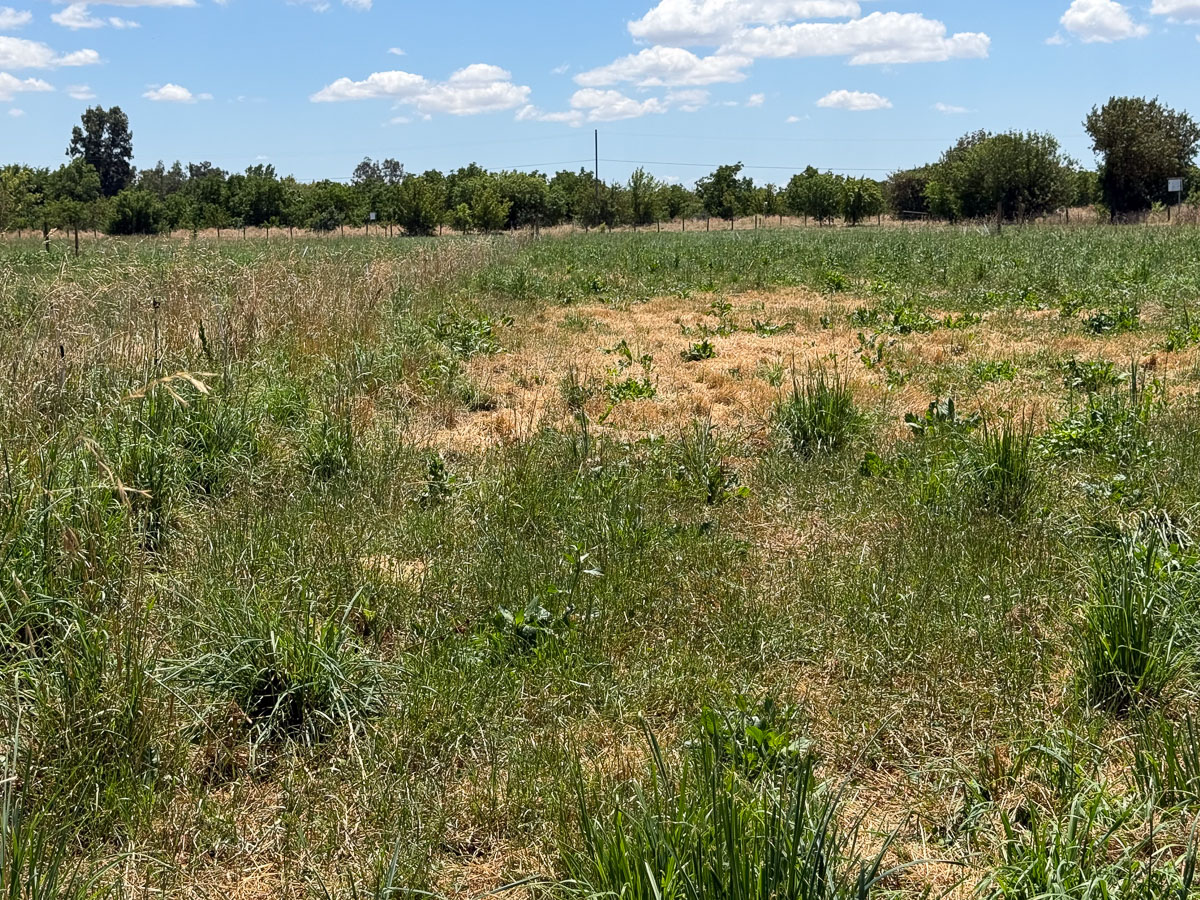
You can see the difference in upper part of the photo. It’s bothering me that so much of some of these paddocks are not as productive as they should be. This is the result of the ryegrass that took over last spring and again this spring. I need to be able to graze these before the grass gets so tall that it is trampled and flattened more than eaten .
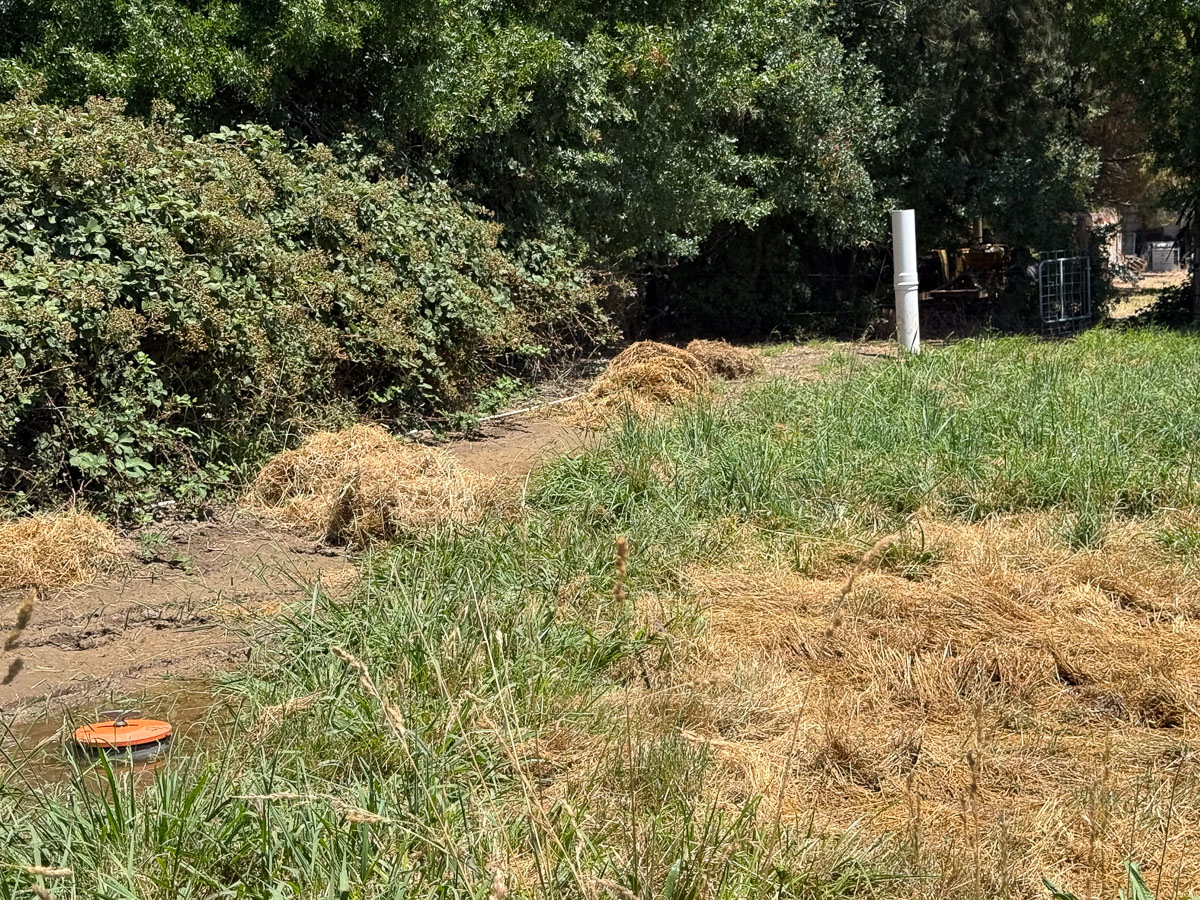
I did rake some and made loads with the wheelbarrow before I decided that this was a dumb idea and I could never make much of an impact.
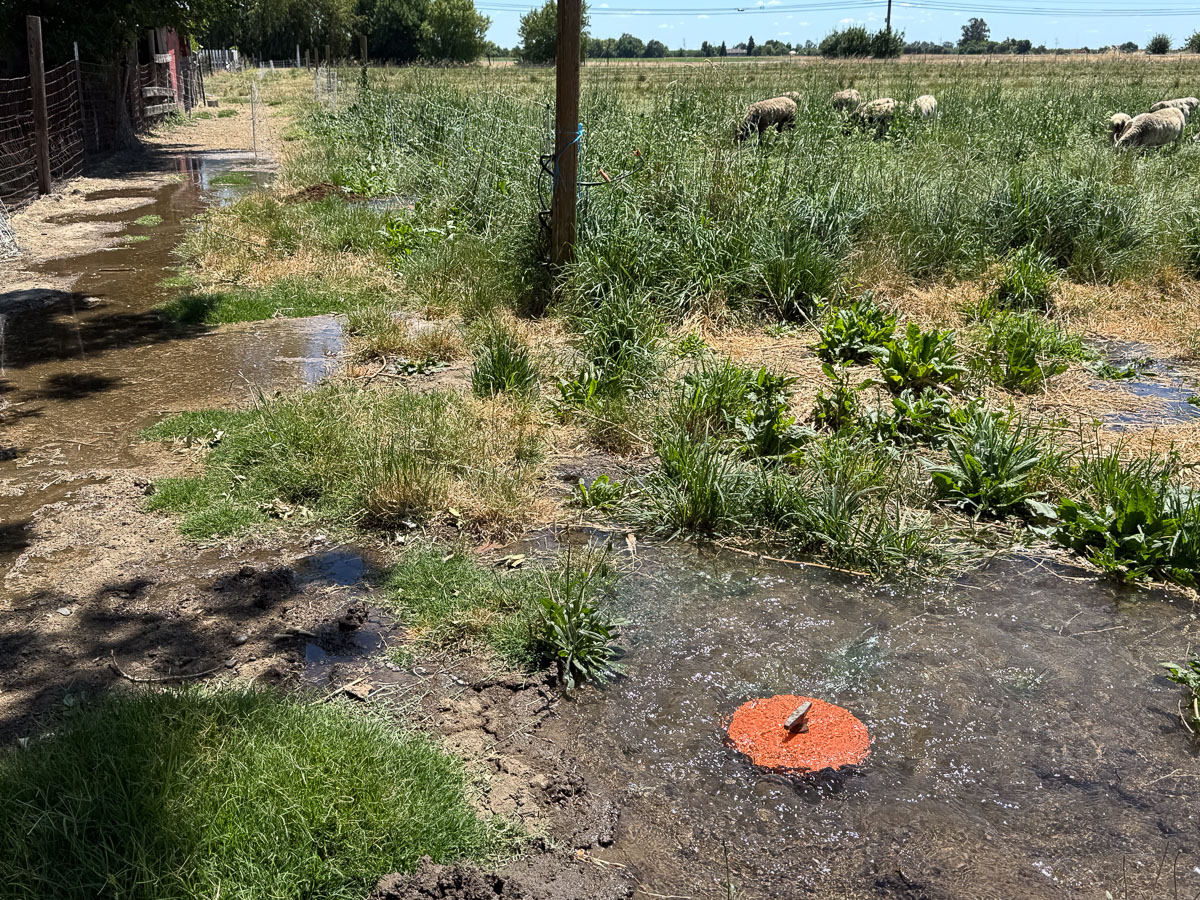
Moving to the south, there is a flooding issue at #8. One of the ways to control this is to have more valves open and lessen the water pressure. Remember, this was more water than. before. I’m learning as we go along. I used the wheelbarrow and took some of that fill that was near #7 and made a border here.
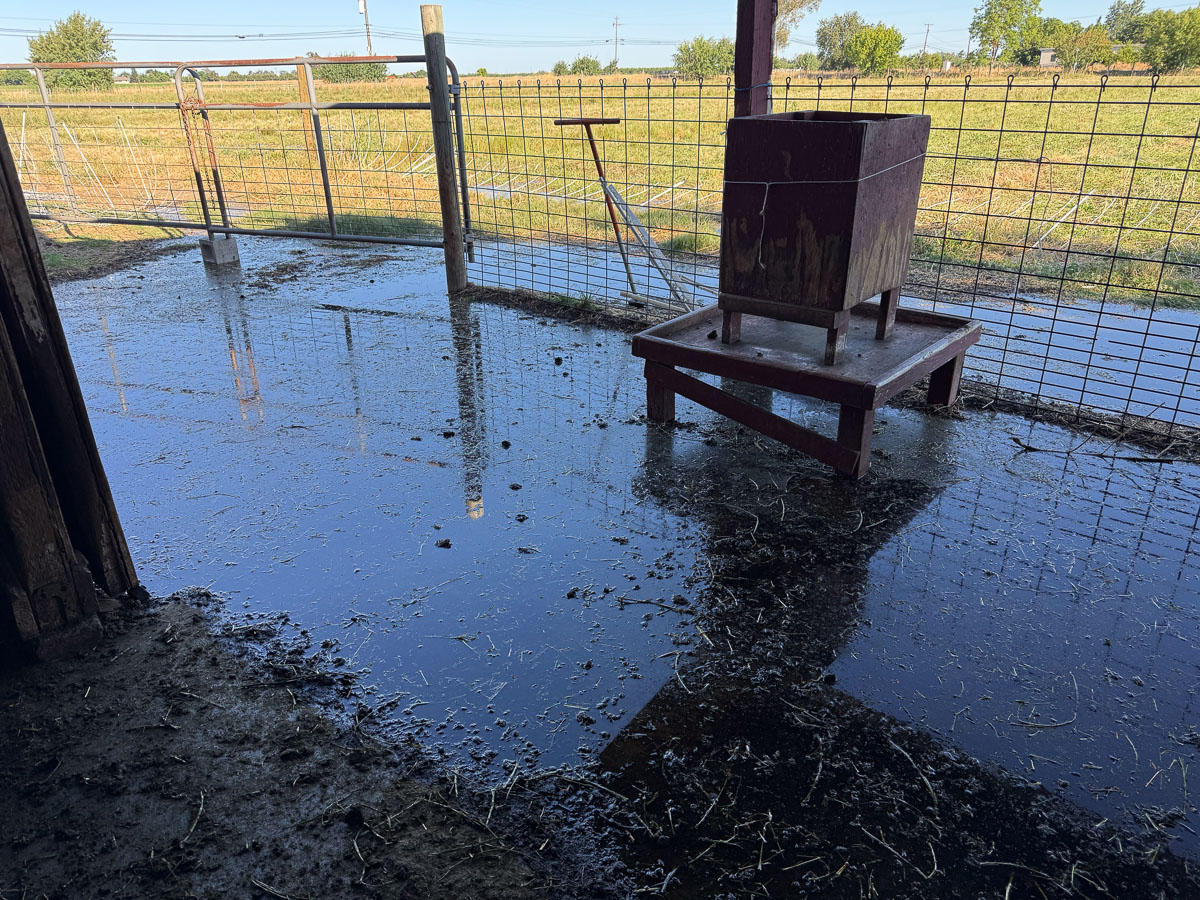
Later that evening I saw that with this much water #11 and #12 flood the lane at the barn.
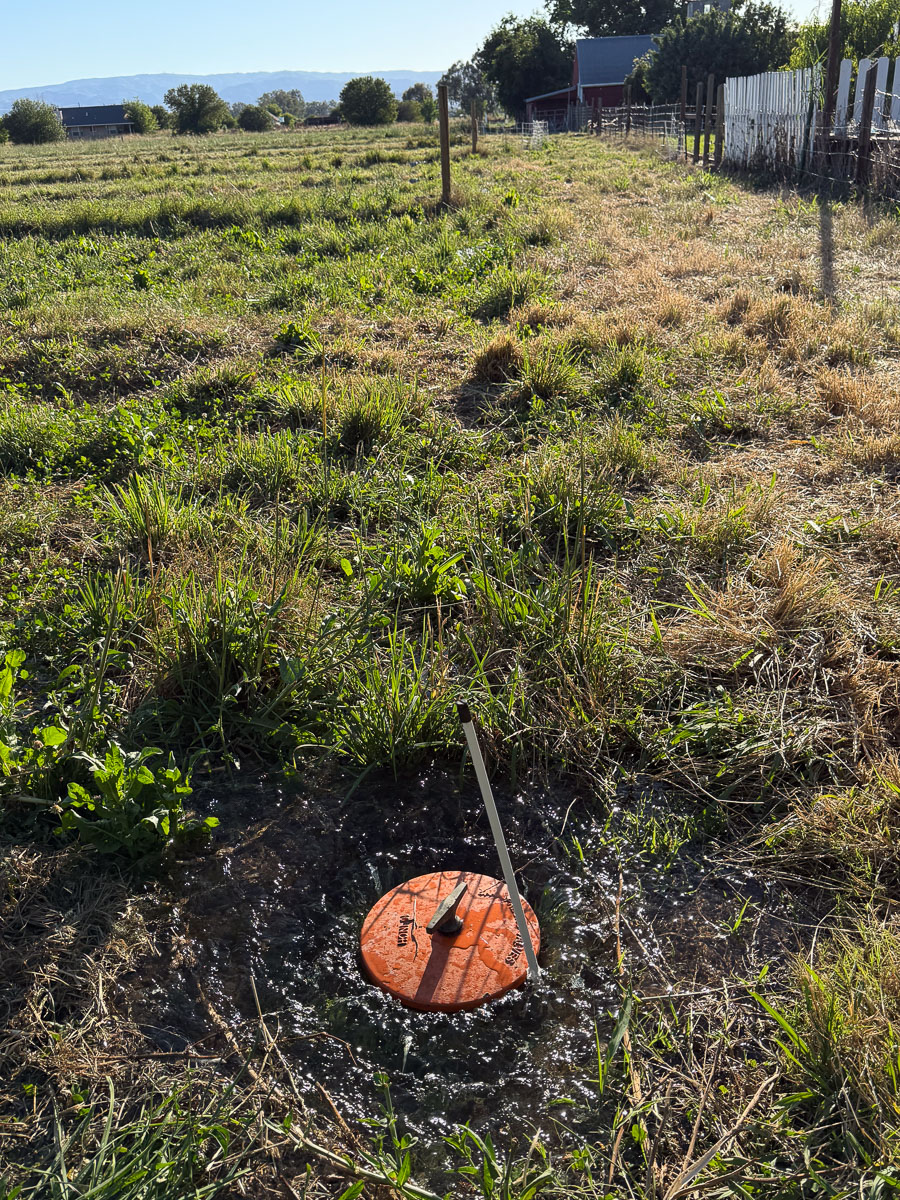
Almost all the lower paddocks were finished by the evening. I opened the last three around 6 p.m. The water wouldn’t be turned off until the SID water tender was on site at 6 a.m. It still flows into our ditch for another hour after that.
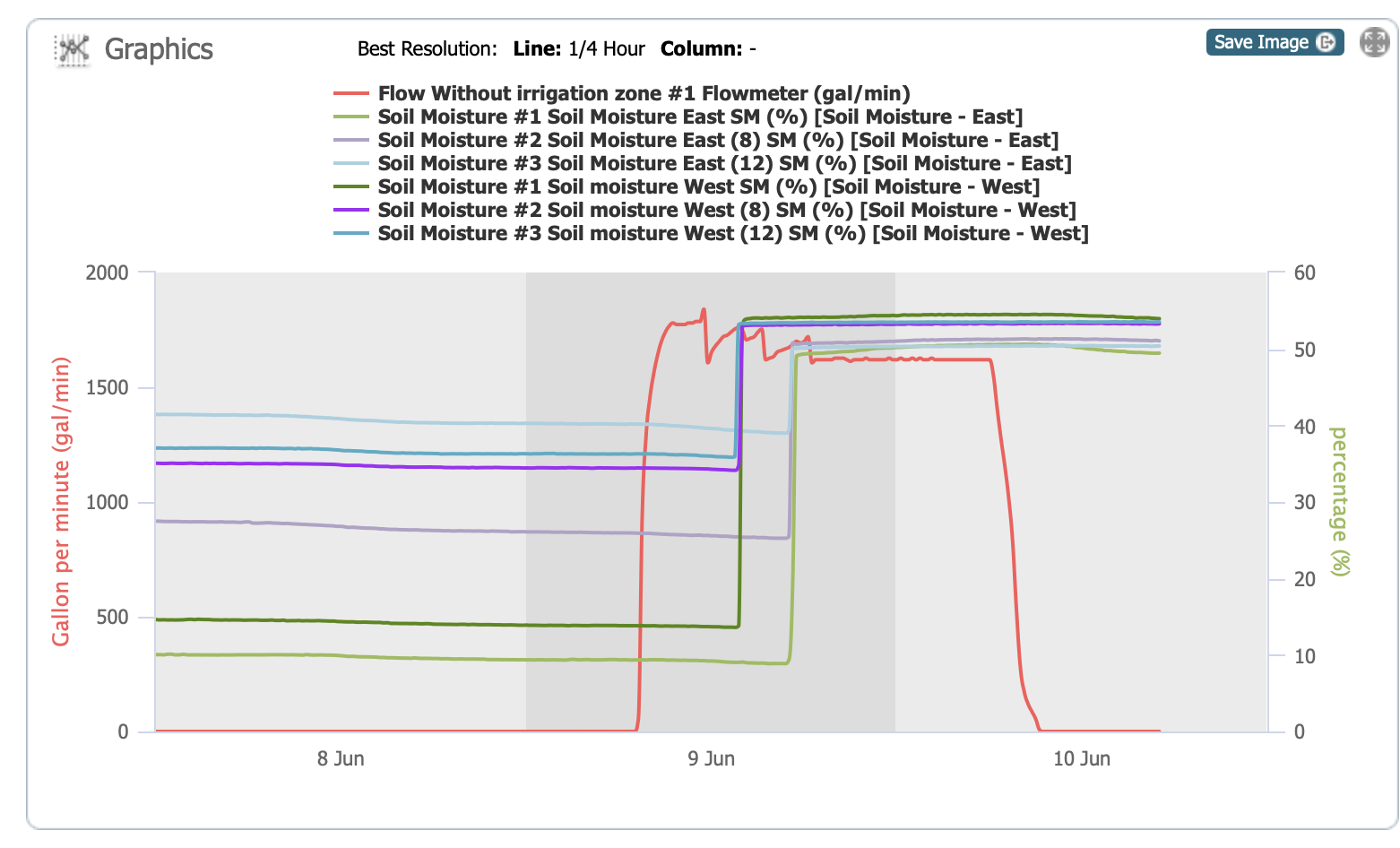
Here’s a closer view of yesterday and today. We’ll need a better plan next time.

