 Saturday morning I met up with a Ravelry friend and her crew for their annual tailgate breakfast before the show opened. They went to get in line and get organized for the day and I went in the back gate to take care of sheep.
After my minimal chores I went out to see the show. I showed photos of sheep at MSWF in the last post. ,but for some people fiber shows are mostly about shopping.
 The number of people at this show is amazing. This was probably an hour after the gates opened and people were still pouring in. (I can’t help but think about the fool who, when I was involved with organization of Lambtown in Dixon, insisted that the beer booth would be the big money maker and didn’t give much importance to the activities for “ladies with the quilts” [did he even say ‘old ladies’?] )
 The main street. Food on the right. Sheep and vendors on the left. More vendors behind me and more in the distance.
 My first stop was the Fiber Arts show. I was surprised to see this award for Best Woven Article on the shawl I entered in the commercial yarn division. This is Anderson Ranch yarn with a natural warp and black walnut-dyed weft.
 I had high hopes for the handspun V-shawl that I finished just in time for the show. It got second, but there was stiff competition…
  …very worthy of a win in this class. (There is a connection for some of you to this shawl if you read the card by kbdoolin.)
 I had also entered photos. (I had a whole suitcase devoted to the weaving and photo entries–good thing that Southwest allows two checked bags.) Another surprise!
After checking out the entries I started wandering through the grounds. The main exhibit hall was packed with people. It’s hard to even get around.
 This is where the t-shirts, caps, etc. are sold. The line zigzags a couple of times with those barriers keeping ordered. I didn’t even try to go in there on Saturday. Writing this post reminds me that I did go back on Sunday and bought a t-shirt. There were only a few left from this year’s festival. I must have left the bag somewhere because it didn’t come home with me. 😦
 Outside the t-shirt building.
 The fleece show.


One booth had thousands of buttons, all sorted by color. I was drawn to the soap sale display. Notice that the wheel has two flyers–there were dozens of wheels, looms, etc in the Auction Tent. Saturday afternoon would be the auction of spinning/weaving equipment. On Sunday there would be an auction of sheep equipment.


Signs seen in the barns and vendor areas. This is one reason it is fun to go to a show like this–the vendors are all different than those I see all the time on the West Coast.
 Jacob horn necklaces.
  In the parking lot.
 Unique “flower” arrangement.
 Speaking of friends, another great thing about this trip was meeting up with people who also raise Jacob sheep. Some I had met before and others were just names from Facebook. Now I have met them in person.
 Scottish Blackface.
 Lincoln Longwool.
 Kerry Hill.
 Leicester Longwool.
 Tunis.
 Herdwick.
 Hog Island.
 Clun Forest.
 Shropshire.
 Border Leicester.
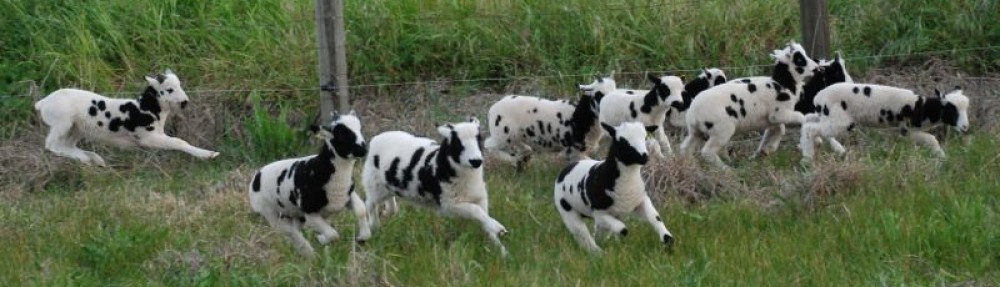
 And of course, Jacob. This is not my ram. This one had never been shorn.
 My sheep were shorn in February which put them at a disadvantage at this show.
 This is Jolene and Saffron waiting for the show.
 Andy, who drove the sheep filled trailer out here, offered to show one of the ewes.
 He is an experienced showman, but I’ll bet this is the first Jacob he has shown.
 My sheep place in the middle. The ram, Serrano, placed 4th out of 7 or 8. Jolene was 3rd and Saffron was 7th in a class of about 10.
 I hung around the Fine Natural Colored Wool show in case Andy needed help. This is one of Terri M’s fleeces. Color like a Jacob, but much finer.
 Look who was also on display. Making their debut, these are 50% Valais Black Nose sheep, the first generation in a breed-up program with the goal of producing almost 100% purebred sheep.
 Elegant and cute at the same time!
 Seen in the parking lot!
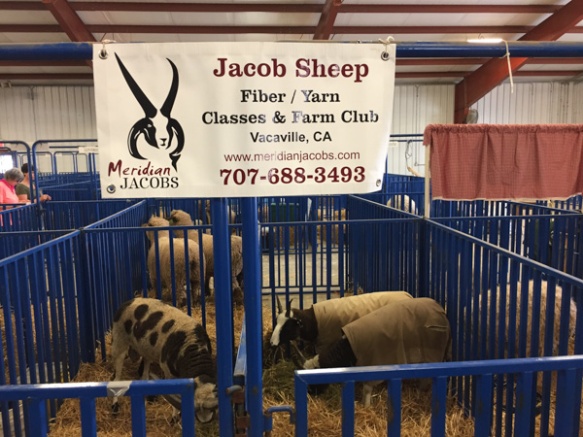 I got them situated near the other Jacob sheep and hung my newly made sign (that includes my location). I delivered my entries in the fiber and photo contests (a whole suitcase full–it’s a good thing that Southwest allows two free bags). Then I went exploring.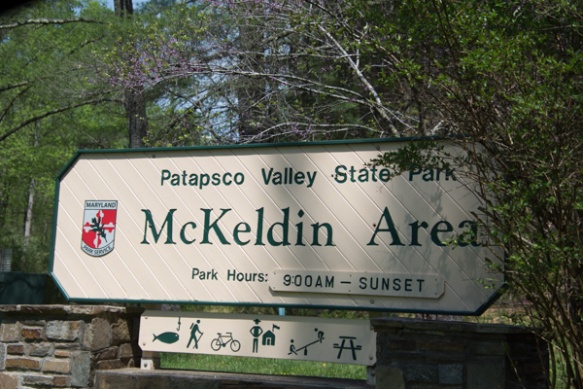
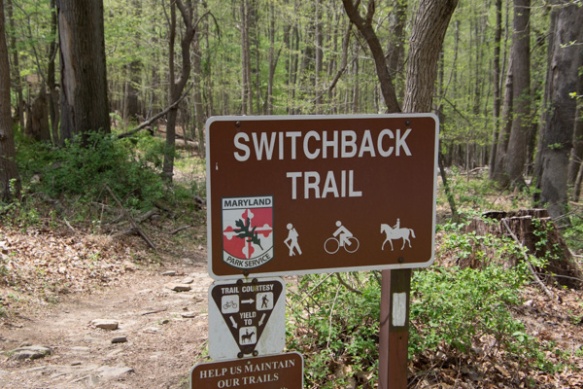
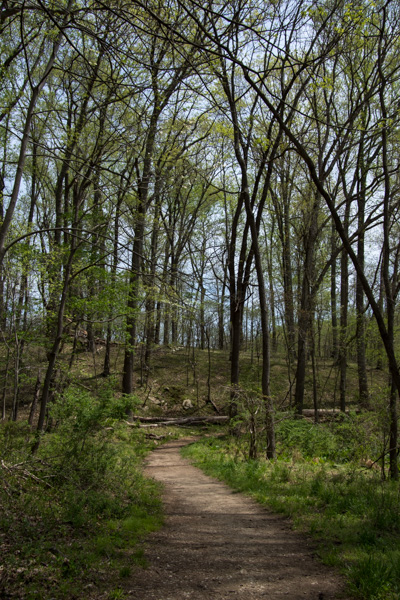 This was a pretty area. It was “mixed use” including developed playground and lawn areas, but I stuck to the trails. I was not dressed for the weather. According to the news it was 90 degrees on this day and we haven’t been that hot at home yet. Too bad I hadn’t brought shorts…although the ticks that I found later made me think that maybe jeans were better anyway.
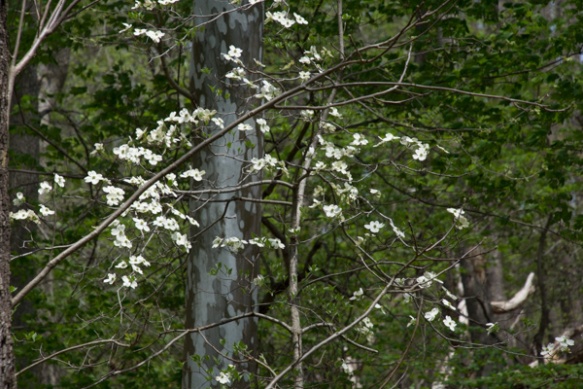 Dogwood. That’s one flower that I knew.


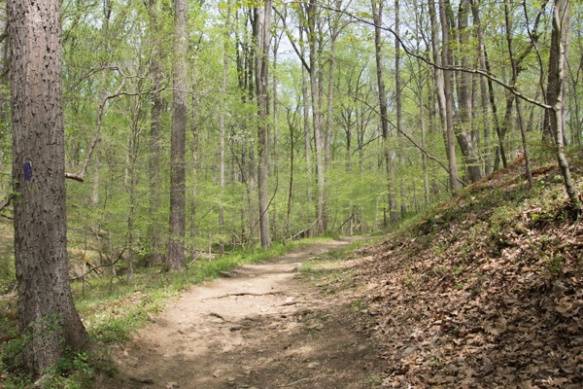 More of the trail.
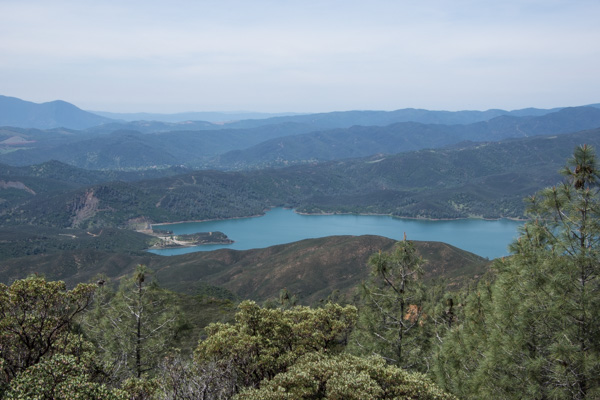
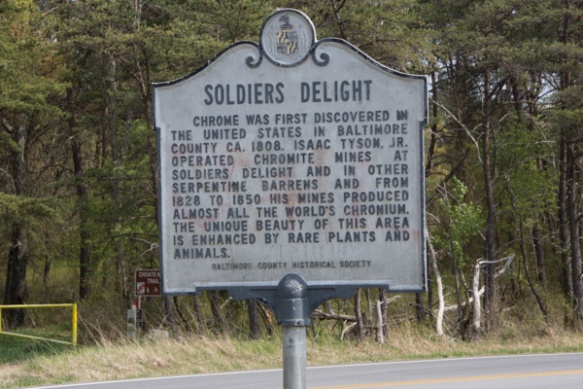 No one knows for sure why this place is called Soldiers Delight but the purpose for preserving it is the unique geology and ecosystem.
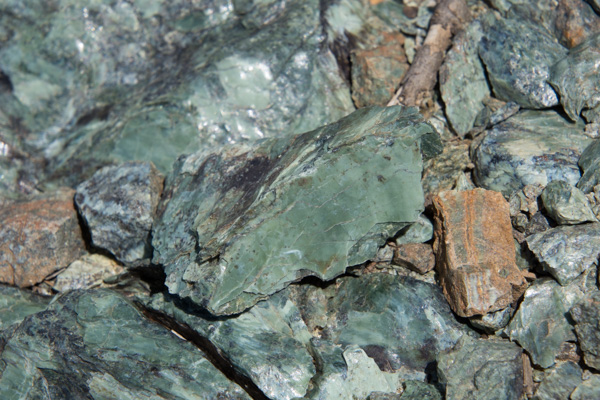
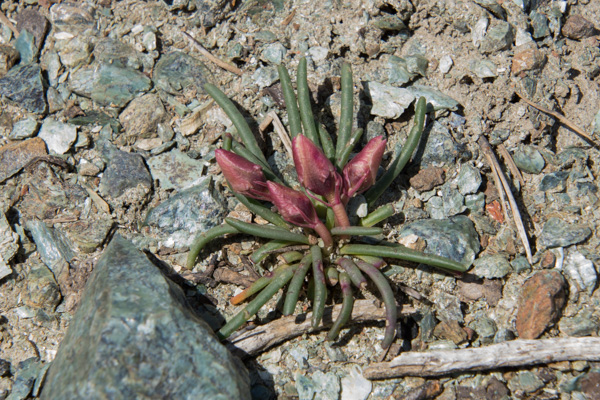
 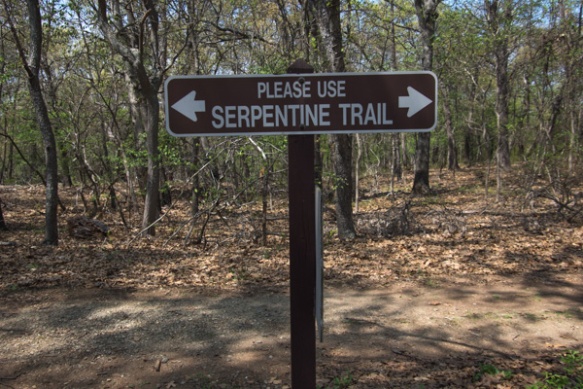 From Wikipedia: “The site is designated both a Maryland Wildland (1,526 acres) and a Natural Environmental Area(1,900 acres) … The site’s protected status is due to the presence of serpentine soil and over 39 rare, threatened, or endangered plant species along with rare insects, rocks and minerals.”
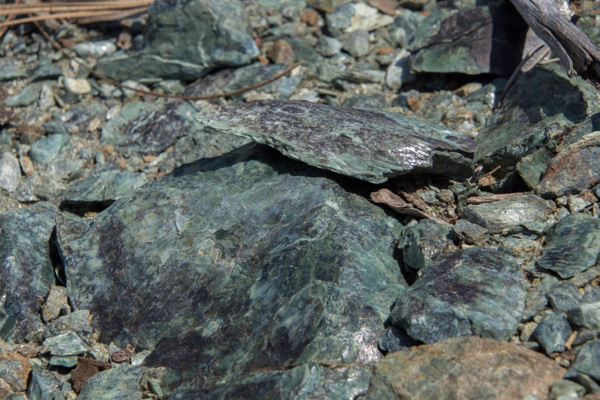
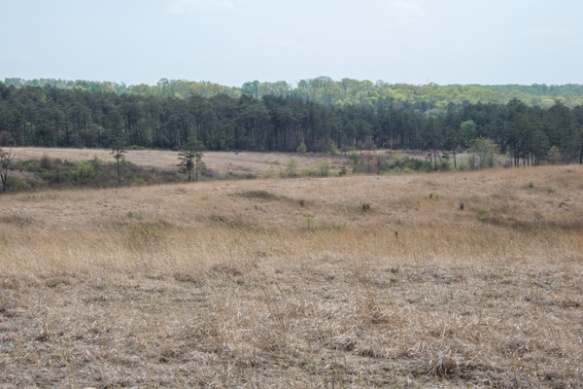 “Weathered serpentinite is dissolved rock, transformed into thin, sand and clay poor soil which is easily eroded. This creates a land surface which is stony, unfertile and sparsely vegetated and is the reason that the term “serpentine barren” is used to describe these areas.
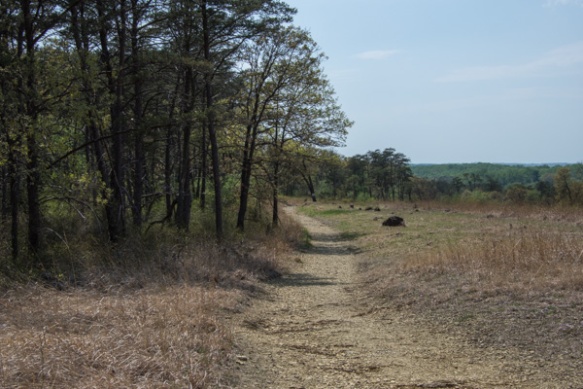 Signs explained that “the serpentine grasslands and oak savanna systems are now imperiled due mainly to the lack of American Indian and lightning fires which are critical to this fire-dependent ecosystem…The oak savanna ecosystem is one of the rarest communities in Maryland.” Over 90% of the less than 1000 remaining acres lies within Soldier’s Delight NEA.


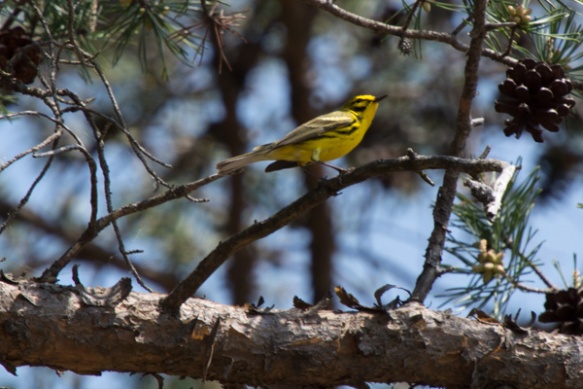 Praire warbler.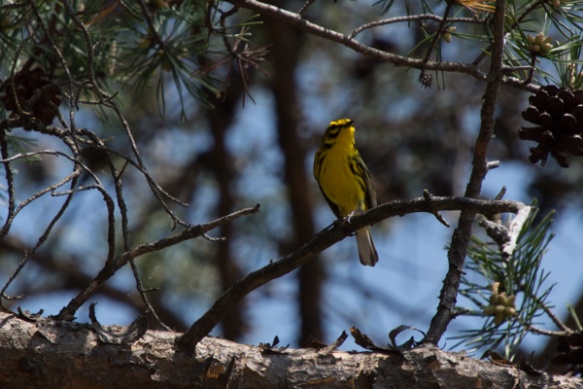
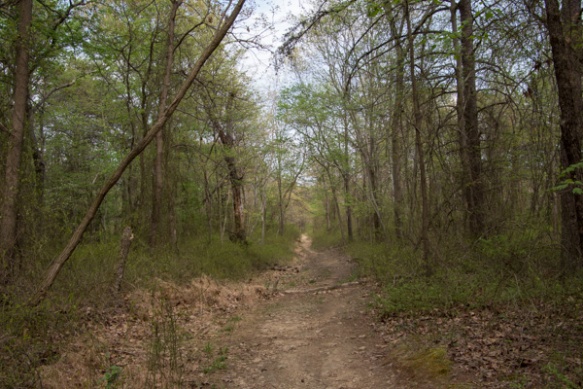 I hiked the 2-1/2 mile trail around the grassland area and came back up to the main road. I decided to take another trail that went to the chromite mines. Half way through this one I started to think that maybe I should have brought water…and food. I realized how hungry and thirsty I was. It was already about 3:30. Did I say that it was very hot? I started to have visions of having to be rescued. Or not–how would anyone know where I was? I also found a tick on my hand. Then I started to feel like there must be ticks everywhere. Forget those mind games. I was still enjoying the new landscapes.
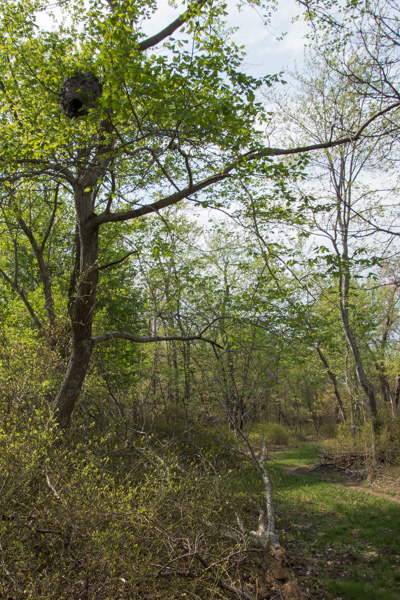 I happened to look up and saw this.
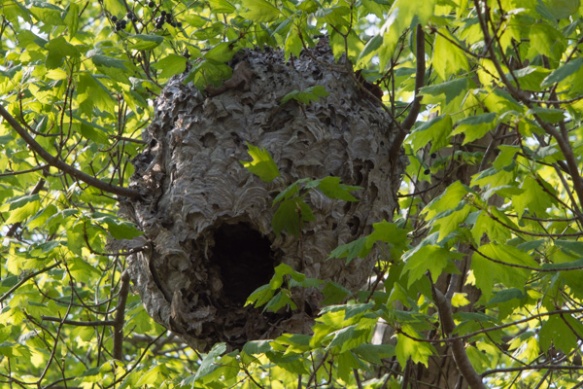 Here is a closer view.
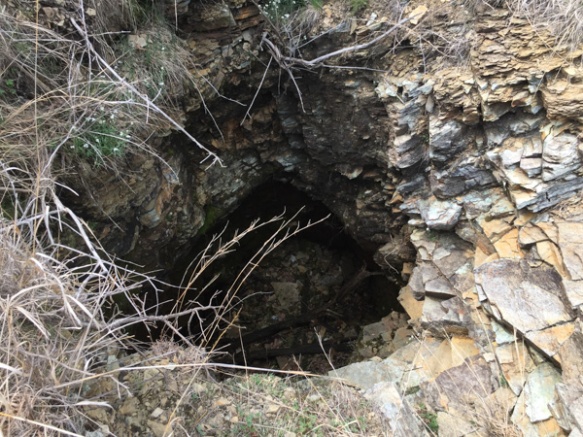 Along the way I found the Choate mine that operated from 1818 to 1888 and for a brief period during WWI. I had expected something bigger when I read the sign pointing to a pit mine (picture the massive mines I’ve seen in the west). It’s hard to imagine that it was a few holes like this produced the world’s supply of chromium.
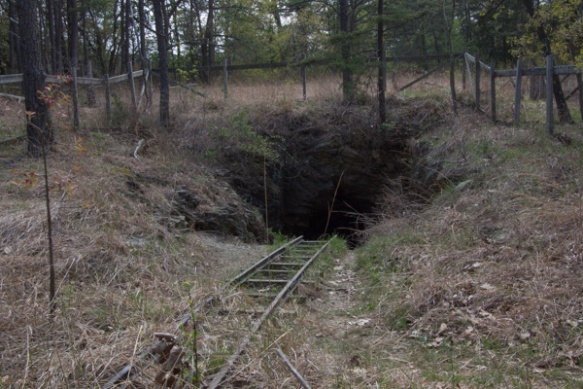 This is one of the other mines. I did make it back to civilization without mishap (and only one other tick).
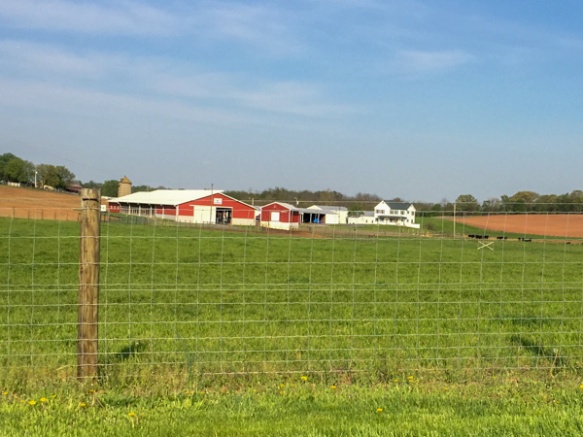 I didn’t want to take the main highways because I love seeing the farm country.
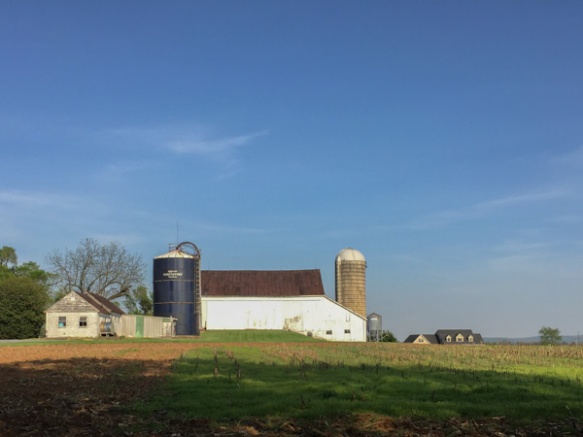 I pulled over in a couple of places just long enough to get photos with my phone.
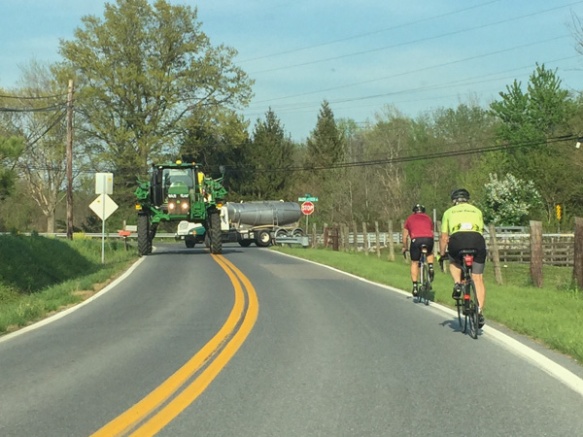 You can’t tell from this photos but that tractor is big enough that the car I’m driving could have almost gone right under it. I don’t know what crop that is for.
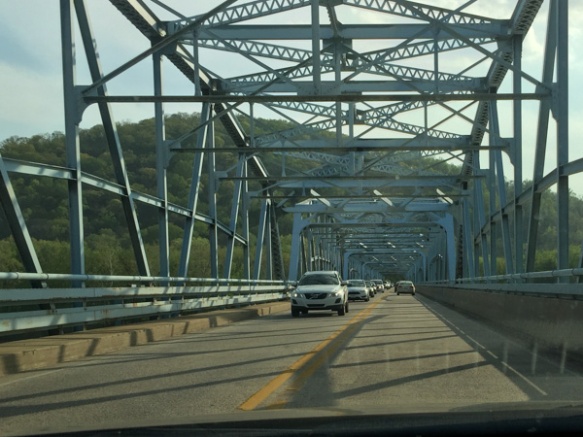 Crossing the Potomac River. I crossed a couple of times before I found the parking area for the National Historical Park at a place called Point of Rocks. (Actually I parked elsewhere and finally found this when I started walking toward the river.)
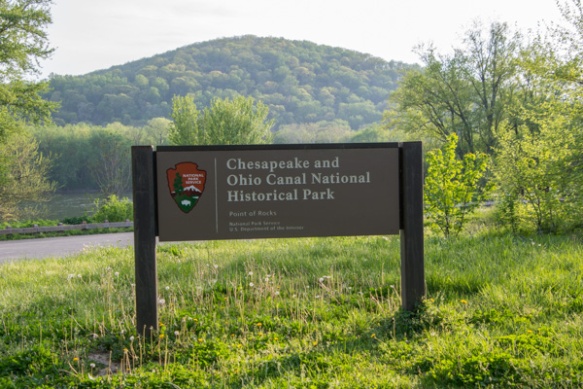 The C & O Canal follows the Potomac River for 184 miles and was used for about 100 years as a way of transporting lumber, coal, and agricultural products.
 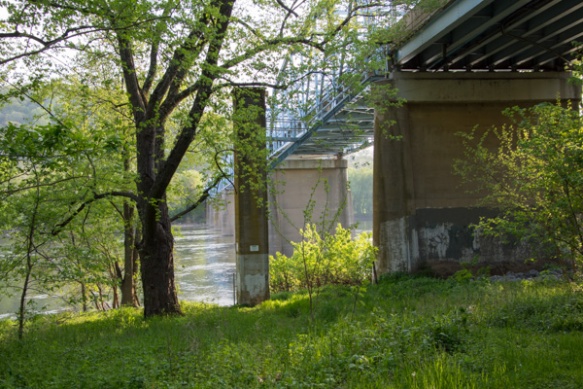 The bridge from below.
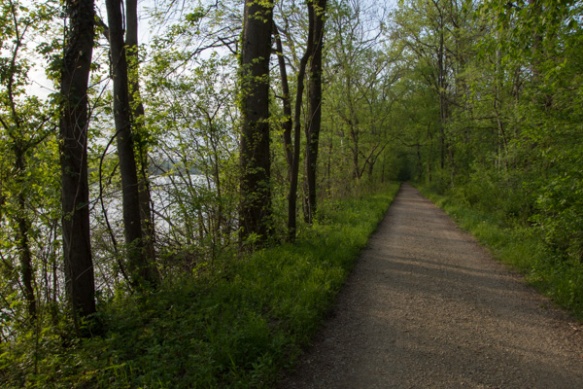 I walked along the towpath for an hour or so.
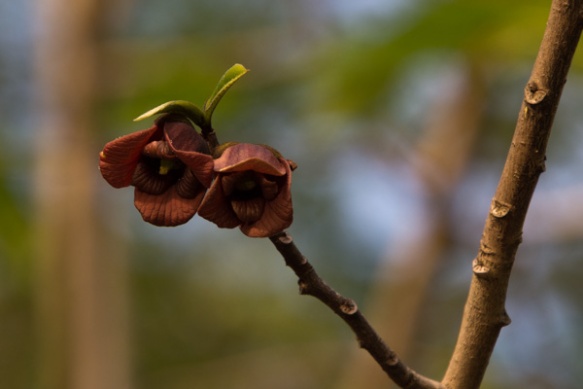 Here is a tree I haven’t seen before. Flowers on the pawpaw tree.
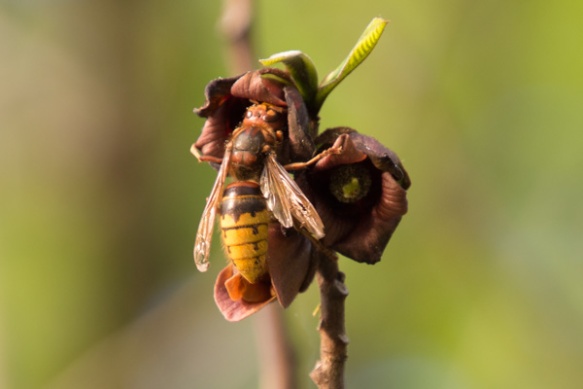 I don’t know what kind of insect this is but it is a big one.
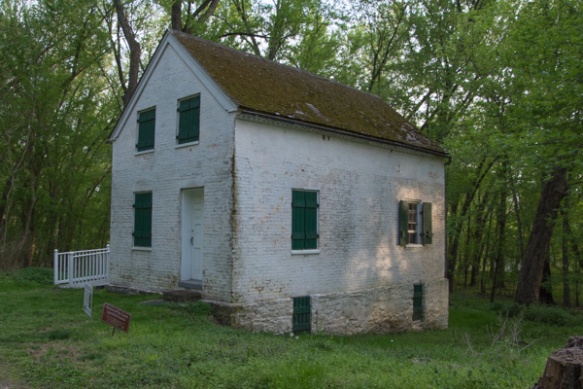 There are some lock houses still standing along the canal. These were houses provided to the locktenders who would be available to operate that lock 24 hours a day. This house, built in 1837, has been fixed up and is available for rent.
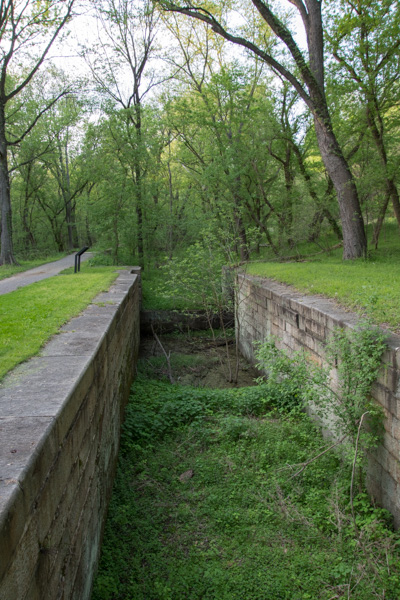 A view of the lock.
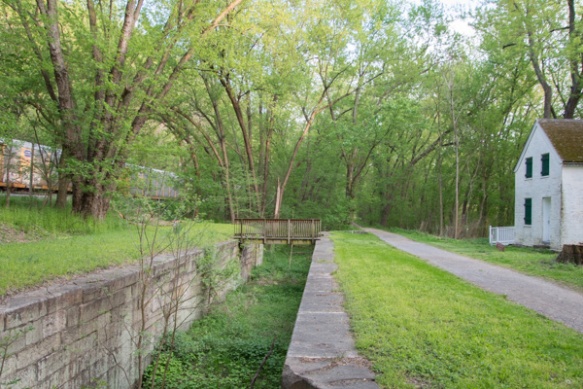 This photos shows the scale and proximity of the house, the canal and the railroad. Point of Rocks is famous because it is where the battle for the transportation rights played out. The mountain on one side and the river on the other left a narrow strip of land. “Both the C&O and B&O [railroad] fought in court for primary access to this “point of rocks.” The C&O won but the two companies compromised, sharing the narrow passage from here to Harpers Ferry.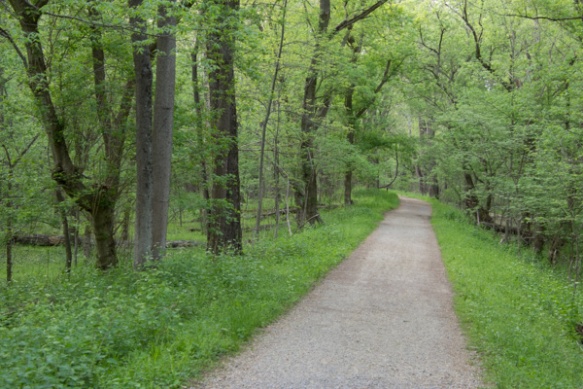


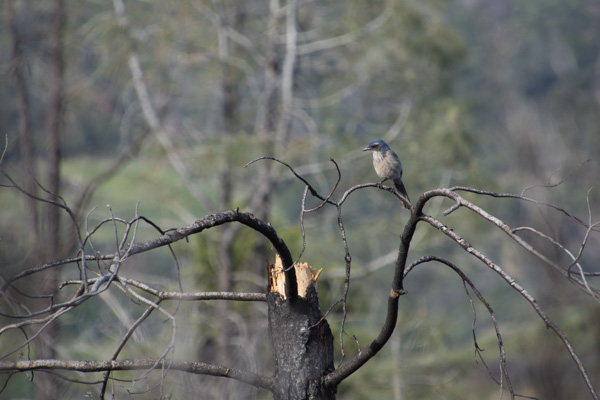
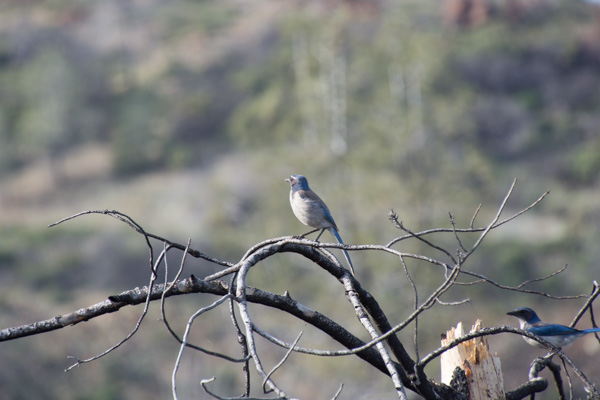
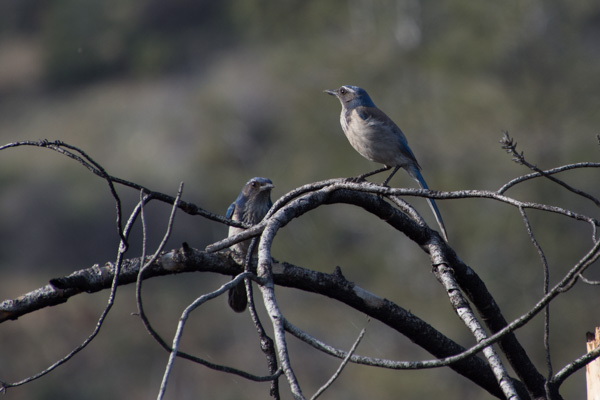
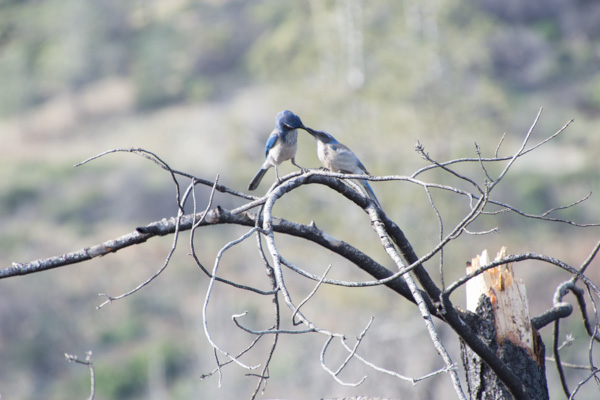


 Goat paparazzi.


 I’m not sure that I’d call this mannerly but everyone had fun.
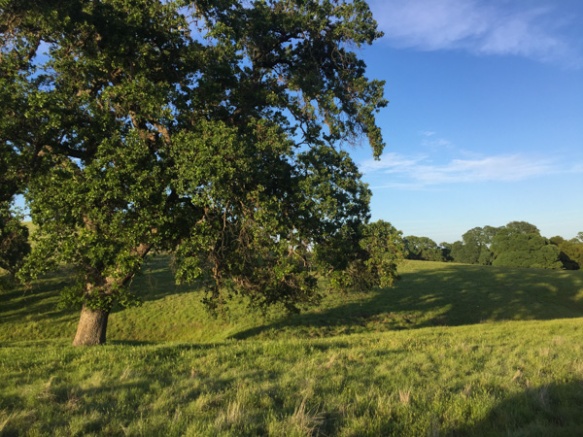 After a rainy and overcast week the sunny day was a welcome change and the ranch was a beautiful place to spend the day.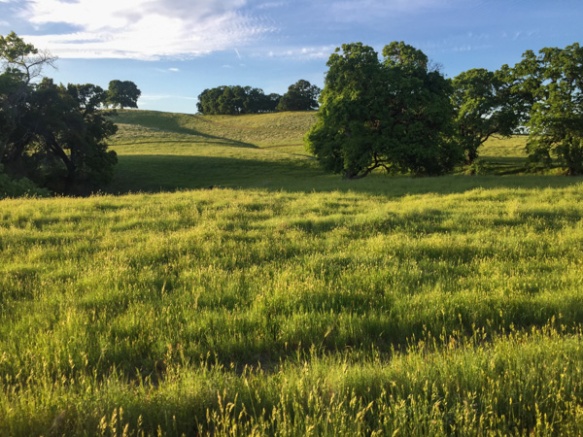
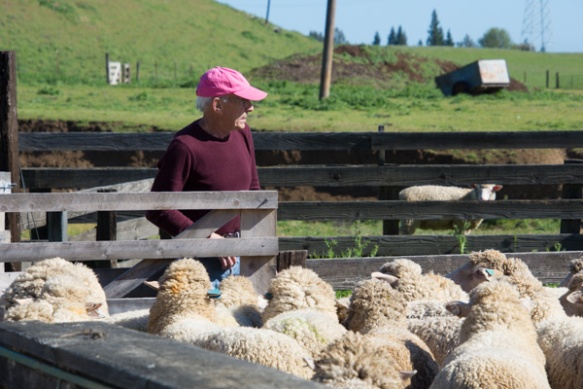 The sheep were in pens when we got there.
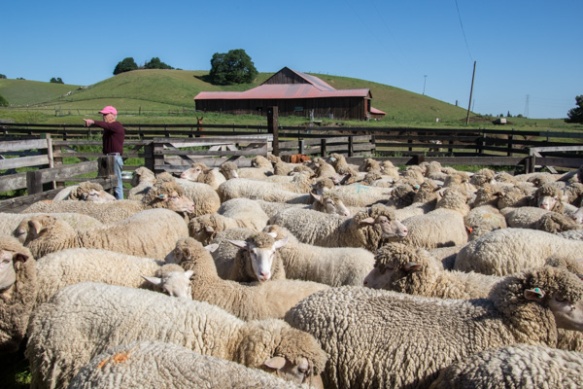 We helped to move them toward the lane into the barn.
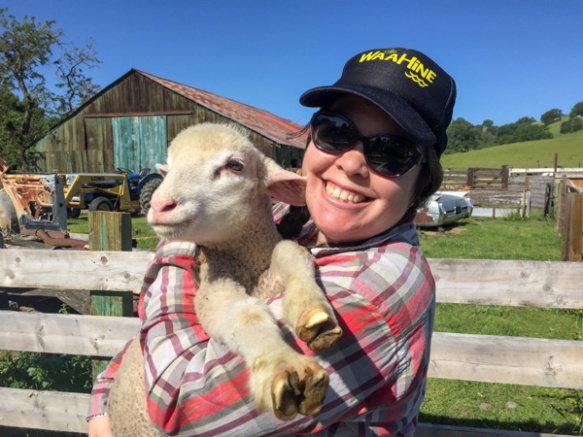 Most of the lambs were born much earlier but there were a few late lambs too.


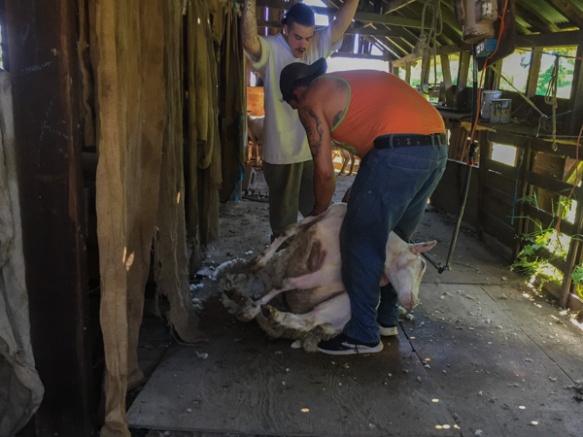 The shearer works in the old barn where there are signs of what shearing would have been like in the “old days” when there would have been hundreds of sheep to shear in the day.
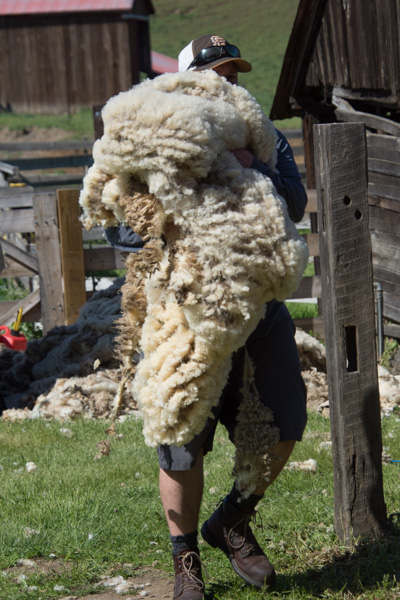 We brought each fleece to the skirting tables…
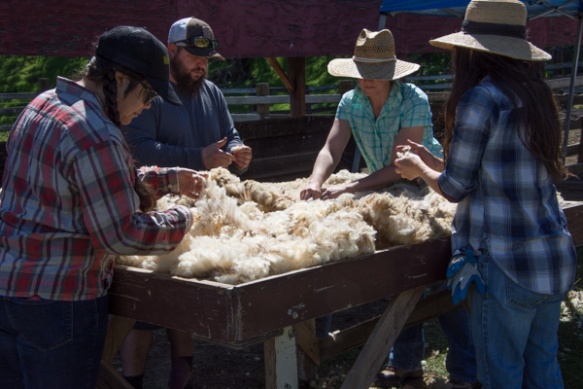 …and inspected them for strength, length, and VM (vegetable matter)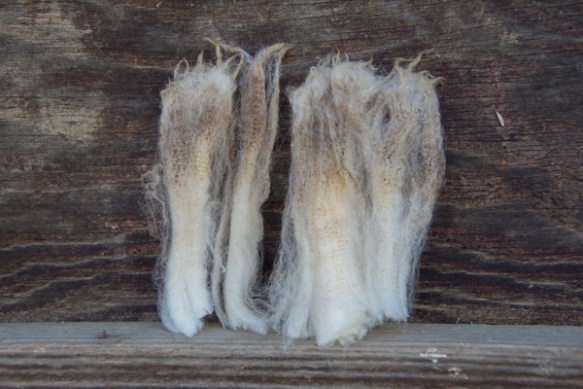


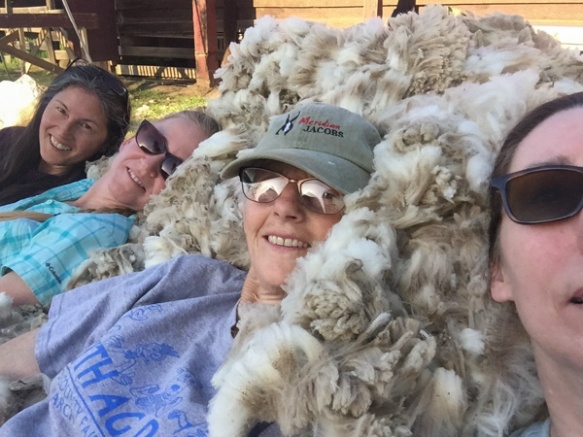
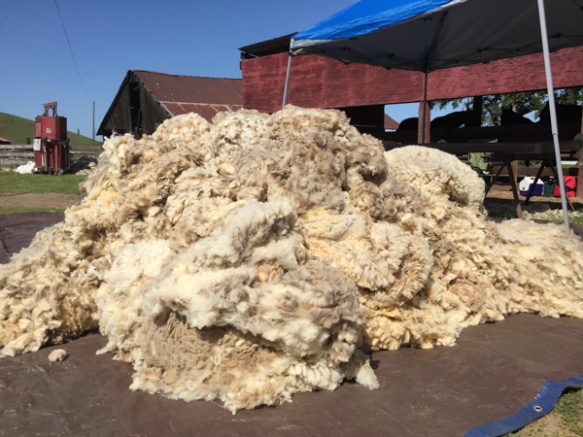 I ended up with 270 pounds of beautiful fleece.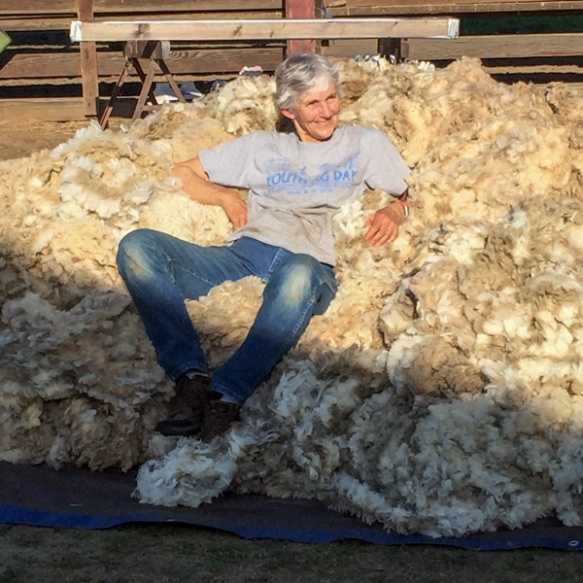
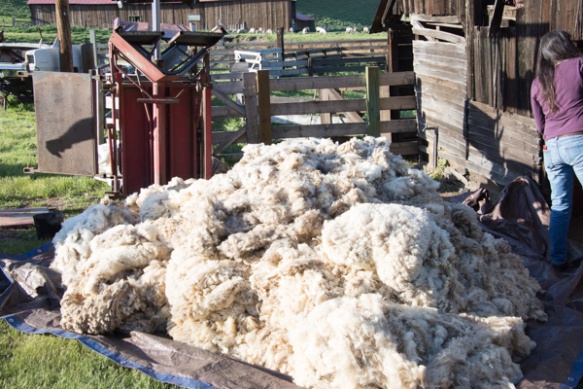 We dragged it on a tarp over to the baler…
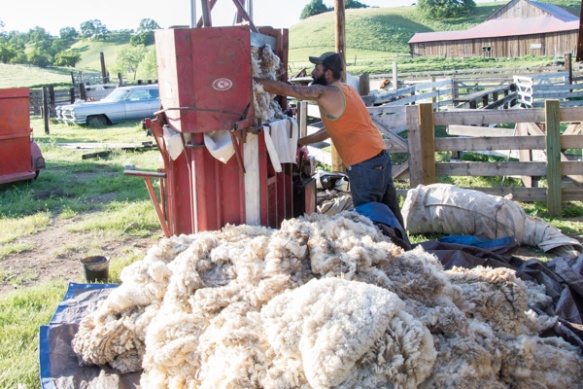 …where the shearer baled it.
 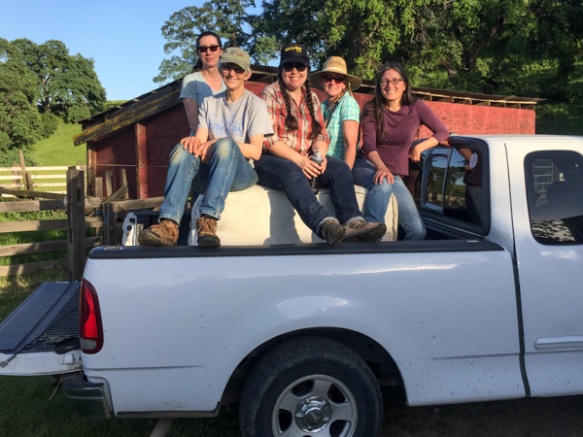 This is our 270 pound bale in the truck. I am grateful to Farm Club members for helping out on this day. It not only made the work easier, but it was fun to spend time together.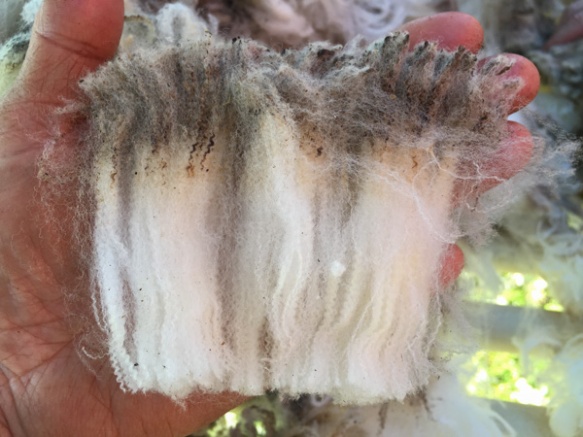
 Farm Cub members are invited to be vendors. This is Jackie with Sheep to Shop.
 These are some of her handspun, handknit pillows.
 Colleen has Fiber Confections.
 She usually sells at the Davis Farmers’ Market.
 Gynna makes socks.
 Here are some of her socks knit from my
  Joy sells dye plants…
 …ready to use for dyeing and ready to grow. Her butterfly is made from a


 Of course, it’s all about the animals, especially the lambs.
 Betsy, Mary, Sue, and Marina helped children pet lambs.
 My little goats were an added attraction this year since Julie, who usually brings goats and bunnies, couldn’t be here.
  This fence helped keep the kids in one place. Moms could relax temporarily.
 I saved the small field behind the shop so that the sheep would be enticed to come to fresh pasture for the weekend.


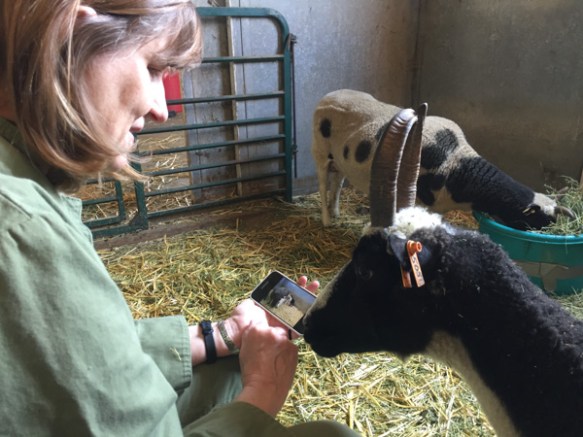 Now I find out that she likes watching videos with friends.
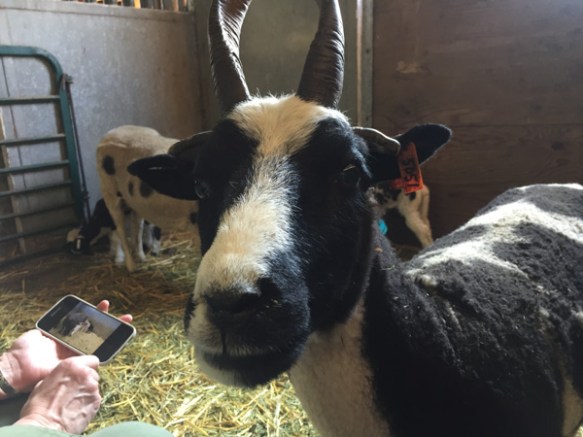 “Don’t you like watching videos with friends?”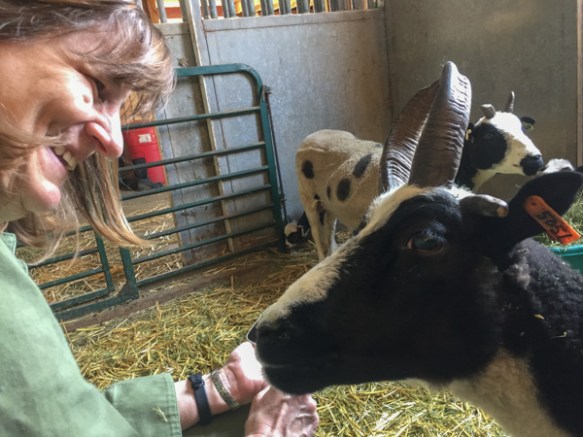
 “Yes Jade, you have nice white teeth.”
 “You too, Lisa”

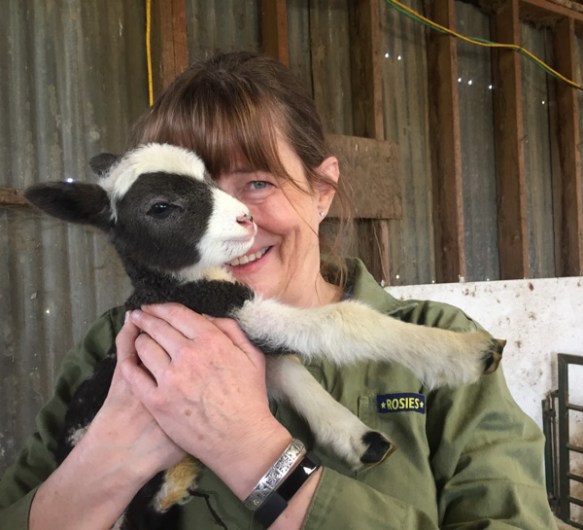 Zorra had plenty of cuddling while she was still in the lambing area with her mom. Lisa is a lamb cuddling Pro.
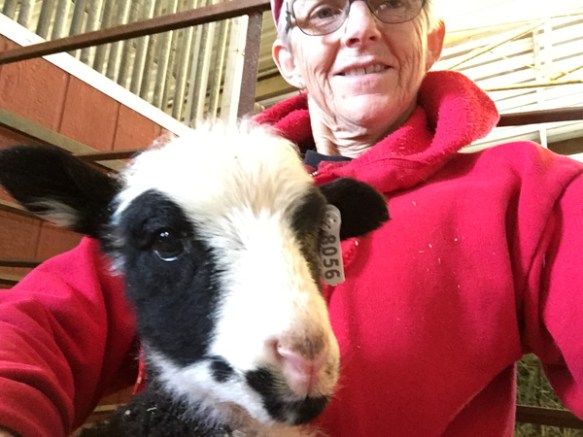 This is pet sheep Jade’s lamb (and me).
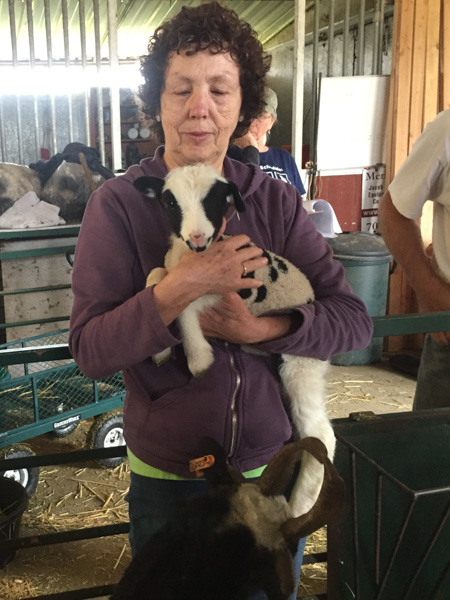 This is her again being held by Peggy. We’d really like her to be friendly too.
 This is Zorra again with Sumi.
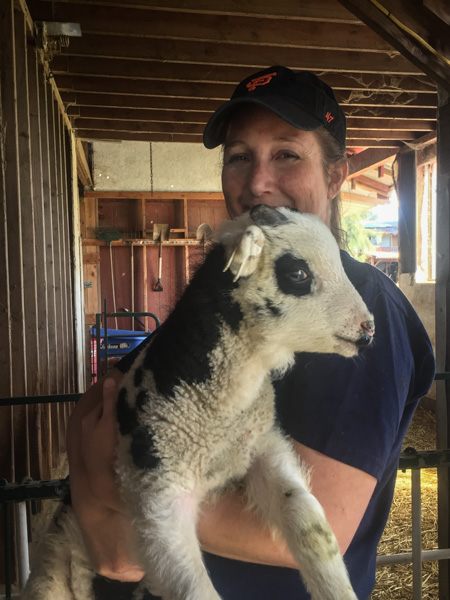 As the lambs get a little older we have other Farm Days. This was Betsy’s first day on the farm and she jumpred right in holding lambs as we ear tagged and castrated.
 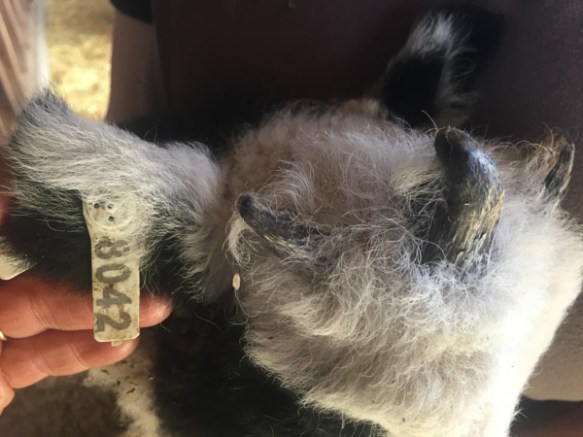 I don’t castrate many because it’s hard to know how they will grow out and which might be a great flock sire for someone. Some are easy though–too much or too little color to fit within the 15-85% breed standard. This one’s horns are already touching at the base under that hair. As the horns grow they will fuse and not grow well separately.
 Marina and Maggie (no photo) helped catch lambs too and Mary handled the clipboard. The lambs were all tagged with their white ID tags right after they were born but we put added a colored tag on Farm Day. I like to use a second tag for back-up ID if the first one falls out and also to color code the sire. It’s interesting to keep track of that and it also helps to find a lamb when you’re looking for one among 75. You can narrow it down some if you have a color to look for.
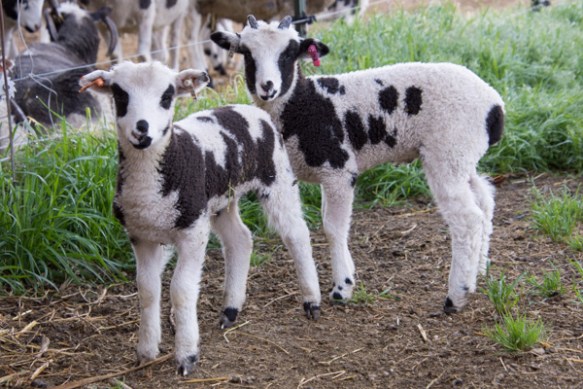 This year Cayenne’s lambs got orange tags. Pink tags go in all the lambs that have been castrated.
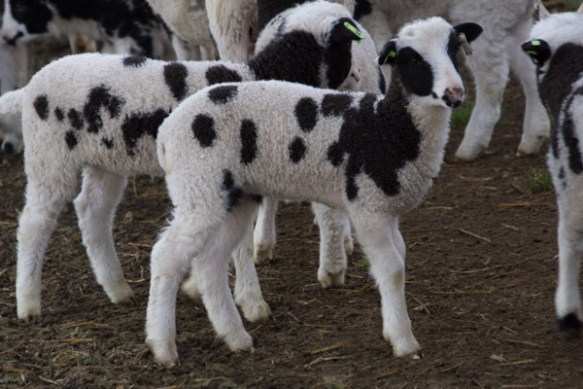 Green means these are Buster’s lambs.
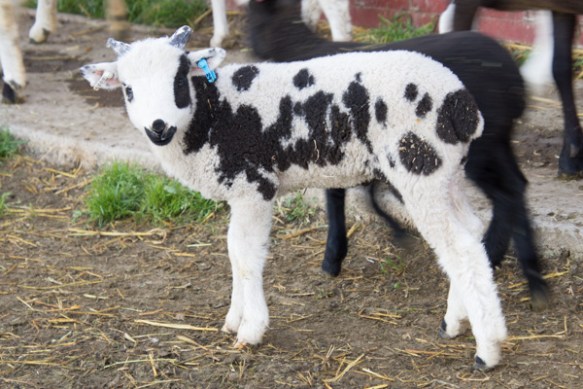 Blue was for Catalyst.
 Peyton’s lambs are obvious so don’t need an extra tag.
 After we tagged all the lambs Marina and Betsy stayed to help me set up the pasture for the sheep. I had put the sheep out for a few days but hadn’t cleaned and moved the water trough.
 We walked around the pasture and took stock of things. I always point out the issue that I have with the dallisgrass that is out of control. That’s what all that dry grass is. I’d much rather see green grass growing. The whole pasture was looking somewhat dismal from a growth standpoint. At this point we had just had March rain after two very dry and cold months. I wasn’t seeing much growth–at least not enough to feed 55 ewes and 75 lambs.
  We spotted this grass that I don’t recognize.
 I took photos to send to a friend of Marina’s who she think might recognize it.
