We left home Tuesday morning and I shared photos in this post. It was getting late in the day when we got gas in Ely, Nevada and we took time to look at the map. We found a place to camp in the Ward Mountain Recreation Area a few miles out of town.
Here is the campsite in the morning. Dan was still in the tent.
I went for a walk as the sun was coming up.
We packed up and got to Utah about 9:30.
We got off the main highway to drive the original road through the mining town of Pioche. This sign describes the tramway, the remnants of which are still here on the east side of the road.
This is the tramway that facilitated movement of ore from higher up the mountain (behind us) to the valley below.
This is a closer view showing the cogs that held the chain or cable that carried the buckets. The structure that is on the horizon towards the left of the photo is one of the buckets still on the cable.
Our first stop where we planned to spend some time was Cedar Breaks National Monument. We checked out the visitor center first and then went for a hike.
All the views of the breaks are incredible. Do you notice that light spot just right of center on the bottom of the photo. It sure looked like a rock for the longest time.
Then I saw it for what it was – a hole through that wall. I still see it as a boulder part of the time.
Closer up view showing the colors in the rock walls.
Marmot along the trail.
View of the ridge where we had been walking.
We left Cedar Breaks to get to Bryce Canyon before night. Flock of sheep and their herder along the road.
It’s not easy to leave when you have animals to care for. I am fortunate that there are long-time Farm Club members who have become good friends, and they are willing and able to spend a few days at the farm. Three friends organized the dates to suit their schedules so I know the animals are in good hands.
Anytime Dan and I will both be gone I spend at least a day getting organized. I needed to get the pasture set up to make it easier to graze. This has been “on the list” whether I was leaving or not. So Farm Club members came Saturday to help with that project and I shared that here.
This is on the list of things to fix, but there was no time to do it right before we left. This is the ram pen shelter and they have been enlarging the holes in the plywood. There is a 2×6 board on the inside so I haven’t been worried about the rams getting out, but do I want to take a chance when I’m gone? So I tied a metal panel to the outside.
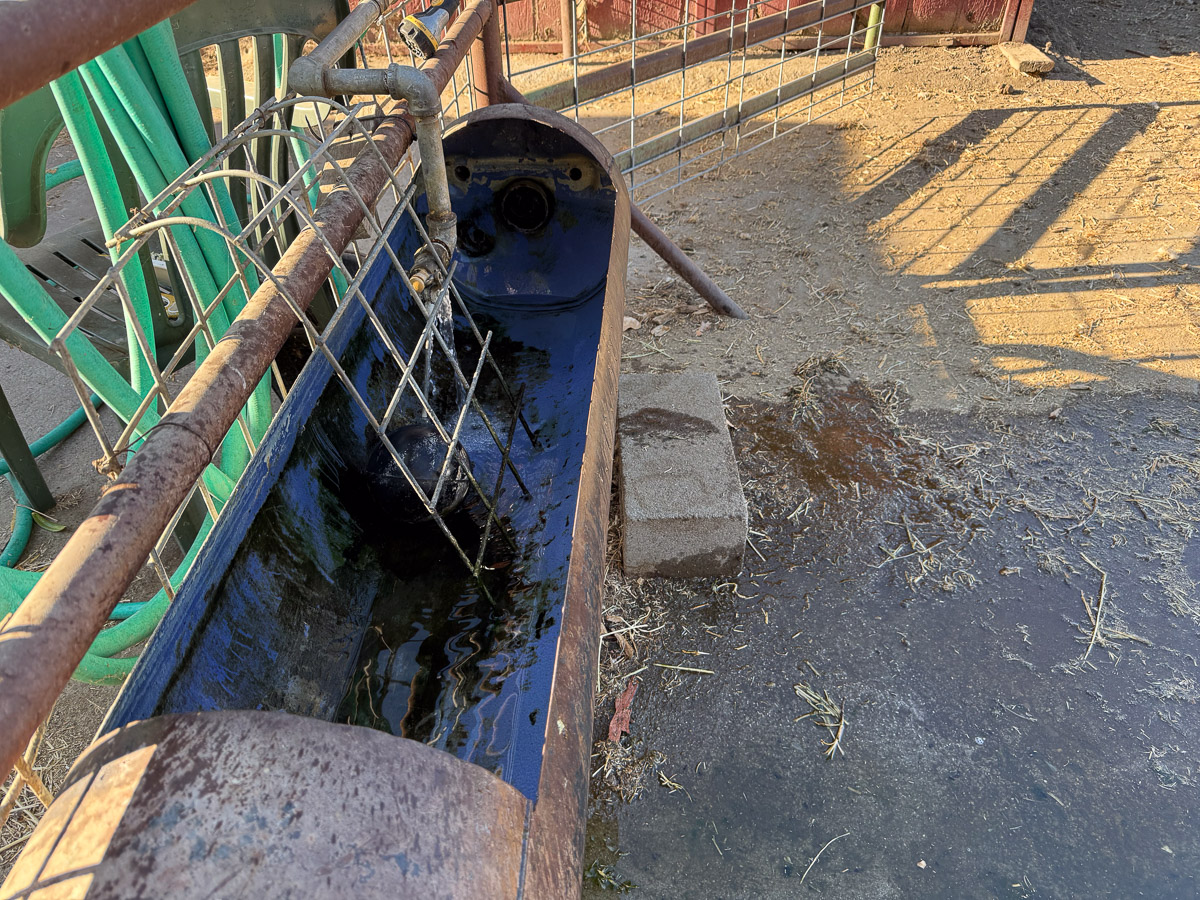
The water trough needs cleaning at least weekly in the summer because it gets full of algae.
I needed to finish a proposal for an article for one of next year’s Handwoven magazines. That was due August 1. This is a photo to accompany that proposal.
After photographing the cosmos flowers I harvested this batch to dry. I pick them every few days so they will continue to bloom and to save them for dyeing later. The pink flowers are dahlias.
We were down to only six bales of alfalfa in the barn. Although the ewes would be on the pasture while we were gone, all the rams need to be fed hay. Since Dan’s knee replacement we have bought hay by the stack so it would be delivered. This is the first batch of ten bales that Dan has loaded himself since the surgery.
This job was not a priority but I continue to be distracted by gardening chores. I know this is not the time of year to prune roses, but I was tired of being attacked by rose branches every time I walked on that path or the deck at the Weaving House.
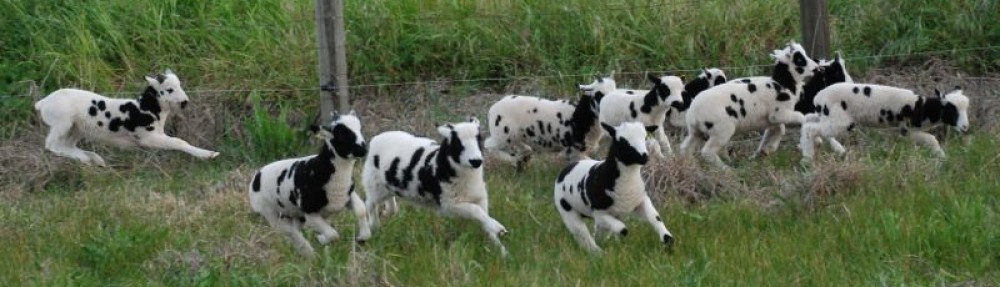
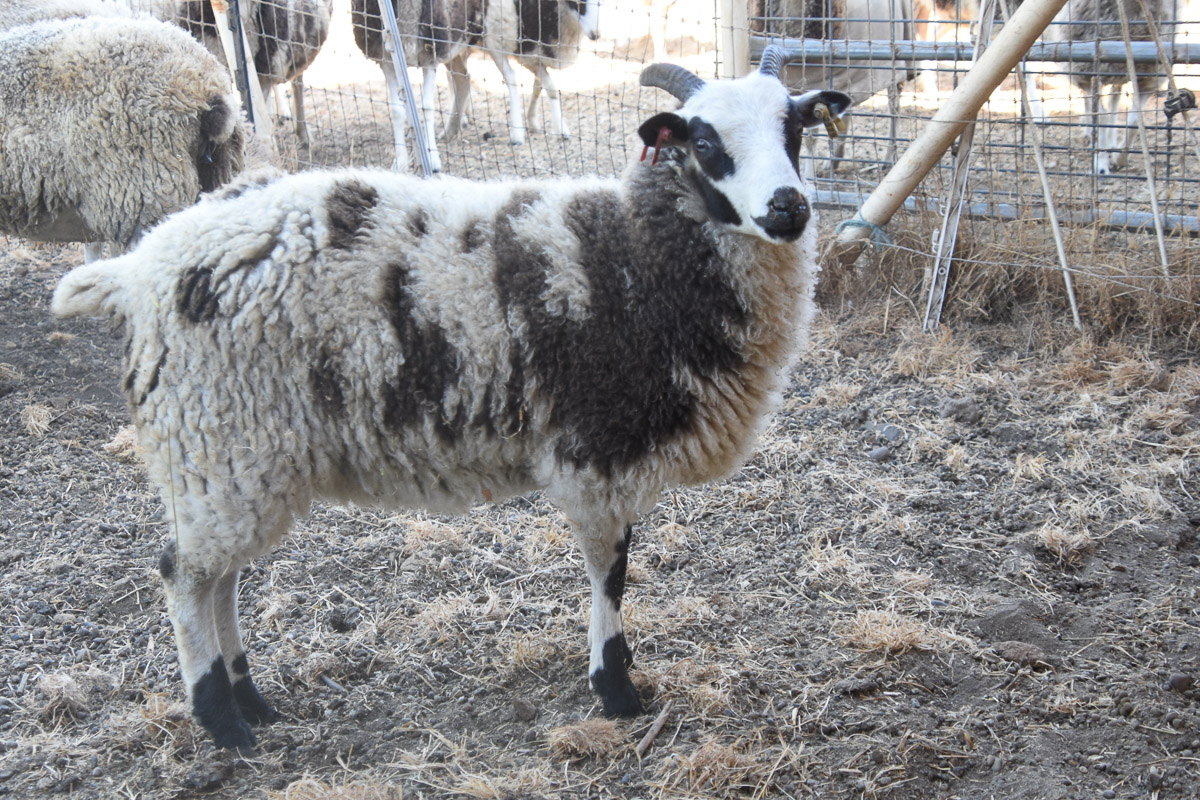
The lamb page of the website has not been updated for quite awhile and I needed current photos. The last photos are from mid-May and those lambs have changed a lot since then. I took these photos a couple of days before our trip but have not yet updated the site. Maybe by the time you read this post I will have added some of these. I will need to take more photos when I’m home.
A couple of days before leaving I was at the Artery to remove all of my pieces there. The Artery will be closed for two weeks while the floors are completely refinished. The old carpet and tile will be removed and the floor will be refinished. We found that there would have to be the added job of asbestos removal. The Artery will reopen August 11 so I’ll be returning my pieces the day before.
I got my Timm Ranch wool back from the mill right before we left. I had time only to open the boxes. I will list it on the website when I’m back.
Stay tuned for photos of our trip. We camped the first couple of nights but I’m in a hotel room right now and finally got my computer out. Now to try and make some updates to the sheep pages. Or maybe I should review 5 days of emails…
Way back in January I wrote the 14th Pasture and Irrigation Renovation post. I like my posts to be in order, but now I have skipped some important updates. Too many photos. Too confusing. Too much other stuff going on–lambing, teaching, deadlines, etc. The whole point of this renovation was to feed sheep and make it easier and more efficient to do so. If you look back at that linked post you’ll see plants growing, but they are small and there is a lot of bare ground. Fast forward past winter rain, warming temps, and 3 months. I’ll change the name of this series to Grazing and Irrigation.
The original plan when we applied for funding was that we might not be grazing for a year. It was evident by April that the pasture needed to be grazed NOW. I was committed to a teaching gig at the end of April and was going to put off grazing until I got back. Dan was not able to work on this only two weeks after a knee replacement. My brother, Dave, knowing how important it was to get started with this, offered to help set up the grazing before I left and handle it while I was gone.
A major problem was that all the permanent interior fencing had been removed at the beginning of this project. We would have to rely on electric net fencing. We gathered all the lengths of net fence that were stored in the barn.
We spread these out to figure out what we had and in what condition it was.
Dave made a plan and laid out fence, beginning in the northwest pasture, the one we call the Horse Pasture. Grazing started April 20.
This gives an idea of how thick the grass was. The seed mix we used had three forbs (clover, birdsfoot trefoil, and chicory) and three perennial grasses. There is a lot of clover and a moderate amount of trefoil. I don’t identify any chicory and all the visible grass is annual rye.The seed already in the soil completely overwhelmed any perennial grasses that might have started to grow and was covering the clover as well. This is one reason we needed to get going on the grazing.
Dave made strips going north-south and we blocked the sheep into a portion of the first strip. The idea is to get them to eat one area down more thoroughly before moving them to the next.
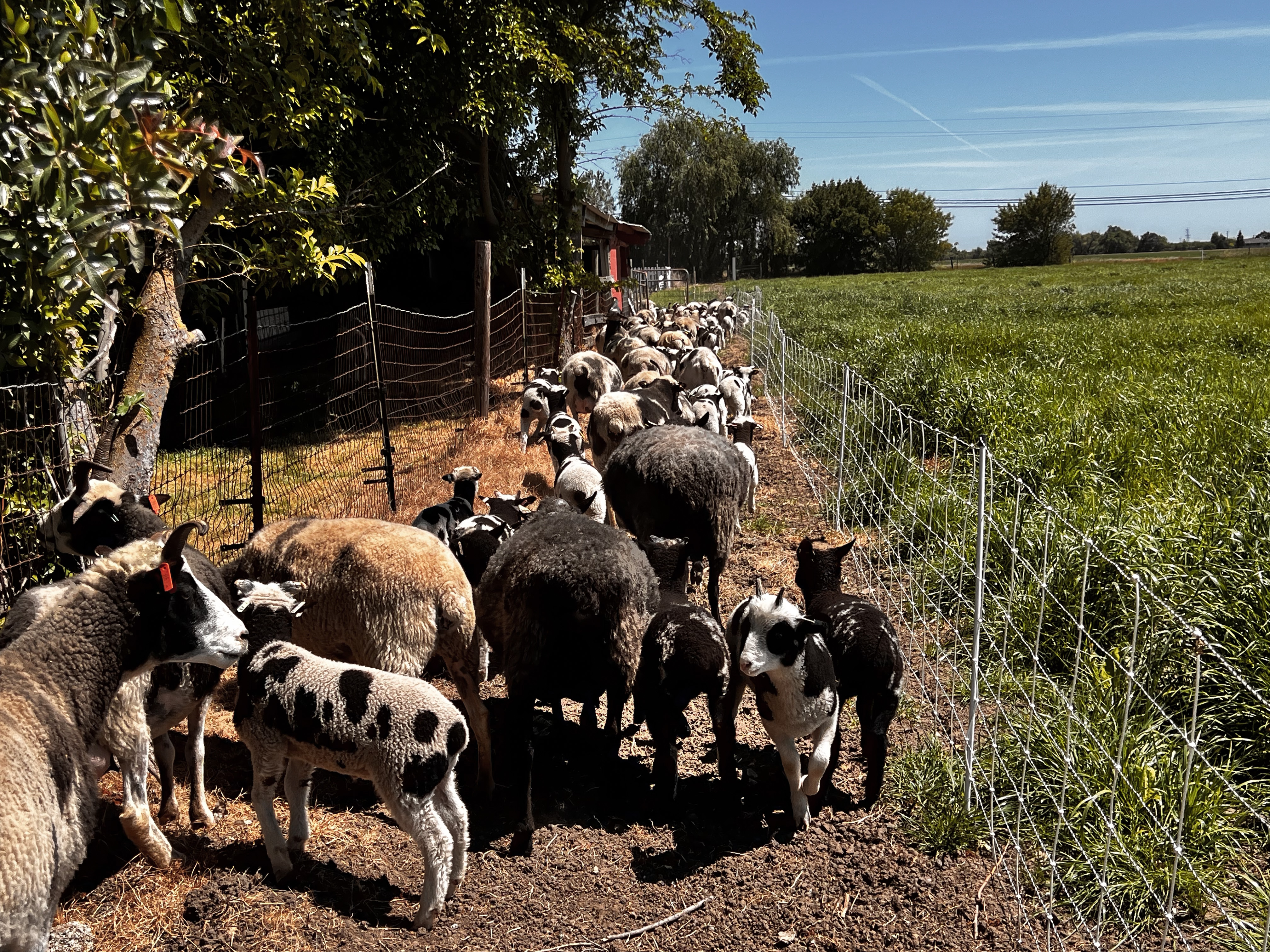
With no fences left in the pasture Dave had to create a lane to direct the sheep from the barn to where we wanted them.
You can see in this photo how the tall grass is trampled more than eaten.
This ewe may have not got the message about eating the grass instead of wearing it.
There is no drinking water in the pasture so at some point the sheep go back to the barn for water. This is something we have to work on.
I’ve written a few posts about lambing, but that wasn’t the only thing going on. During the middle of lambing the Texas grandkids were here for a week. Kirby, age 10, and Kasen, age 8, flew solo (without parents) in mid-March, also spending a few days with the other grandparents a few miles away.
The first afternoon here we walked across the road with Ginny. I like this view of Mt. Diablo due south.
This photo shows the main canal to the right. I got carried away just now and did a bit of internet research about this channel, which I know is called Sweeney Creek, but it doesn’t look much like a creek anymore. This document describes the Ulatis Flood Control Project constructed in the 1960’s and 70’s, a series of channels that end in the delta. The focus of the document is a fish survey done in 2023 and sampling point #9 is at this location. How does this relate to this post? The kids wanted to walk down to the water and the easiest place for that is below the structure at the right of this photo.
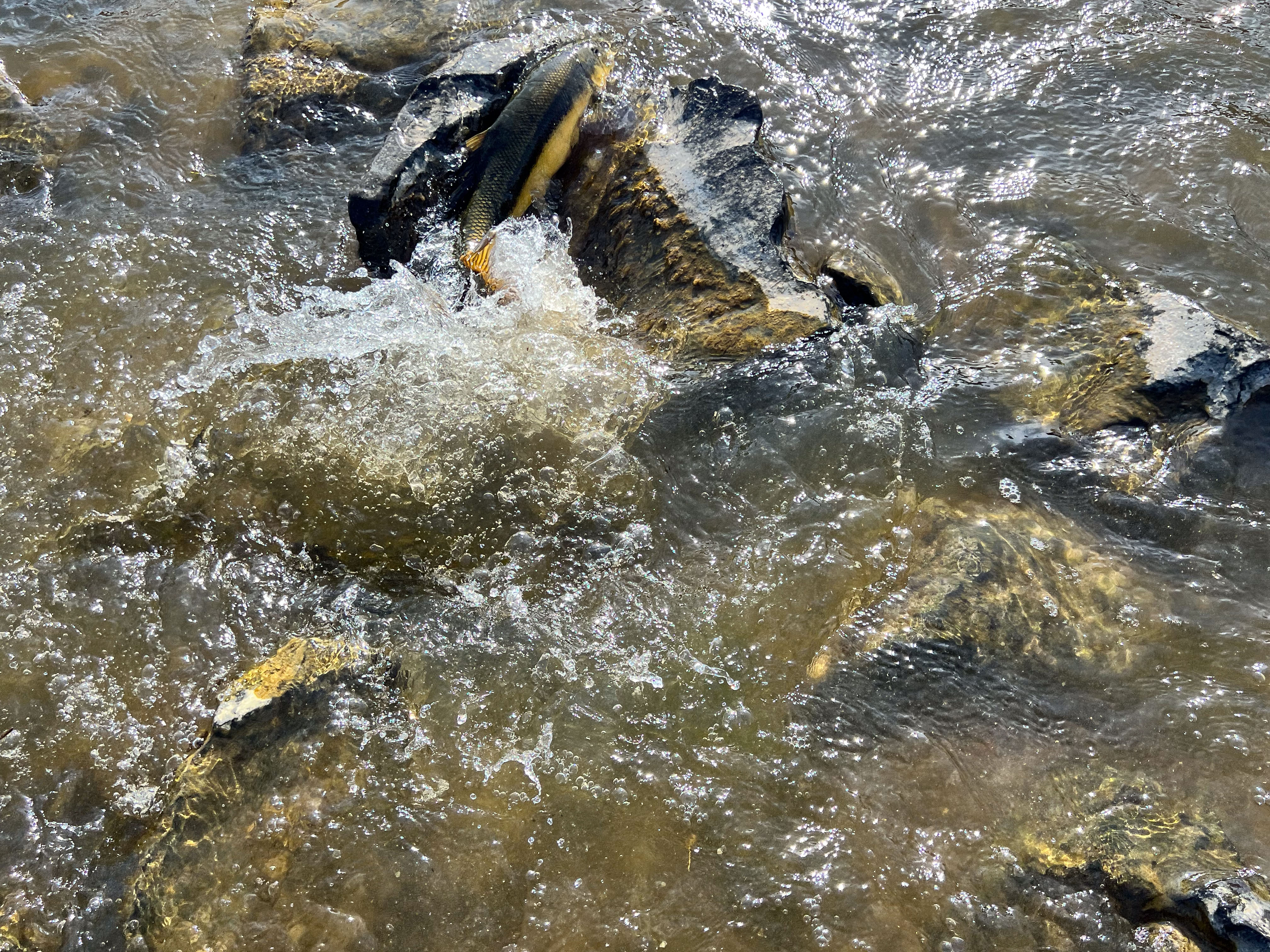
At that point we saw splashing and realized that there were a lot of large fish in the rocky area below that structure. There is a fish at the top of this photo.
In a small still area we saw over a dozen fish.
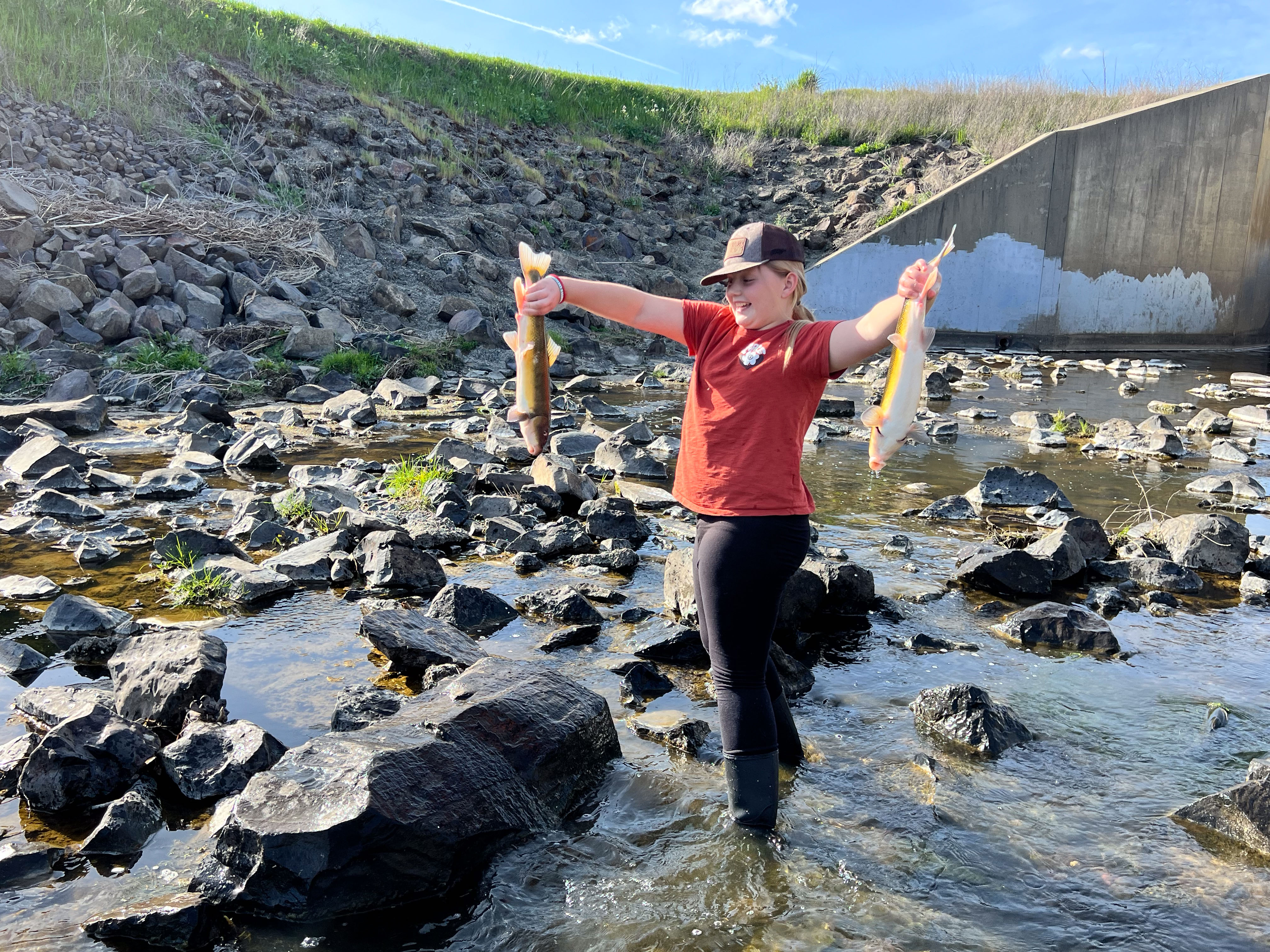
Kirby decided that a rescue was called for to move the fish from the small rocky pools to a place where the water flowed more freely. She was able to easily catch several of the fish that were in the small pool.
One of my friends identified this as a Sacramento sucker, which I learned is the native fish found at this location in that 2023 fish survey.
The kids spent about an hour splashing in the water and catching fish.
I walked along the water edge and an artifact I recognized. How many tennis balls have we lost during our walks?
This one has become its own ecosystem.
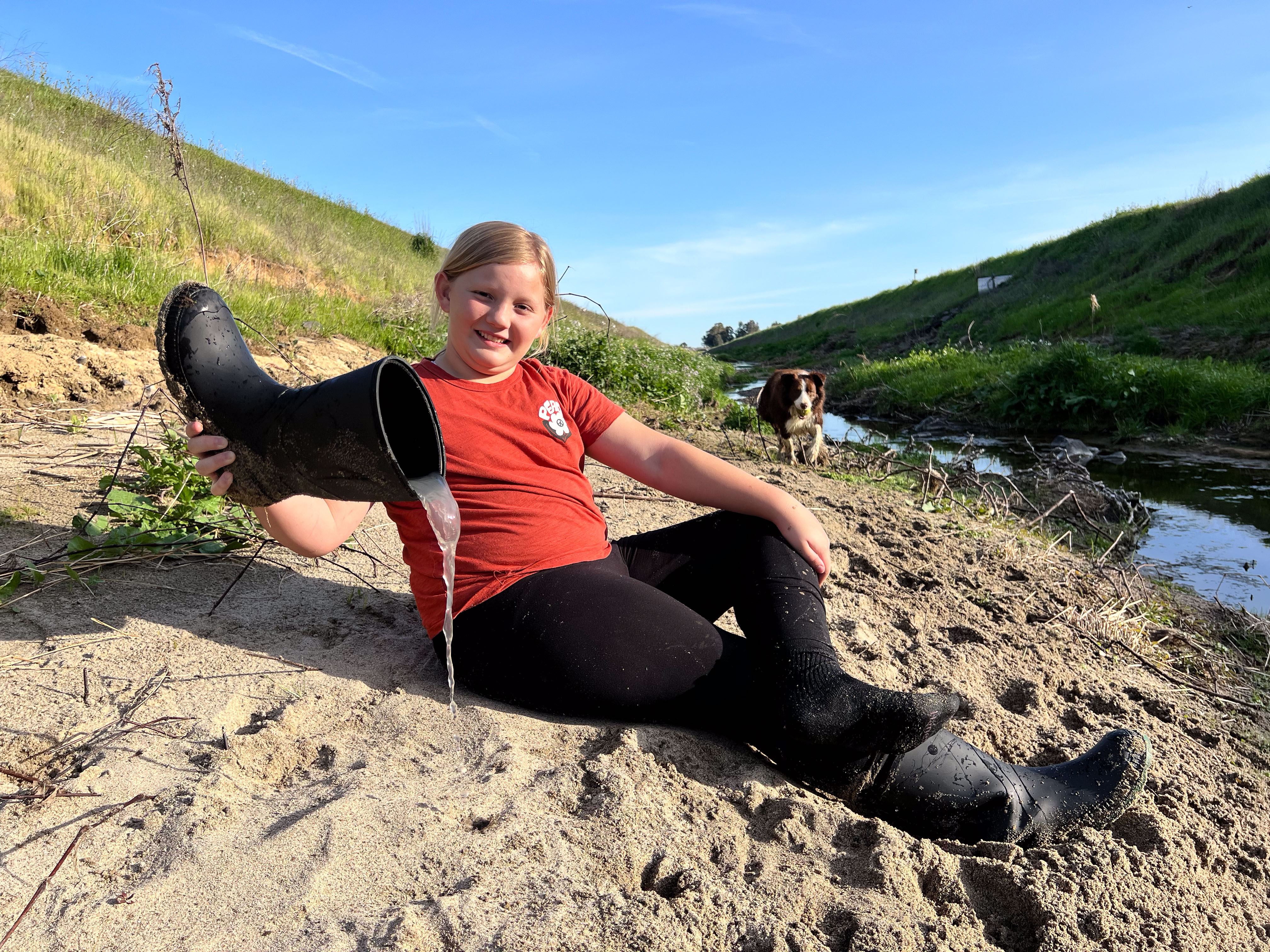
Kirby’s rubber boots didn’t keep her feet dry after awhile
I’m interrupting the Pasture and Irrigation Renovation posts (#9 of that series) of the last few weeks because we had an adventure before the project was completed.
Chris was to compete in the Tempe (AZ) Ironman on Sunday. Dan had gone to Idaho for a visit and to pick up Chris’ bicycle so he wouldn’t have to ship it. We left November 14 (Thursday) with the plan to camp part way and get to Tempe mid-day on Friday.
I took this photo when leaving the park on Friday, because by the time we got to Joshua Tree NP it was dark and I did not take a photo at the west entrance. I did not take any photos that evening. We set up the tent and ate bagels and cheese for dinner. This trip was not intended to be a real camping trip. We just needed a place to stay on the way to Arizona and it seemed that it would be fun to have short National Park experience. When we got there we realized that we hadn’t even brought any water, other than the water bottles we’d already emptied. I have learned that I am not a winter camper. The last (and maybe only other) time I have camped in the winter was at Big Bend National Park in 2017. I know that because I just looked for the blog post and found it. I have the same sentiment now that I did then–you get to a campsite in the dark and it’s not bedtime but you have to get in a sleeping bag to be warm.
I think we got in sleeping bags about 6 p.m. I read awhile and eventually fell asleep. I woke up at midnight and the wind was howling and the rain fly was slapping the tent. Dan told me the next day that he wondered if he left the tent in the middle of the night if it would blow away with me in it! I read until I finished a book about 3 a.m. and then slept. I woke up early and thought I’d be better off moving than lying in the sleeping bag for longer. I thought I might find some sun since it was starting to come up.
I found a marked trail not too far from the campground.
I didn’t see any bighorns, but I liked the sign.
Dawn in the desert.
This seems like a prickly place for a bird nest, but maybe it’s protected that way.
We were staying at the Ryan campground, named for the Ryan family who settled this area in 1896. It’s hard to imagine that 60 people lived here and worked in at the ranch and mine until 1908. This is one of the buildings built of adobe bricks. There are other remnants of the ranch as well.
You can see this structure centered the right of this photo. Those two large rock features are part of the campground and our tent was behind the one on the right.
Part of a toppled windmill. At this time the sun had reached the hills across the valley but there was not sun where I was.
I continued my walk until sun appeared over the hill and from behind clouds and I could stand in a sunny spot for awhile.
The tent was still in the shade when I got back. Dan had emerged, but maybe you can tell that he was cold. We didn’t linger there, but packed up and headed for Arizona. We did spend some time in the park, stopping to read signs and take in the sights.
This is a view over the Coachella Valley with Santa Rosa Mountains in the background and the San Andreas fault at the eastern edge of the valley.
We stopped at the “Cholla Garden”, a location along the road filled with cholla cactus.
This is a fascinating landscape, and I’m glad it’s preserved by the National Park system.
Another sign tells that Joshua Trees live only in the Mojave Desert and that is in the northern section of the Park. The Mojave and Colorado Deserts overlap in the park and the vegetation in each is different.
My birthday was last weekend and I wanted to go hiking. I thought about Mt. Diablo or Pt. Reyes or Mt. Tamalpais, all places that I’d like to explore, but the thought of Bay Area traffic discouraged me. Then I realized that I could take advantage of some open space that is closer to home.
Lynch Canyon is in Solano County just north of the freeway between Fairfield and Vallejo. In the 1980’s the property was purchased by a company who proposed a landfill. Thankfully that was rejected by Solano County voters and the land is now owned by Solano Land Trust.
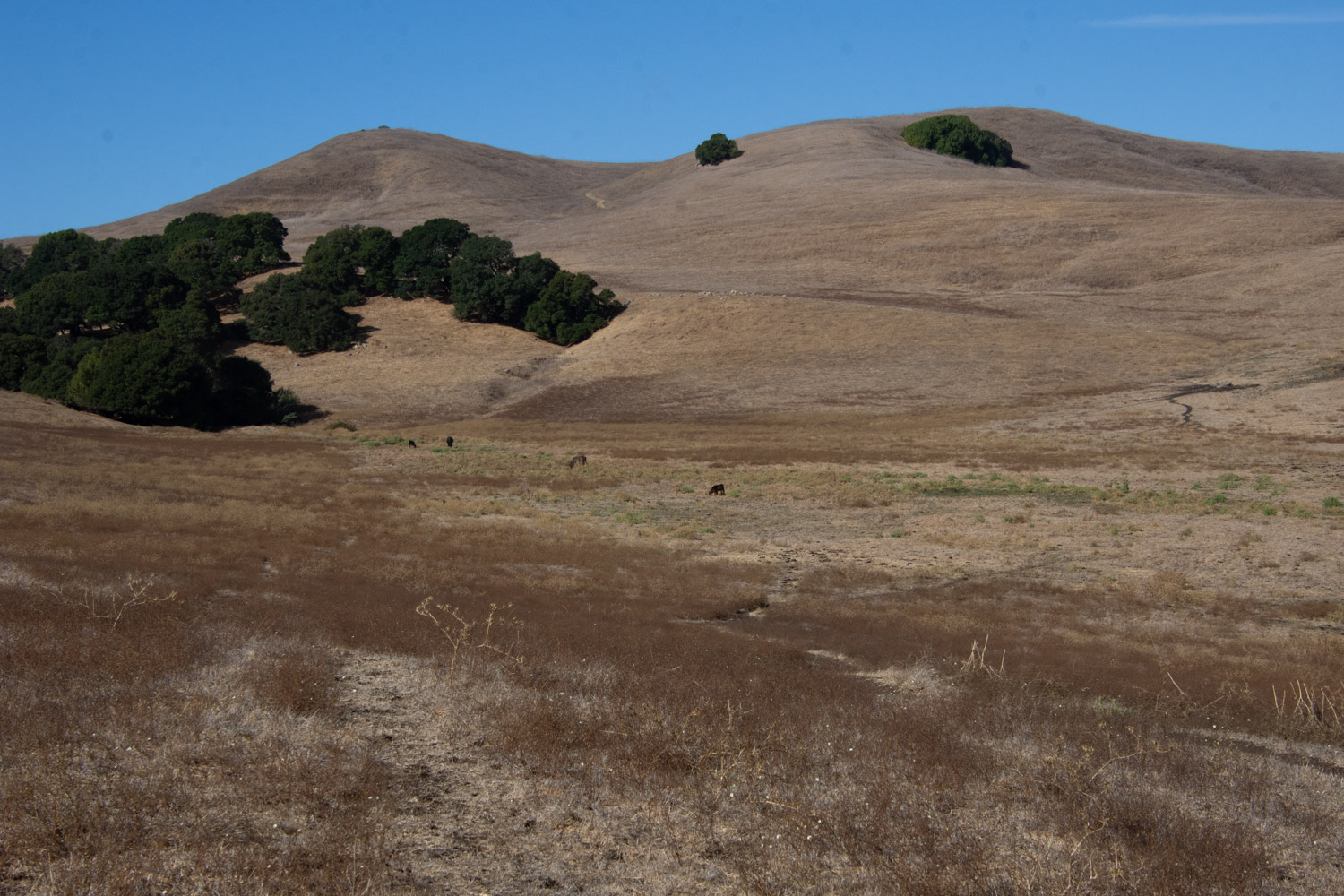
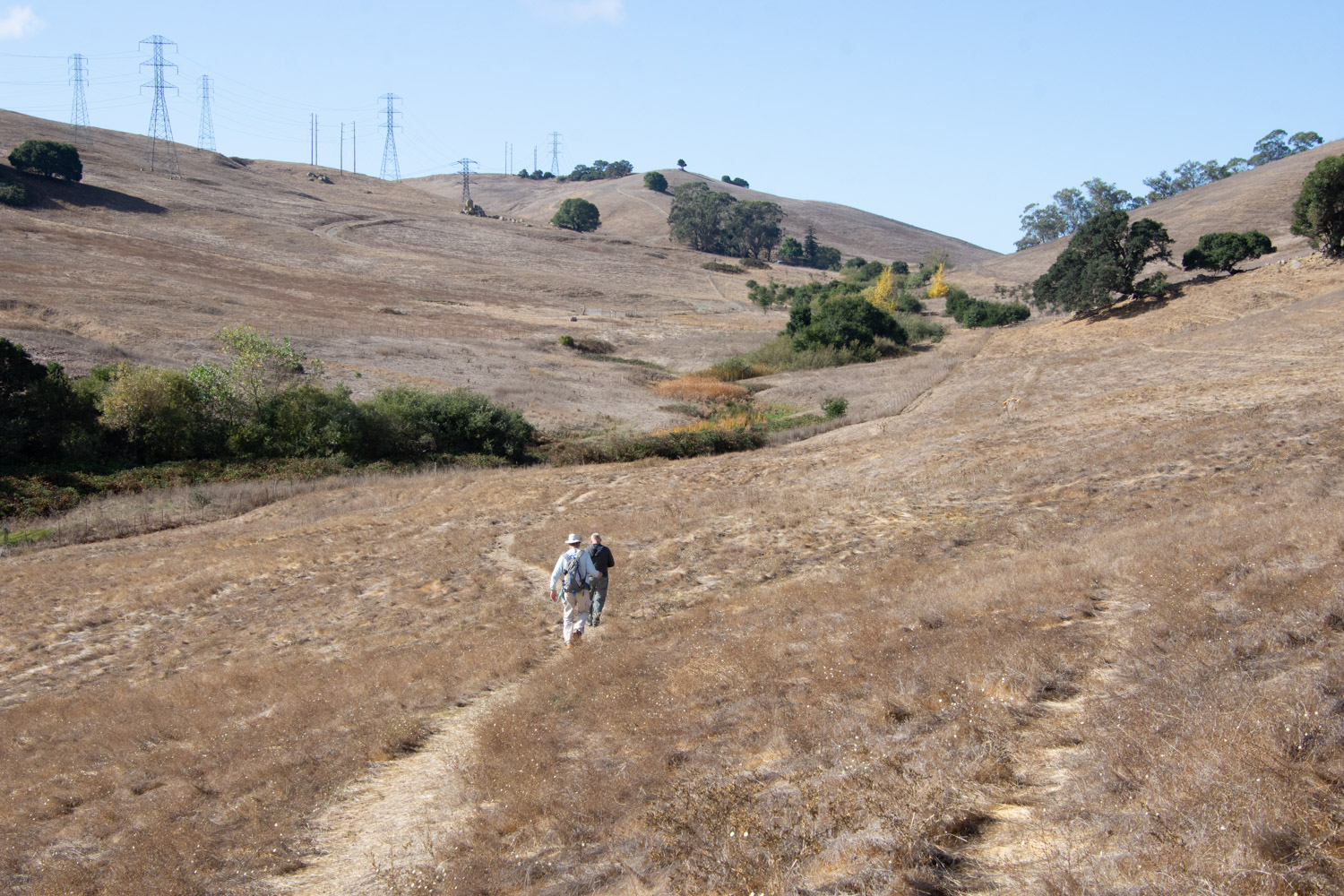
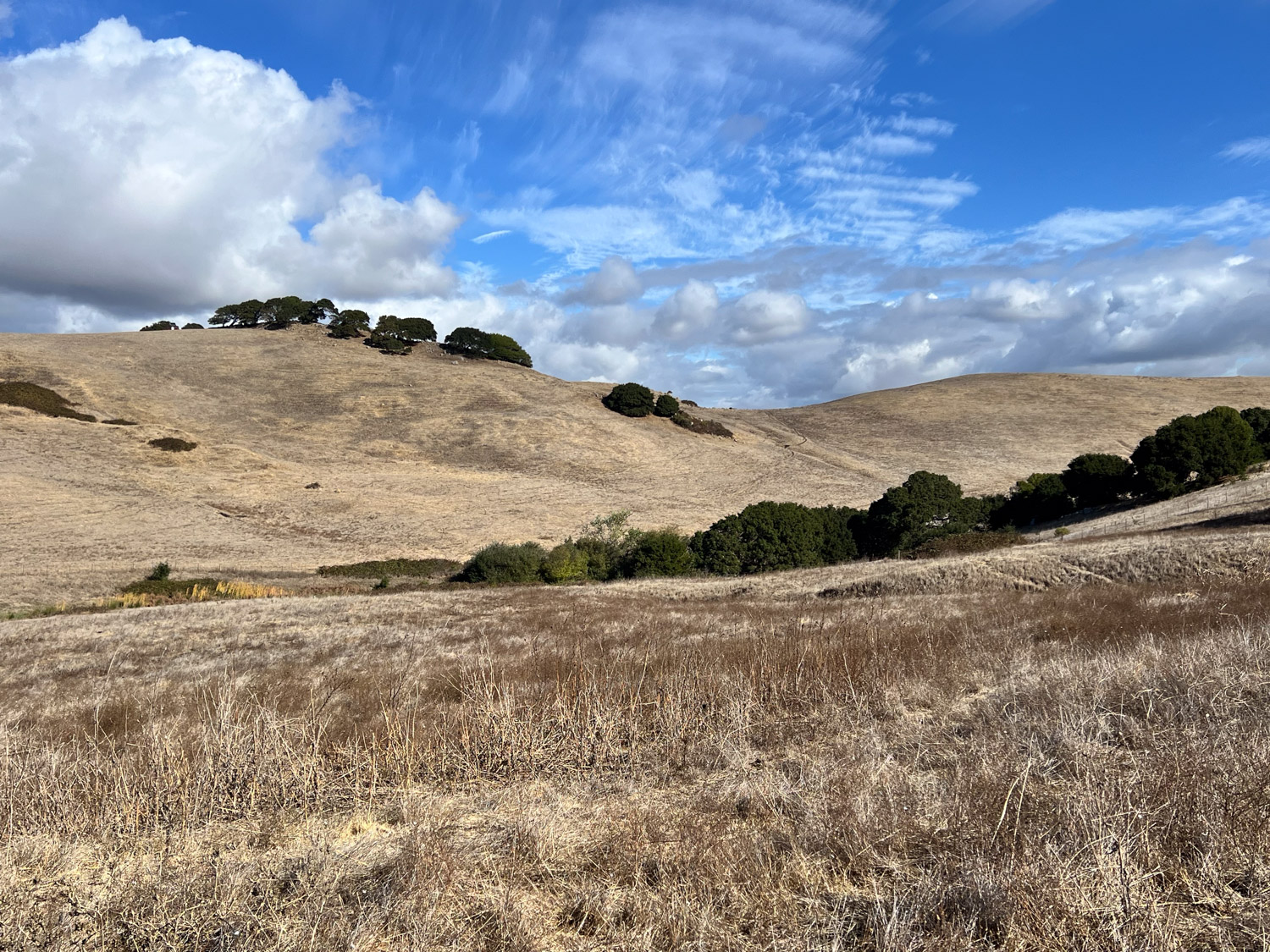
The land is rolling hills dotted with oak trees. We had the first real rain of the season the previous evening so this may start to green up soon. On the morning of our hike the vegetation was all dry.
The trail we chose headed generally west. I wanted to get to the top of the hills for the view.
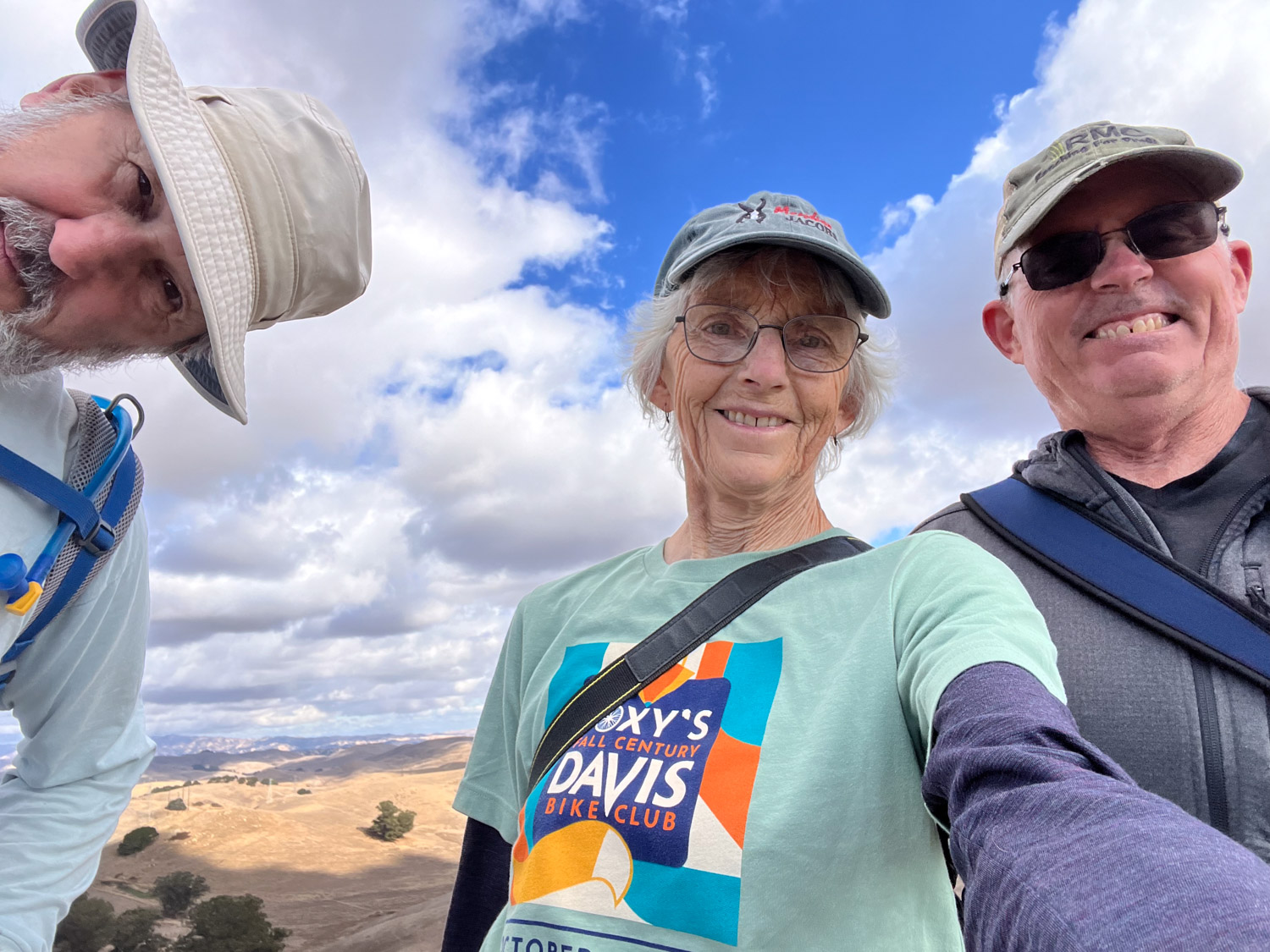
My brother, Dave, was with us.
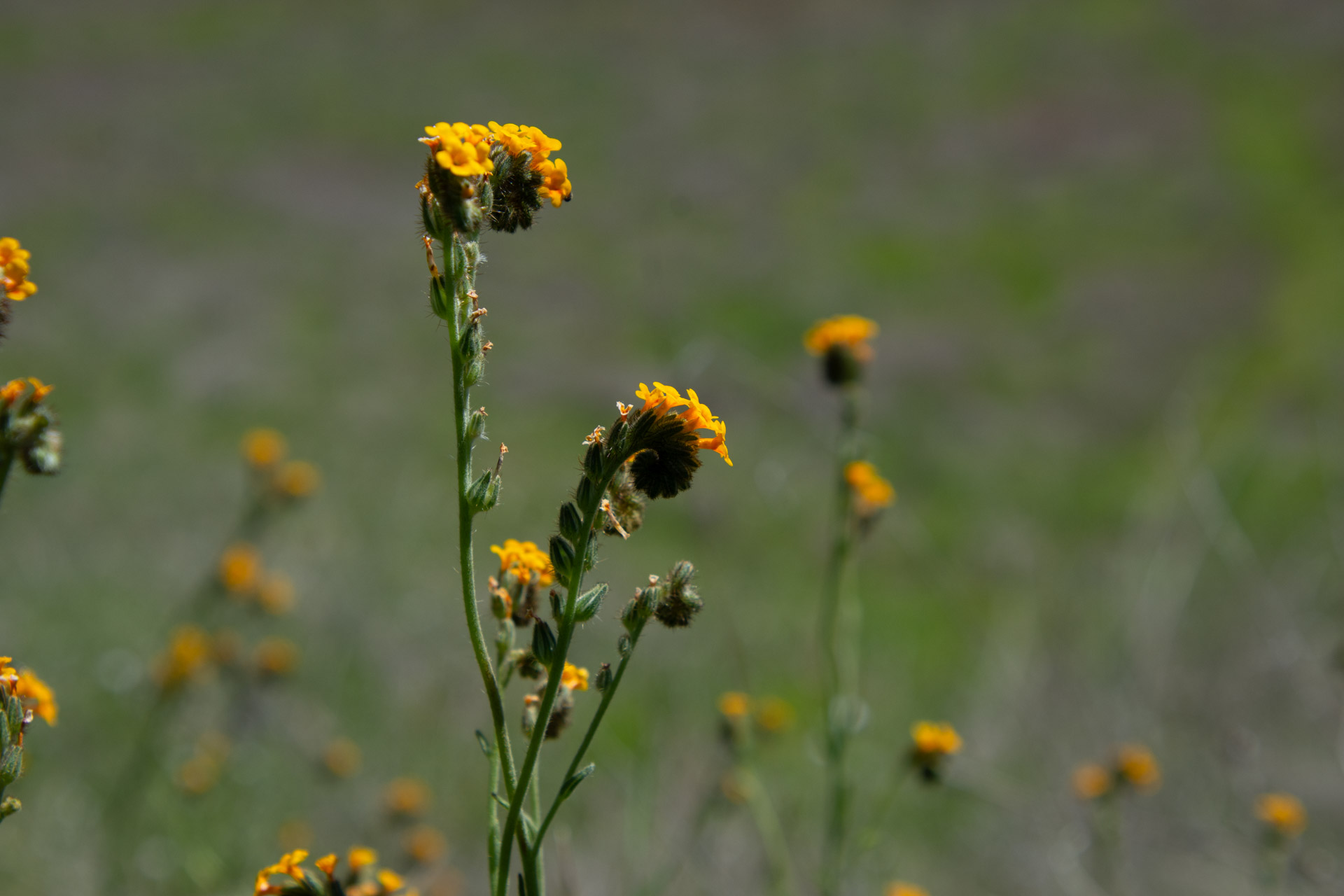
This area could be stunning when there are spring wildflowers. The only plant flowering now was tarweed.
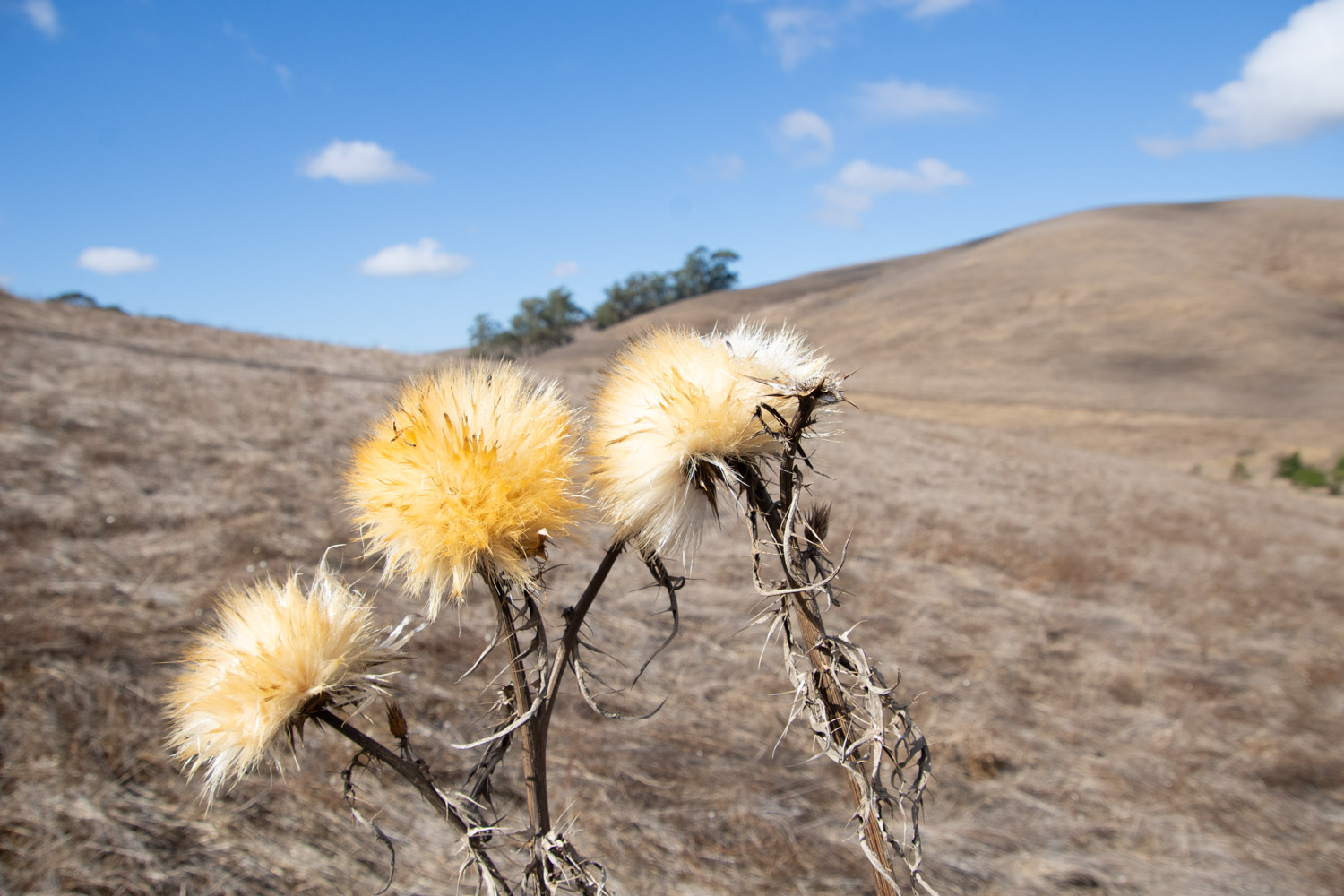
The thistles were an interesting contrast.
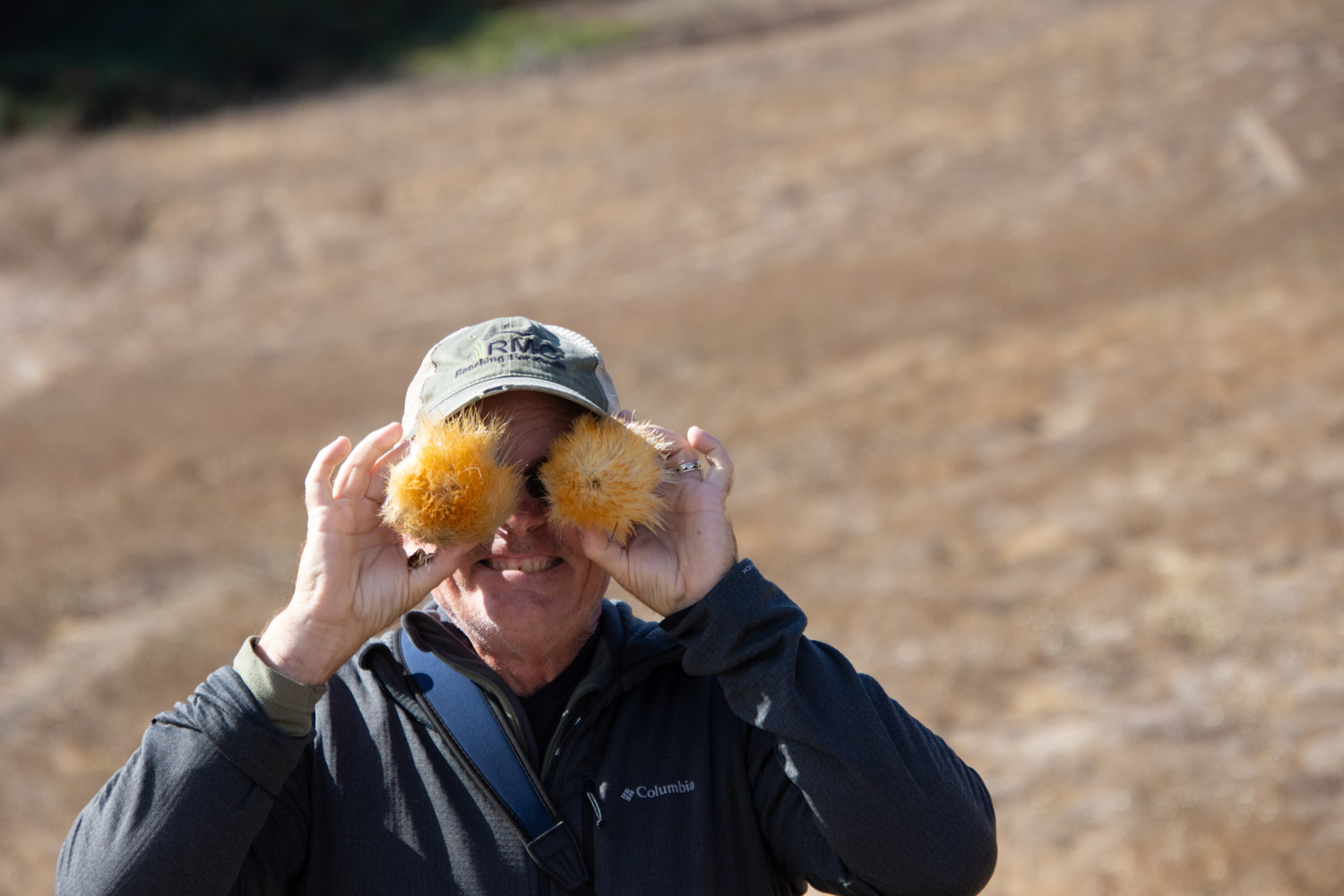
That’s my brother.
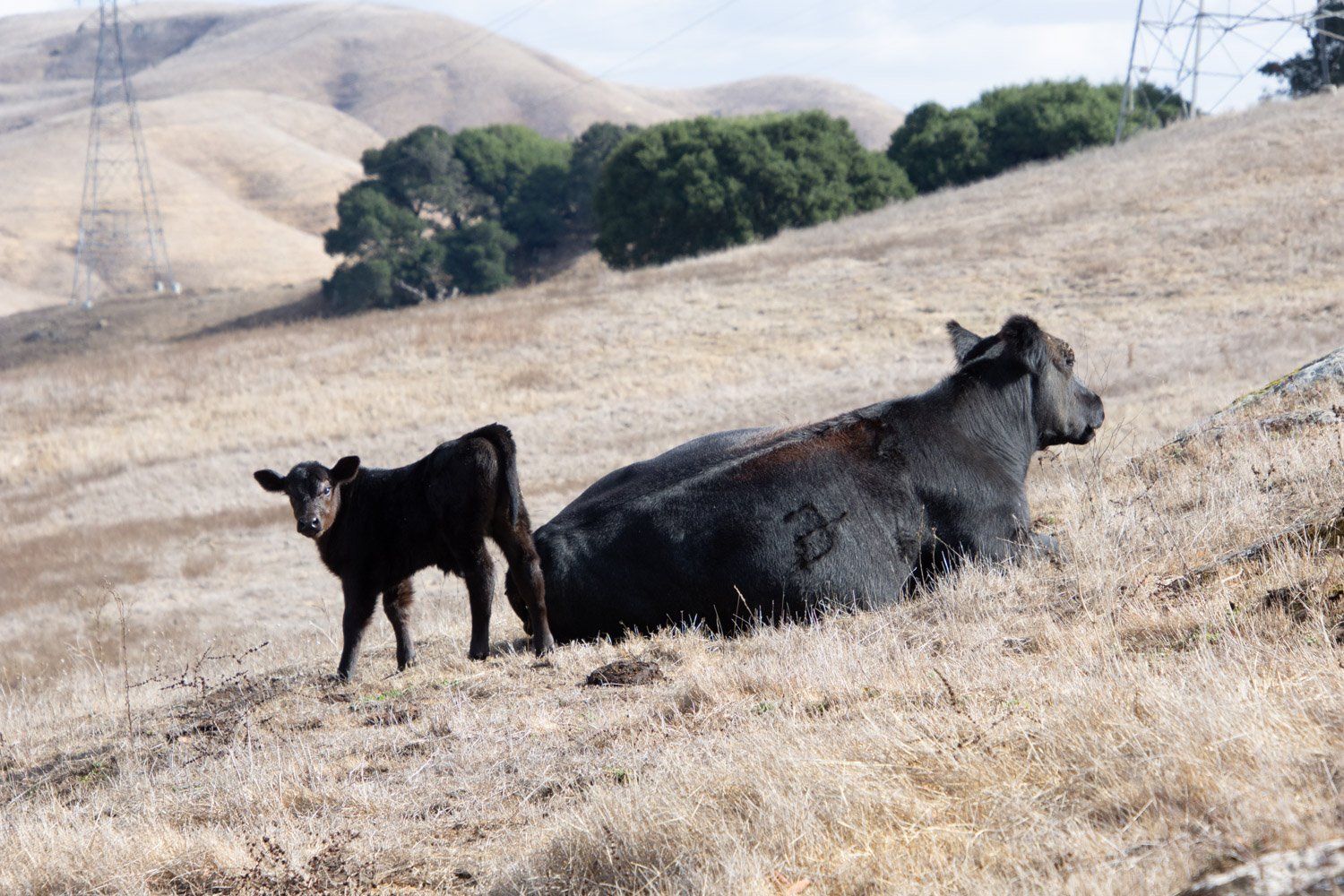
Cattle graze these hills right now.
This was a beautiful day for a hike.
Once we got on top of the hills we had views all around. This is looking southeast over American Canyon and the marsh land where the Napa River ends at San Pablo Bay. If I turned around I could see the windmills along Hwy. 12 to the east.
We could see Mt. Diablo to the south.
An easy 6-mile hike was a good way to spend my birthday.
When I got home I walked Across the Road with Ginny. Do you recognize that mountain in the distance? That’s Mt. Diablo at a little different angle than the phioto from Lynch Canyon.
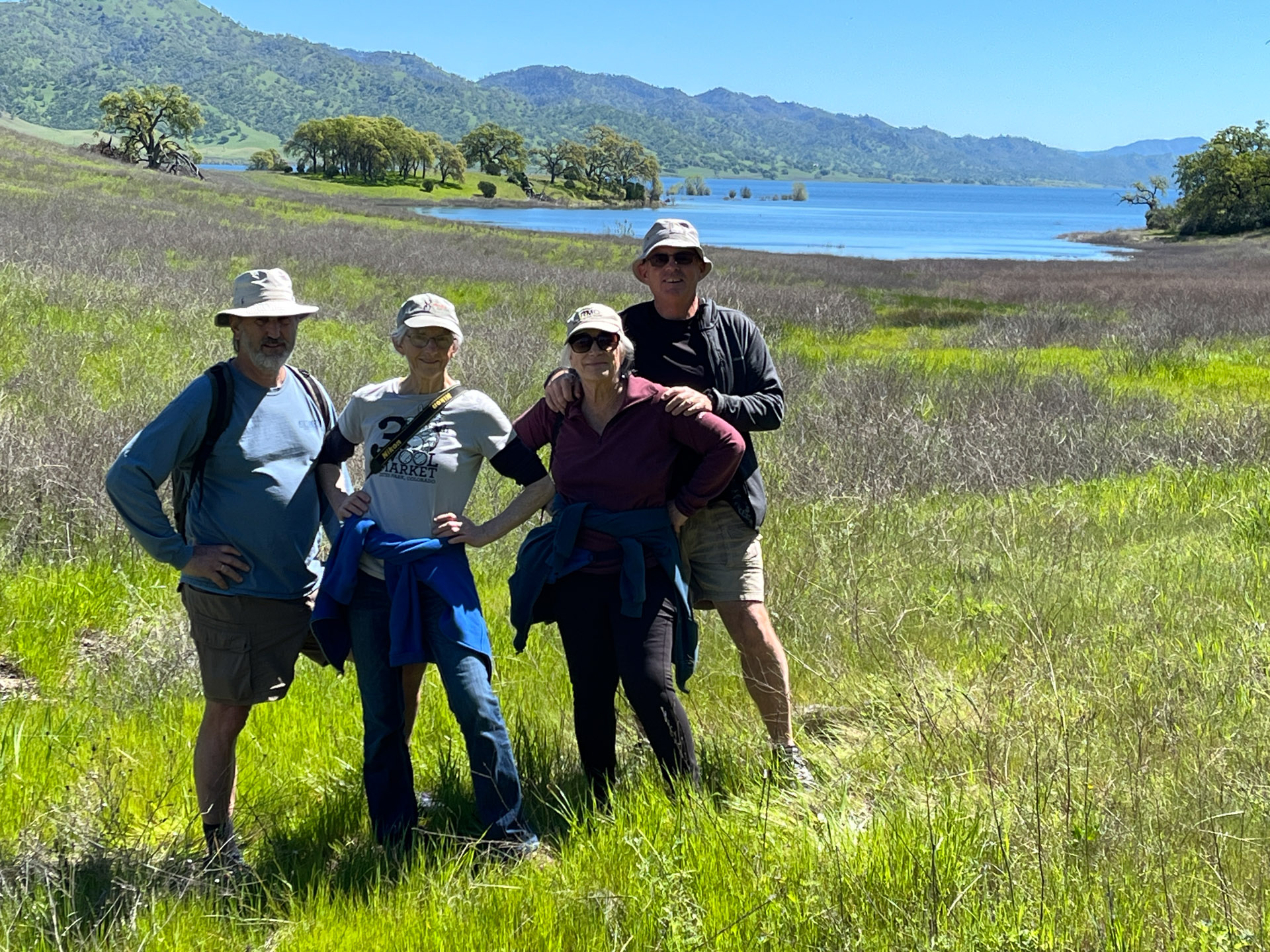
On Monday we went on a hike with my brother and sister-in-law. I think it was actually a walk because the trail followed the edge of the lake fairly closely. Doesn’t a hike involved dramatic changes in elevation or at least some level of difficulty? Regardless, it was a beautiful day while the annual growth is still green and not all the trees have fully leafed out. (Is that a word?)
We drove to the north end of Lake Berryessa and stopped at the trail head.
My brother has been here several times and expects to find ospreys and eagles. We saw ospreys in the air on the way here and found another not long after starting on the trail.
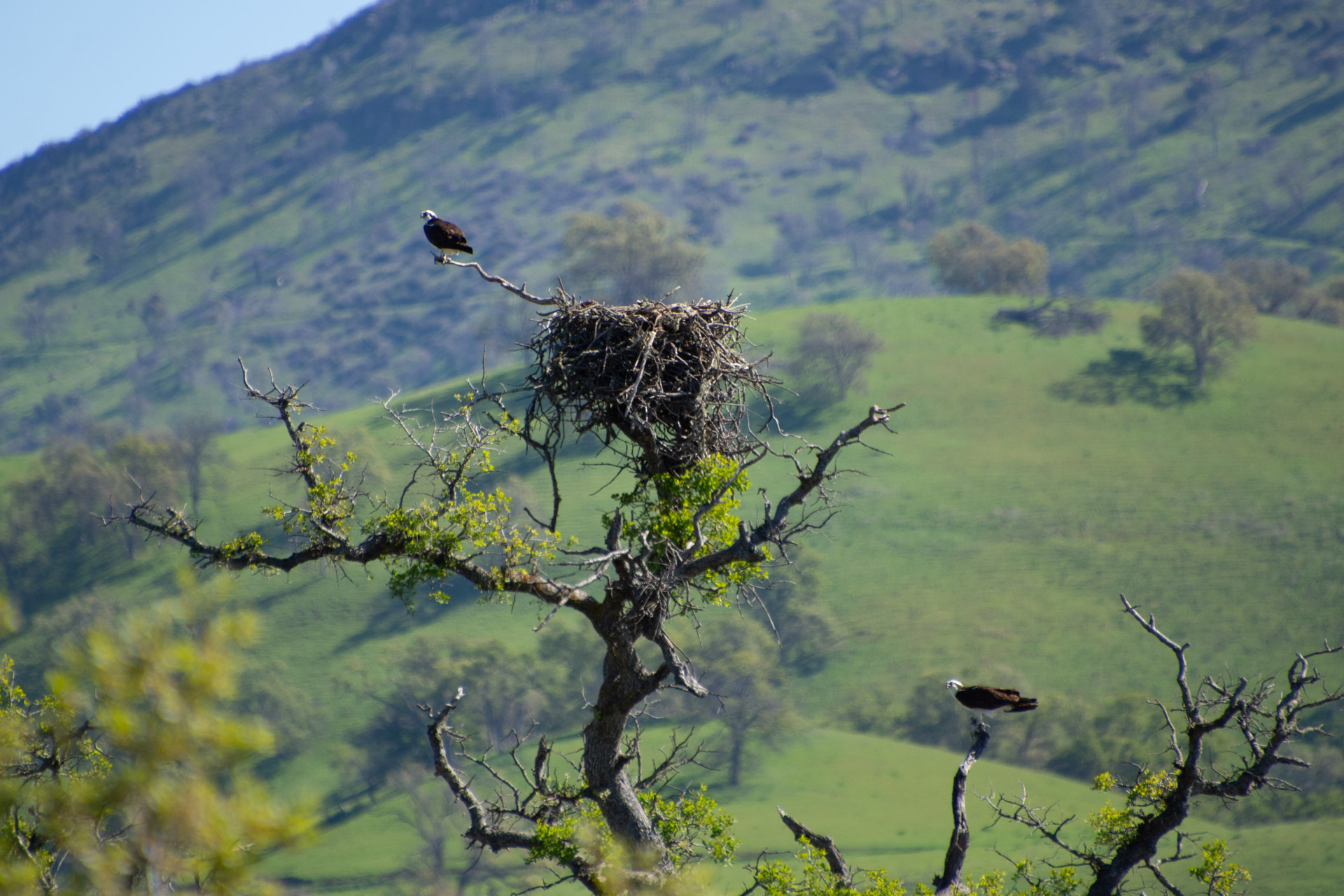
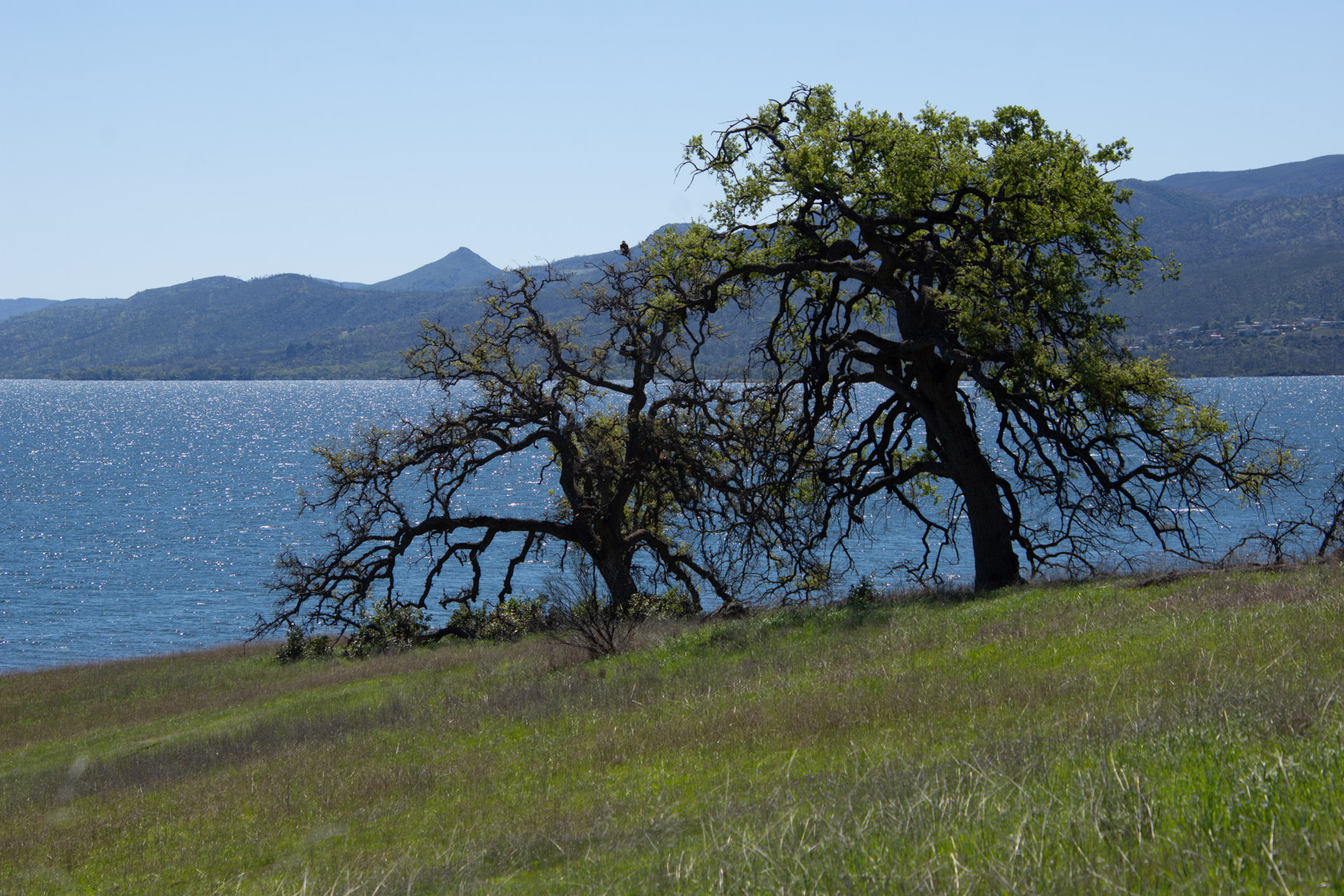
This is a view of the landscape and the lake. There is an osprey in this photo also, but you have to look hard to see it.
Here is the osprey, right in the middle of that other photo. Notice there are two here. One is below the nest.
Another view across the lake. What a beautiful site for a ranch headquarters.
I have always taken more photos of plants than birds. Plants sit still longer and I can get closer.
Here is a magnificent oak tree.
The oak woodland landscape.
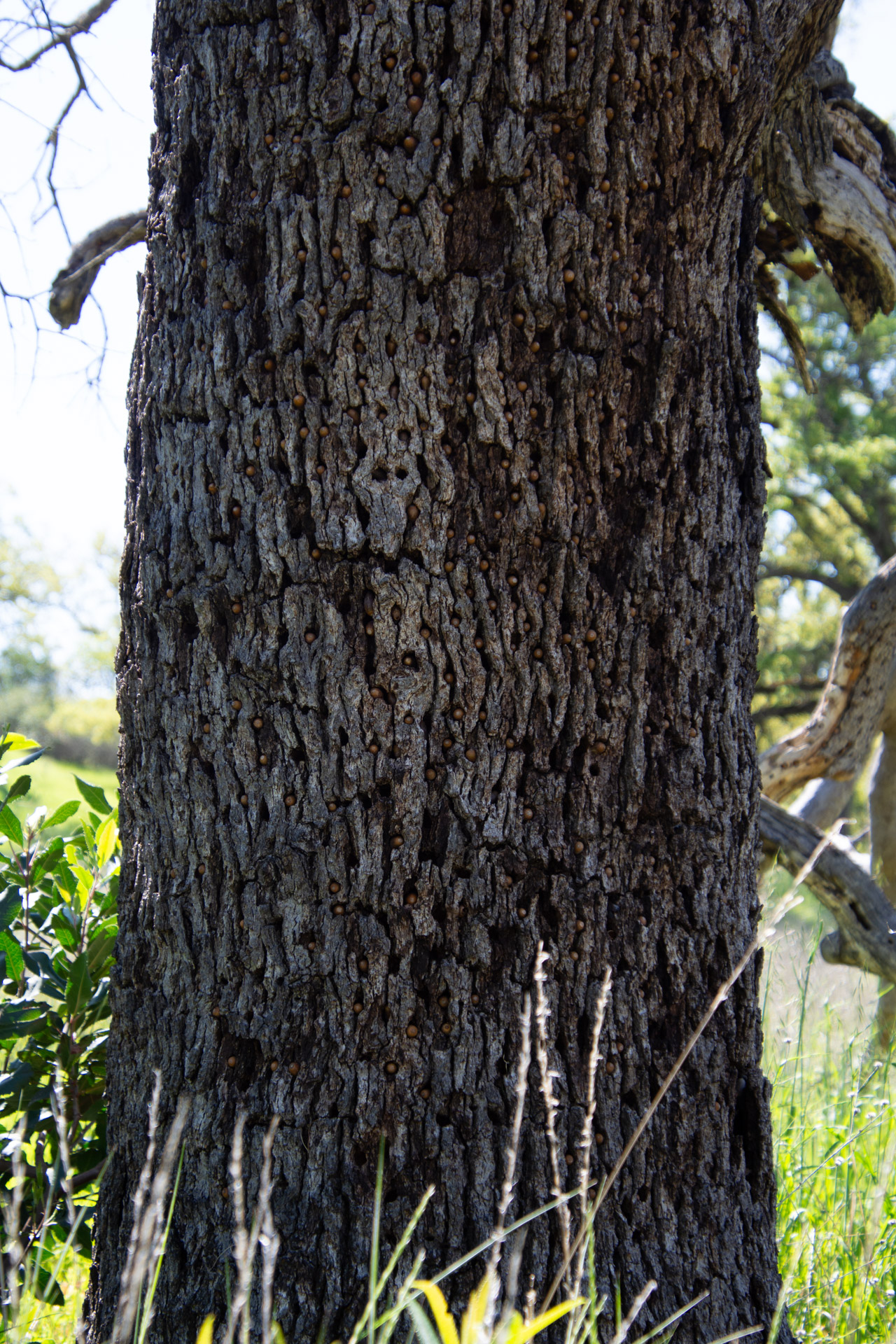
We noticed several trees with holes in the bark. Can you tell what is in the holes?
The holes are filled with acorns.
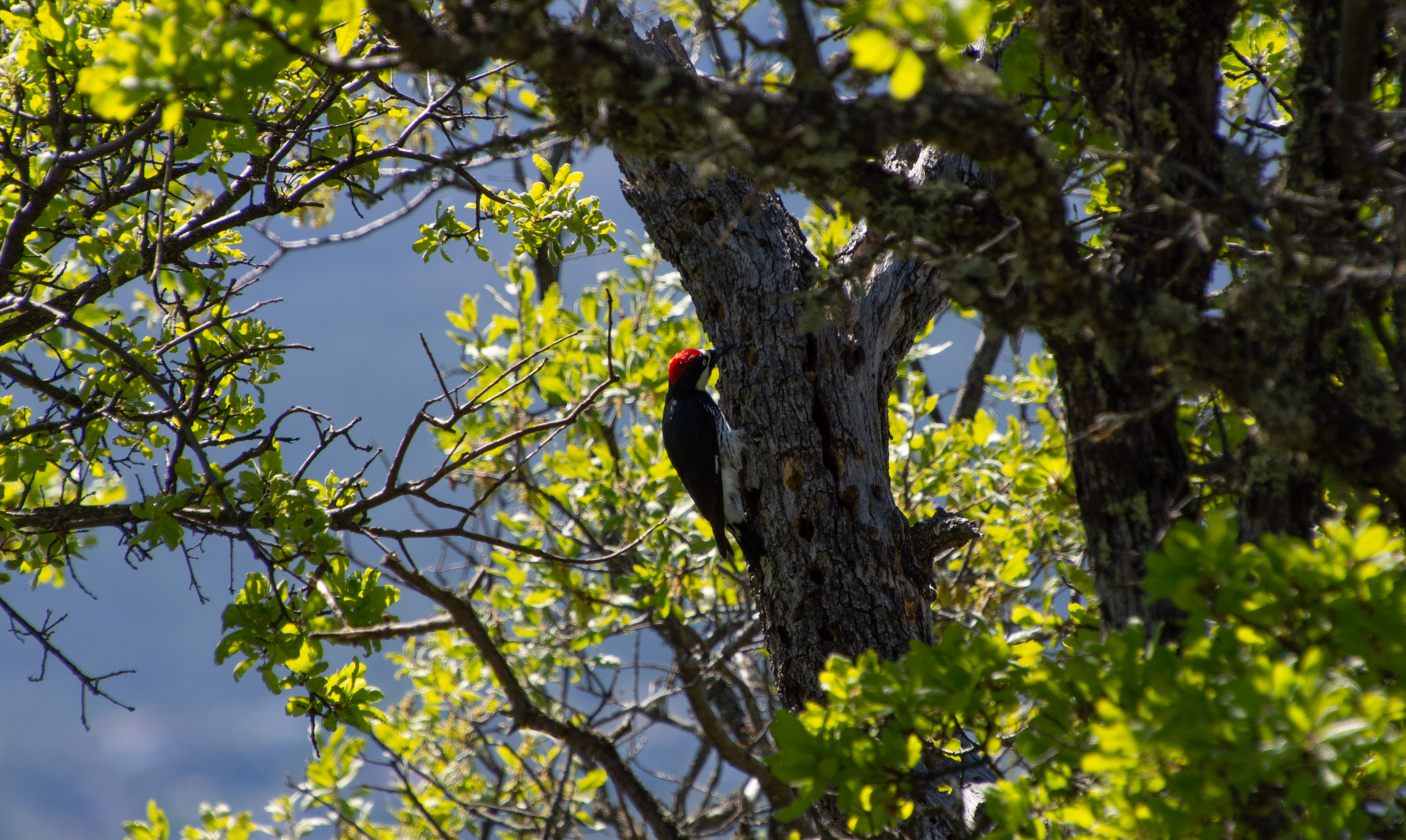
The acorn woodpecker is responsible for this. Wikipedia has this to say about this behavior: Acorns are stored in small holes drilled especially for this purpose in “granaries” or “storage trees”—usually snags, dead branches, utility poles, or wooden buildings. Storage holes—always in dead tissue such as bark or dead limbs—are used year after year, and granaries can consist of thousands of holes, each of which may be filled by an acorn in the autumn.
This turkey vulture wasn’t about to leave his meal, although three others did fly off as we walked by.
Can you spot the bird here?
This one is a bald eagle.
We walked about as far as La Pointe (on the map at the top) and turned around because we all had visitors coming for dinner. On the way back we saw the same osprey pair.
This is Dan, me, Kathy, and Dave thoroughly enjoying the day.
Look at what we woke up to this morning. Rain! I know I won’t be so happy about it by February or so, but it is a welcome sight now. There are months of dust and dirt to wash off of plants and sheep and this will get the winter grass to start growing.
Here is the beautiful sky across the road while I was taking the photo below…
…to use in a PowerPoint presentation I was preparing for a talk about Sustainable Fiber in San Francisco tonight.
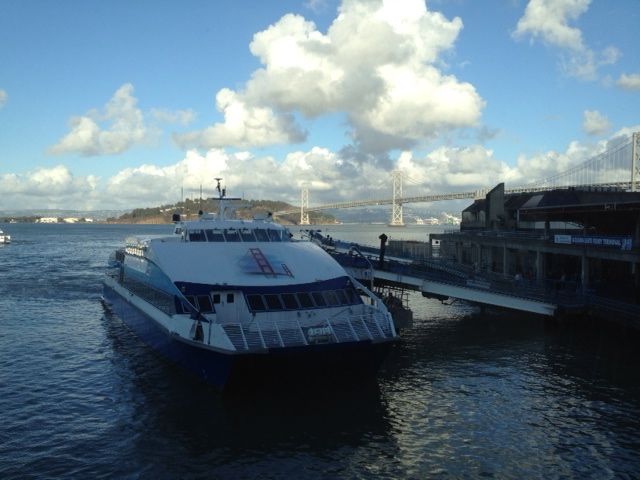
A gorgeous sky in the city too. This is the view from the Ferry Building before it started raining again.