Road Trip 2024 – Day 5 – Colorado Springs

I’ve been at the computer a lot, but haven’t had time to finish this story. I usually start with a photo of our campsite, but we stayed in a motel in Trinidad after seeing the Cowgirl Artists show. This day we were headed to Colorado Springs to visit Dan’s brother.

We stopped in Pueblo along the way just to get out of the truck and wander around a bit.

We found a shady place to park and walked into the old downtown. This bike was one of many that we saw painted in bright colors. I didn’t notice if they all have the same message. I suspect that they are all different. This one: “Life is like riding a bicycle. To keep your balance you must keep moving.”

This is the old train station. Notice the blue bicycle leaning on the lamppost.
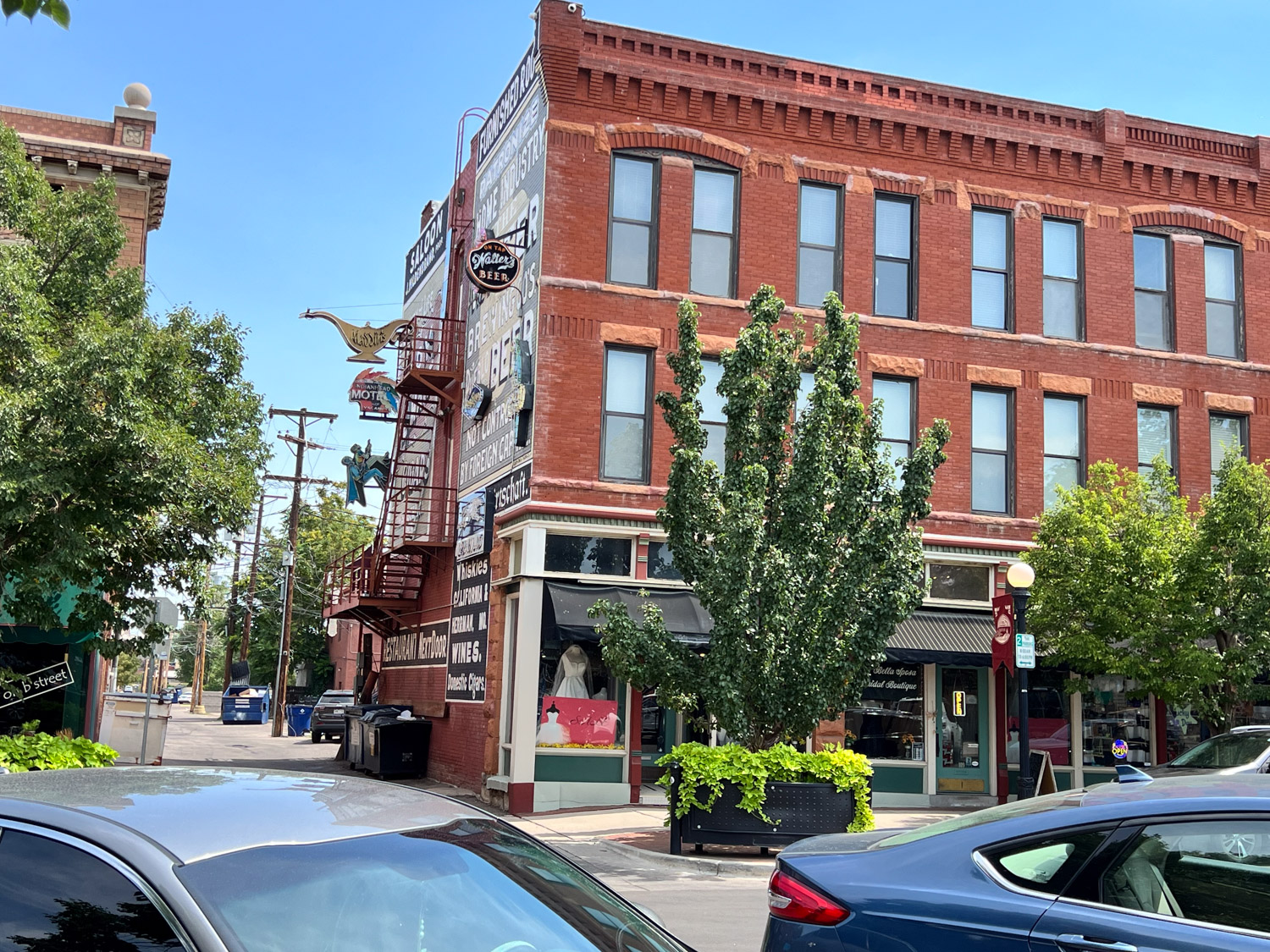
There were lots of brick buildings. I took this photo for a reason.
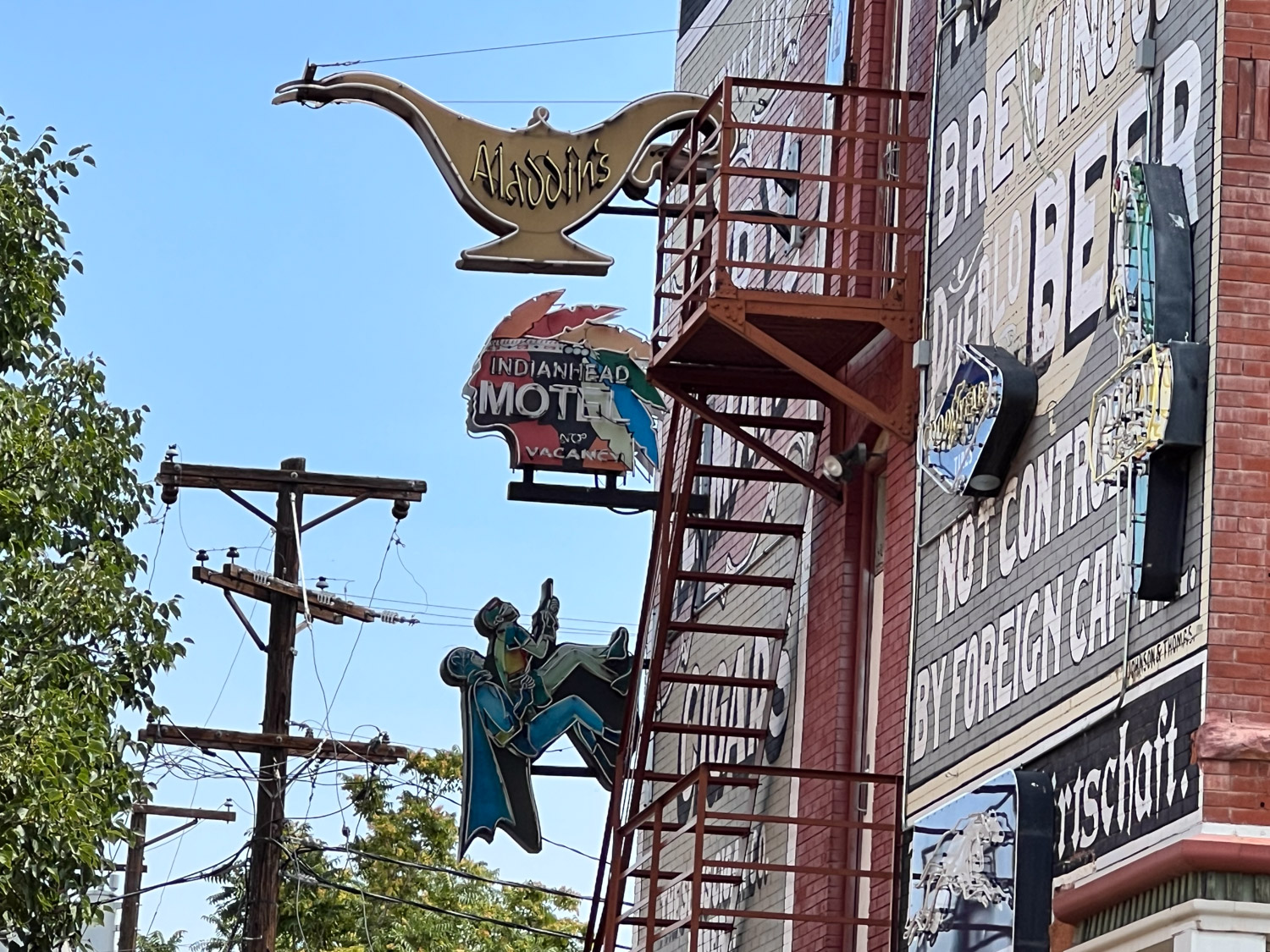
Did you notice who is climbing up the side? I got a kick out of seeing Batman and Robin from the old TV series on the wall.
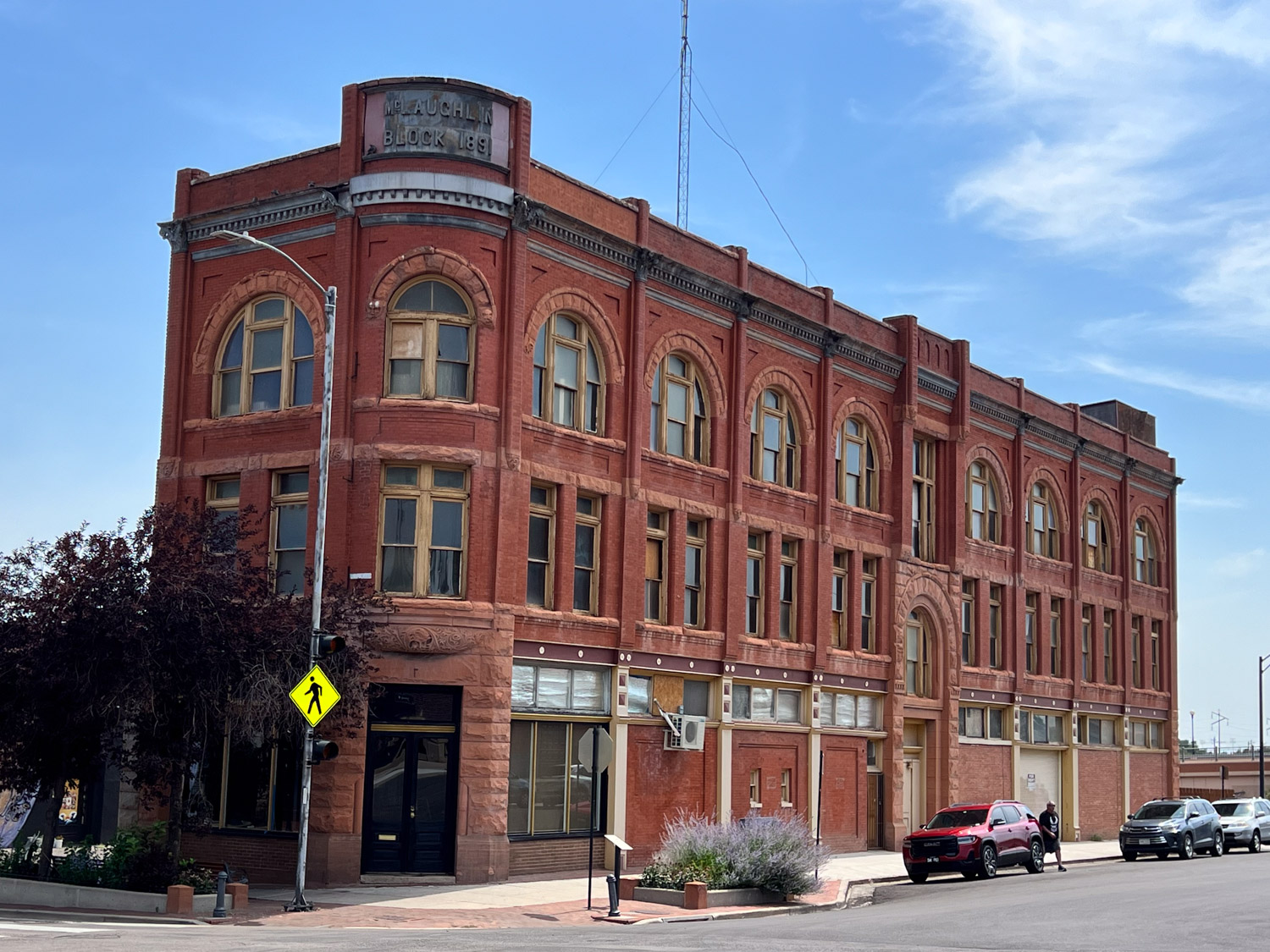
Another interesting building. We drove onto Colorado Springs.

We stopped near a park where we thought we might walk along the river, but then we saw that the Olympic & Paralympic Museum was right across the street. There is access from these stairs that go up to a walkway and down the other side.
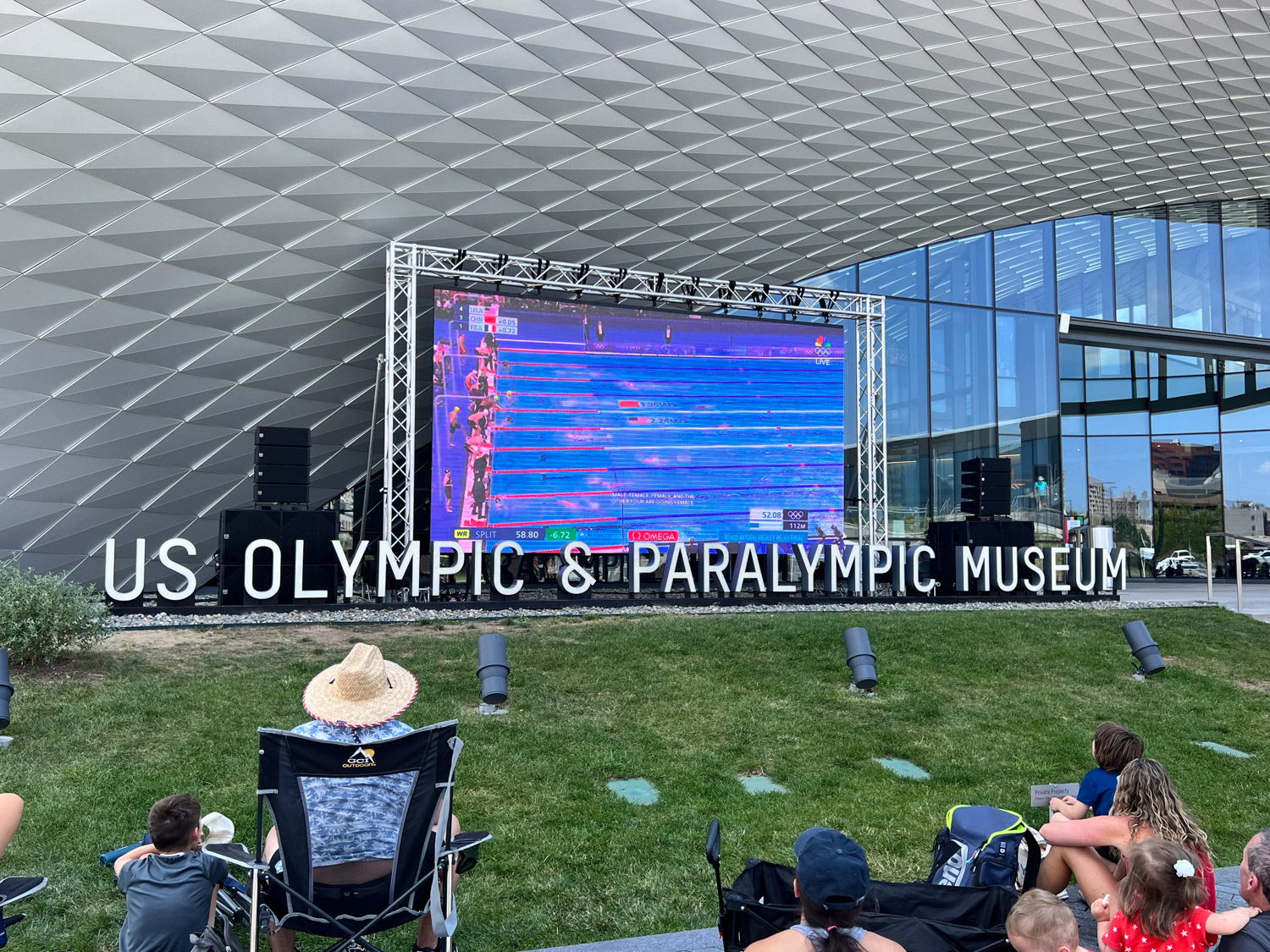
The walkway comes out near the main entrance of the museum and since we were in the middle of the 2024 Olympics it was fun to watch a portion of it on the large screen that was set up outside the museum. They were broadcasting swimming at this time.
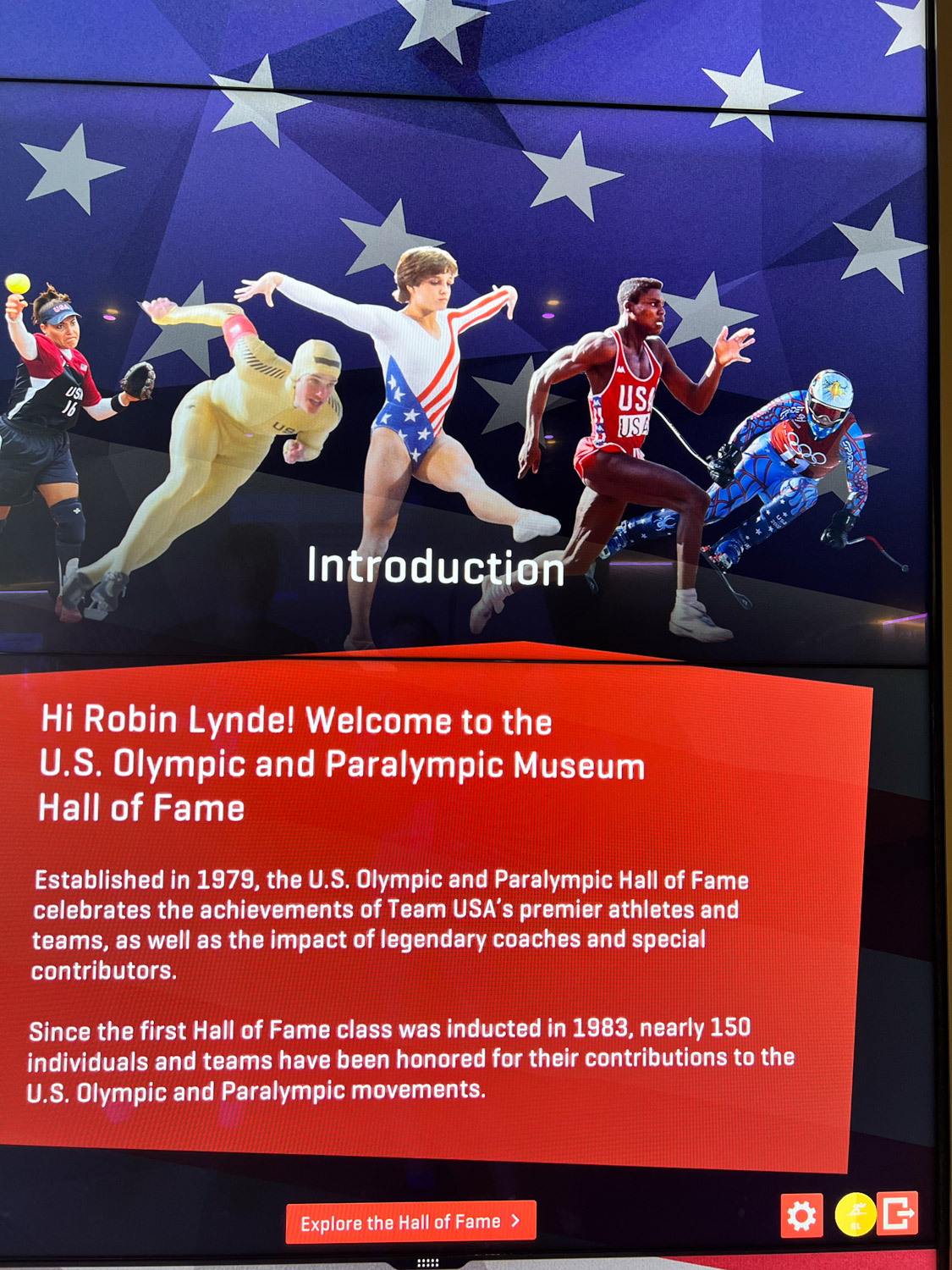
This was a difficult place to take photos. It’s also difficult to describe. You enter on the bottom level. After you pay you get a badge on a lanyard. You can use that to sign in to computerized presentations, many of which are interactive, throughout the museum.
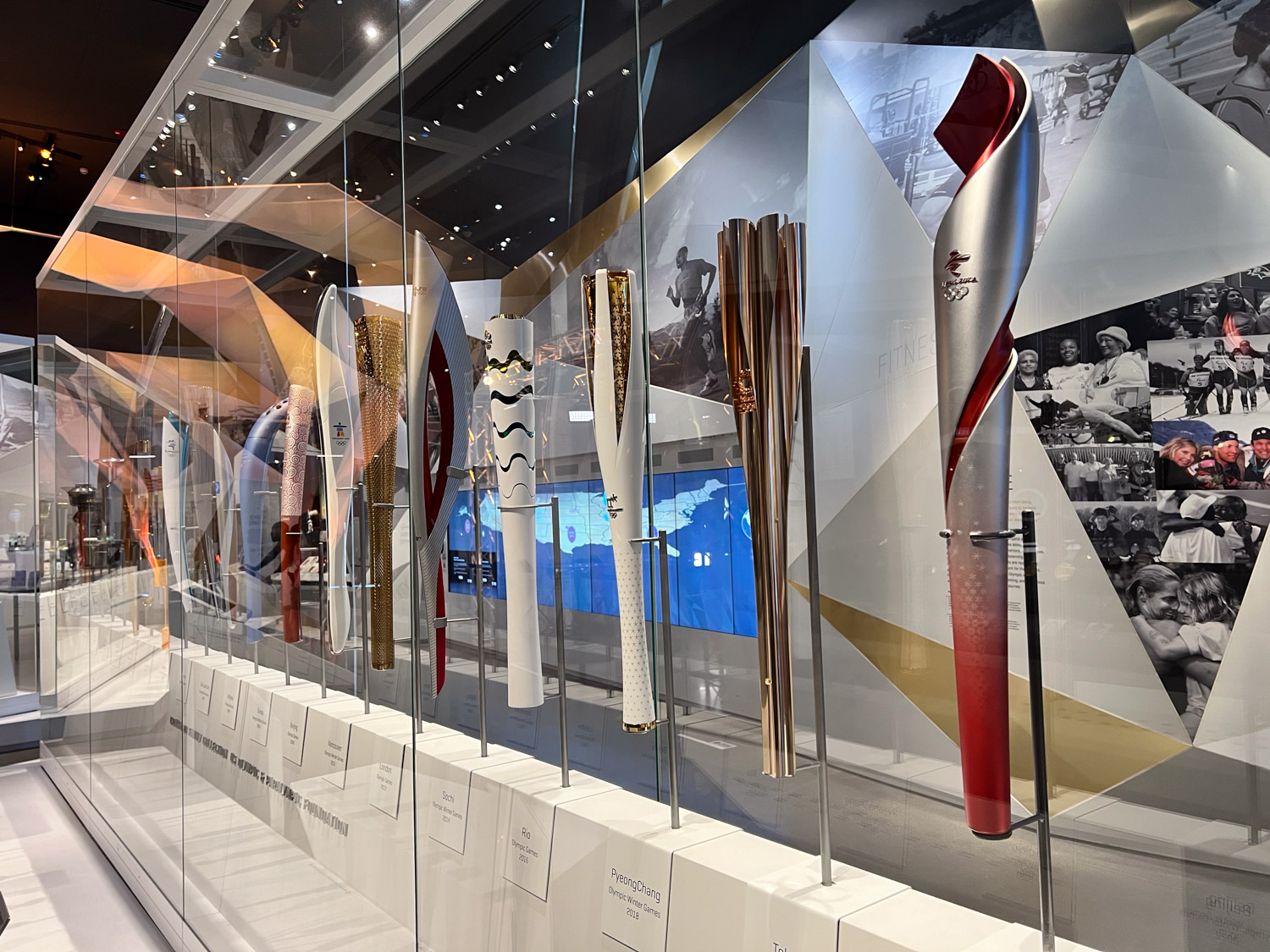
After the initial check in you take the elevator to the top floor. The museum is set up so that you spiral down through many different exhibits. This case held Olympic torches from many of the Games. I hadn’t realized that all the torches are different.
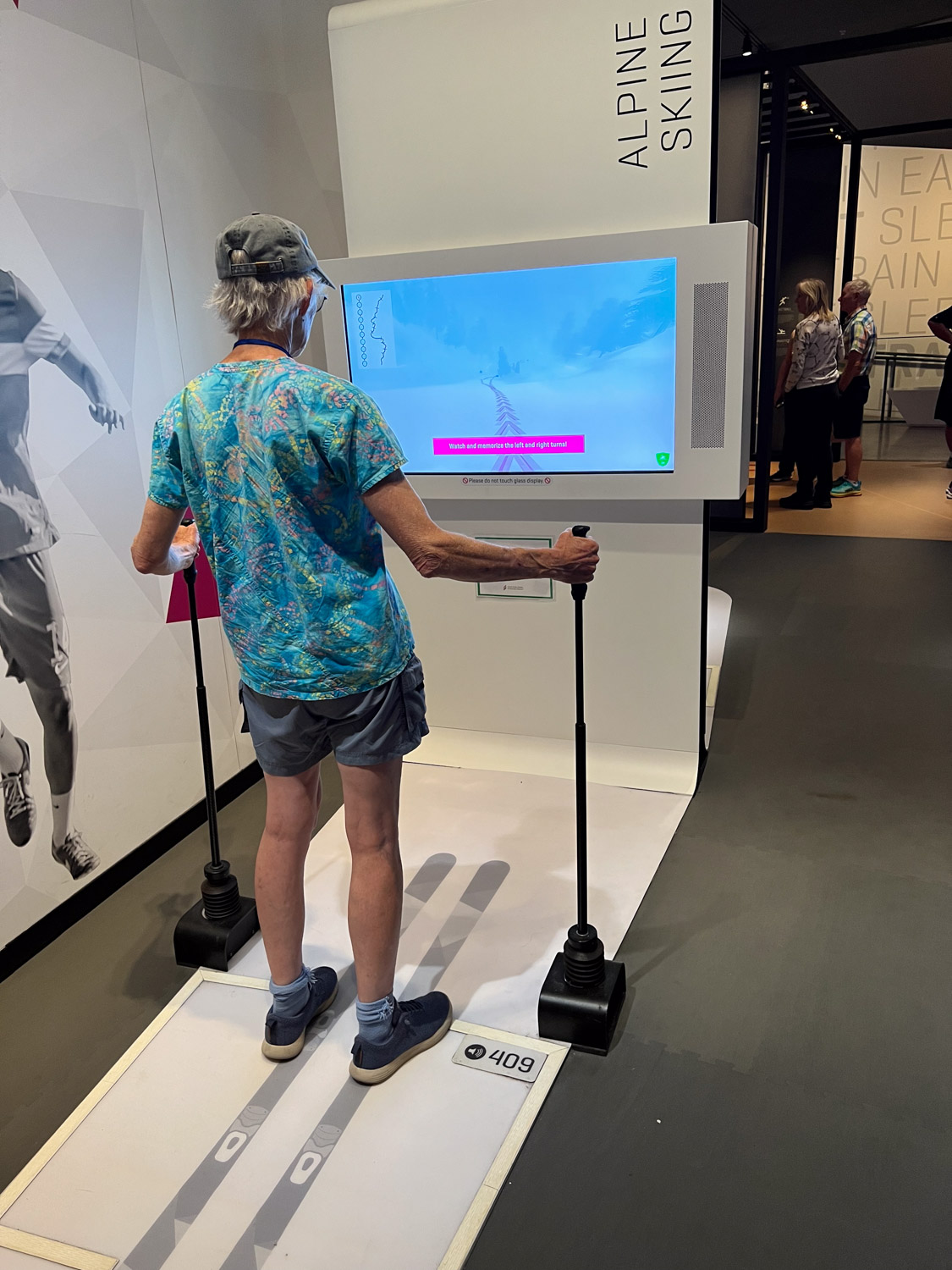
There were a few opportunities to try out sports via video. I chose skiing over archery.

As you follow the path through the layers of the building there are dozens of different displays about everything from the professional staff that is required to support all the athletes (did you know there is a Team Mom?) to highlights of specific games, stories of individual athletes, and information about gear and clothing.
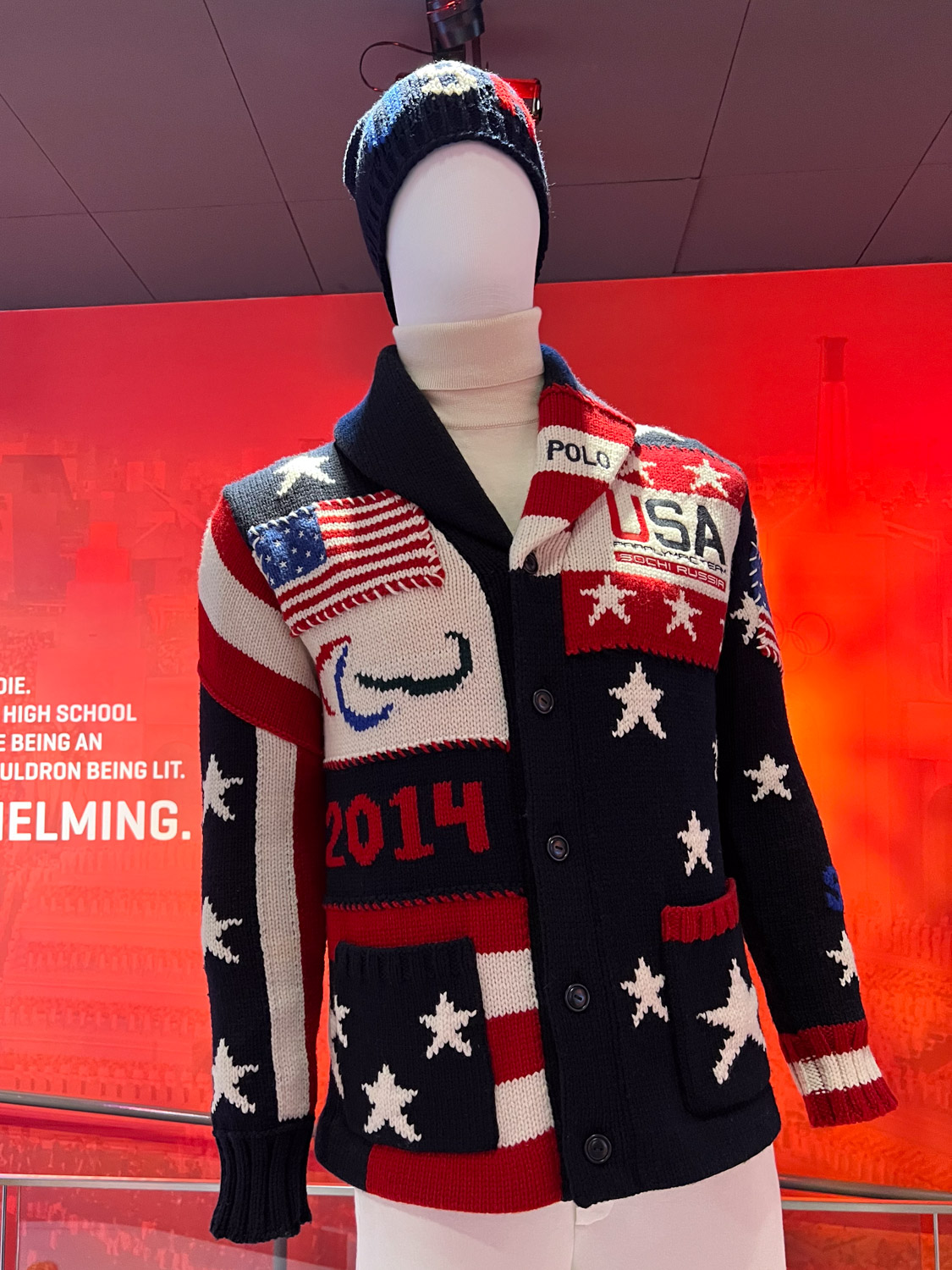
I’ll end this post with a sweater that I recognized. This was the sweater worn by the athletes at the opening ceremony of the Winter 2014 Games. It was designed by Ralph Lauren and knit from wool grown in Oregon. The whole process supported U.S. businesses. I remember writing a blog post about this yarn when I used it in an Artery show and there I found this link to a video about the ranch and the creation of this sweater. It was worth another watch.

We drove to my brother and sister-in-law’s house and spent the night there.

Road Trip 2024 – Day 3

If you’re just tuning in you can see Days 1 and 2 here.

Red sunrise over brush.

I woke up in time to see the sunrise at Great Basin National Park.

Here is another view of our campsite.

Sign with map of Wheeler Peak and trails.

The only paved road in the park winds up to the trailhead to Wheeler Peak (13,063′ elevation). We didn’t plan on hiking all the way to the peak but hiked to the lakes at the base. The hiking is all above 10,000′.

Stella Lake is the first of two lakes along this trail.

Deer in green grass and logs behind.

This doe posed nicely for the camera.

Wooden sign about Teresa Lake with the lake and trees in the background.

This sign indicates that we were about a mile from the trailhead where we started on this loop trail. However, there were signs that said the area was closed due to ongoing work. In fact, the road had been blocked before we got to the end and we’d parked lower than we first planned. Law-abiding citizens that we are, we didn’t take this trail back but took another fork and ended up back-tracking over most of the way we had already walked.

That just meant that we got to spend more time in this gorgeous area and put in about 6 miles that morning.

I’m always the one taking photos. Dan took this one so that I could prove I was there. Funny story, and maybe an example of things to come on this trip–there were two large trucks in this parking lot waiting to get past the gate that is just to the left of those porta-potties. They were full of rock or gravel or whatever they were using for the road surface. However the gate was locked and no one had a key. The drivers were trying to find the right tools to take the gate apart. I figured that one of the trucks could have just rammed the gate (being just a pipe) and driven through, but I wasn’t going to suggest that. We were able to move our truck around to get between the two big ones, but then the traffic was stopped on the way down until the pilot car that was with these trucks could make it down the mountain. So these was the first delay of the trip.

We planned to go to the visitor center and maybe see the Lehman Caves.

We spent a little time at the Visitor Center and I made a point of finding these Tempestry panels, knit by my friend, Lisa. They depict the daily high temperature for a given year and location, in this case 1916 and 2016 here at the park. You can find out more about the Tempestry Project here. This is the same idea I use in my Year to Remember blankets

This was Thursday afternoon and we needed to be in Trinidad Colorado by Friday afternoon. We didn’t have time to take a cave tour, so we’ll have to go back.

We took Highway 50 across Utah. This highway is known as “The Loneliest Road in America”, at least in Nevada. It gets a bad rap because it can be desolate, but this area in Utah known as the San Rafael Swell is stunning. (Click on one of the photos to enlarge and scan through them.)

We were somewhere west of Green River when the traffic stopped. We spent about two hours in stop and go traffic, mostly stopped, with no where to pull off. A friend (the afore-mentioned Lisa) and I were texting at the time and she found a a clue to what was going on–there had been a police chase that ended in a fatality.

Later I searched for myself and found a local news report that confirmed a chase that followed an attempt at a traffic stop. The driver passed into the median and eventually wrecked the car killing himself and another person. By the time we got to this area where we’d be able to get to an offramp our truck indicators showed that it was overheating.

We finally got to the exit and were able to let the truck cool down. Fortunately it hadn’t caused damage.

We headed south towards Moab as the sun was setting.

Not long after we turned south two sheriff trucks passed with lights and sirens. One of them weaved back and forth, stopping traffic. We were the first vehicle behind the trucks. The deputy told us that there was a pursuit in progress and, if the vehicle being pursued hit their trucks, then we should “get out of here”. That was a little nerve wracking, especially after the last episode and seeing these cops with guns drawn. Eventually the car drove past in the northbound lane with at least a dozen cop cars following. The car was being driven on rims–there must have been a spike strip that the driver ignored. All those vehicles went by and then these two turned around and followed It seems as though for the next hour we continued to see law enforcement vehicles going that direction. I never did find out what that chase was about.

These stories are not the most significant ones of our trip, but the situations pop to the top when we think about the day.

We drove south on Hwy. 491 and into Colorado and then turned east on 160. I followed the big map book and found where the highway was bordered on both sides by USFS land. There were some roads shown on the map where we could get off of the main highway. We didn’t need a campground as long as we had a safe place to pull off. We were in the San Juan National Forest and found a road that turned north. We found a spot where we could pull off that road. I think we were still eating bagels and bagged salad that we brought from home. That was dinner. We rolled out the sleeping bags in the truck and went to bed.

Road Trip 2024 – Day 1 & 2

Finally…another Road Trip. The last real trip Dan and I made was in 2019. Yes, we drove to Estes Park last year, but it’s not the same when you have a trailer full of sheep and can’t stop to play along the way. This trip was planned to coincide with the opening night of an art show in Trinidad, Colorado, but I’ll get to that in a later post.

I drove my granddaughter to the airport Tuesday morning (July 30), and we were finally packed and ready to go by about 5:30 that evening. How do we get away when there are all these sheep to take care of? Thanks go to Farm Club members who were able to spend two to three days each to take care of sheep, the garden, and of course, Ginny.

We have our phones, but I sure like to follow along with real maps. We can find a lot of interesting details along the way, figure out USFS lands where we can camp, and get a broader overview of an area. Then I use my phone to look up odd place names and read background info as we travel.

Some of my photos will be “drive-by” where there are plenty of windshield splotches visible. I haven’t been in the higher Sierras lately. I don’t think I’d seen this devastation from some of the fires over the last couple years. I think this was from the 2021 Caldor Fire that burned in the El Dorado National Forest and beyond. There were miles of devestation.

We drove east on Hwy. 50 and turned south towards Markleeville and then Hwy 395 on the east side of the Sierras. It was dark by the time we were near Mono Lake where we decided to spend the night. We got gas ($6+/gallon) as the last station was closing in the nearest town. Then we found a place to park the truck and camp.

This photo is from the next morning. Our style of camping is to bed down on the platform Dan made in the back of the truck. I sleep on a foam pad and a sheepskin and am almost as comfortable as in a real bed.

It’s hard to imagine that this was once part of the lake. The sign in the next photo says that in 1994 the State Water Resources Control Board set a target level of 6392′ which is 25′ below the lake level in 1941.That decision decreased diversions by Los Angeles from four Mono Lake tributaries.

I don’t know how much progress has been made but there is still a long way to go, The mandated level of the lake will be at the base of these signs

We walked down the board walk to the lake edge.

From The Geology and History of Mono Lake: “Along the southern shoreline of Mono Lake, large tufa towers or pinnacles rise above the water’s surface. These iconic pillars, comprised of precipitated calcium carbonate, formed over thousands of years by the interaction of freshwater springs and the highly alkaline waters of Mono Lake.” This website also says that when the water diversions were stopped in 1994 the lake was at about half the water volume and twice the salinity of what it was before the water diversions began.

Mono Lake
Mono Lake

After exploring a bit of the lake edge we got on the road. We planned to camp at Great Basin National Park, on the eastern edge of Nevada, Wednesday night.

We have always wondered about the Clown Motel which we discovered on a trip through Tonapah when we made a decision to NOT stay there and try another. It is even more clown-themed now than I remember it from before. I just looked it up and found that in 2019 it was purchased by someone who embraced that theme and has modernized the motel. I read more and found that there is a history to the clown theme. You can see that here if it intrigues you.

We made it to Great Basin National Park by about 5 p.m.

I needed to get out of the truck and get some exercise. After we chose a campsite I followed a trail along the nearby stream about a mile and a half. We didn’t see any warnings about bears, but I started thinking about them and wondered if hiking by myself near dusk was a good idea, especially with the recent fatality in CA by a mountain lion. The only bear encounters we have had were at Grand Tetons and Yellowstone, but maybe it’s the older I get the more I know that sometimes things go wrong. I decided to turn around. I still enjoyed the beautiful scenery.

This was our camping spot.

Convergence 2024 in Kansas – Day 1

When I Google “convergence” I find “an annual convention for fans of Science Fiction and Fantasy”, “a global network for blended finance”, and more, If you’re a weaver you probably know of Convergence as a gathering held every other year by the Handweavers Guild of America. This year it’s in Wichita, Kansas. It was a year ago that I applied to teach here and two of my proposed classes were accepted. I ended up teaching only one because too few people signed up for the other.

I flew to Wichita on Wednesday.

The conference is at the Hyatt Regency and the adjoining Convention Center. I spent the afternoon setting up my classroom for the next day’s workshop. Then I explored the nearby area.

Screenshot

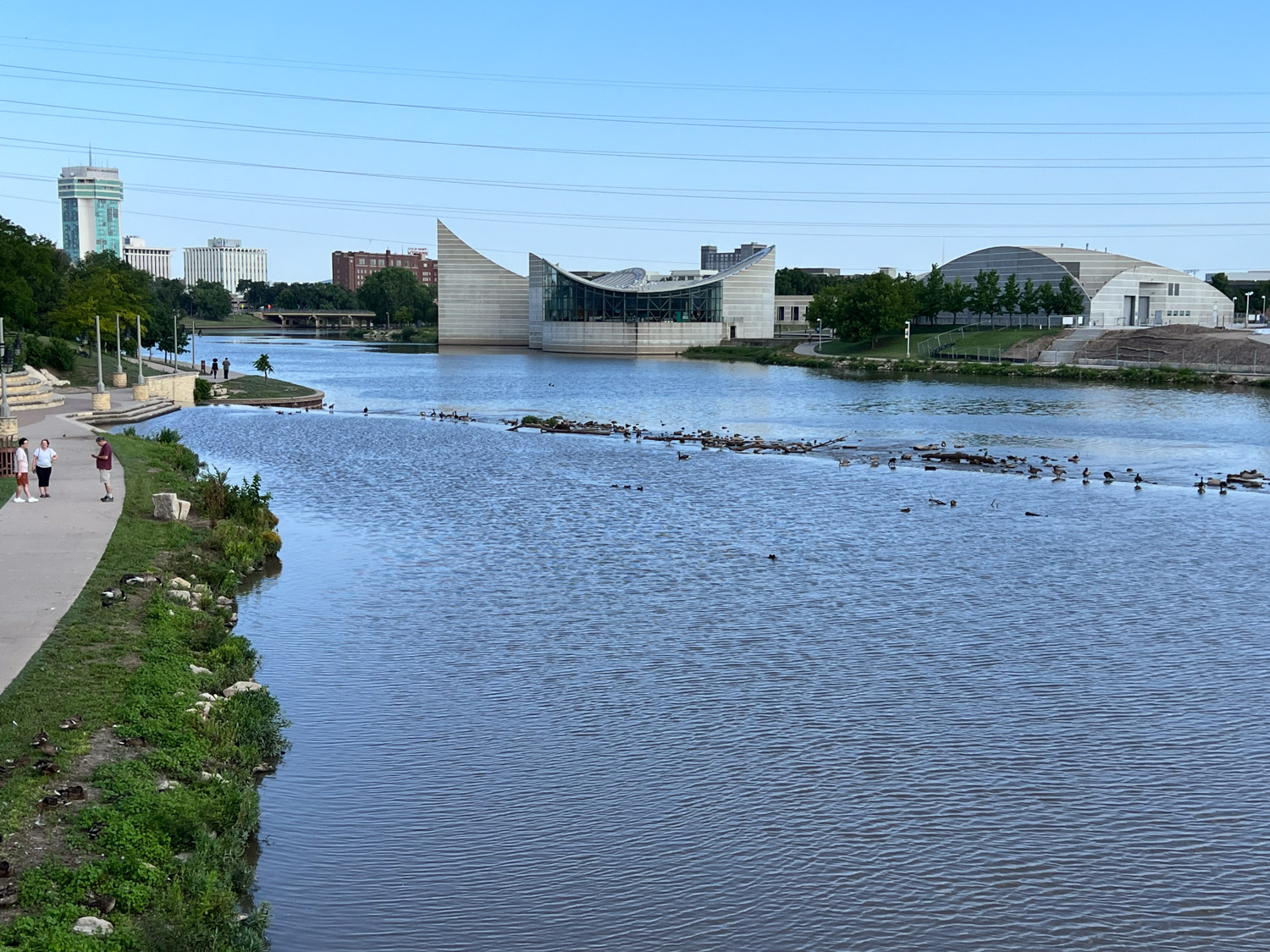
I took a screenshot of the app I have on the phone to record workouts–although I don’t call this a workout. It’s a walk. There are paved paths along each side of the Arkansas River with plenty to see on both sides.

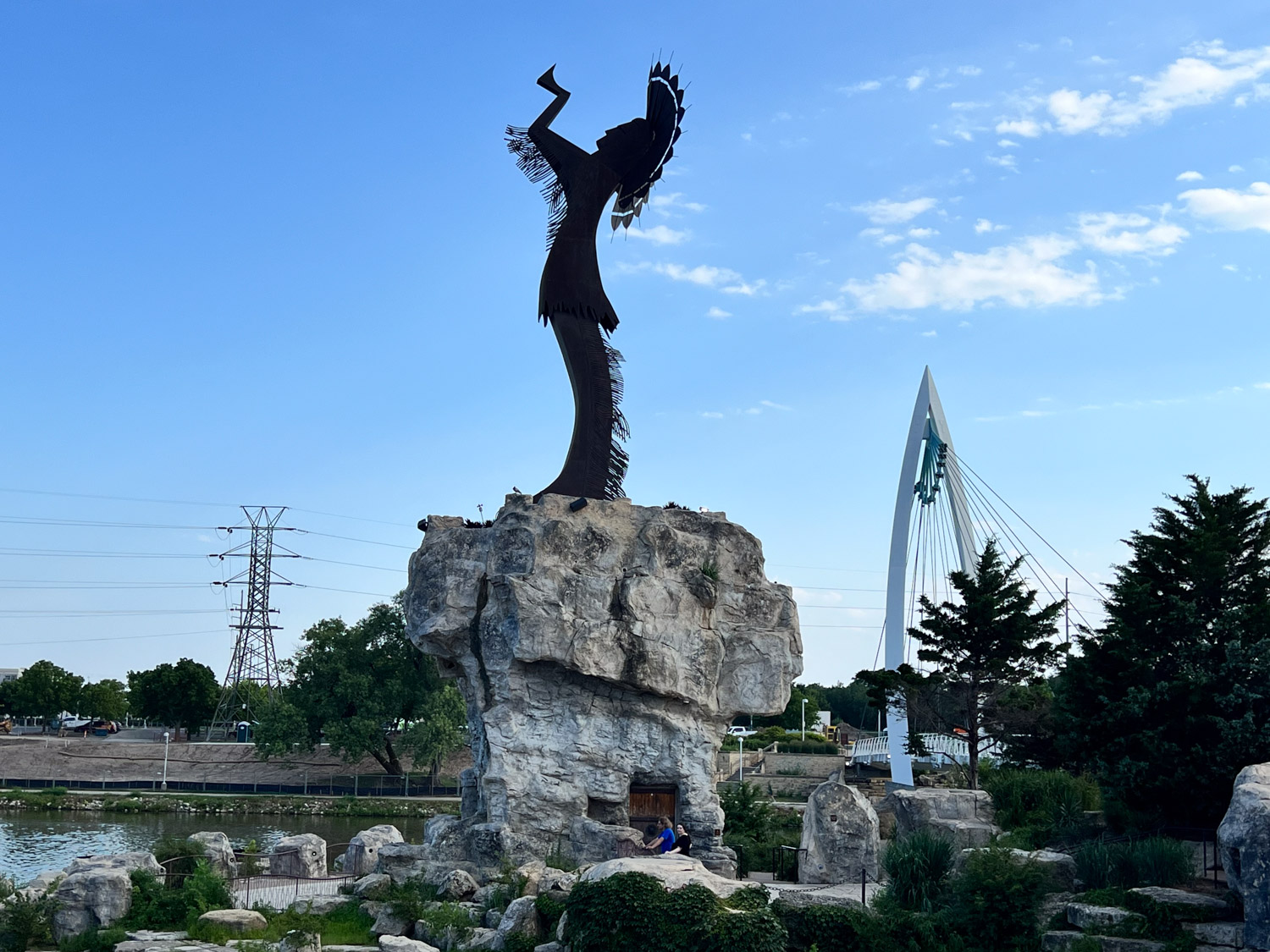
This unusual building is the Exploration Place. In the distance you can see a pedestrian bridge and the 44-foot tall Keeper of the Plains statue that rises on a rock promontory. It is at the confluence of the Arkansas and the Little Arkansas Rivers, as seen on the map above.

This monument is just off the path and is one of many in the adjoining Veterans Memorial Park

Exploration Place seen from the north.

Keeper of the Plains. The statue was erected in 1974 and was raised on a 30-foot promontory in 2006 so that it could be seen from farther away. In the adjoining plaza there are displays that describe the local tribes that used to inhabit the area. There is also a ring of fire pits that are lit nightly for 15 minutes.

As I walked back on the other side of the river I had another view of the Exploration Place. Right now the website advertises two nights of Superhero Sleepover (“Bam, Pow, Snooze”). This looks like a great place to visit with kids…probably adults too. I took this photo partly for my own kids who I think would be interested in or amused by the helicopter, the giant open mouth and the green object on the left. You probably can’t tell in the photo here but I could see from where I stood that it says Fart Chair. The building is large and I’m sure holds a full day’s worth of interesting activities.

This is a view of the Hyatt from the bridge where I crossed back over the river. Home for the next four days.

Ironman 70.3 at Coeur d’Alene Idaho – Day 1

I think we’ve made it to all the Ironman events for Chris and Matt. When I search the blog I used from 2019 through early 2023 I found 11 posts about our Ironman experiences. The earlier WordPress blog (which is what I’m using now) had Chris’ first Ironman in 2013 and the second one in 2016. Do you see the purpose of these blog posts? Like I’ve said before, they replace the old scrapbooks. And now, to have the best of both worlds, Matt has made real books out of many of them (see this post).

Chris had to fit this Ironman in before fire season. Chris and Meryl live in Boise and Chris works out of McCall, so it seemed that Coeur d’Alene was doable. For us it was a 13 hour drive. This post is all about the drive on the first day.

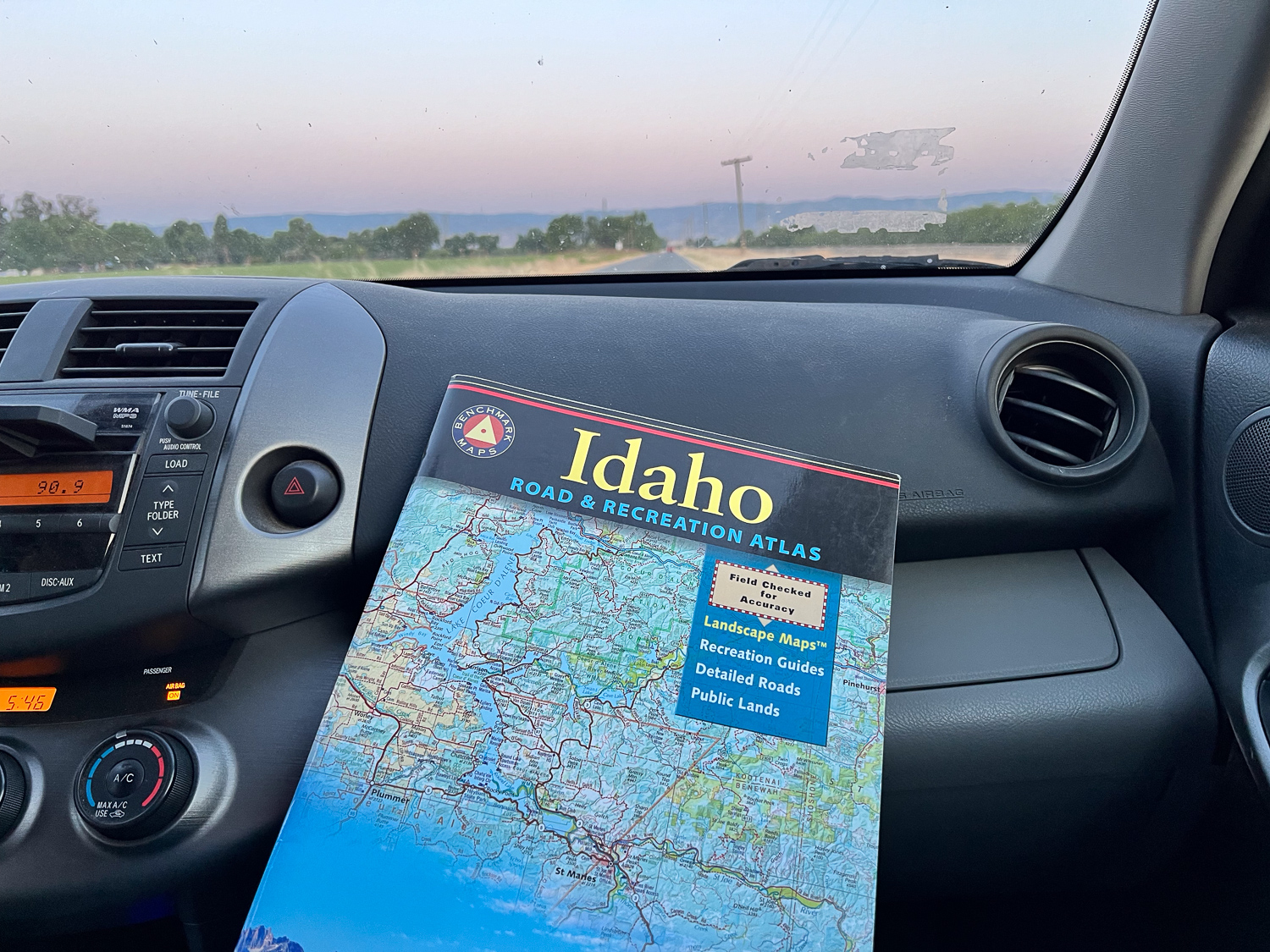
Idaho map book on dashboard of card.

We left at 5:45 a.m. on Friday, only 45 minutes behind schedule. The event was on Sunday so this would give us a day to check out the course, check in the bike, and visit with Chris and Meryl.

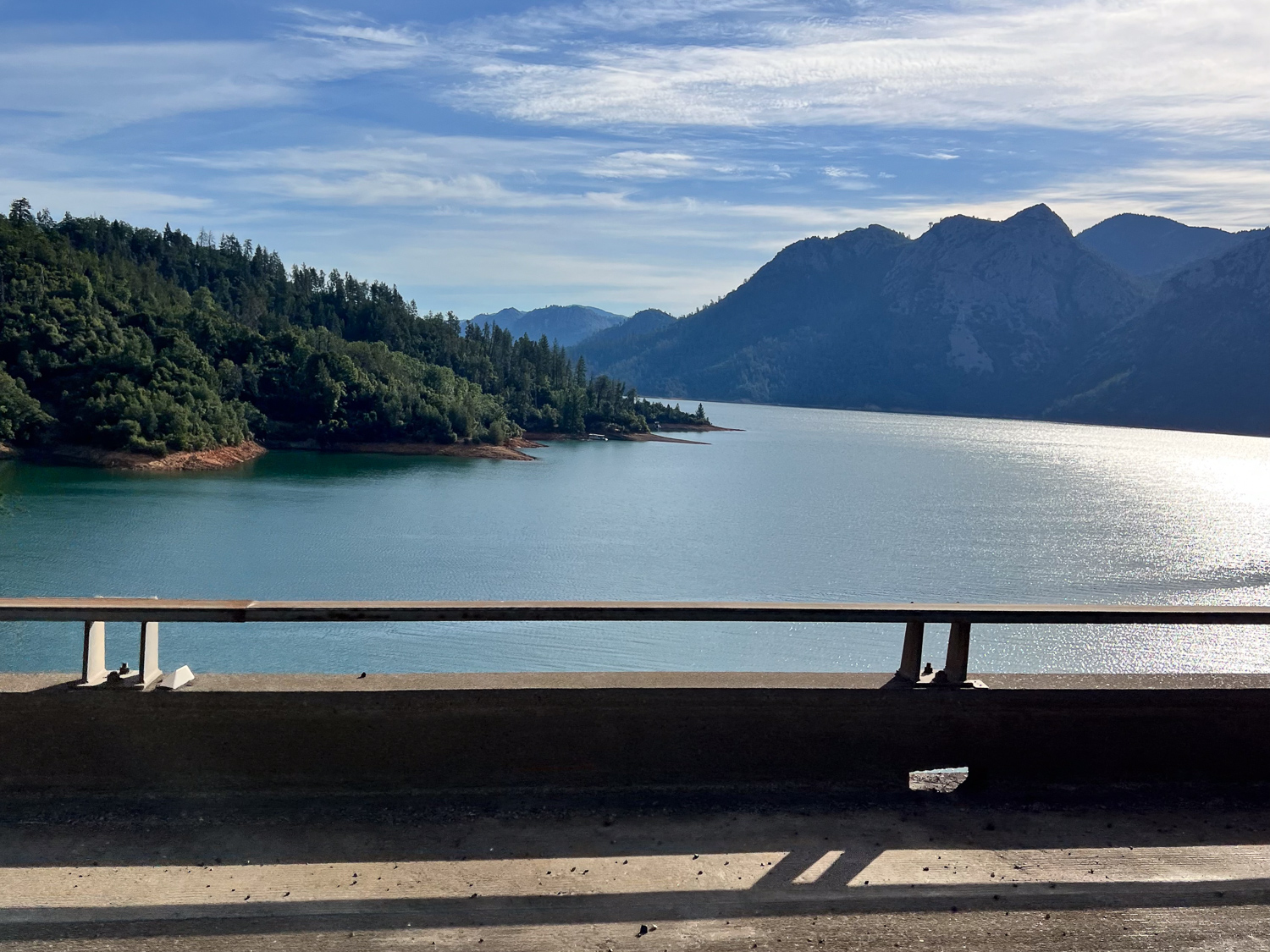
It was good to see that Shasta Lake is full.

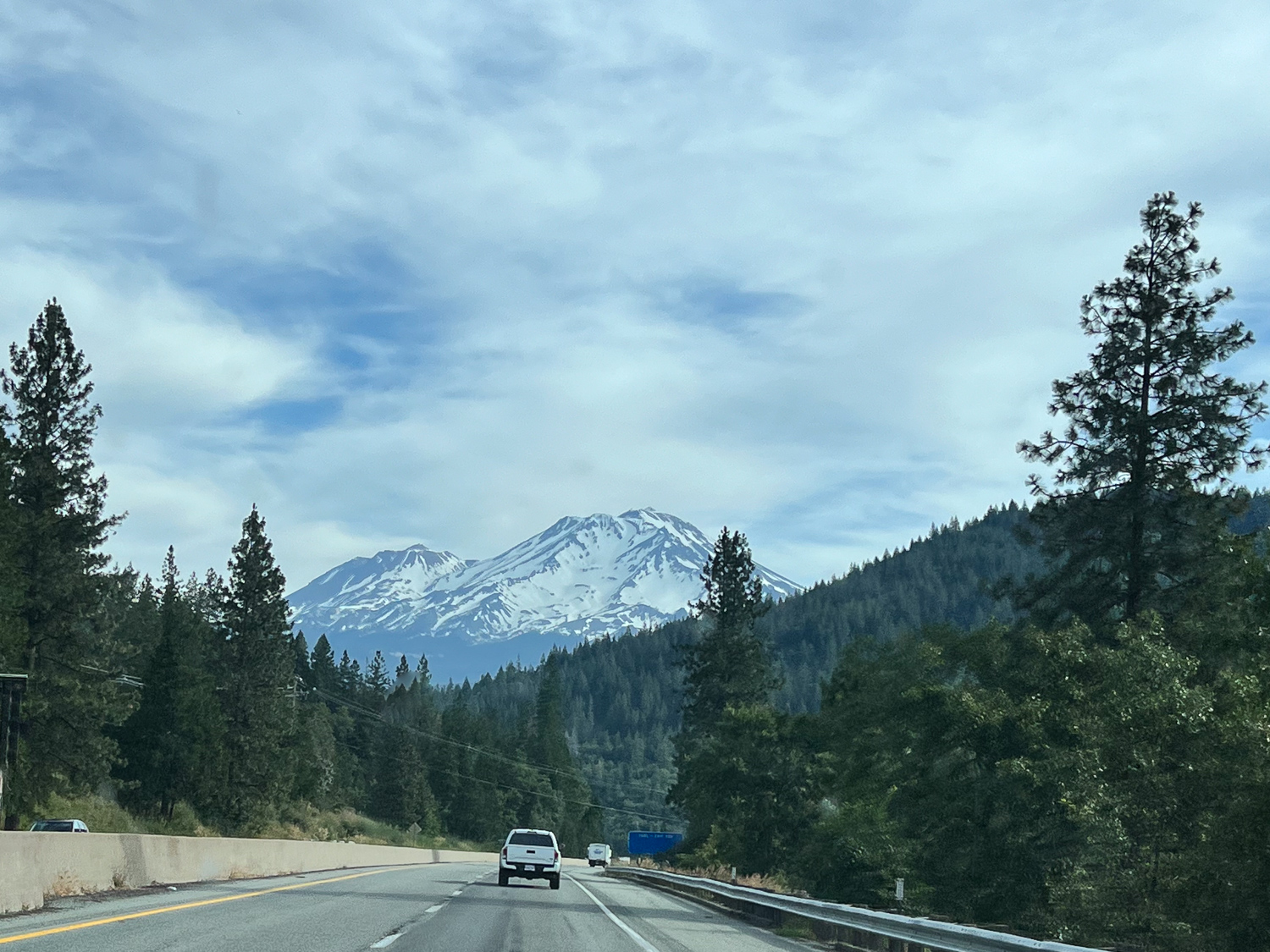
I always look forward to seeing Mt. Shasta.

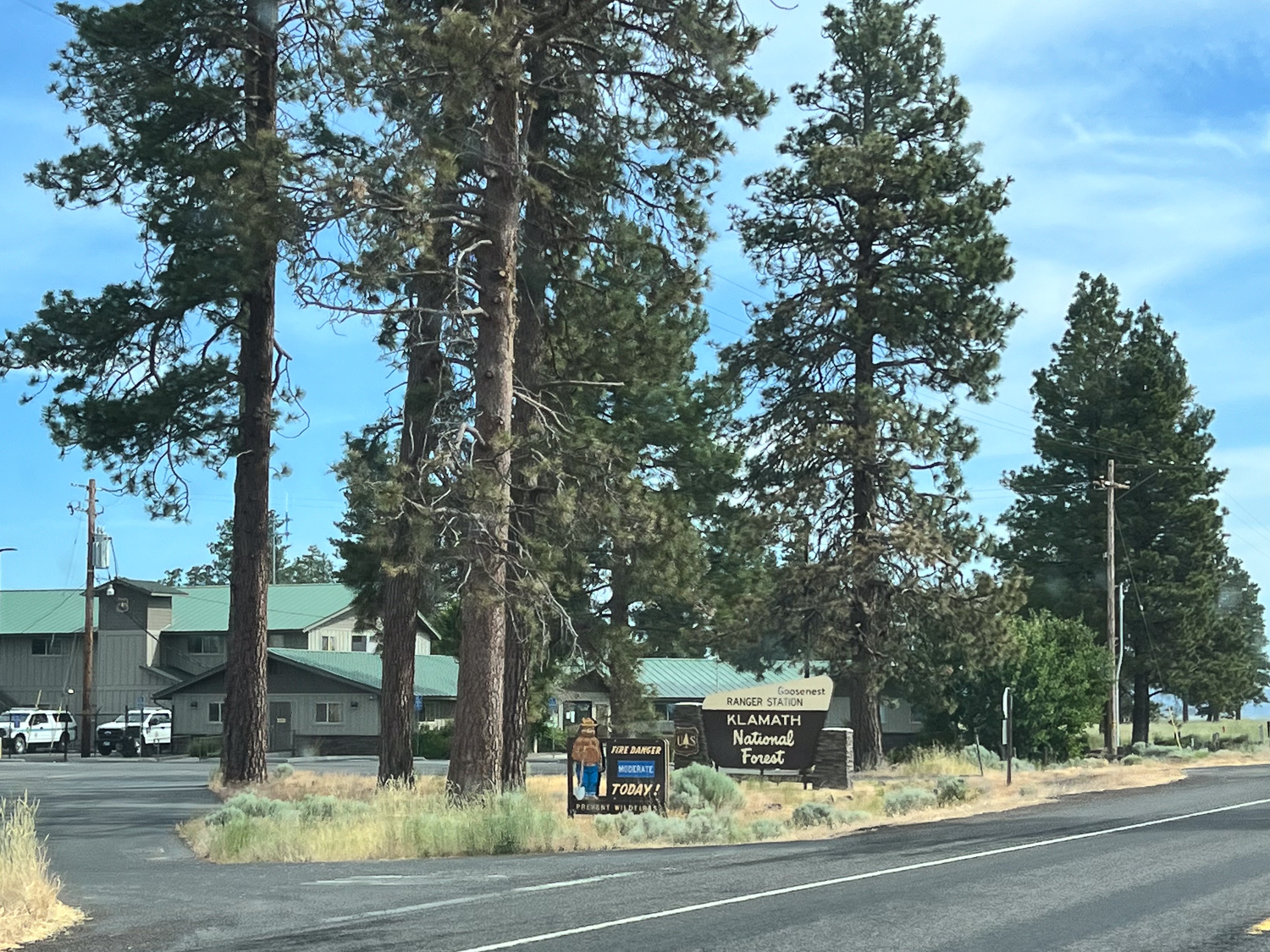
We veered off I-5 at Weed to take Hwy. 97 into Oregon. I interned for a summer in the mid 1970’s (or was it two?) in Siskiyou County for the USFS. This is the station where I reported and I lived in a tent at a campground about 10 (?) miles away. I have forgotten a lot of details. I wouldn’t mind going back there to see it, but this wasn’t the trip for getting side-tracked. There were lots of memories driving through this area though.

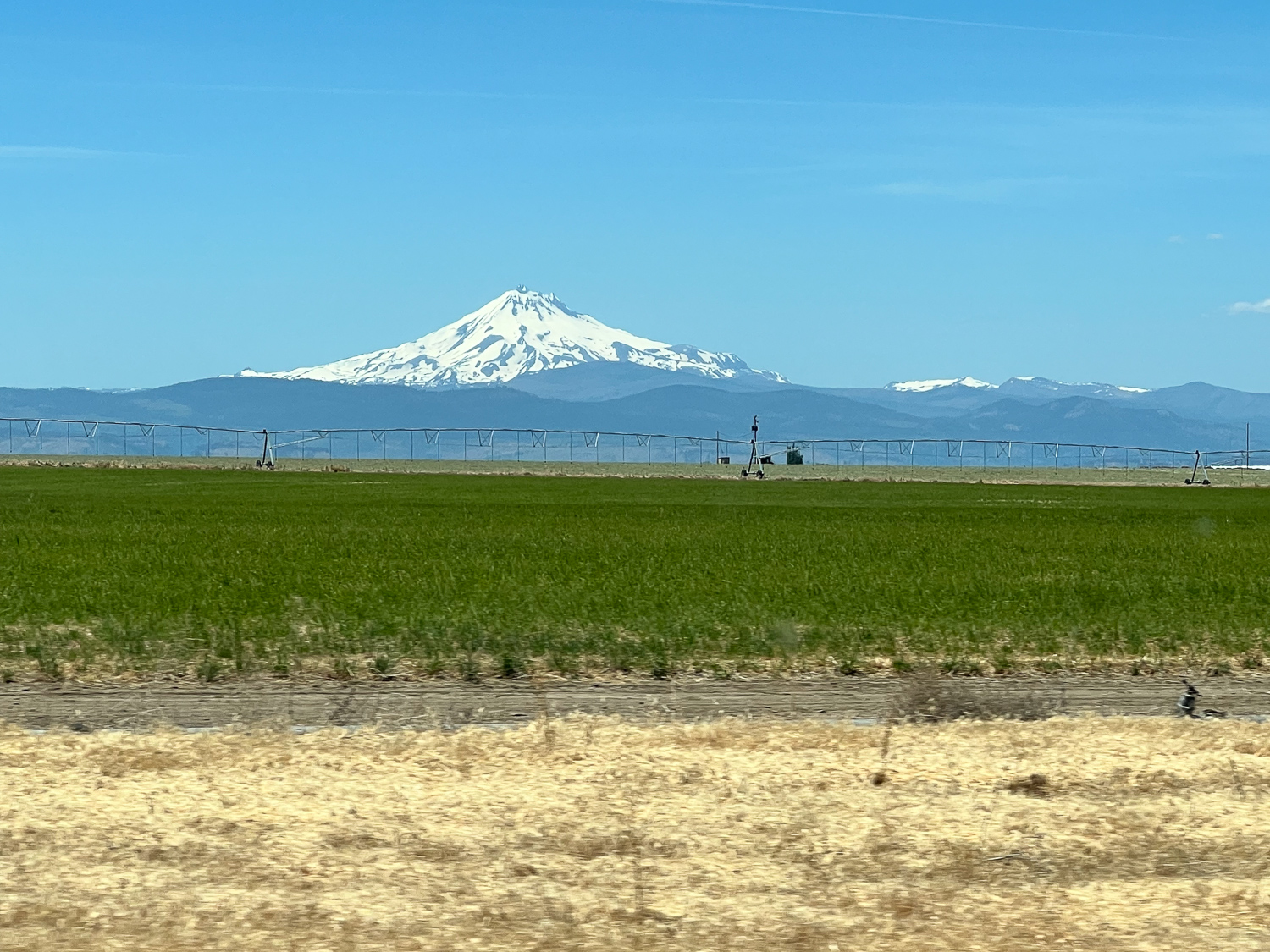
Once in Oregon we were struck by the mountain peaks rising so far above everything else. I’m used to our area where you see a whole range of mountains when the sky is clear enough. Here it’s interesting to see individual mountains that rise above all the rest. This one is Mt. Jefferson (I think), 10,502′ at the peak.

I have lots of landscape photos but I can’t put them all here. I don’t know if I’ve driven this stretch through Oregon. The main feature along this part of the route was the grassland. In fact over 173,000 acres are designated Crooked River National Grassland

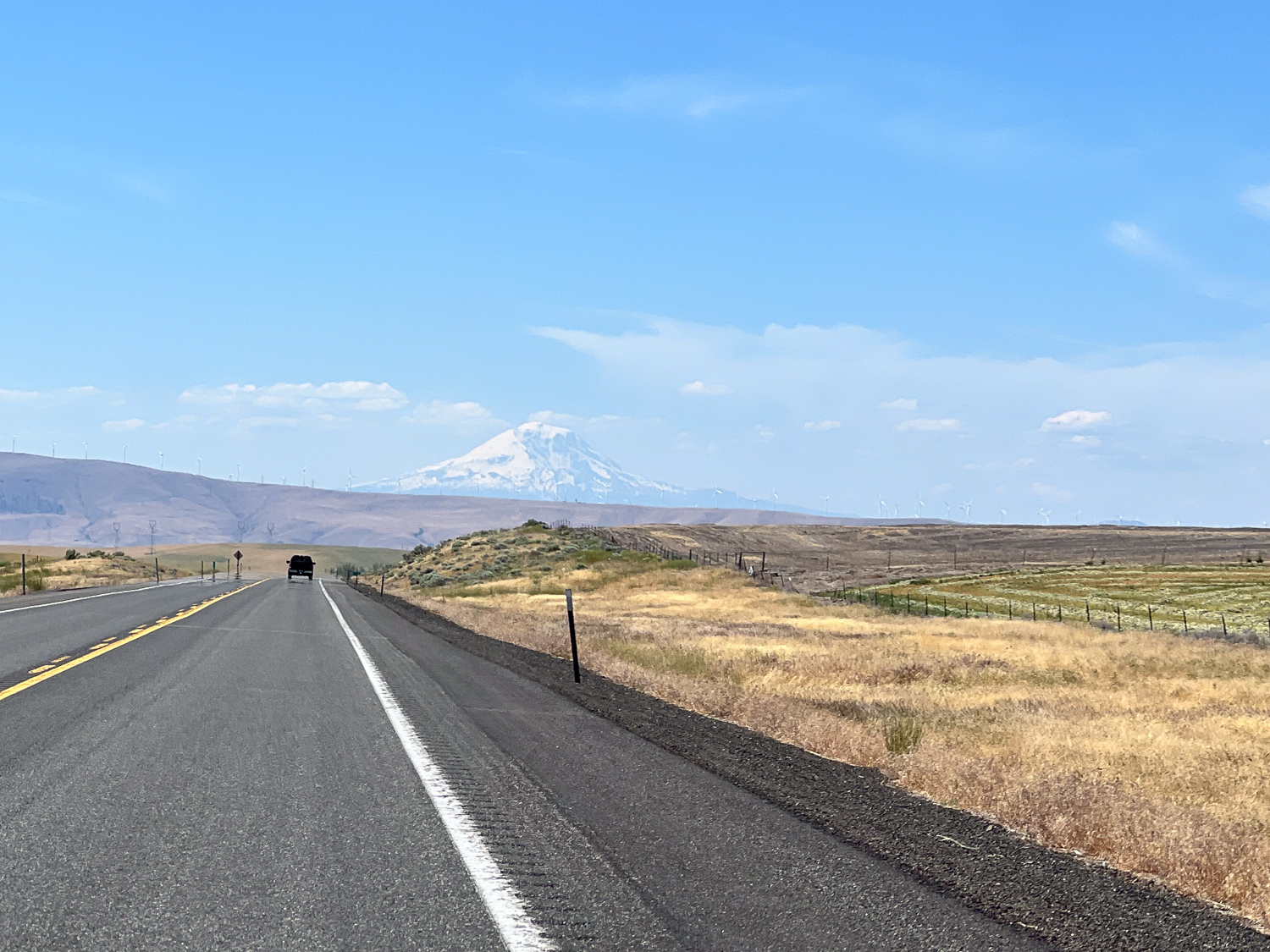
I’m skipping ahead. We’re still in Oregon but with a view of Mt. Adams in Washington.

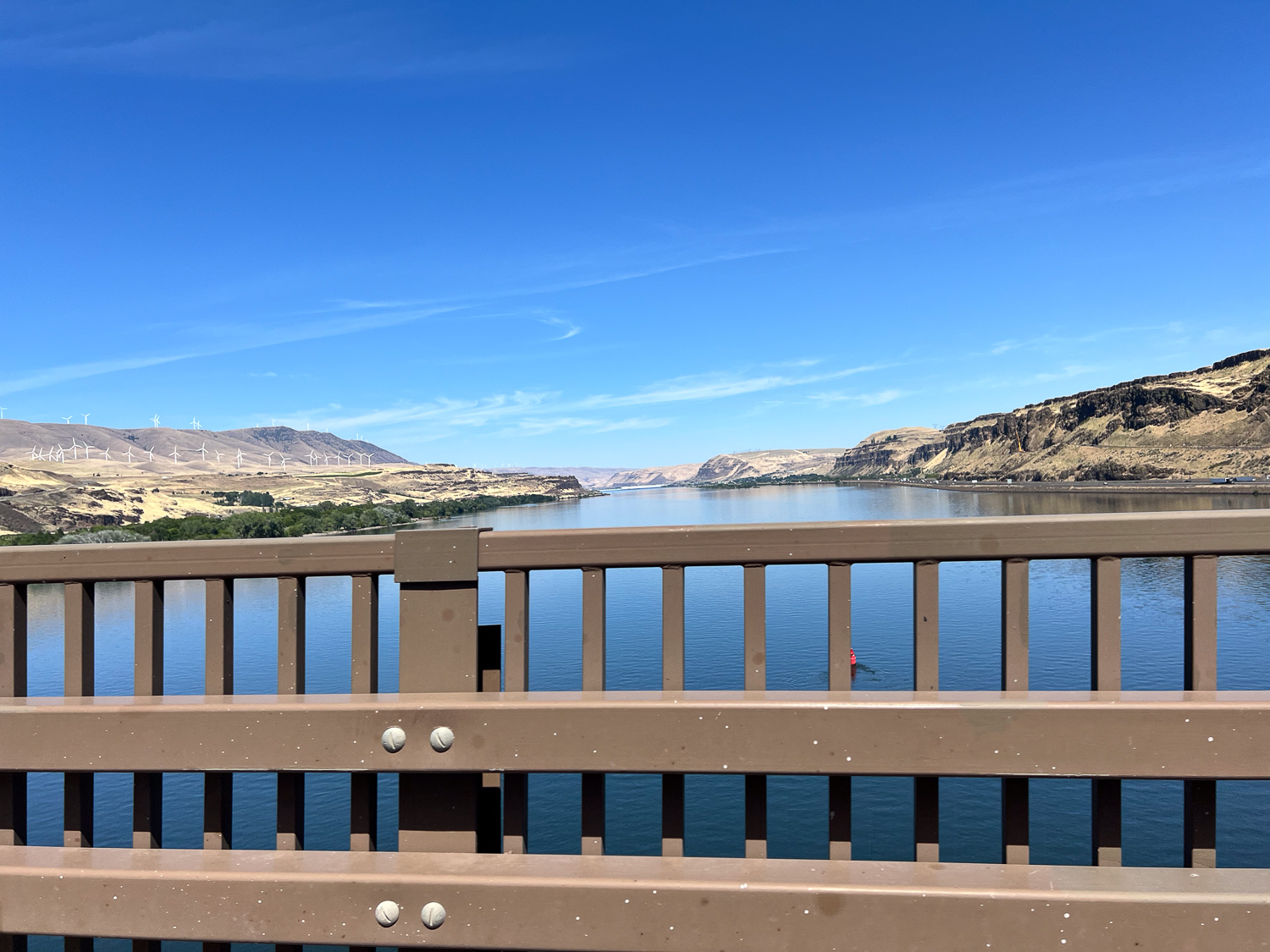
This is crossing the Columbia River at Biggs Junction, entering Washington.

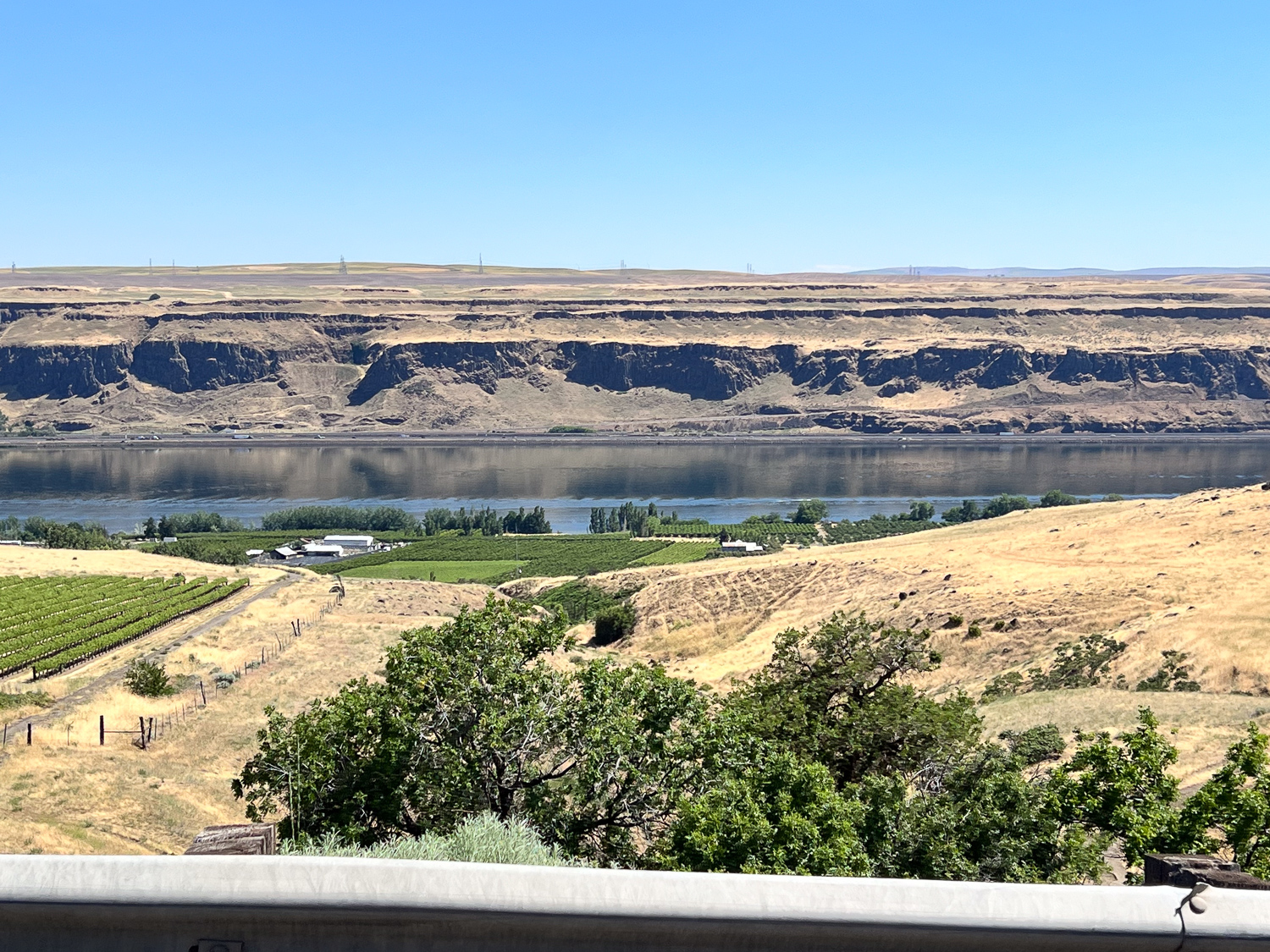
This is the view from the north side of the Columbia River.

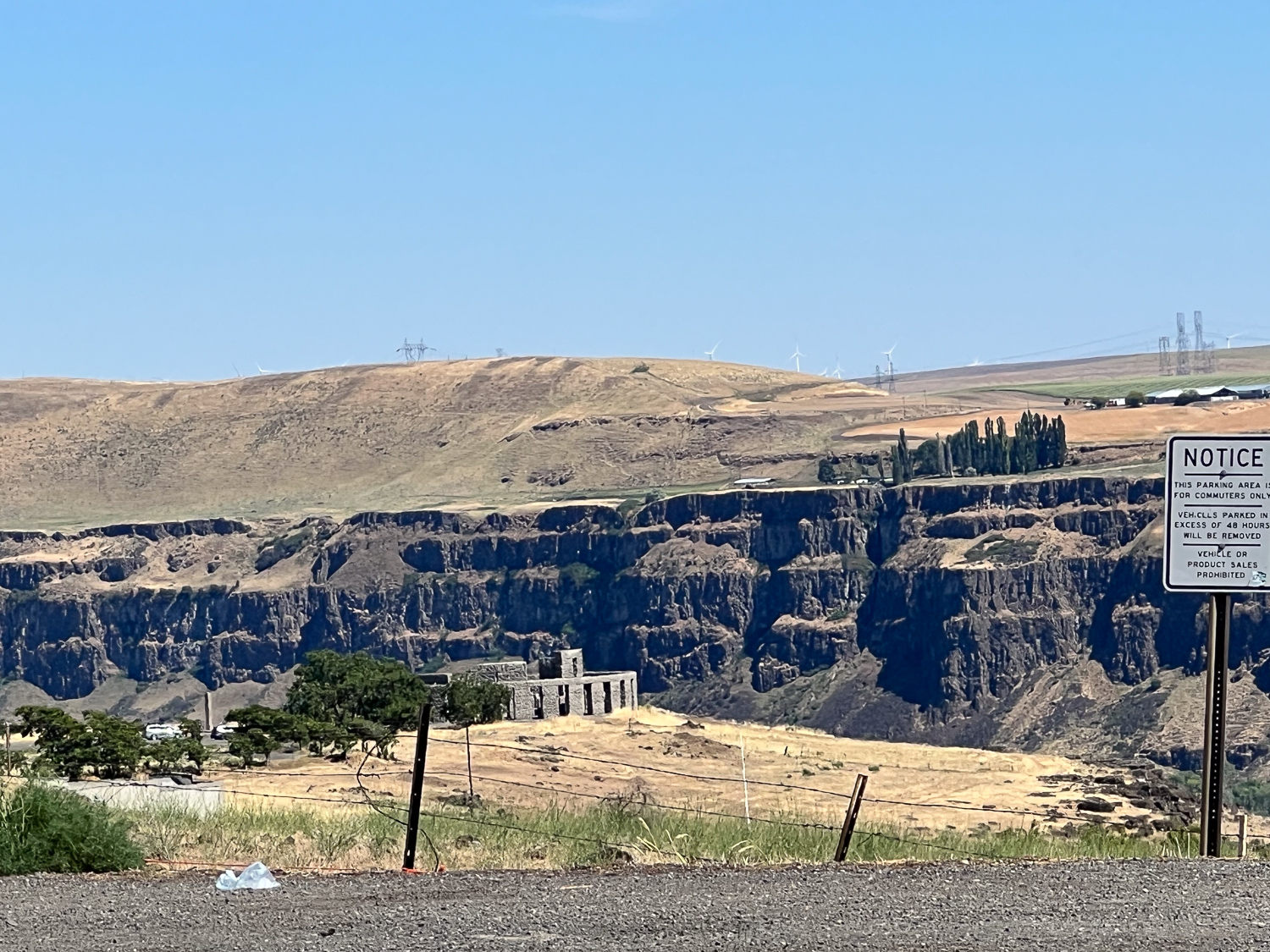
There is an interesting structure on the north bank of the river. This is known as Stonehenge and it was constructed in 1918 to memorialize the men who fought in WWI. See the whole story here.

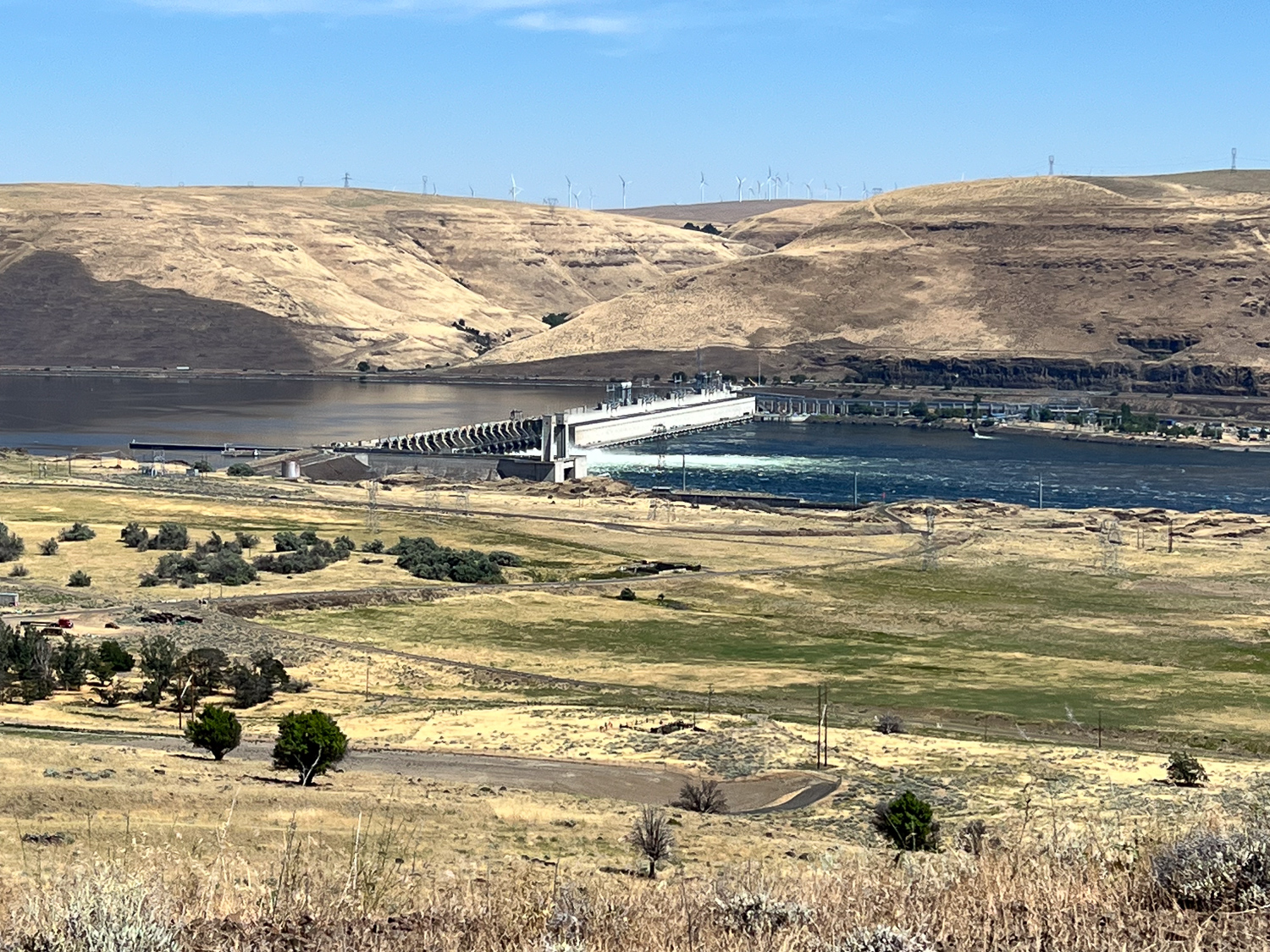
John Day Dam is not far from where we crossed the river. Construction started in 1958 and it was first used in 1971. I am fascinated by the lock structure that lifts a maximum of 113 feet, seen on the left in this photo.

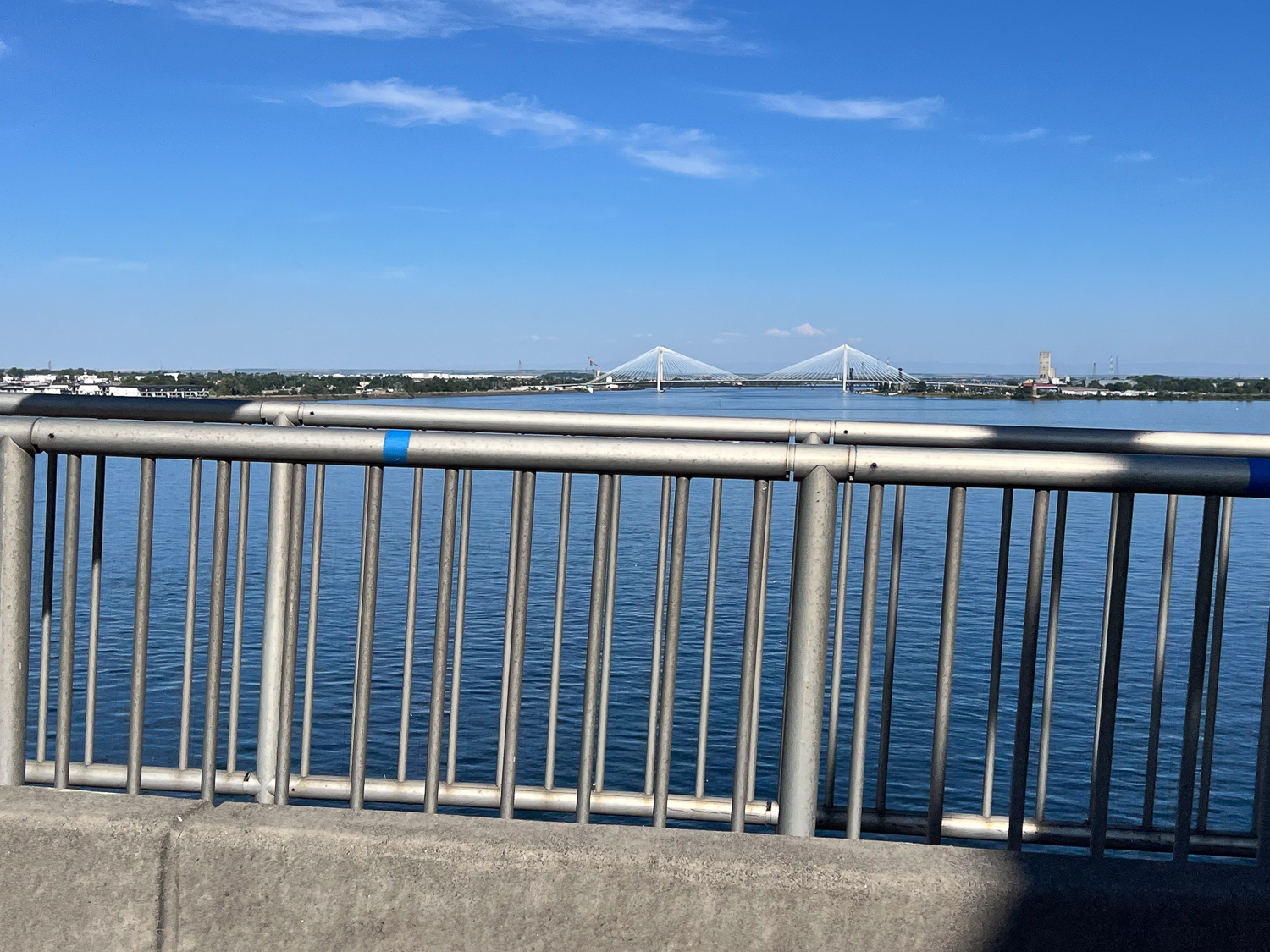
View crossing the river at Kennewick.

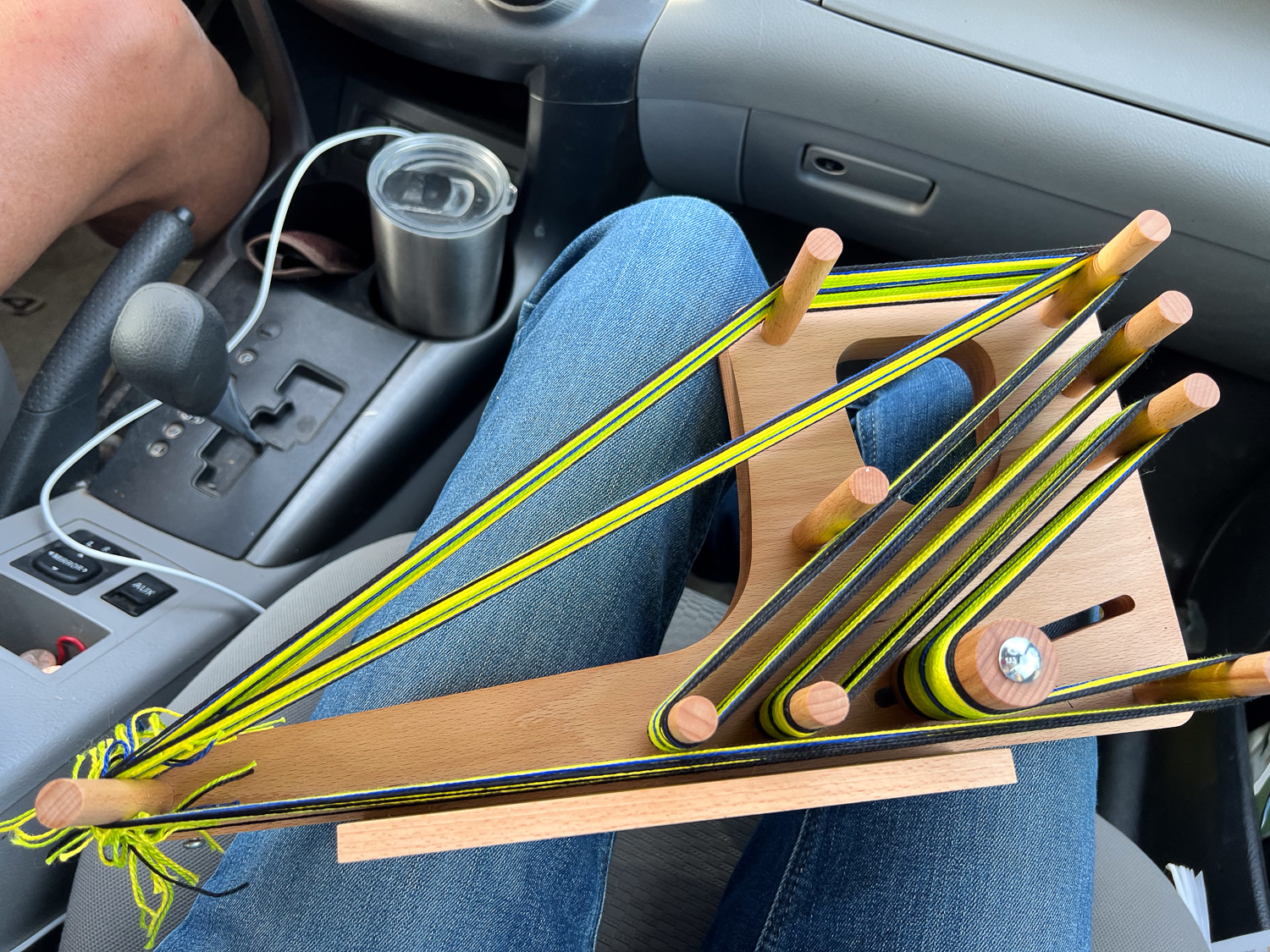
Knowing that Dan would want to do most of the driving, I brought a ridiculous amount of projects and unread magazines with me. I spent the first few hours working on the article I’m writing for Handwoven that was due soon. Once we got into the Northern California mountains and then through Oregon and Washington I wanted to see the scenery. I didn’t get anything out until the last bit when I pulled out this inkle loom to thread it.

It was still daylight when we got to our motel. We met up with Chris and Meryl briefly but everyone needed to get some sleep. To be continued.

Visiting Family in Texas – Part 4

The Eclipse in Texas post is here. That was on Monday. I was flying out on Wednesday, but in the meantime Dan and I had a day to find something to do. Kids were at school and Katie and Kurtis were at work. We drove to the town of Blanco to see what we could find.

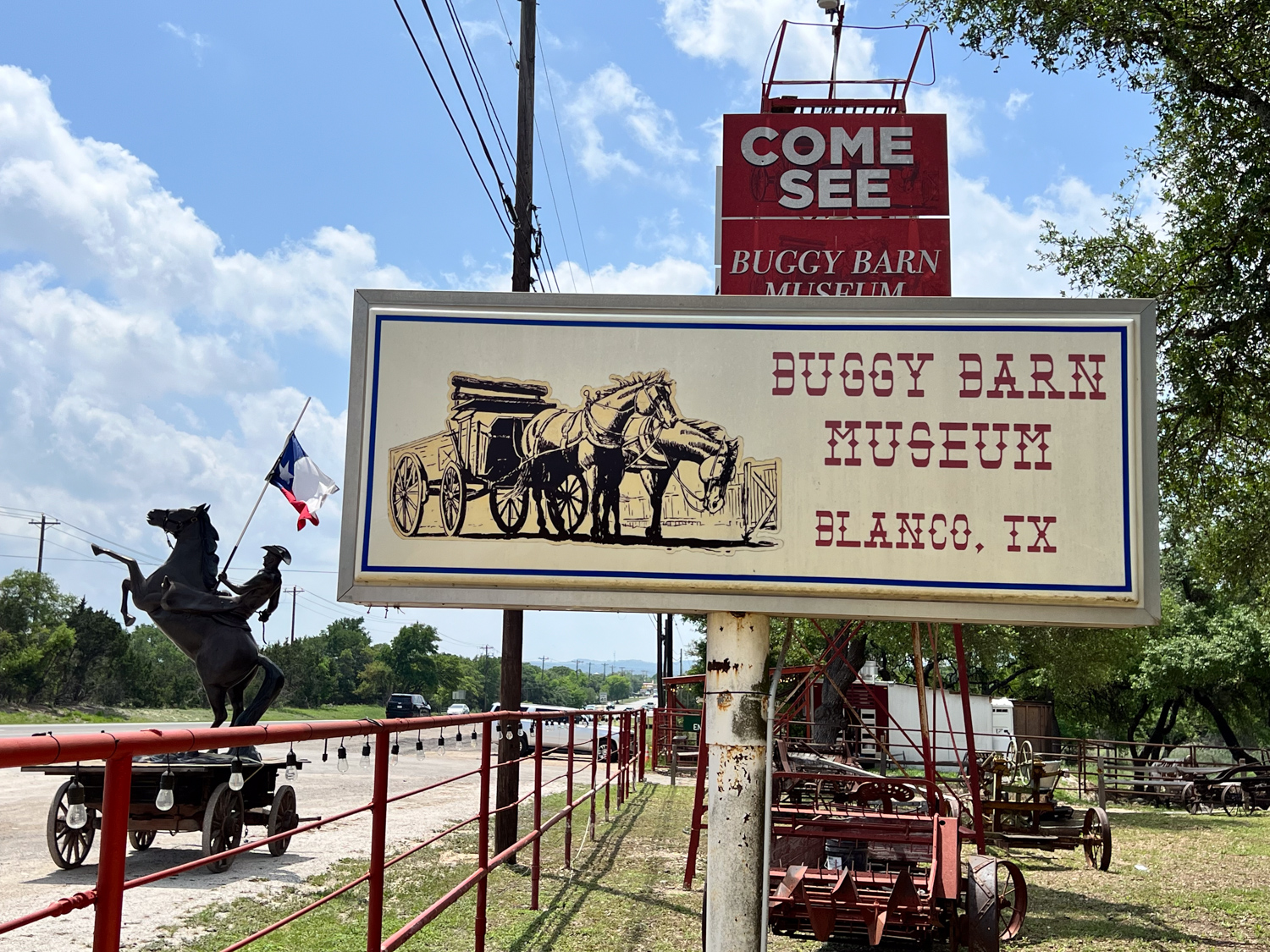
We ended up at the Buggy Barn Museum where there are over 250 buggies, wagons, and carriages of all types. There is also a street with the Old West look and buildings that can be rented for photoshoots or gatherings.

We wandered around the Old West and explored the buildings.

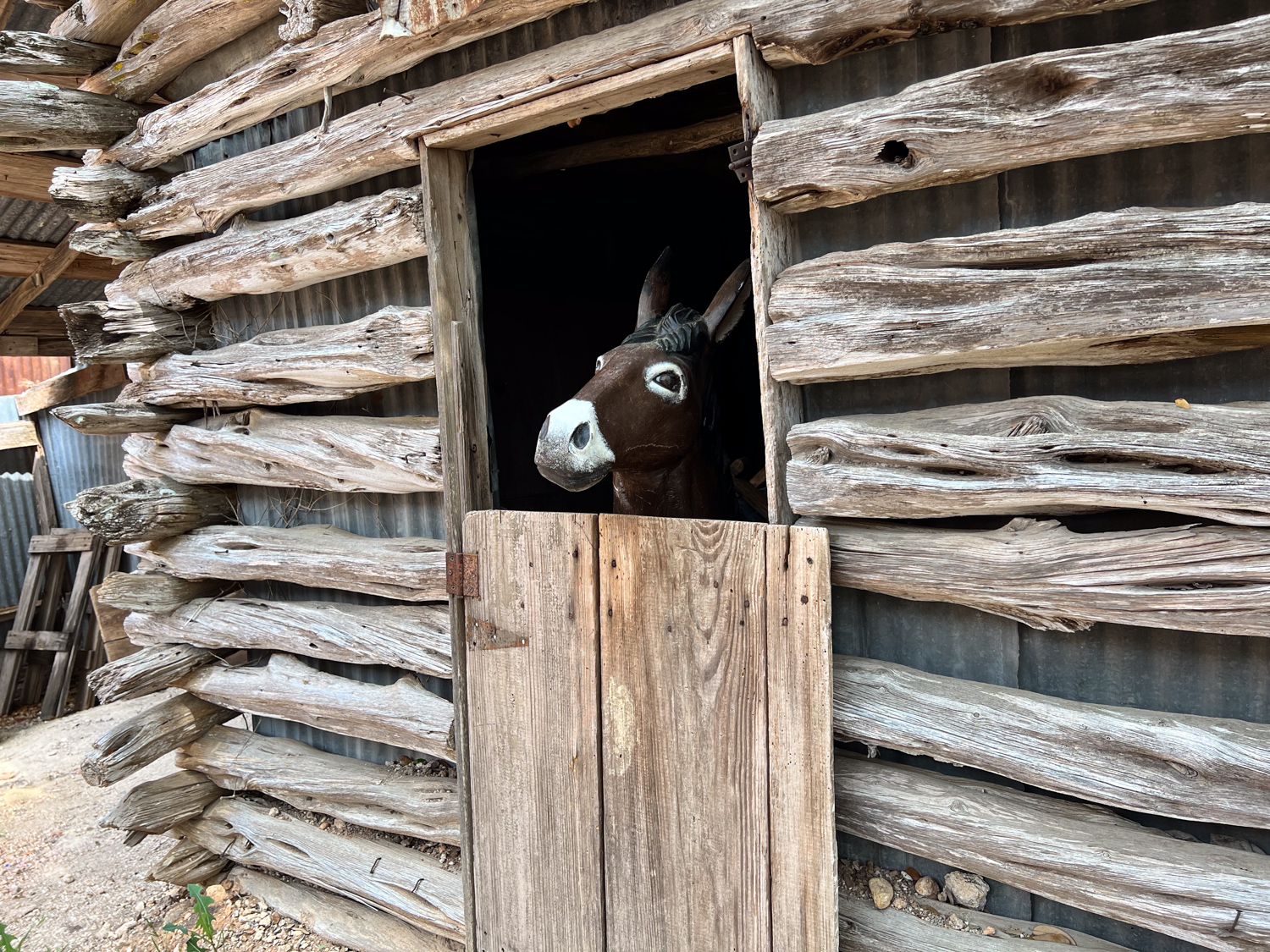
We found a donkey (plastic) peering out of a stable.

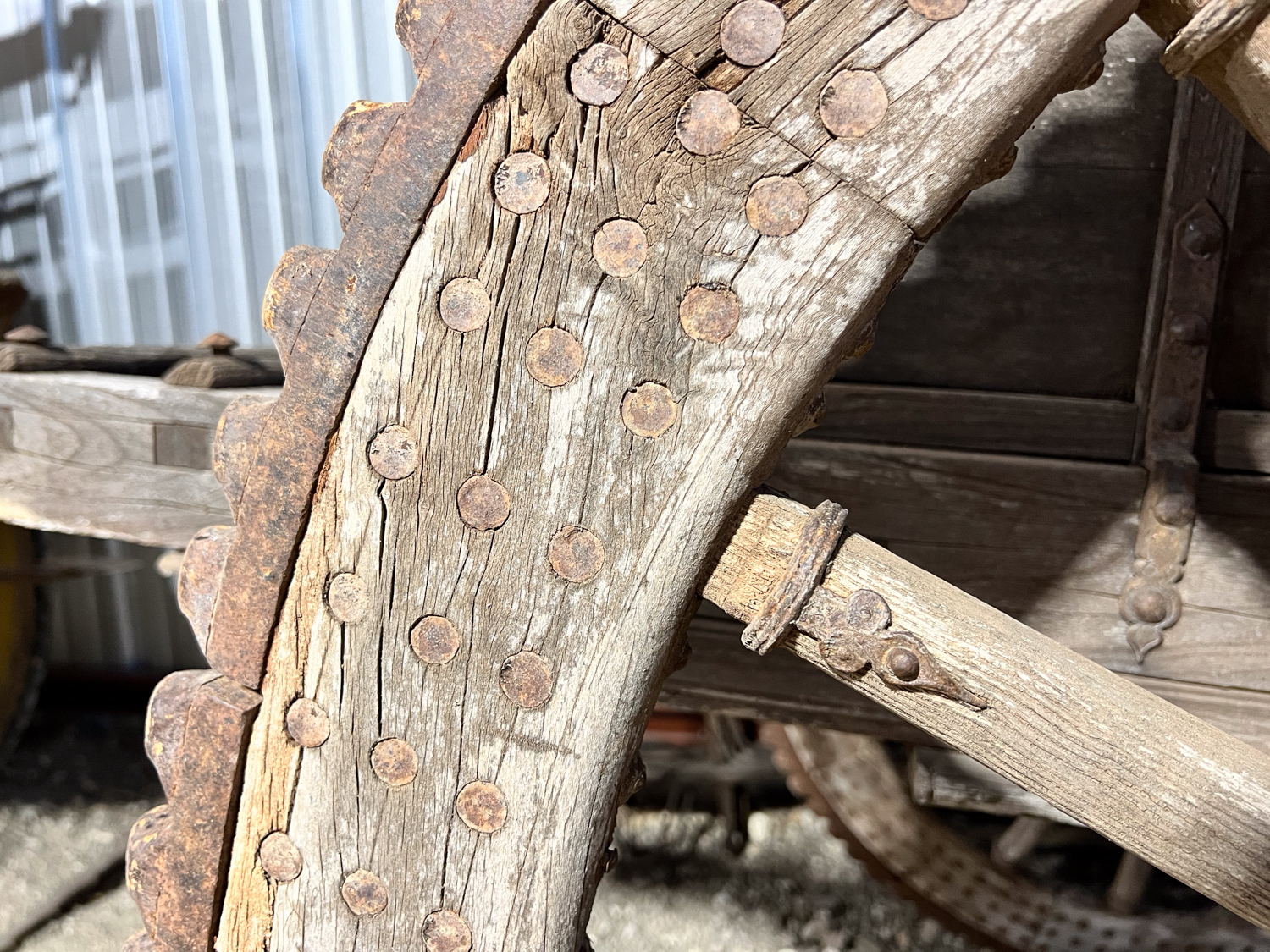
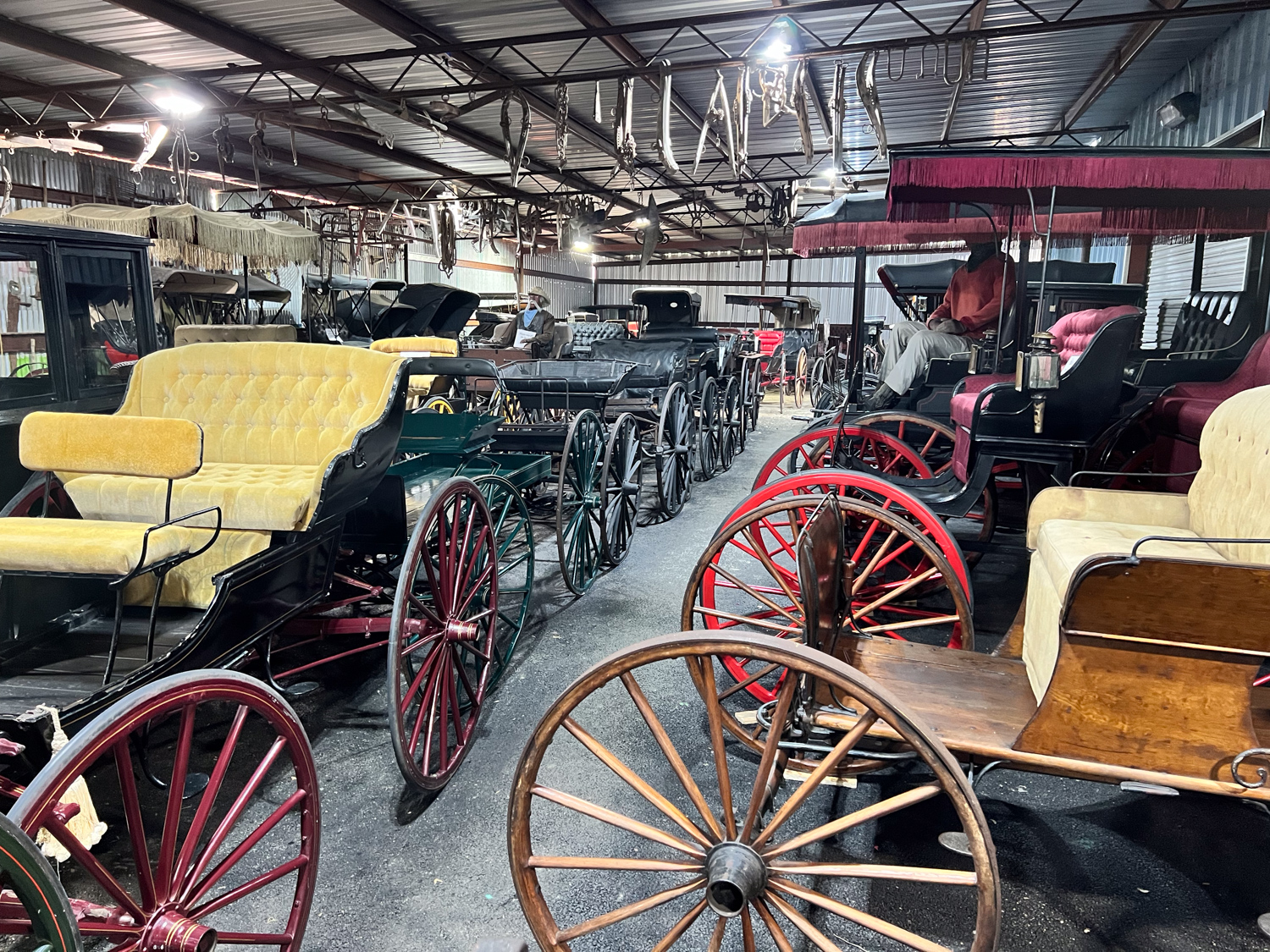
Then we found the interconnected buildings that house the buggies. There are signs on some but not all. I don’t know what this wagon carried–something that needed to be confined to a cage.

Detail of the wheel on that buggy.

I can’t tell you all the different types, but there are a lot. Some of the buggies have signs that list movies or TV shows in which they have been used. Some have been restored for those shows. Others are replicas.

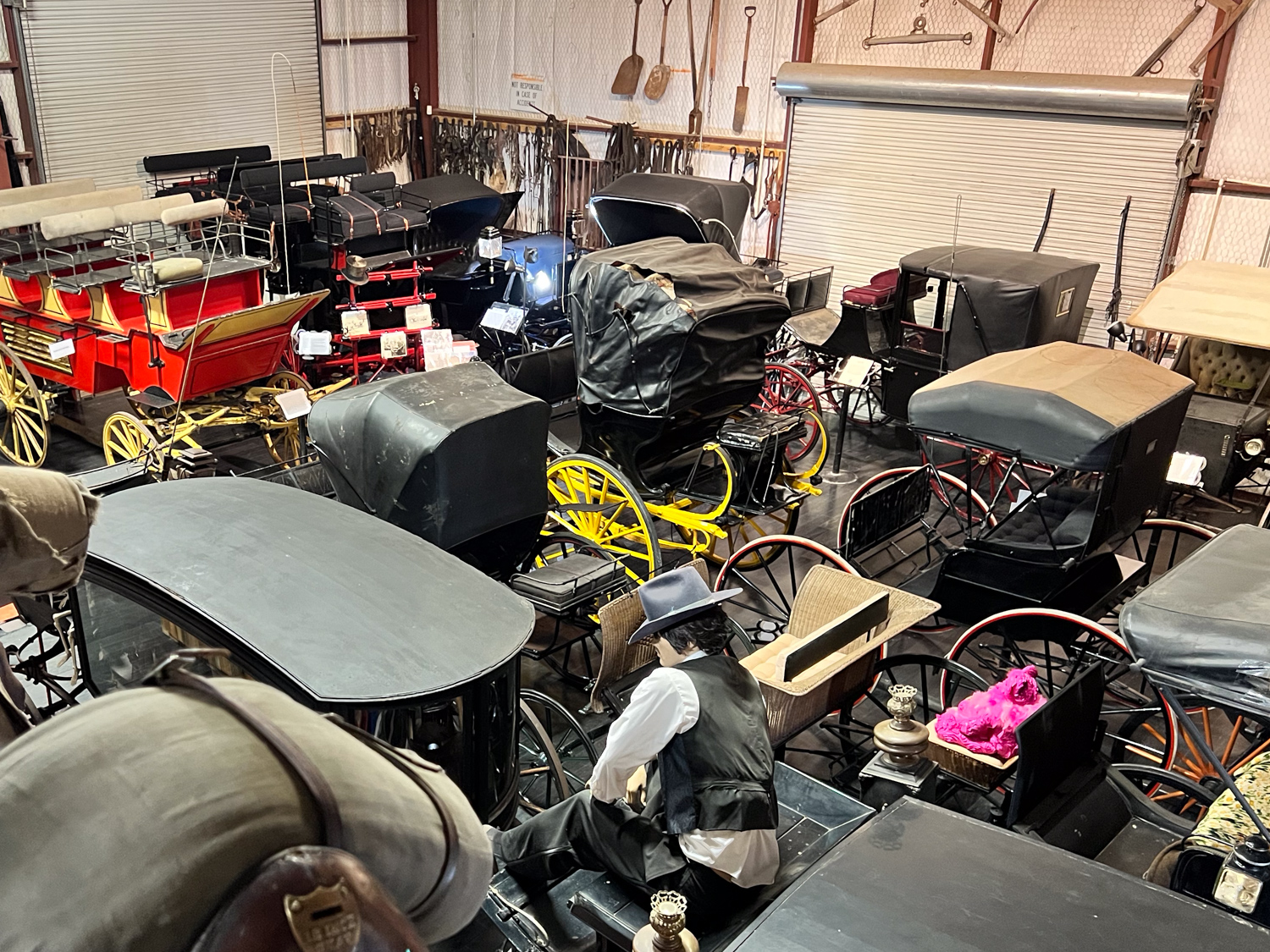
This is a view from an upstairs room that was also filled. There were several times I glimpsed a person driving or riding in a buggy and I had to look twice to realize it was a mannequin.

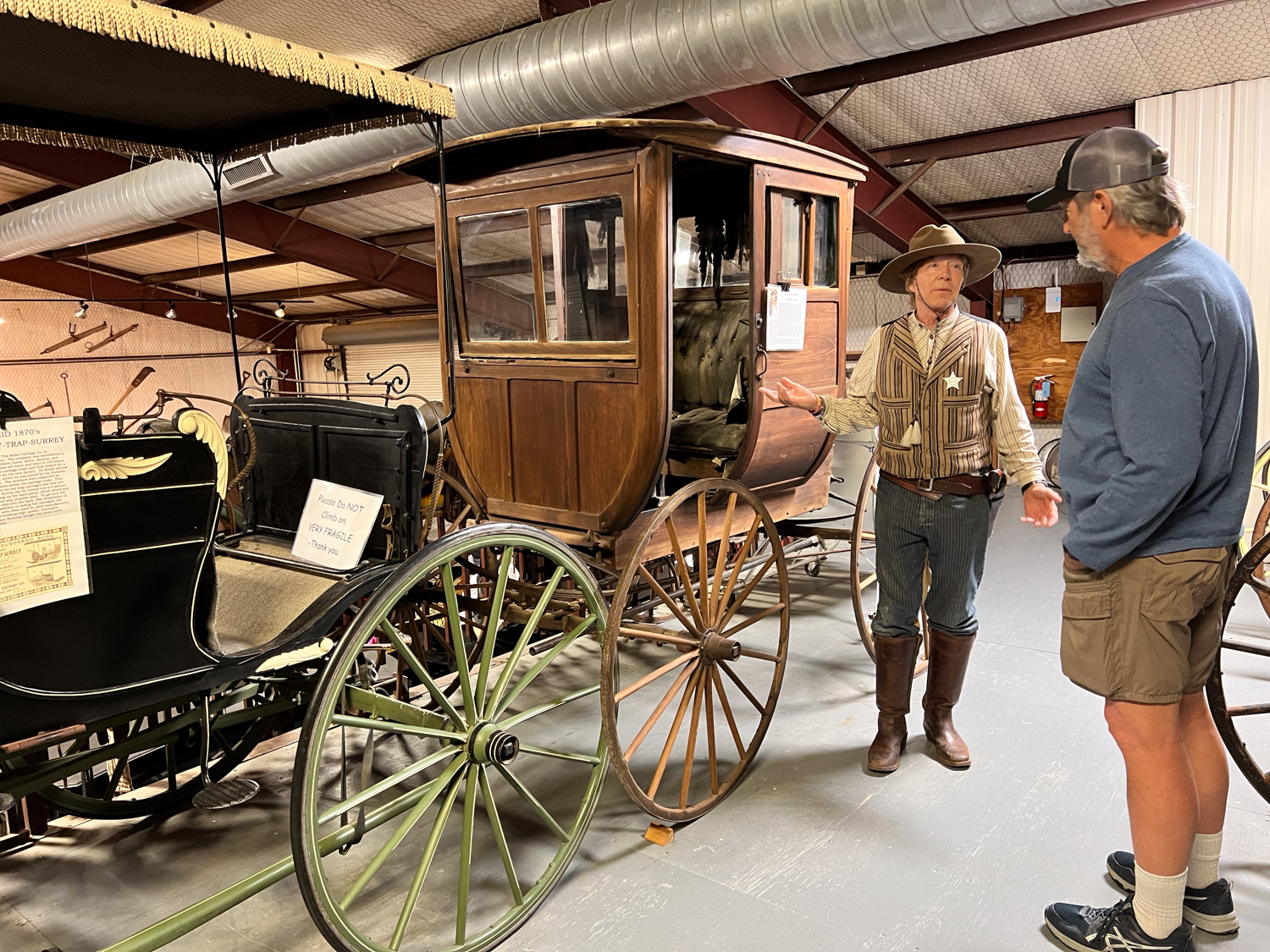
This person, however, was not a mannequin, but he dressed for the period. He was glad to see us and spent quite awhile telling us stories about some of what we were seeing.

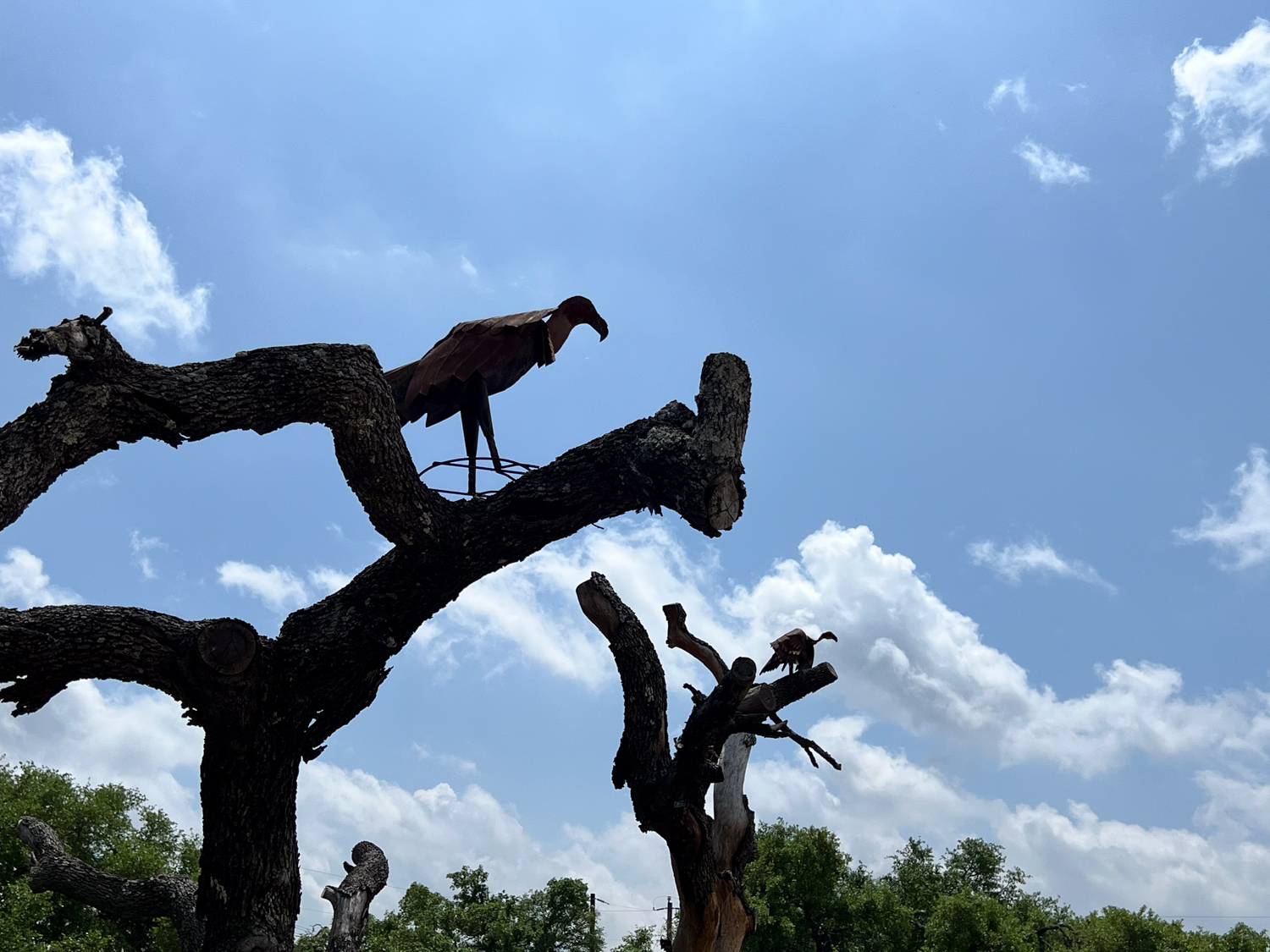
Metal vultures overlooking the fence on the way out.

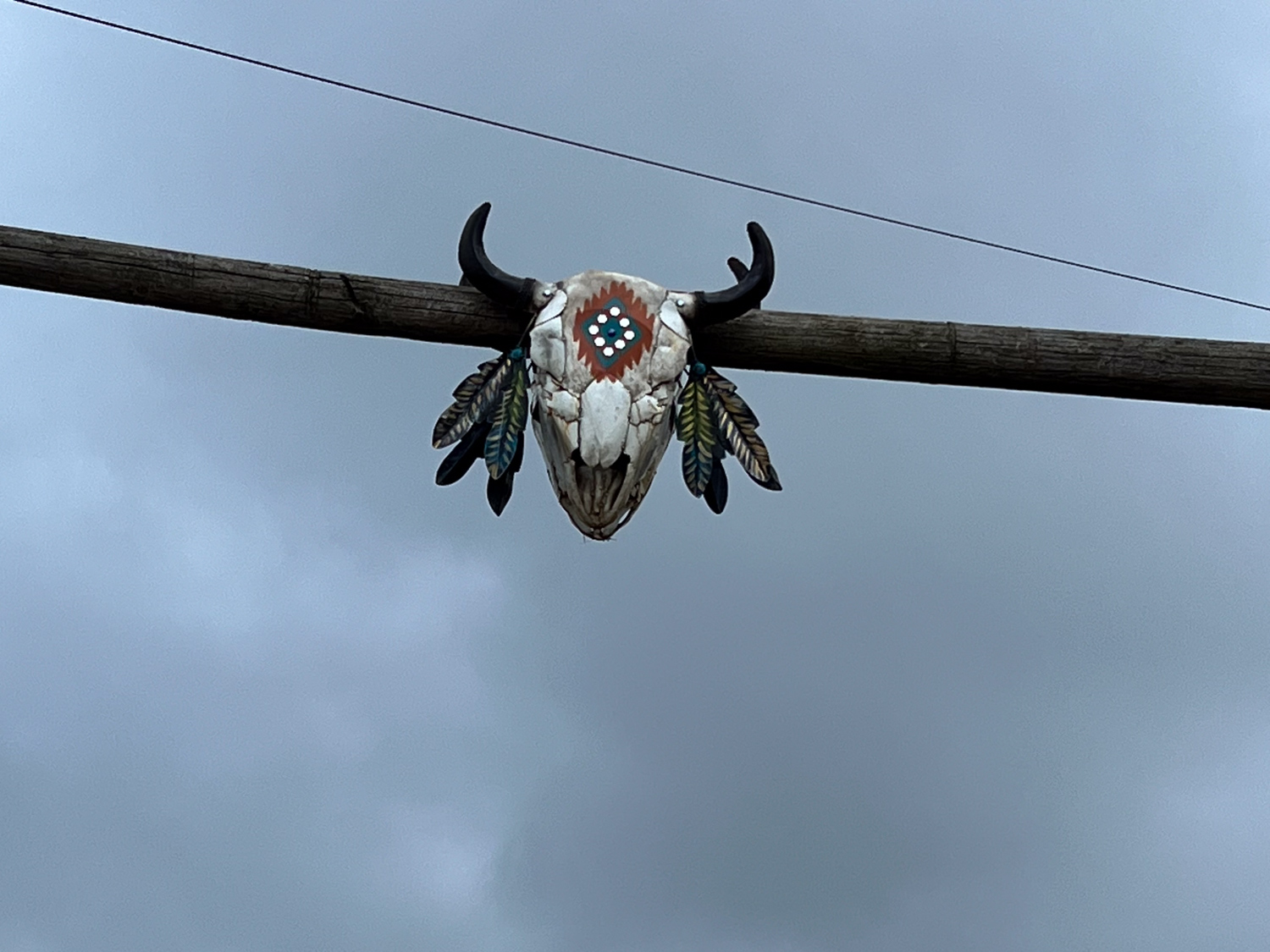
Back at the house I went on a walk. This is above the gate at Katie’s neighbor to the east.

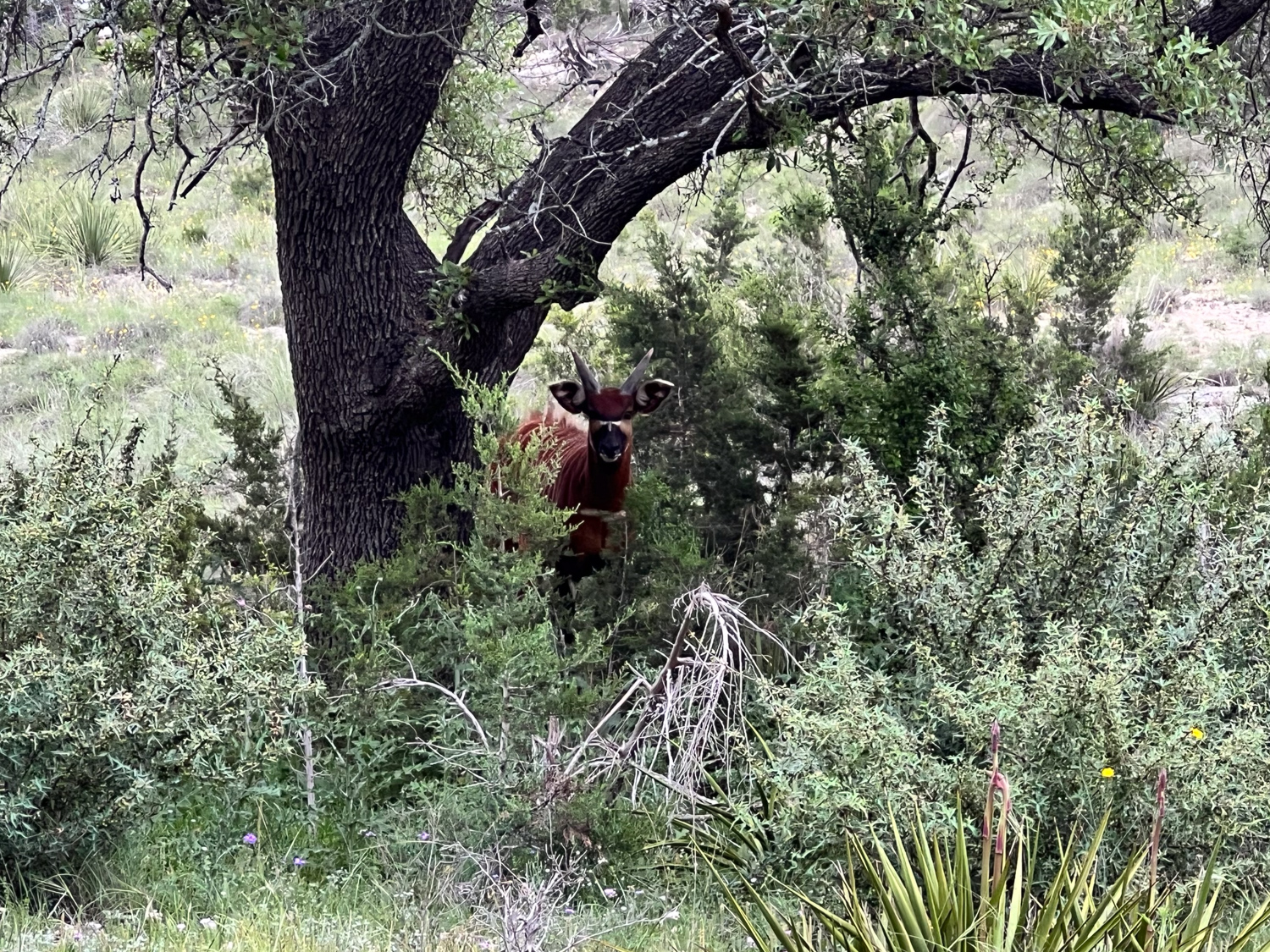
This is across the road. That’s a bongo that we mostly saw under this tree. There are also zebras and springboks on the property.

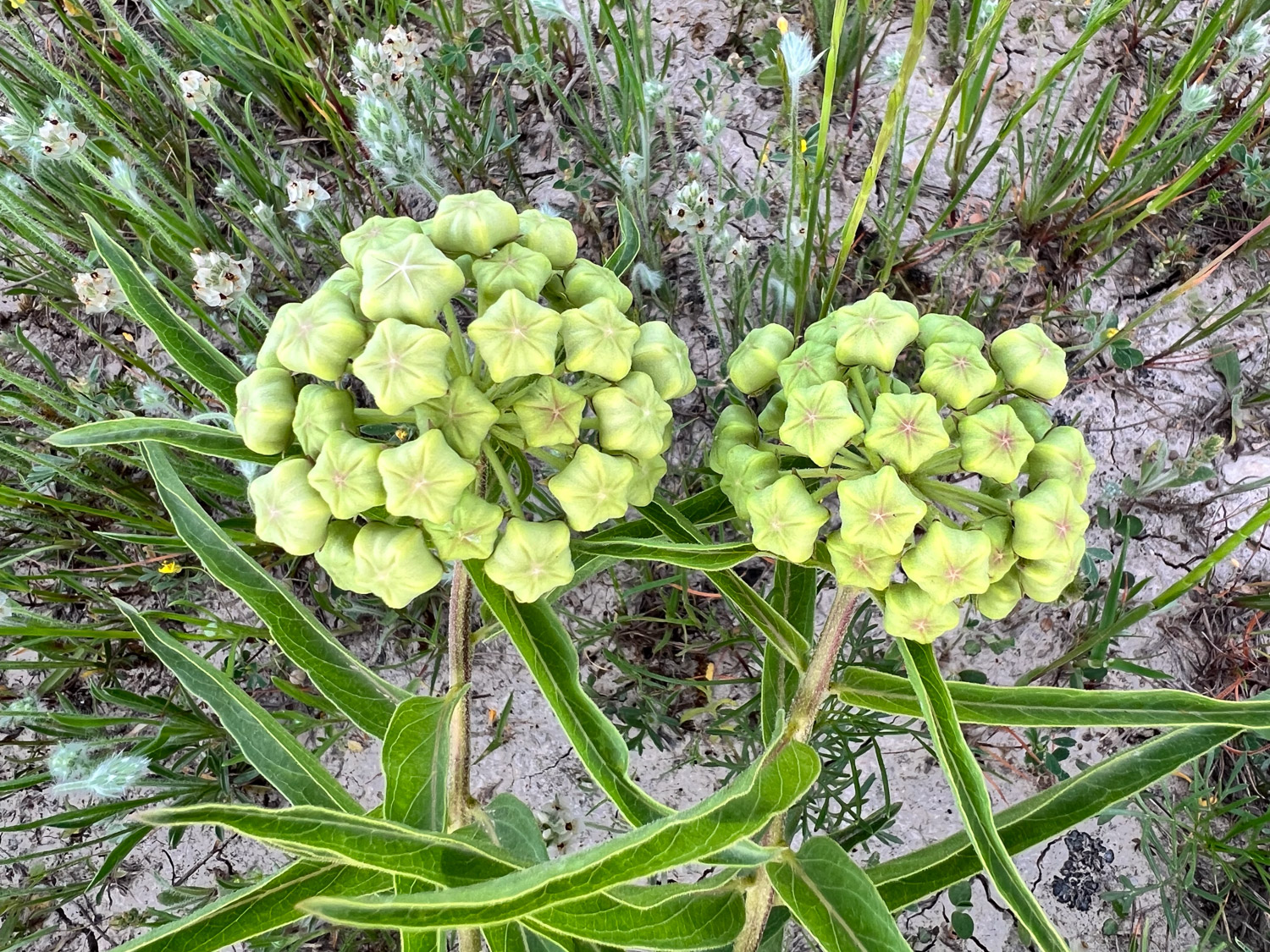
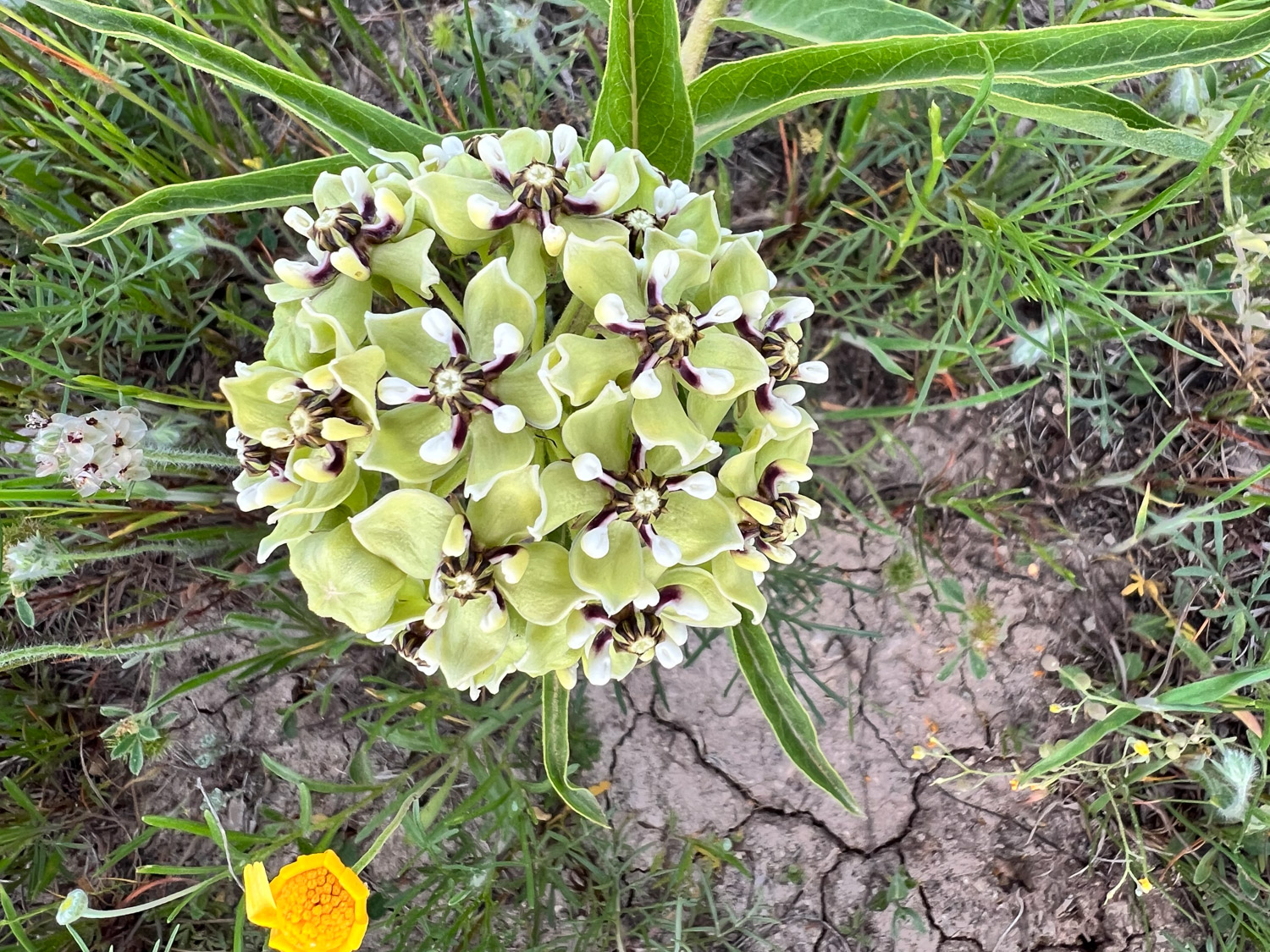
One last photo of my new favorite flower. I find this one fascinating. It is called Antelope Horn for the look of the seedpods. No resemblance at this point. Maybe if I go back in the fall I’ll see some.

Visiting Family in Texas – Part 2

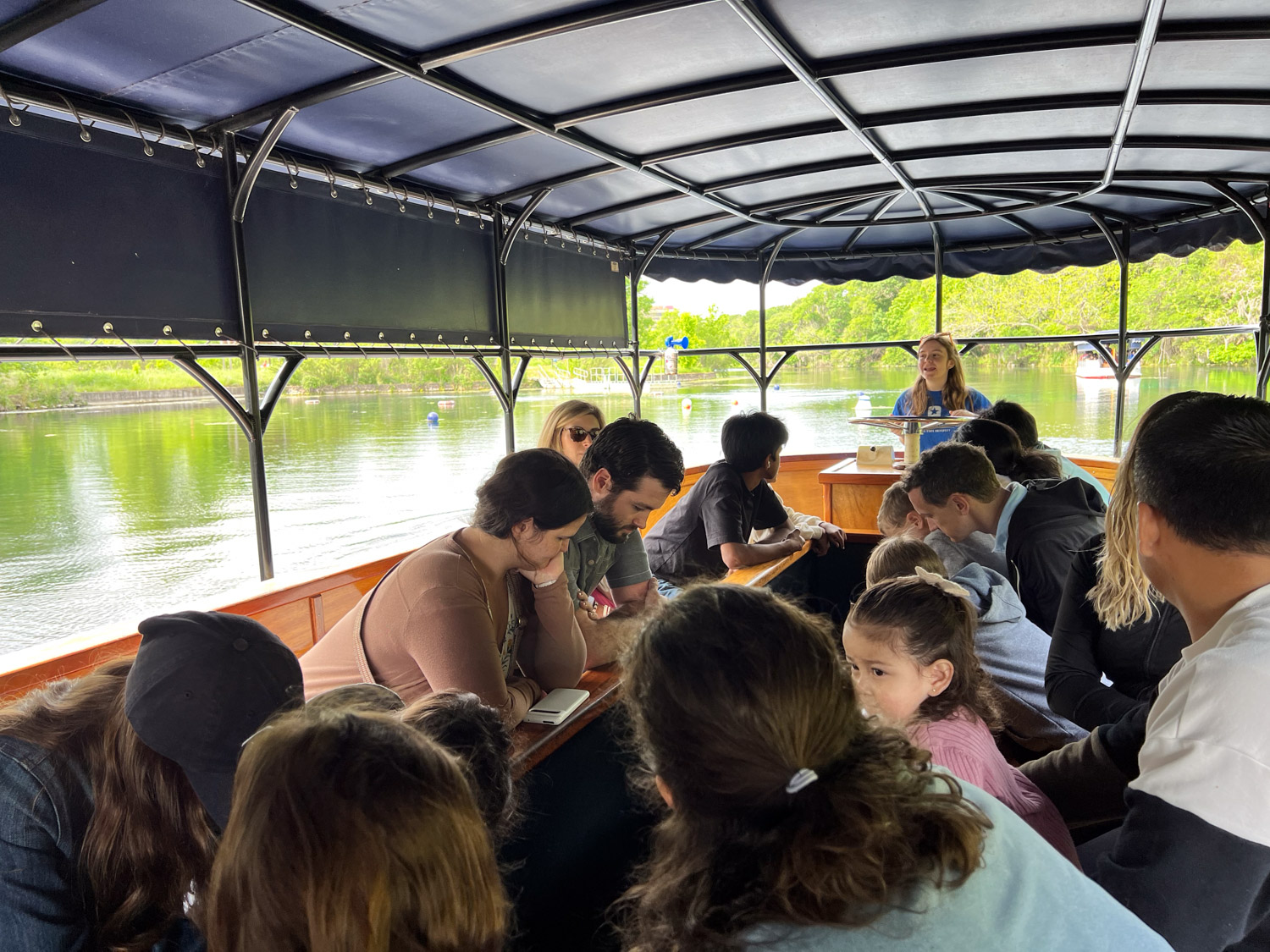
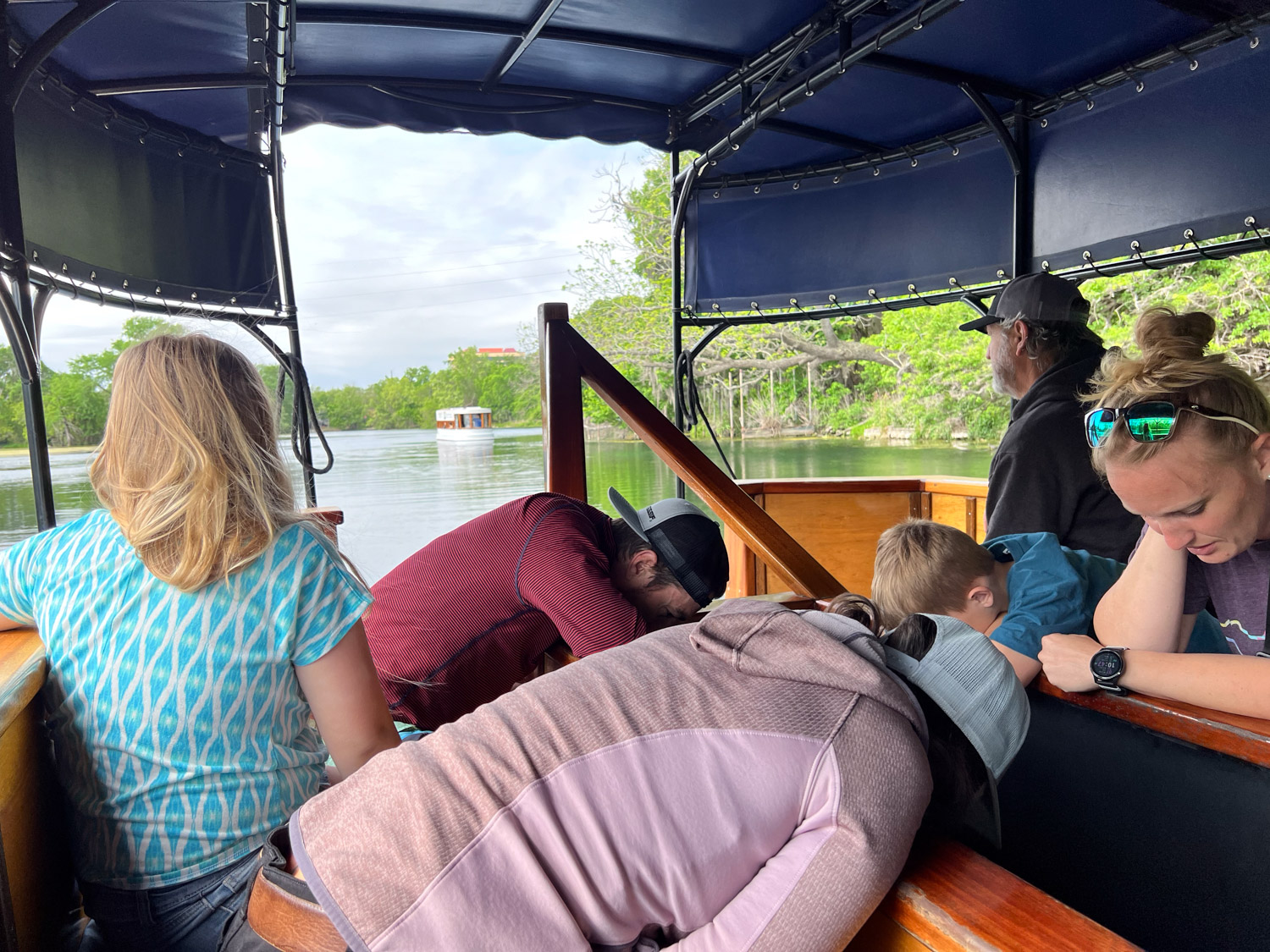
I’m slow at getting caught up with photos. I may never be caught up. Part 1 of this trip is here. On Sunday we drove to San Marcos for a glass-bottom boat tour at The Meadows Center managed by Texas State University.

This is the view from within the boat so I can share what the boats look like.

This is the view in the other direction showing out tour guide and the other people on the boat.

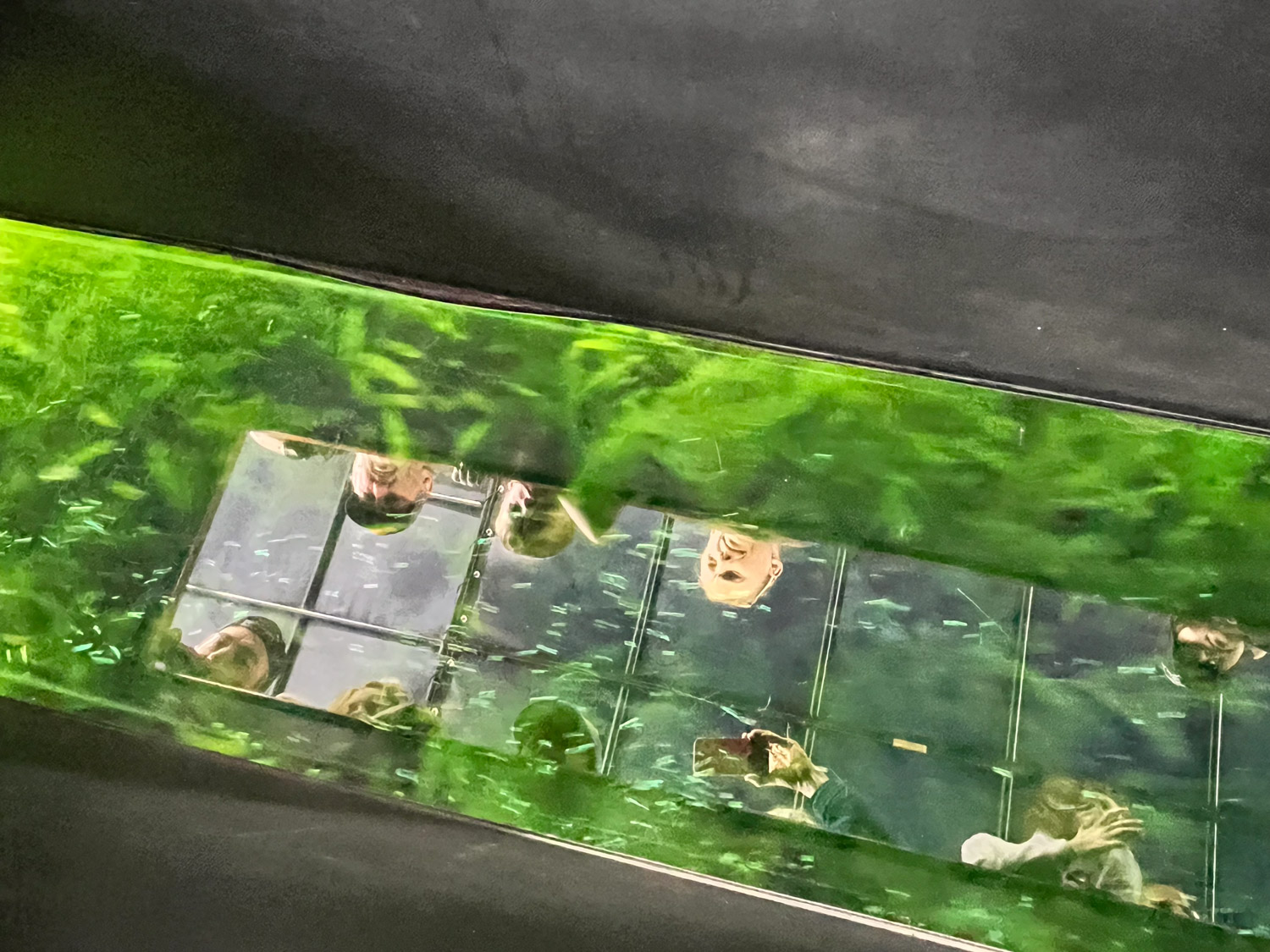
We are all sitting around a center channel with a glass bottom.

A view looking down into that channel.

A view of the bottom of Spring Lake. There are over 200 springs in the lake, bubbling up from the Edwards Aquifer. The water is at 72 degrees year round and the water from these springs becomes the San Marcos River. The guide pointed out what looked like current at the bottom of the lake in some areas and bubbles in others–those are the areas where water is rising from the springs.

After the tour we explored the Discovery Hall that is housed in the old building that used to be known as Aquarena Springs. For a fascinating glimpse into the history of the entertainment provided by the Aquamaids from the 1950’s through 90’s at this site see this link. Thanks to Kaleena for this great photo of Matt and Kasen sitting on the roof of the Hall.

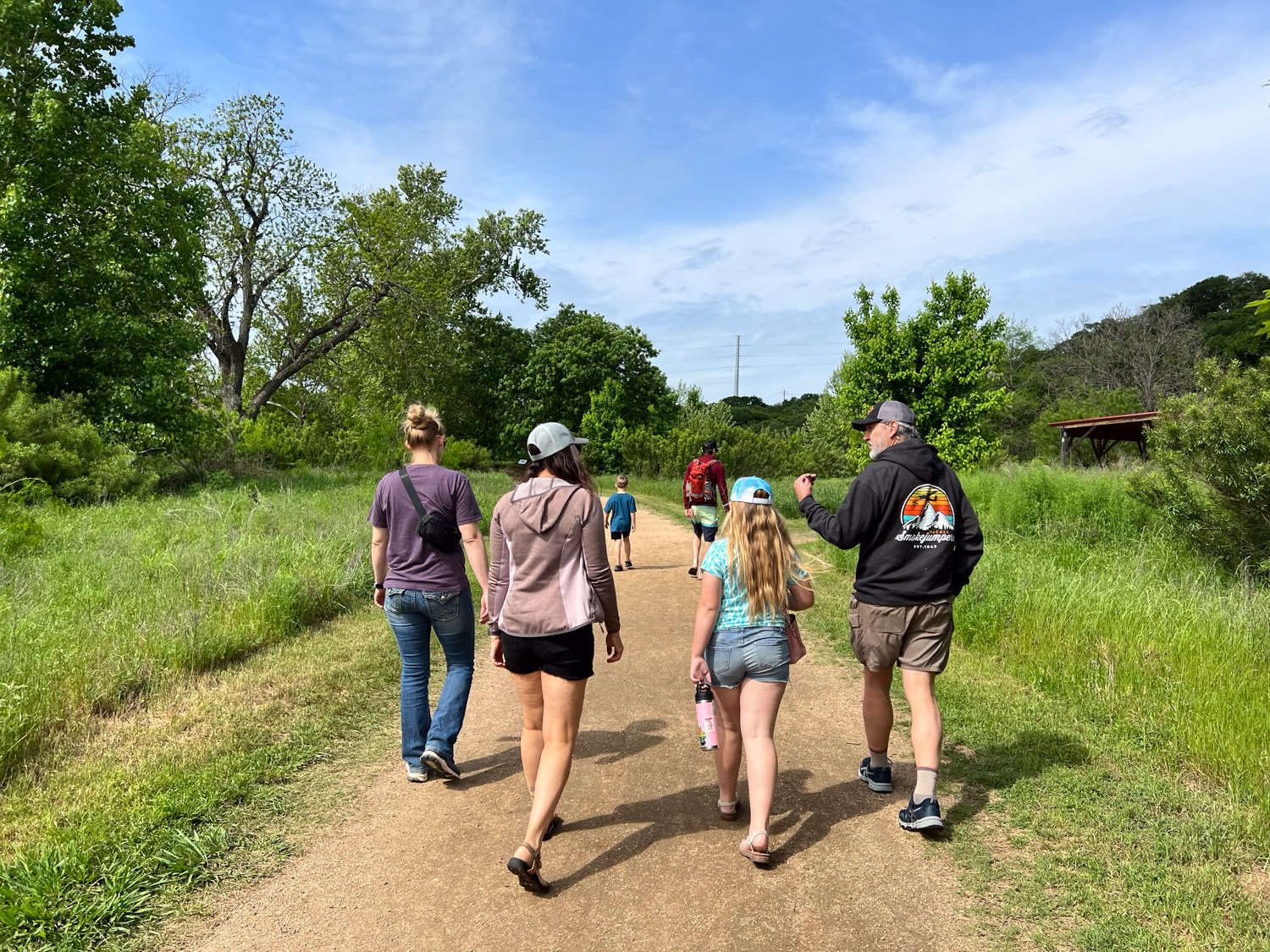
We did a short walk on one of the trails around the Spring Lake Natural Area.

This sign explains that this area may be the oldest continuously inhabited spot in North America.

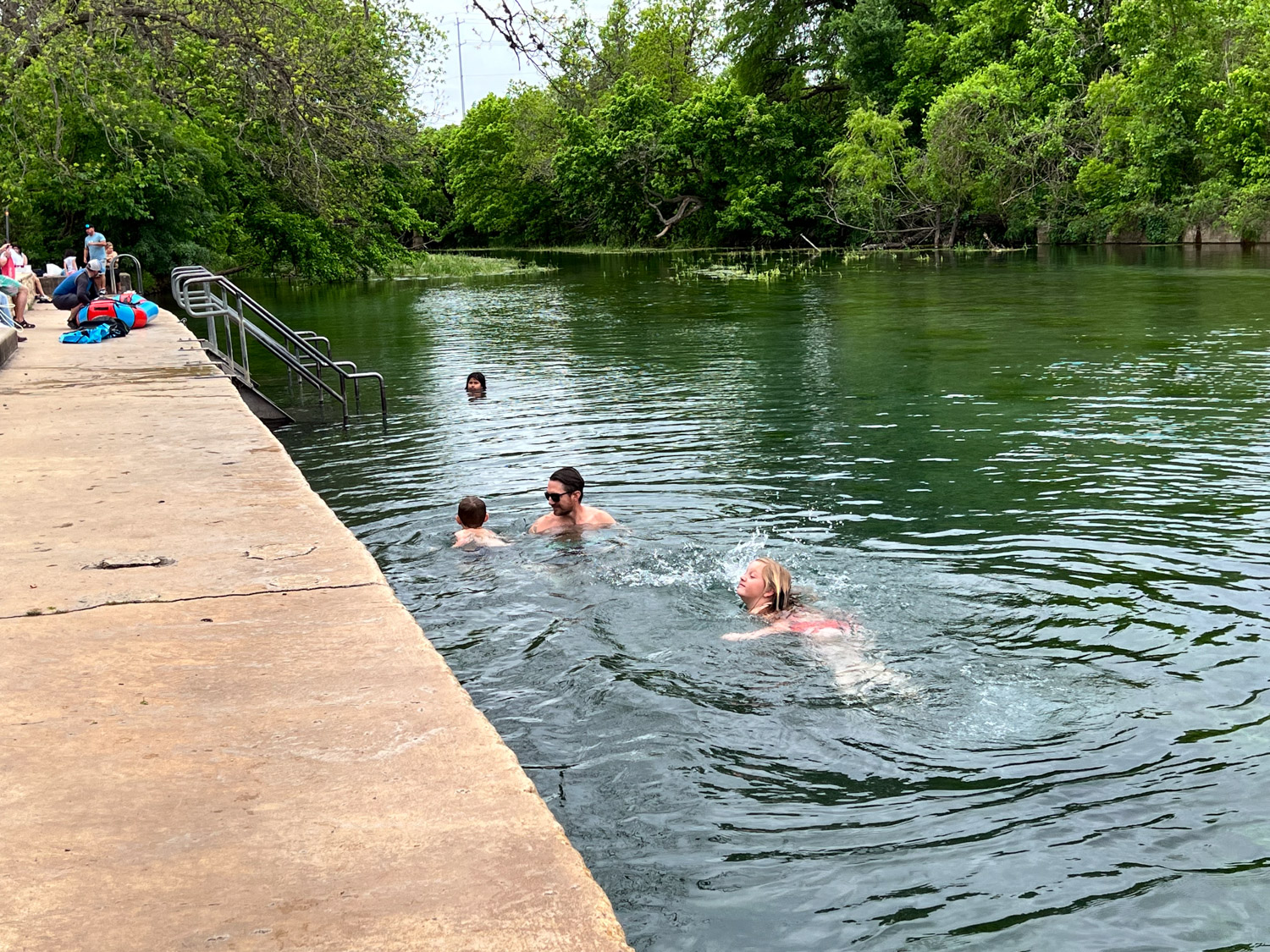
After that we drove into another part of the town and stopped along the San Marcos River where there is public access for swimming.

It was overcast, but warm enough for some of our group to want to get in the water.

Another great photo by Kaleena.

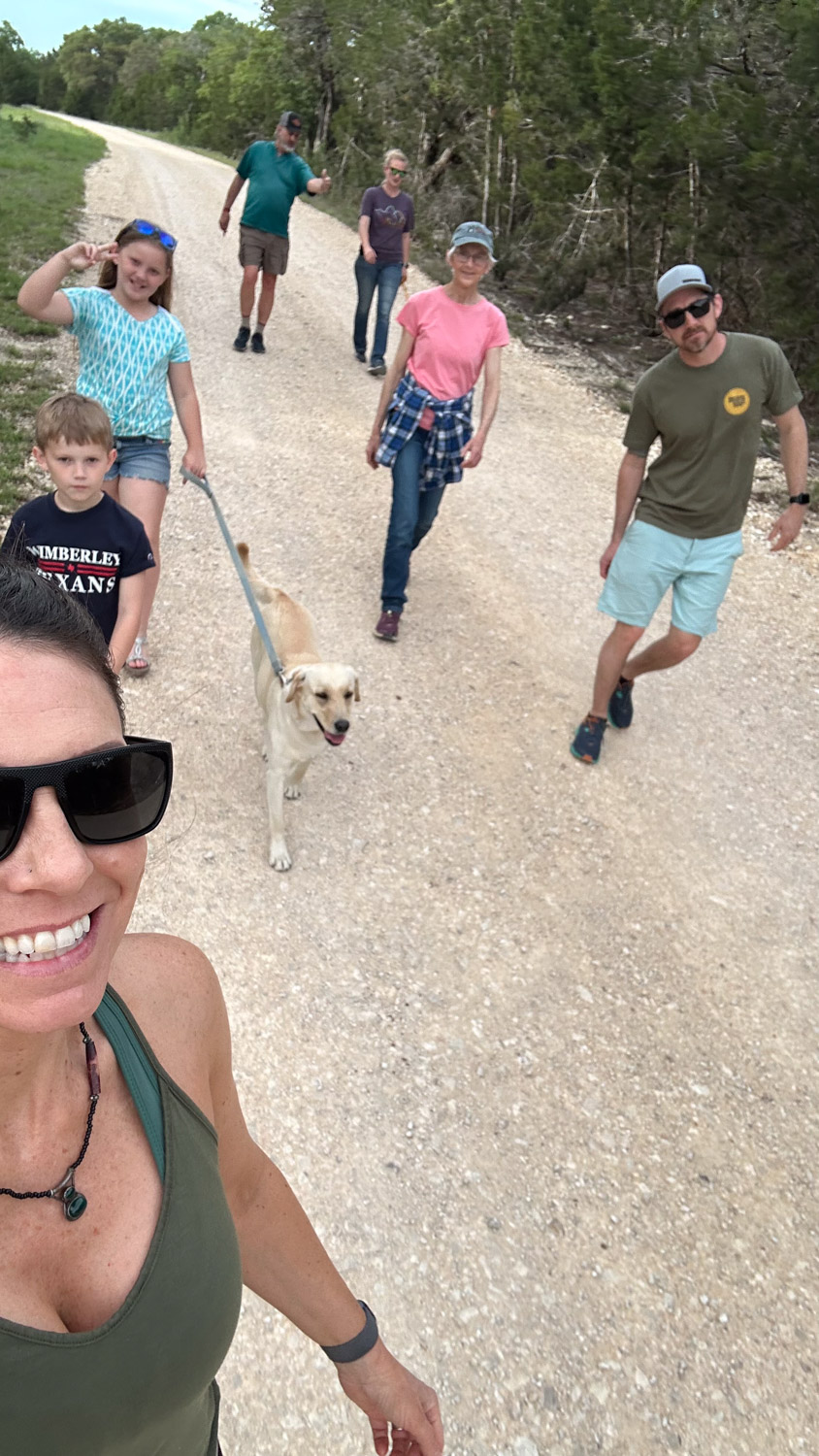
Back “home” we took another walk.

This is a close up view of a flower I identified in the last post…what was that? I just looked back. Pincushion Daisy. I took this photo because of the metallic green bee

Phlox roemeriana

I am experimenting with he ID ability of the phone (a feature I didn’t know about until Kaleena showed me). If I record something as a caption it shows up here. The common name is Goldeneye phlox.

Musicians seen along the road.

Pipevine Swallowtail
Antelope-Horns, Asclepias asperula

I shared these flowers in that other post also, but sharing new photos.

Antelope-Horns, Asclepias asperula

I am fascinated by this flower. It is so odd. And why that name?

The only photo that I am in–Kaleena took this one.

Next post will be Eclipse Day.

New York Adventure – Day 6

If you read the first post in this series you know that I started Day 1 with our first full day here. There was a travel day before that one, as is Day 6. So this would really be our seventh day away from home…just maintaining some level of accuracy.

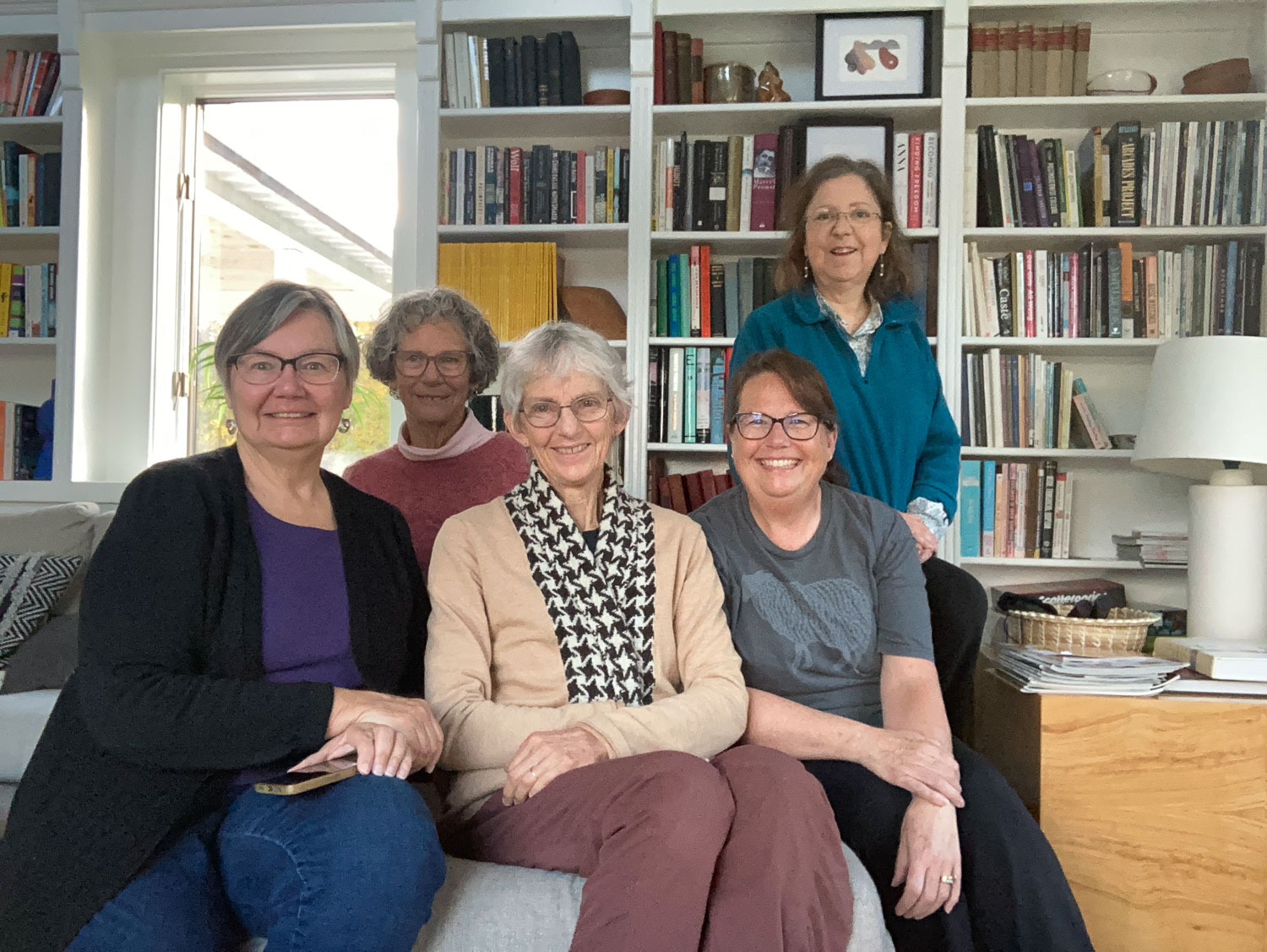
We took a group photo before we all left. The California contingent are the four of us on the left. Adrianne, on the right, stayed with us. We first met her in Maryland several years ago and have stayed in touch. She drove here from Ohio. Some of the best time on this trip was spent hanging out together in the living room and at the kitchen table.

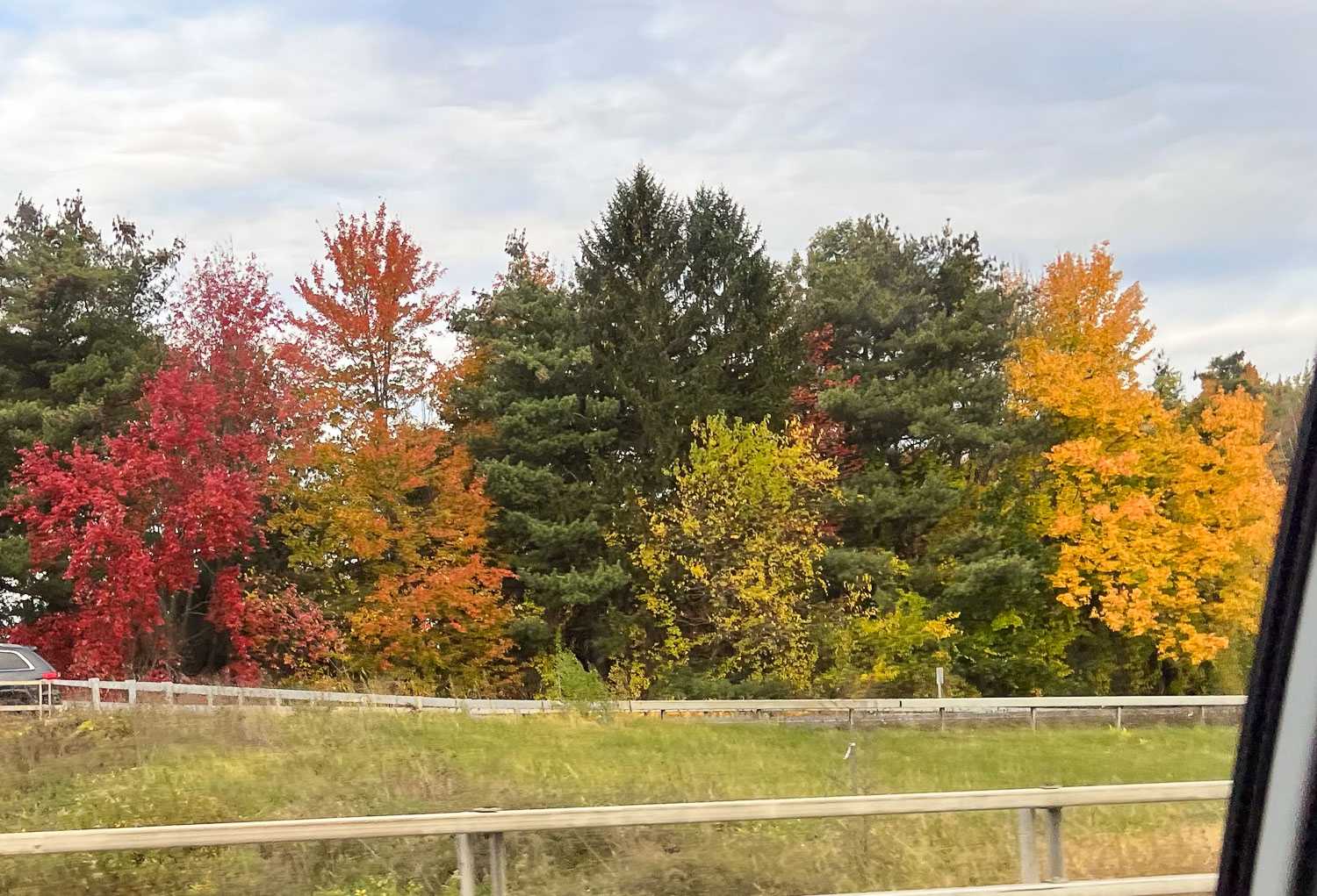
Fall color on the way to the airport.

Our travel days were easy and without incident. they were just long.

Somewhere over the mid-west.

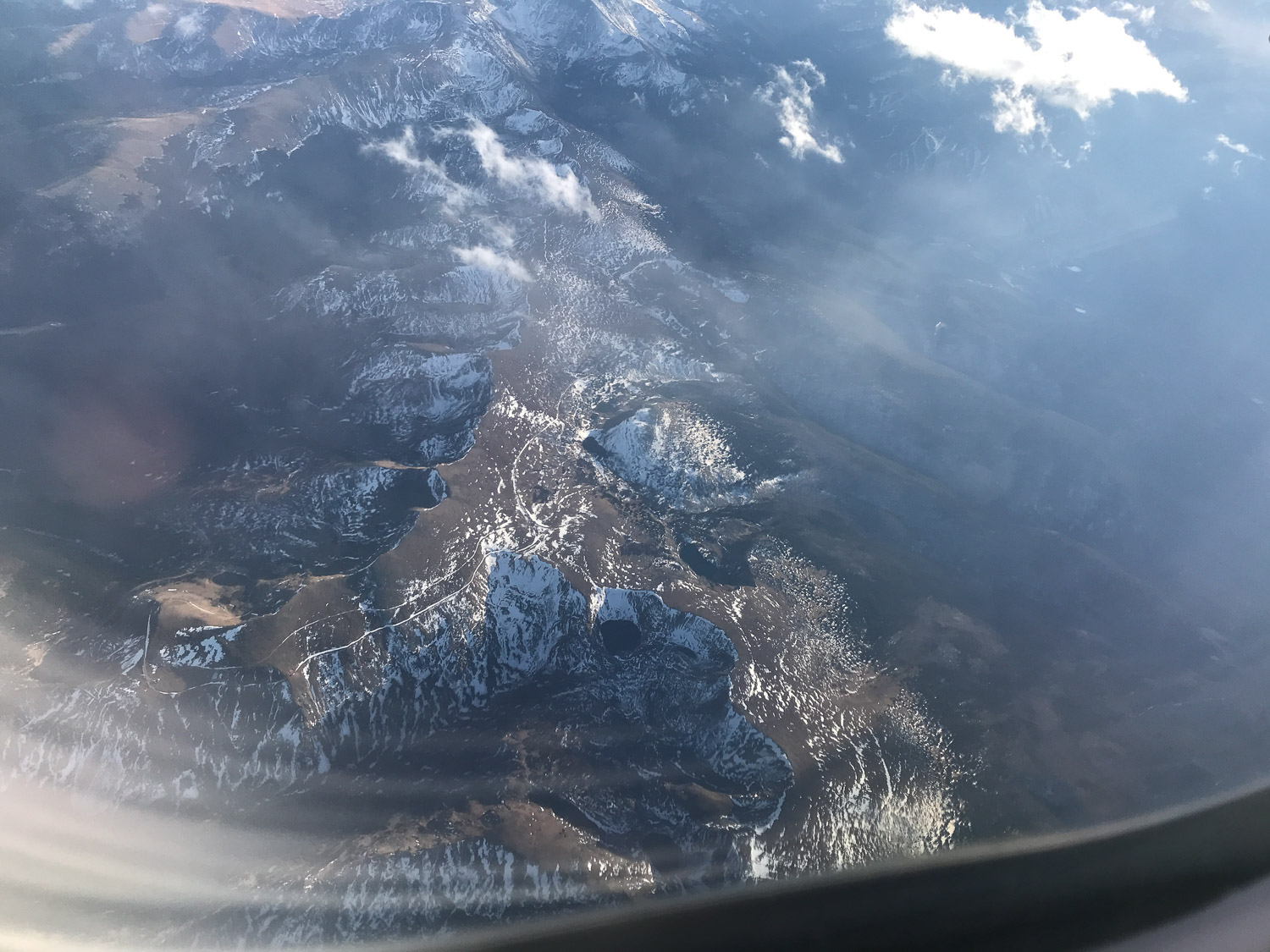
The Rockies.

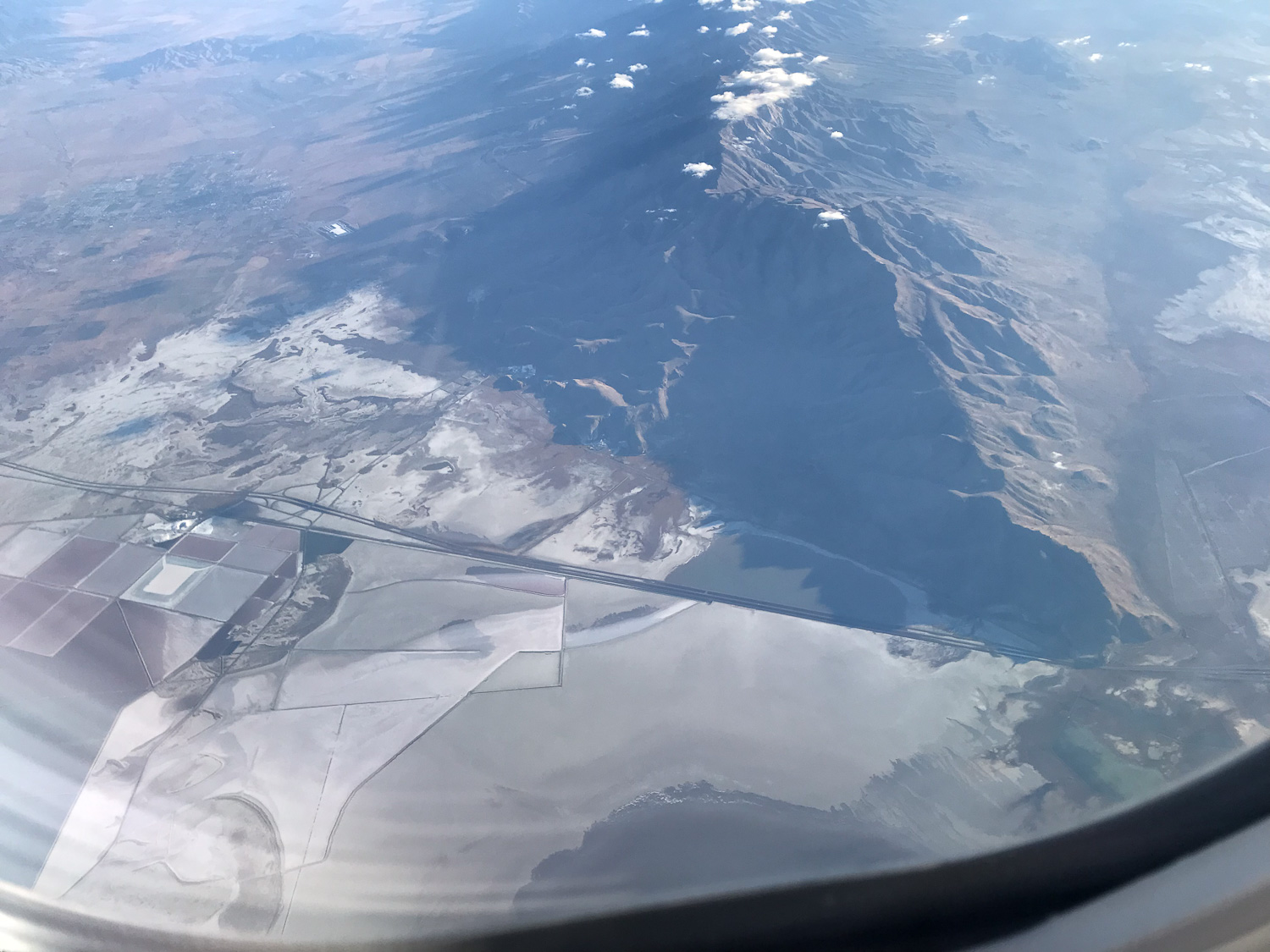
Over Salt Lake, but it’s mostly under the plane.

More of the salt flats. Some of you fly all the time and you are used to seeing this. I don’t see this often and I like getting this perspective

Lake Tahoe and the Sierras. That means we’re almost home.

When we see the fields of the Central Valley it means we are home. Aren’t those beautiful patterns?

Those hills just under the sunset are “my hills”. Our farm is in the valley just east of the lower hills.

New York Adventure – Day 3

I talked about Day 2 here. Now that I’m numbering the days I see that I have it wrong. Day 1 was really a travel day. We left Sacramento on Tuesday at 11:45 and got to Albany well after dark. That’s why I didn’t count it. I’ll stick with the current numbering system that forgets the travel day.

Kathleen and I both entered handwoven items at the show and needed to deliver them on Friday. That was the first stop of the day.

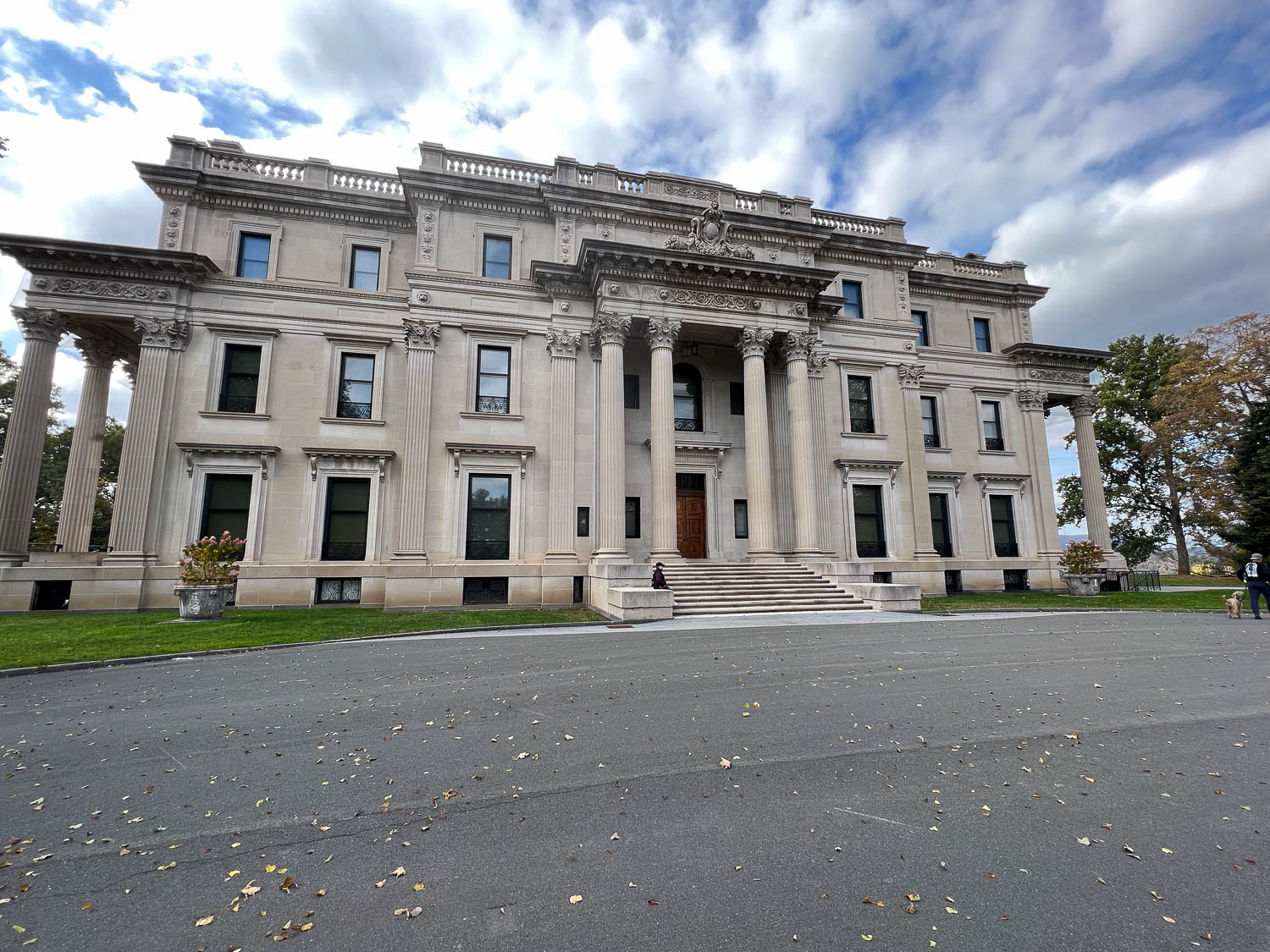
After delivering our items we drove back to Hyde Park so we could tour the Vanderbilt Mansion. This family tree starts with Cornelius, born in 1794. At age 16 he bought a sailing barge using $100 borrowed from his parents. He started his own shipping business and eventually was involved in railroads. In 1871 he opened the largest strain station in North America, which would eventually be called Grand Central Station. The bulk of Cornelius’ estate went to the firstborn son, William. Wlliam doubled the Vanderbilt fortune and each of his 8 children built extravagant mansions, shown on the chart above. The estate on the far right is the one I toured last summer in Asheville, North Carolina, known as “America’s Largest Home”. Notice on the family tree there are no heirs for Frederick’s home, third from right.

Frederick and his wife, Louise, had no children. They left the estate to Louise’s niece but she didn’t need it, having plenty of her own money and a mansion, after marrying into another rich family. She tried to sell the property but there were no buyers. Her neighbor, President Franklin D. Roosevelt, suggested that she donate the estate to the National Park Service, and the Vanderbilt Mansion National Historic Site opened in 1940.

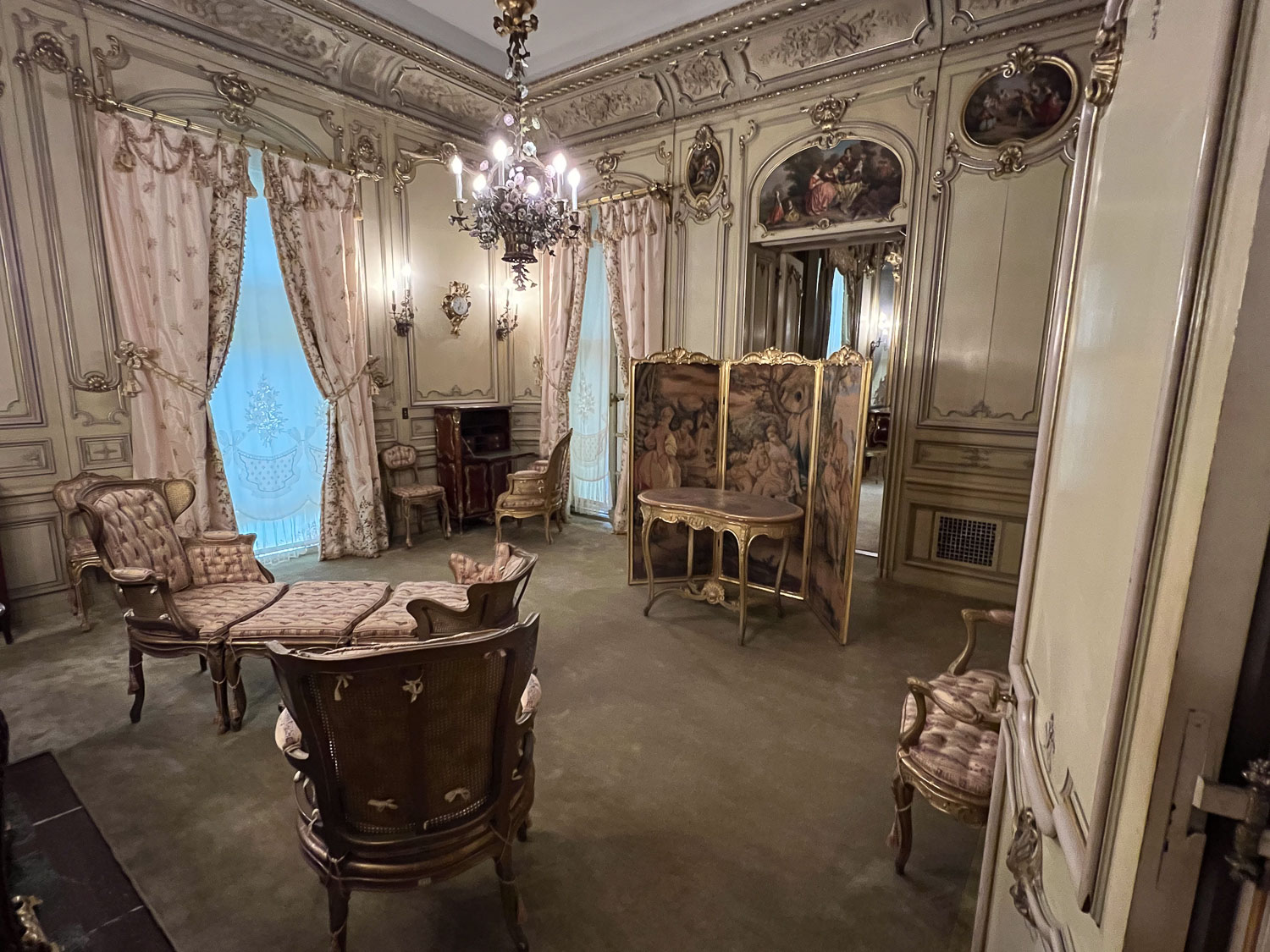
The entrance hall was used for seating and conversation as well as having doorways into all the other first floor rooms. The green marble pilasters were imported from Italy. (From Wikipedia: “In classical architecture, a pilaster is an architectural element used to give the appearance of a supporting column and to articulate an extent of wall, with only an ornamental function.“) We were told that many of the home’s features and furniture were imported from Europe.

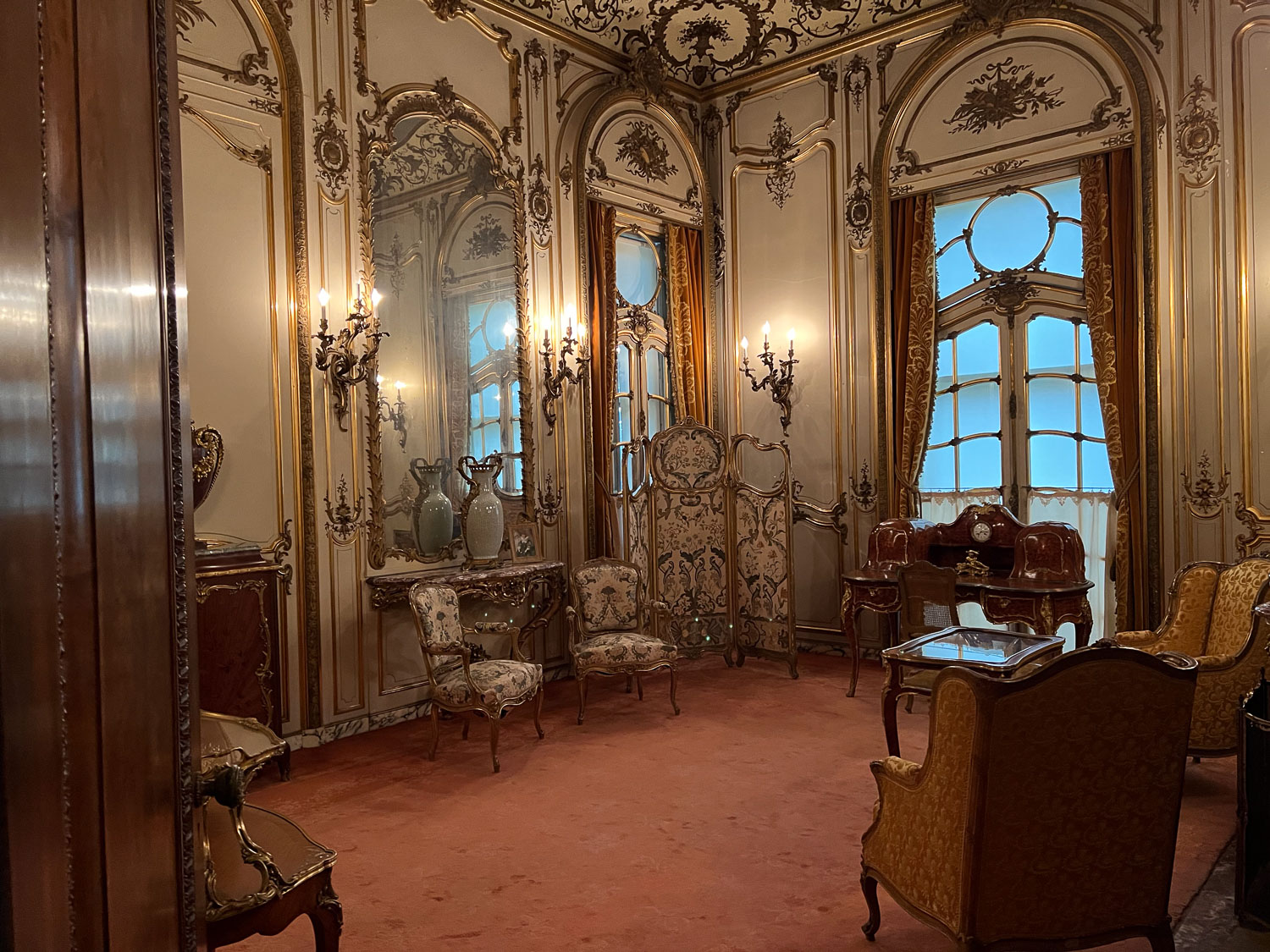
Reception Room. The National Historic Site website says: “Eighteenth-century-style French salons were a typical feature of Gilded Age mansions. Though infrequently occupied or used, they nonetheless were essential in the display of wealth and worldliness.

I took this photo of the ceiling in one of the rooms. I think it was the Reception Room.

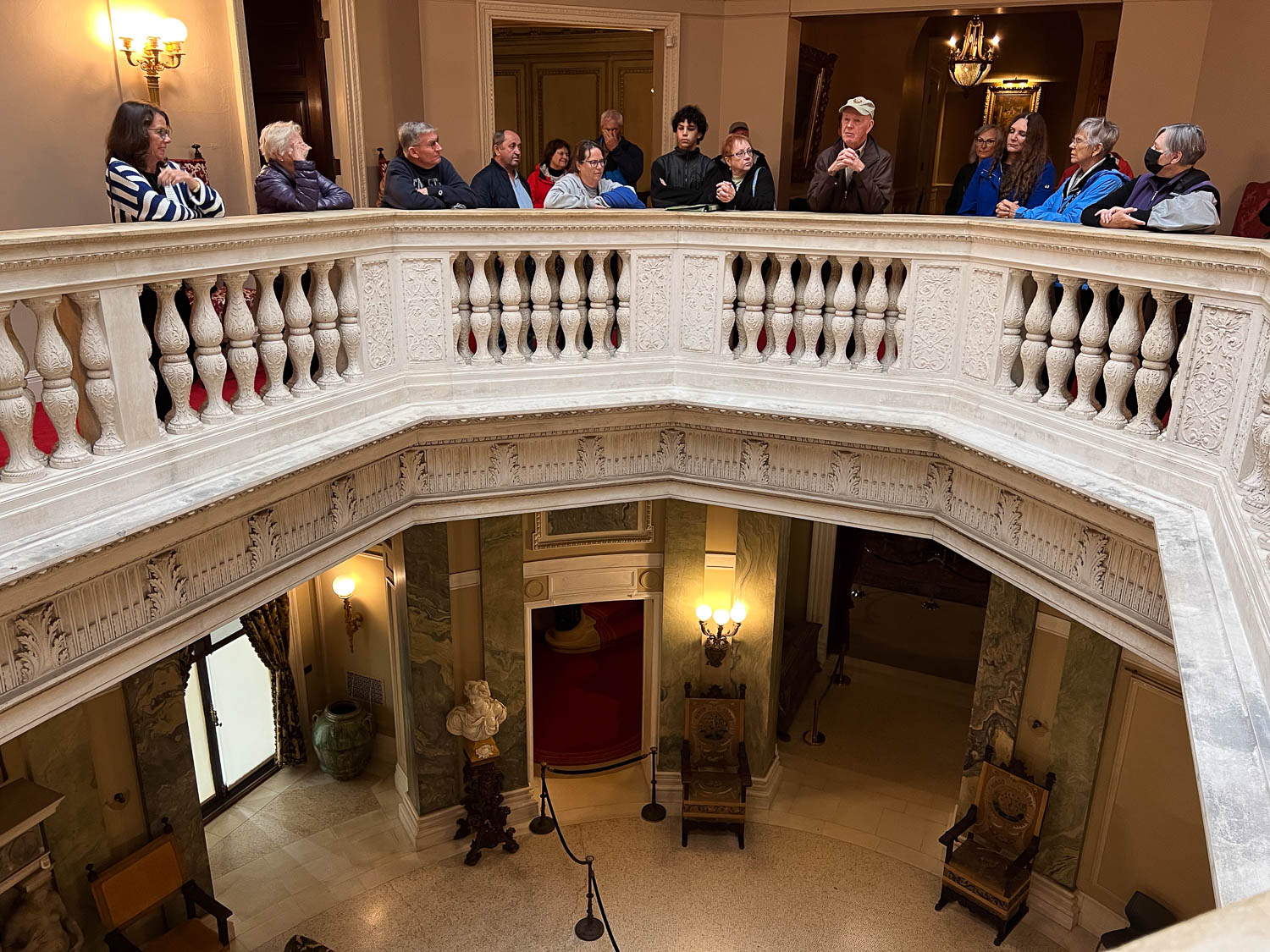
This is on the second floor where you can look down to the first …

…or up to the skylight.

Mrs. Vanderbilt’s bedroom modeled after those of 18th century French royalty. The railing around the bed was typical of royal bed chambers. I don’t remember if this was determined to be true, but the tour guide told us one theory that there may be observers when a Queen gives birth so there is no question about who is the true heir. I just found this on the National Historic Site website: “The railing around Mrs. Vanderbilt’s bed is an architectural convention borrowed from many European royal palaces. In the 17th and 18th centuries, it served both practical and symbolic purposes related to royal births and ceremonies that occured daily when the king or queen woke up. At Hyde Park, the railing serves no purpose other than to reference the architecture of Europe’s finest royal houses.”

I don’t remember what this room is but looking at the map I think it is probably the Boudoir.

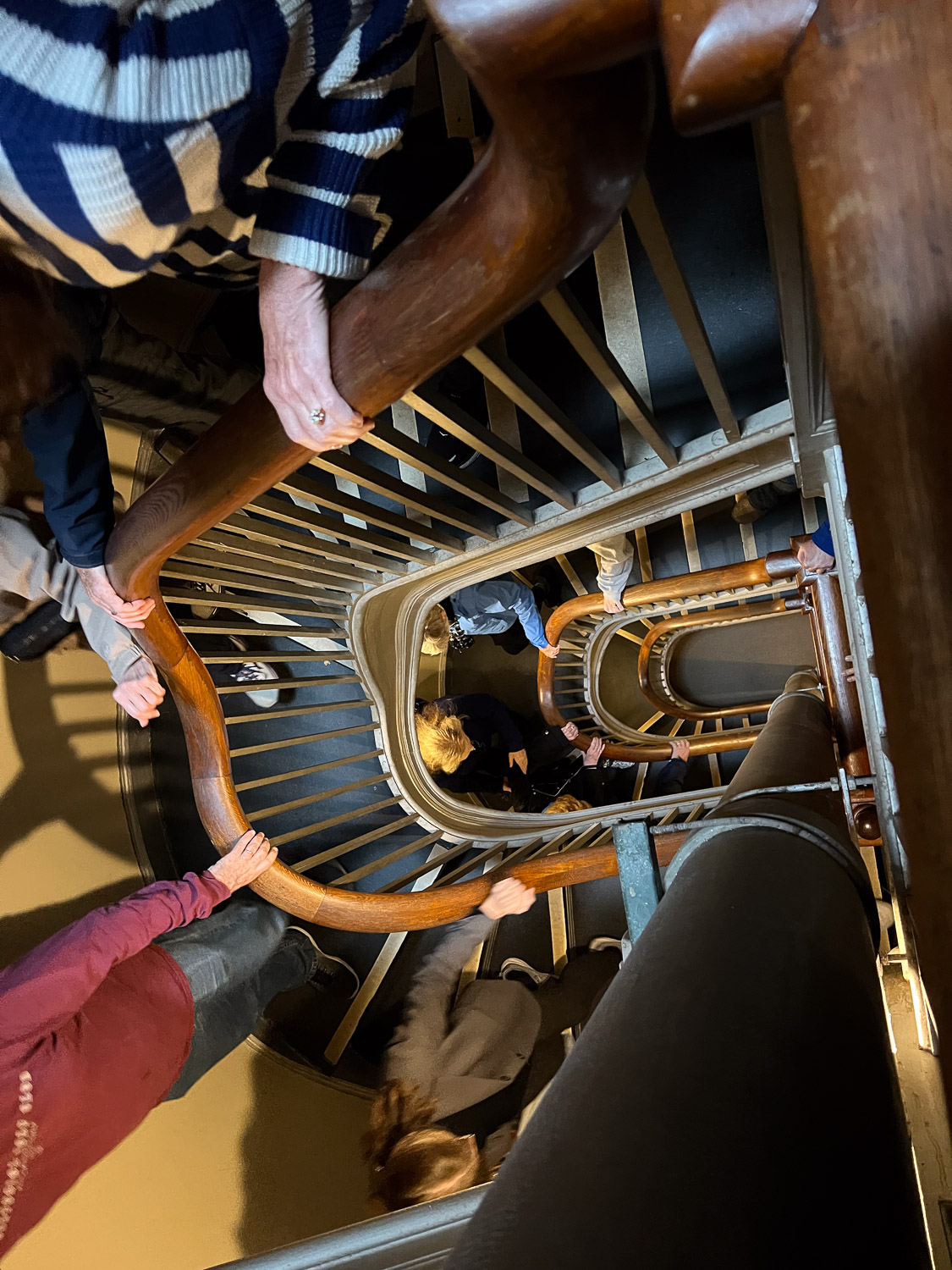
We took the stairway to the Servant’s Basement.

This is the view from below. There are four floors (including the basement), 54 rooms and 21 fireplaces. The third floor is closed to visitors and we were told that it is not as it originally was, being used to house Secret Service agents at some point in the history of Hyde Park. There is much more information to be found on the referenced website.

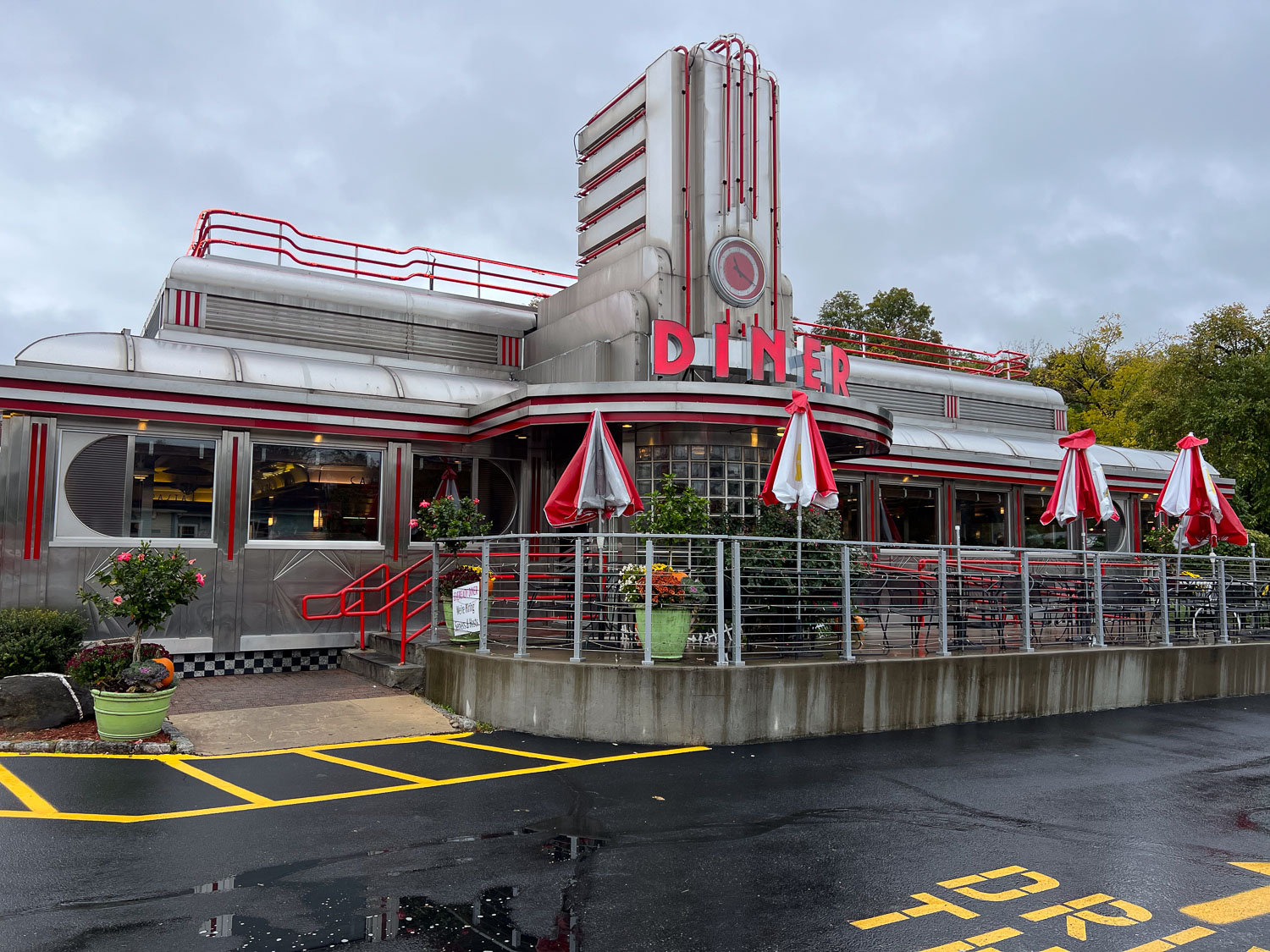
Change of scene… We stopped at the Eveready Diner in Hyde Park for lunch and met up with California friend, Siobhan, here. I didn’t drive during this whole trip and kept losing track of which town we were near. We stayed outside Tivoli, New York and drove to Rhinebeck, only 11 miles south. Hyde Park is only another 10 miles south of Rhinebeck. So we were back and forth on that same corridor for the whole trip.

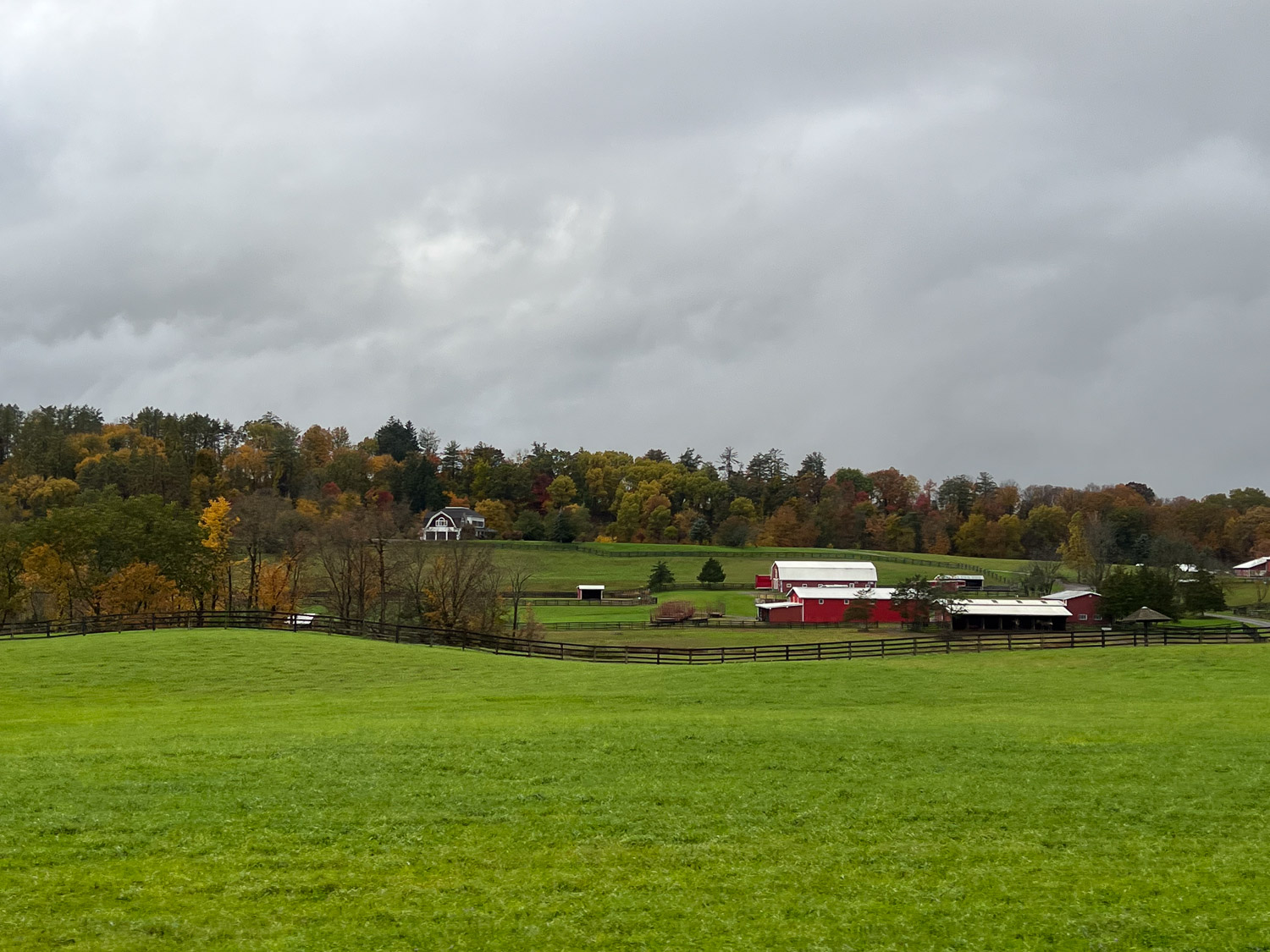
On the way home (to our AirB&B) we took a side road to see some of the countryside.

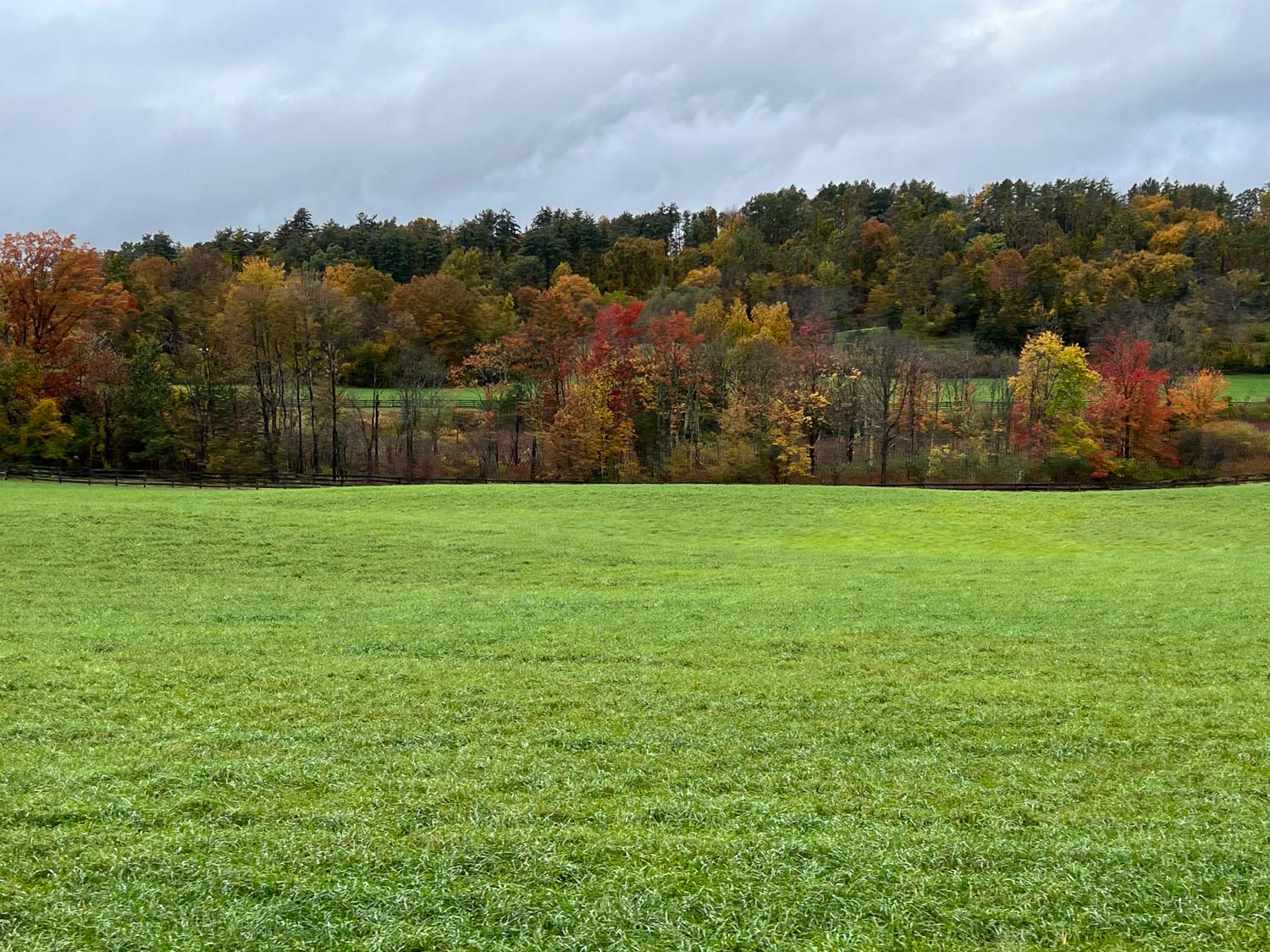
Fall colors in evidence.

To be continued…

New York Adventure – Day 2

I thought that It would be great to come home all caught up with my blog posts. That didn’t happen–partly because it’s not as easy to work on the iPad as on my computer and partly because I spent time with my friends every evening and didn’t focus on other things.

On the second day in New York we drove to Hyde Park where there are three National Historic Sites we intended to visit. We started at this one.

We signed up for a tour of FDR’s house. This is the stable where we gathered.

FDR was born in this house in 1882. After he was married and the family grew there were additions to the house There are also adaptations for wheelchair access since he was unable to walk unaided after contracting polio in 1921. I was surprised to learn the extent to which that fact was hidden from the public throughout his life.

There is a ramp to this room, but when Roosevelt was alive the ramp would be concealed once he was in the room and awaiting his guests.

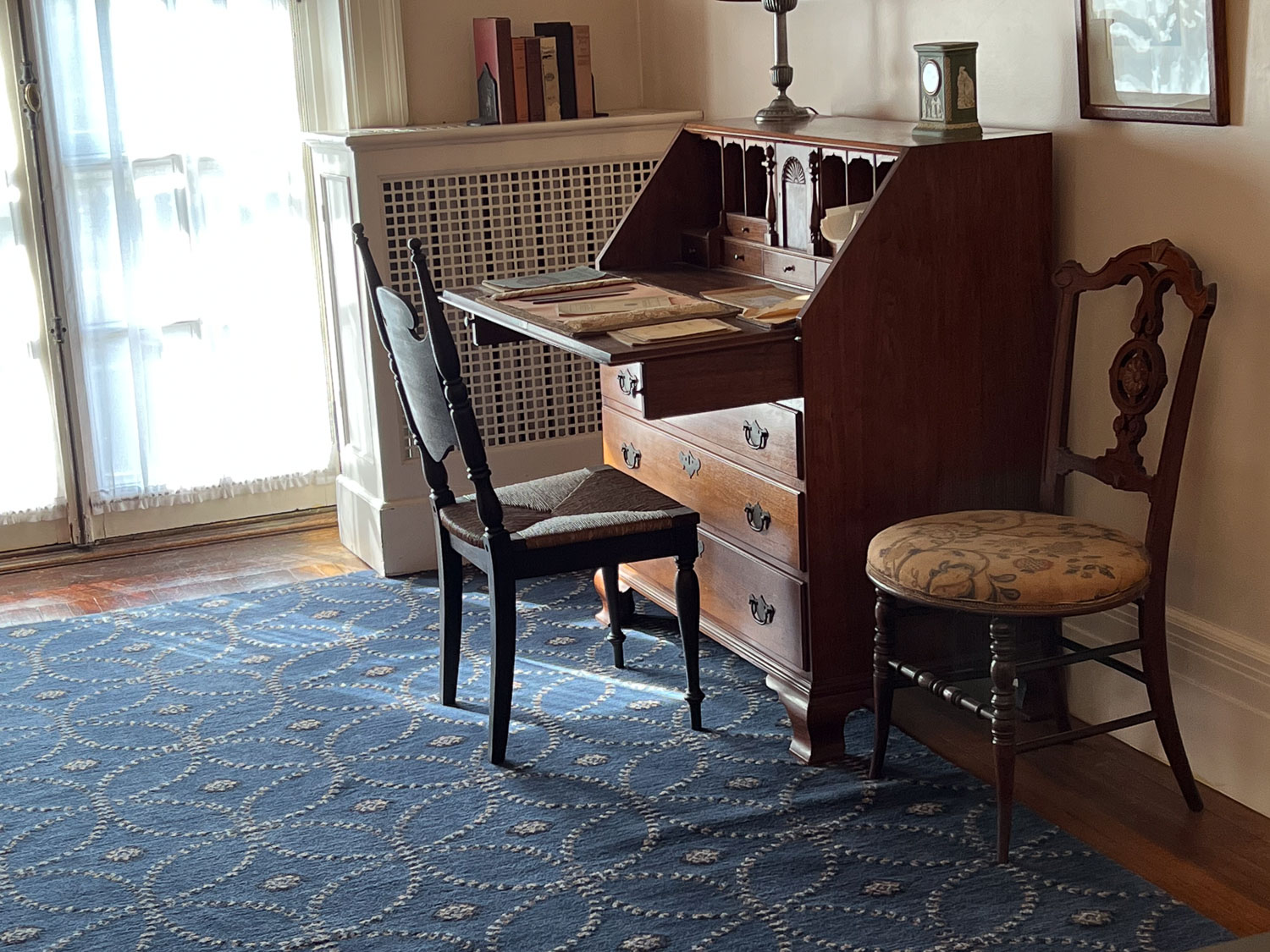
I took this photo because that desk is almost identical to the one that I used while I was a kid and through high school. It belonged to my grandmother who had lived in New York. I always liked the “secret” cubbyholes that were those fancy columns on either side of the door at the center of the upright part. My granddaughter has this desk now.

We had started at the FDR Presidential Library but had only a half hour before our tour of the house. There was so much to see here that we came back. I thought that a Presidential LIbrary would be full of books, but this is a museum. It is very well presented and there is an overwhelming amount of information here. This is the first Presidential Library and I assume that maybe others are modeled after this one. This one opened in 1941, and of course it would have been very different than what it is today.

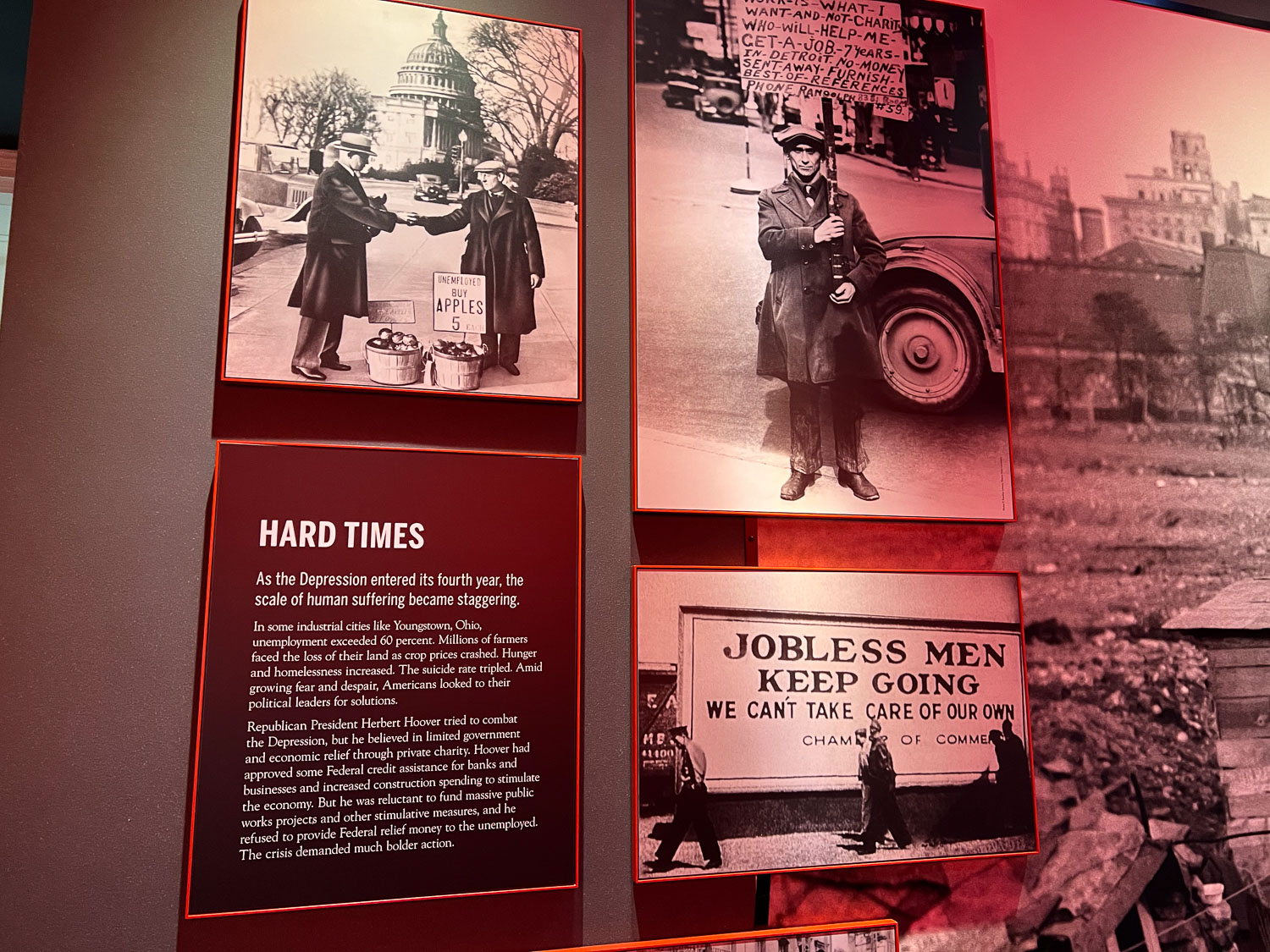
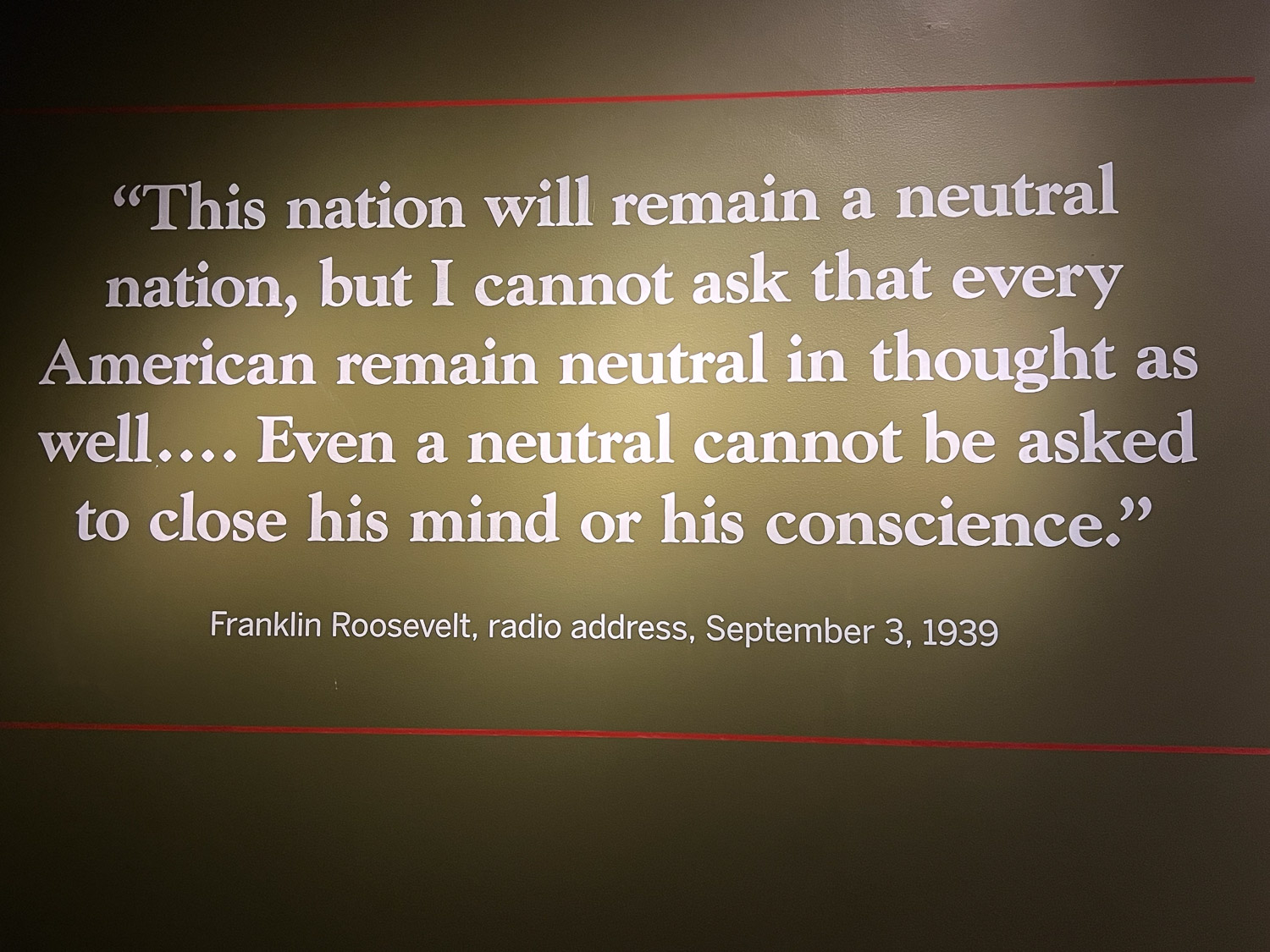
I knew the bare basics of this era but this exhibit pulls it all together in a very informative and organized way. The exhibits are all set up in order so that you move through Roosevelt’s story from before he became President to his death during his fourth term.

It starts with the Depression when Hoover was President.

When Roosevelt was elected he jumped right in and tackled the major problems facing the country.

I am of course familiar with all of these programs now because they are part of our way of life, but I have never thought about the time when they were developed.

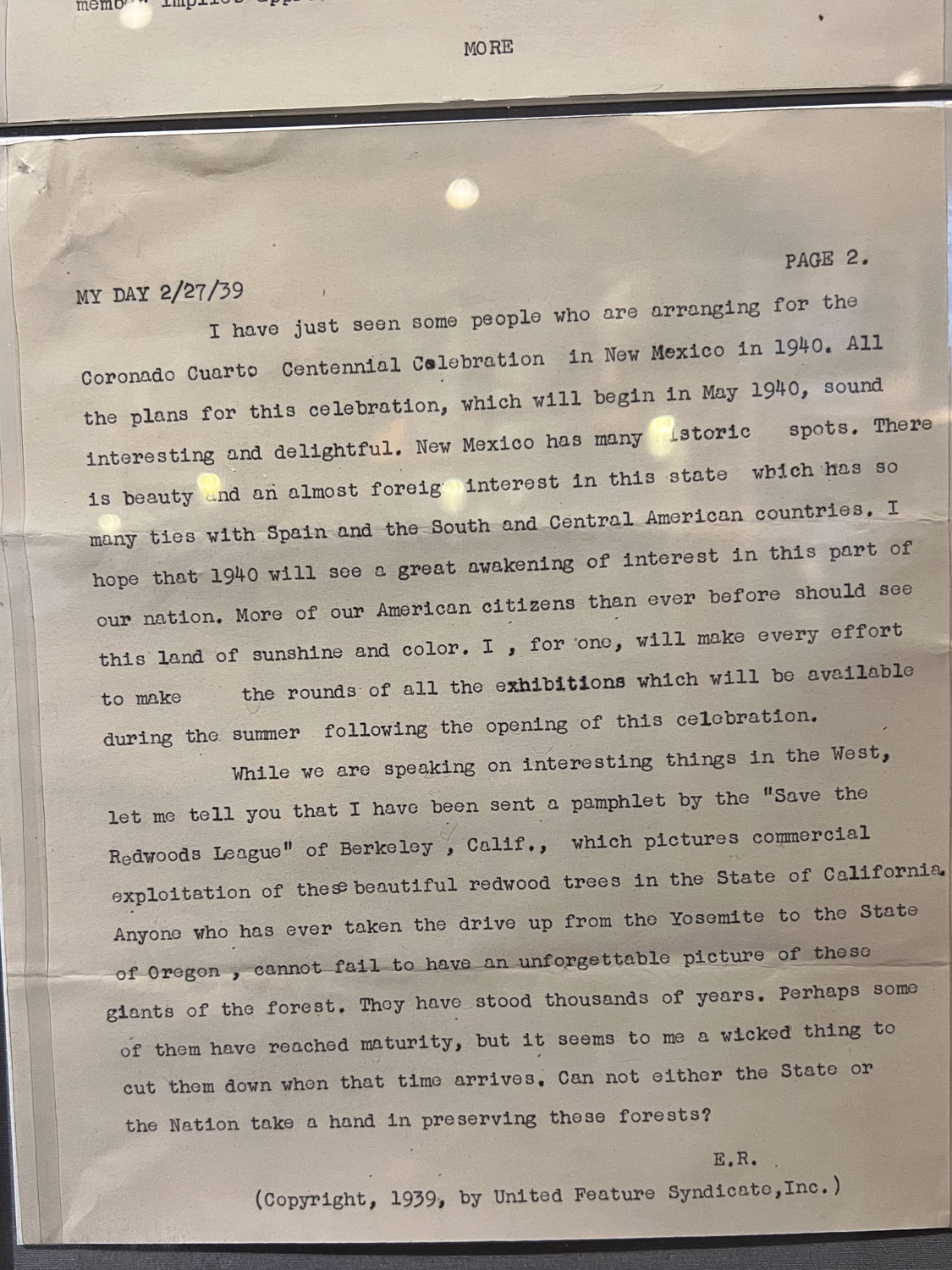
Eleanor is included in this museum as well. There is another National Historic Site at her home but we didn’t have time to go there. This letter is of interest to me because she recognized, way back in 1939, that California’s redwood forests were worthy of protection (second paragraph). There was a lot here about Eleanor’s influence and political activist. The FBI had quite a large file on her activities!

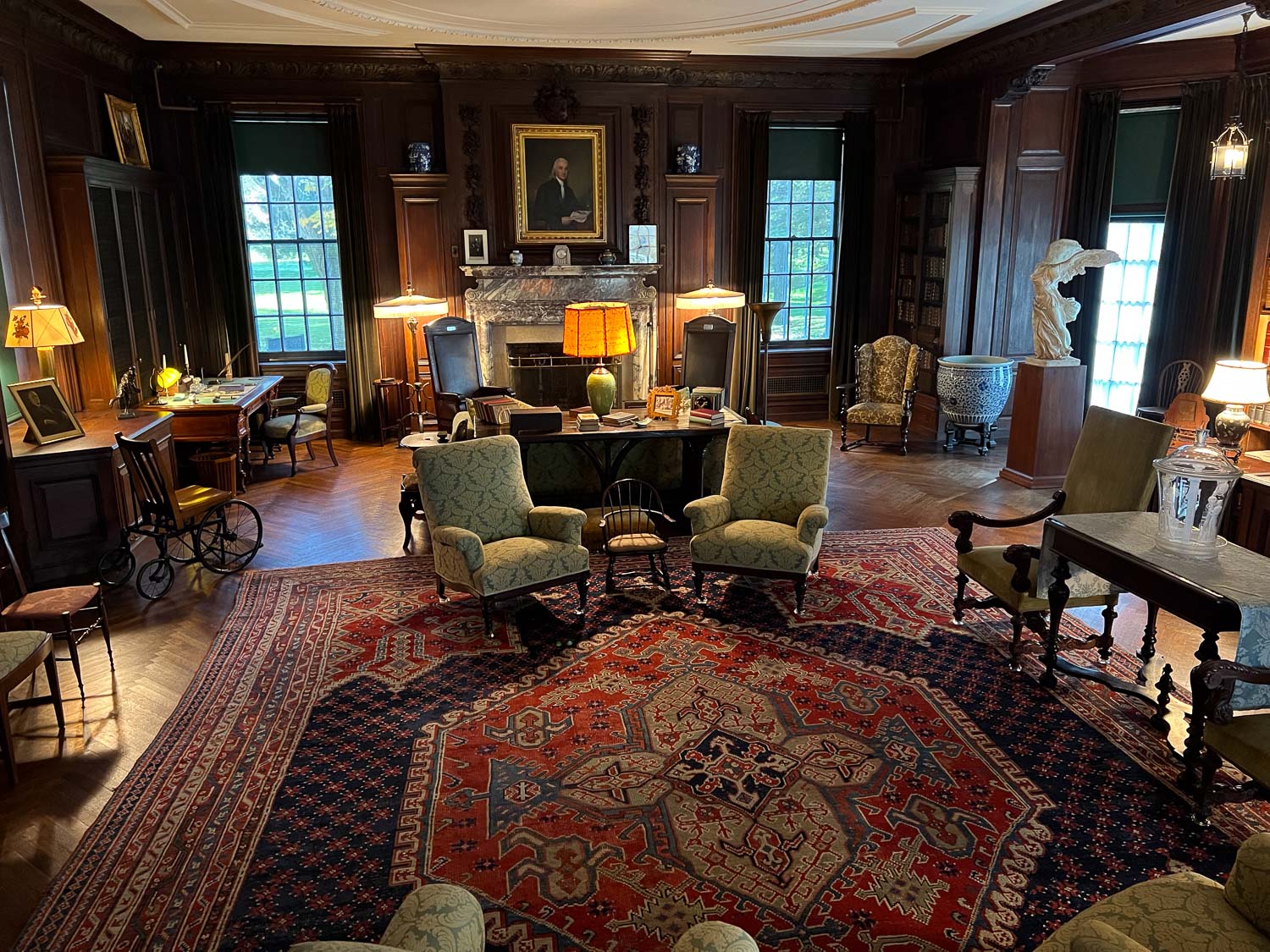
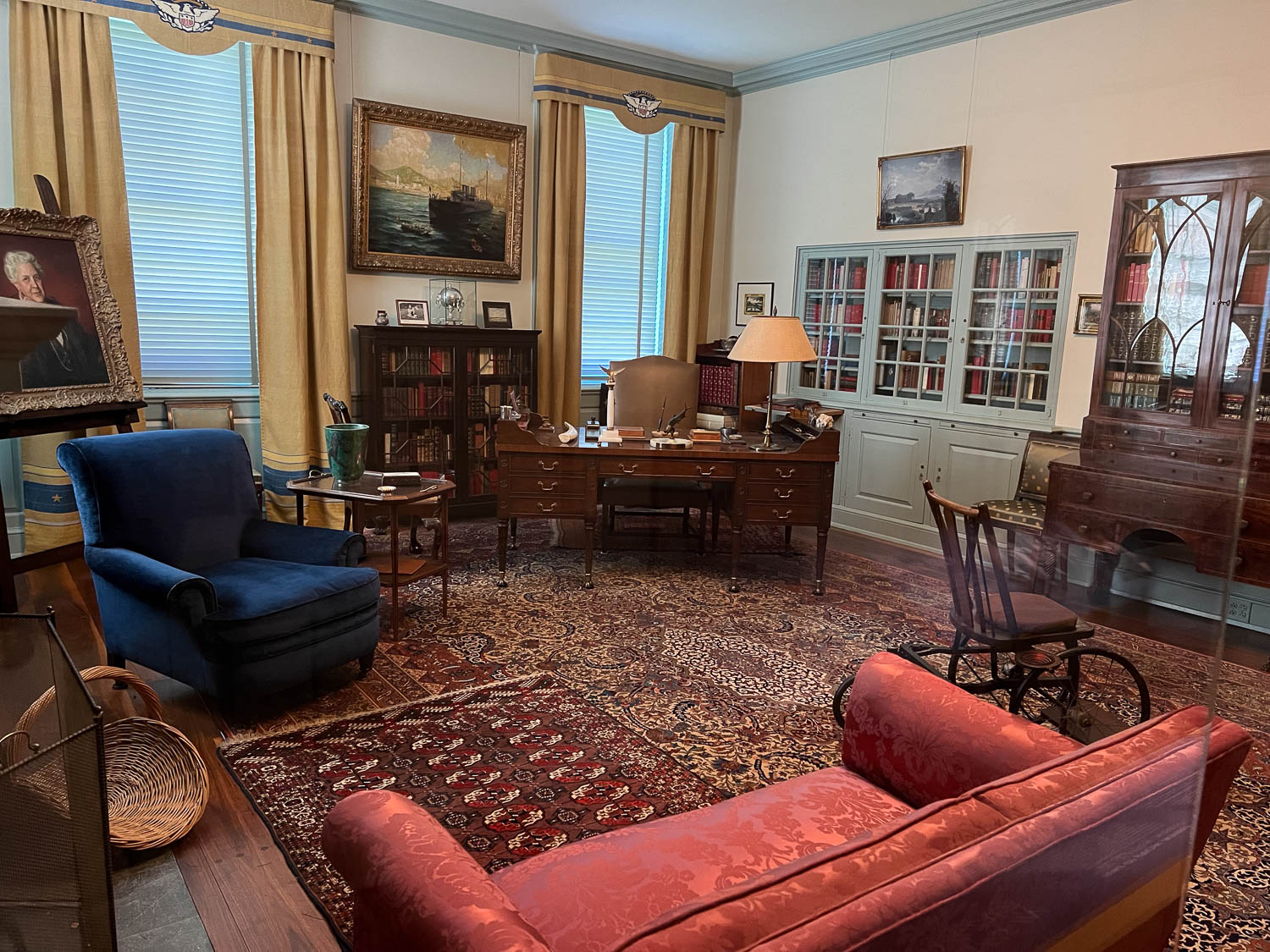
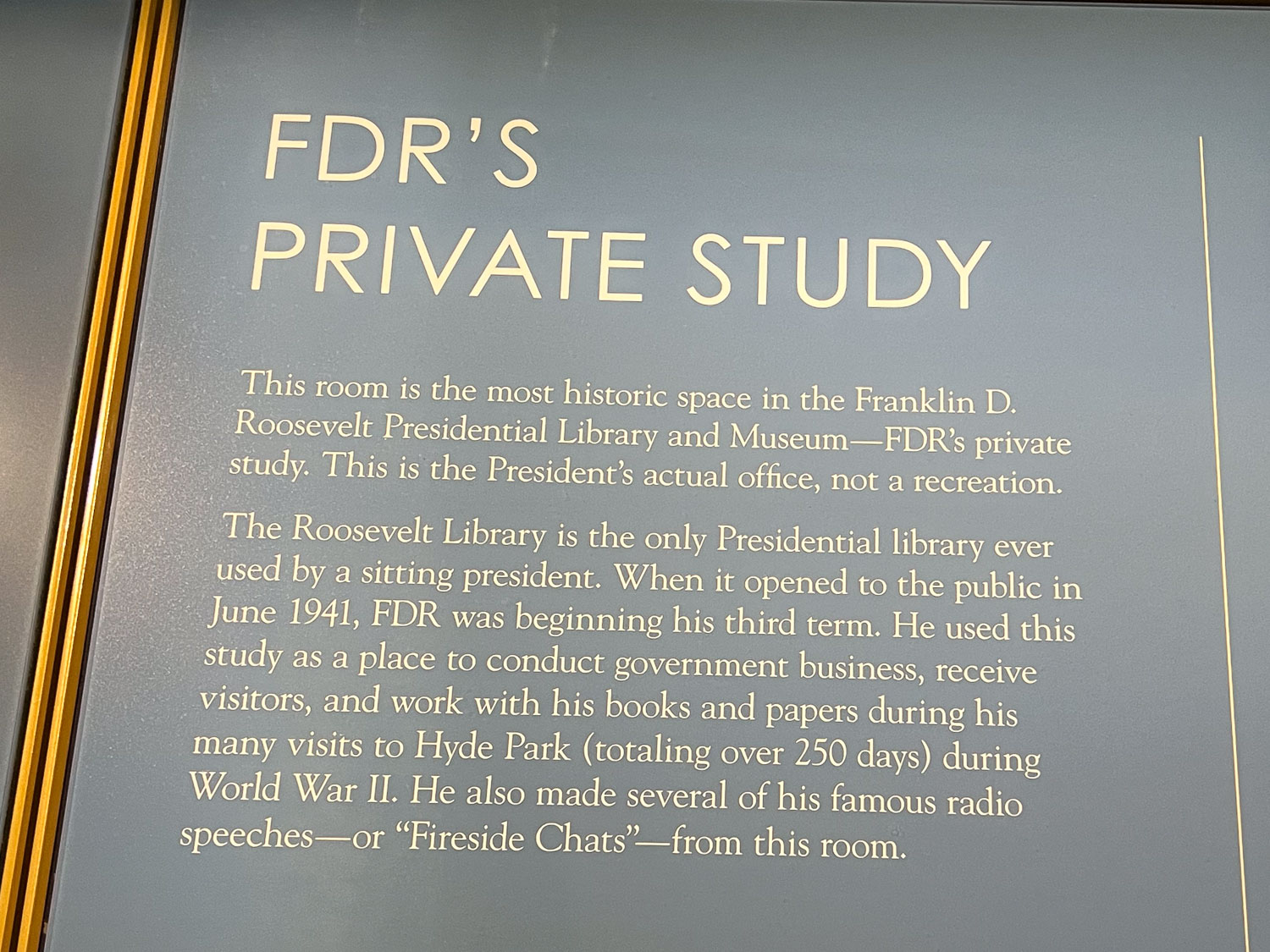
This is a working office used by Roosevelt during his presidency as is told in the photo below.

There was so much to see at this library that I could easily go back if I ever get to this part of the country again.

We drove to the Vanderbilt home only a few miles away. We would have had to wait a couple of hours for space in a tour so we decided to come back the next day.

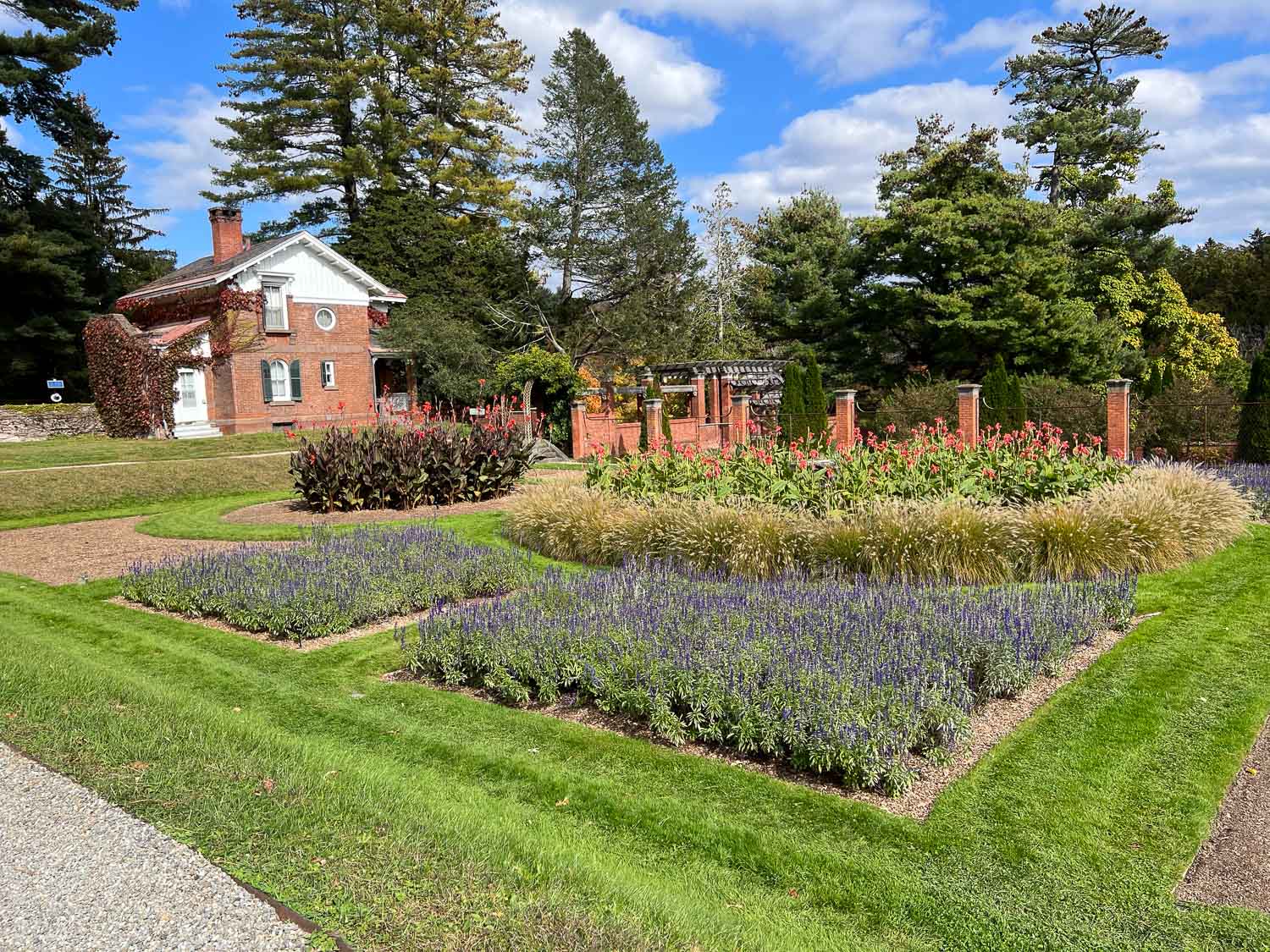
We wandered through the gardens before we left to go “home”.

I don’t have many photos of the AirB&B where we stayed. This is from the driveway.

I stayed in this bedroom.

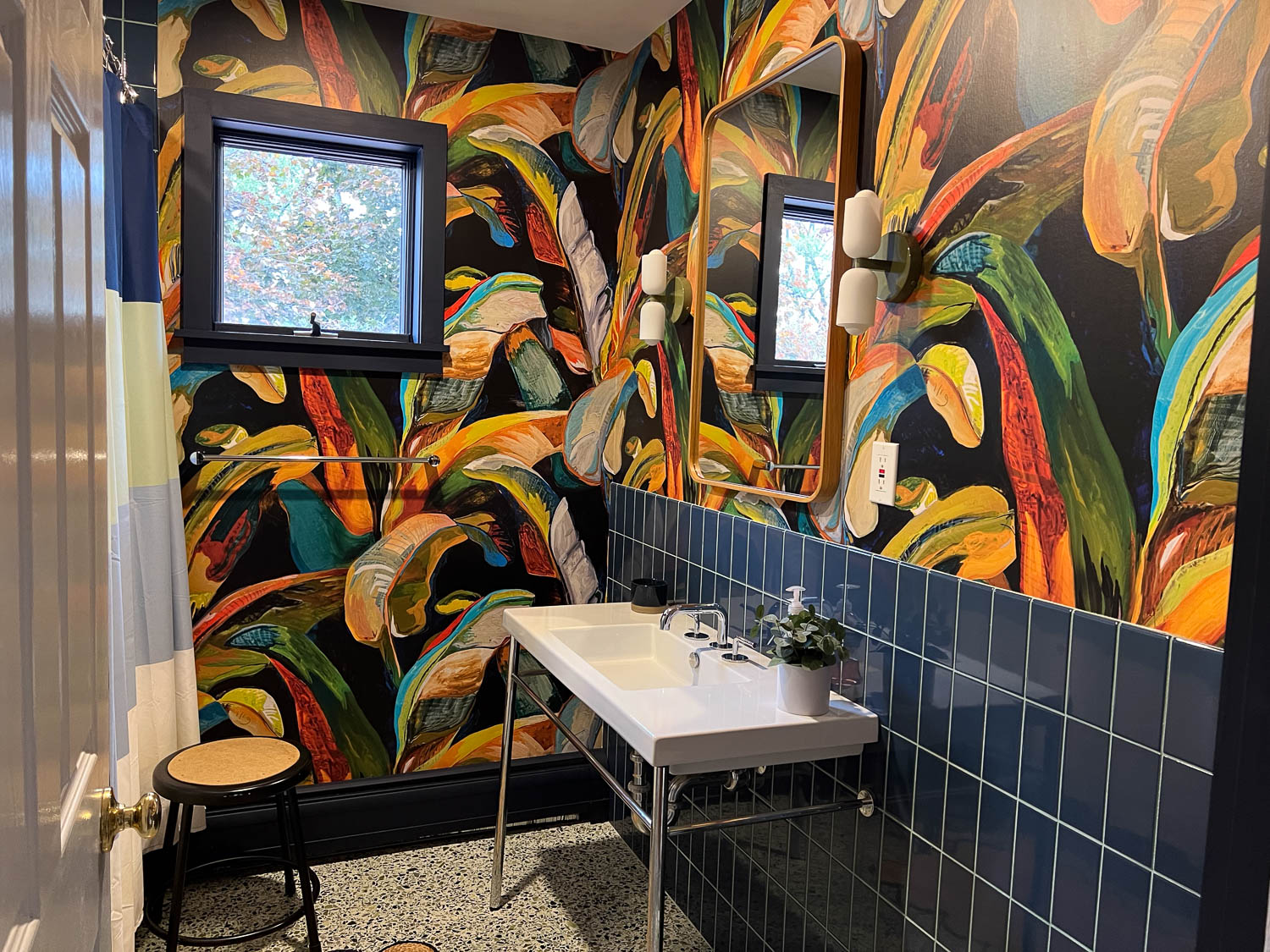
The bathroom that was shared by two bedrooms. The third upstairs bedroom had it’s own bathroom in a totally different style. We figured out with Google and other clues in the home that the owner is an architect with an office in Brooklyn.

This living room and the kitchen are where we spent most of the time. As much as we looked forward to exploring this part of the country and going to the fiber show, some of the most enjoyable time was spent sitting here and around the kitchen table.