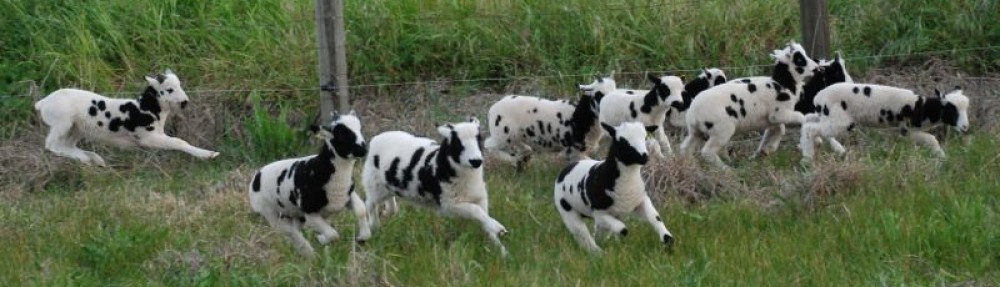
Road Trip 2025 – Day 4, Part 2

In the last blog post I shared photos of a brief stop at a corner of Black Canyon of the Gunnison National Park. Then we were on the road to Trinidad. We had time for one more stop.

Colorado grassland with mountains in the background.

We turned south off of I-50 on Hwy. 69, east on Hwy. 96, and south on 165 to find Bishop Castle. We had never heard of Bishop Castle, but the campground host at Bryce Canyon suggested a stop here.

We parked along the road and walked past other cars on the road to this entrance. This is not part of the castle, but the entryway to the property.

This sign is at the right of the entryway. I guess this is enough to limit any liability claimed by visitors.

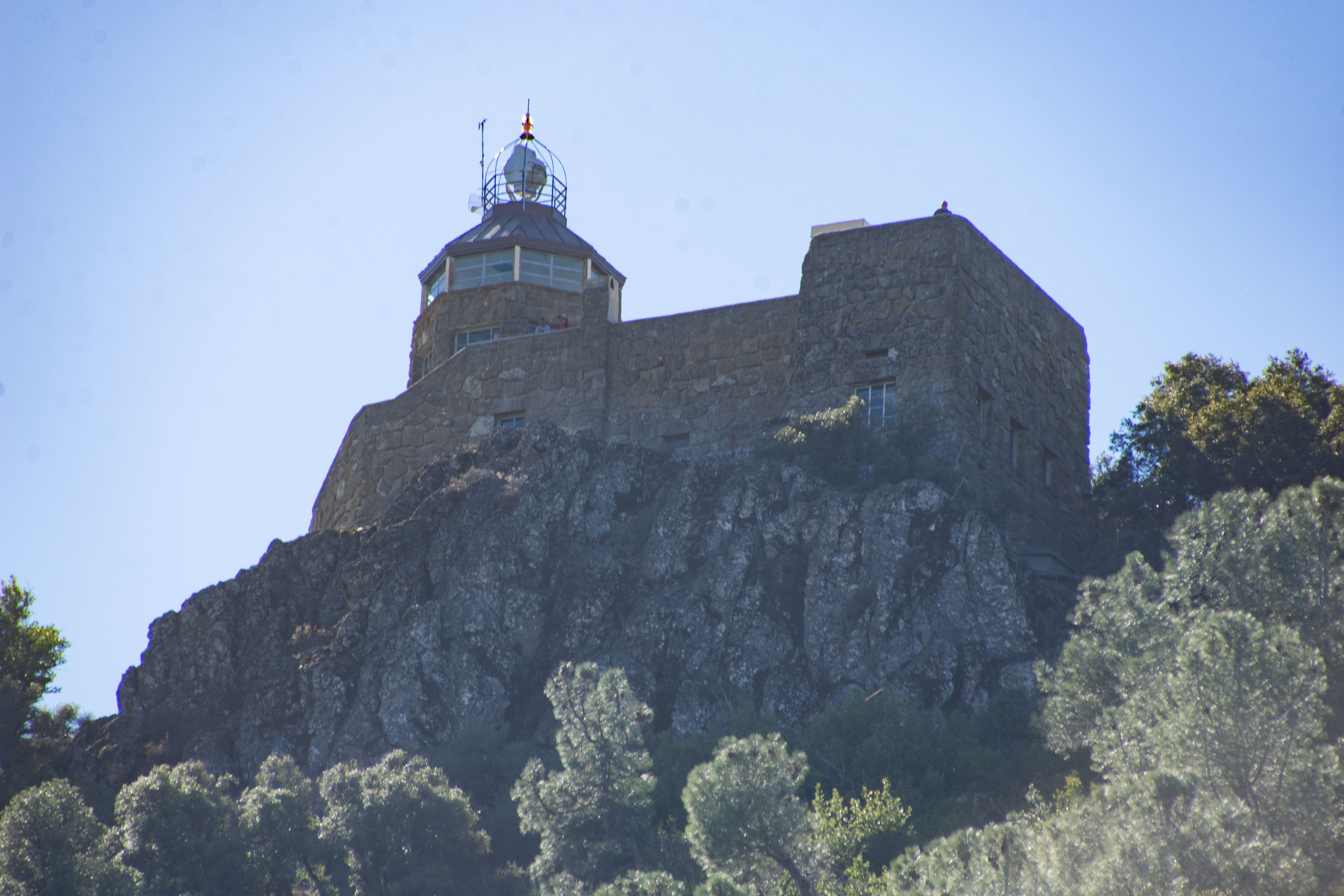
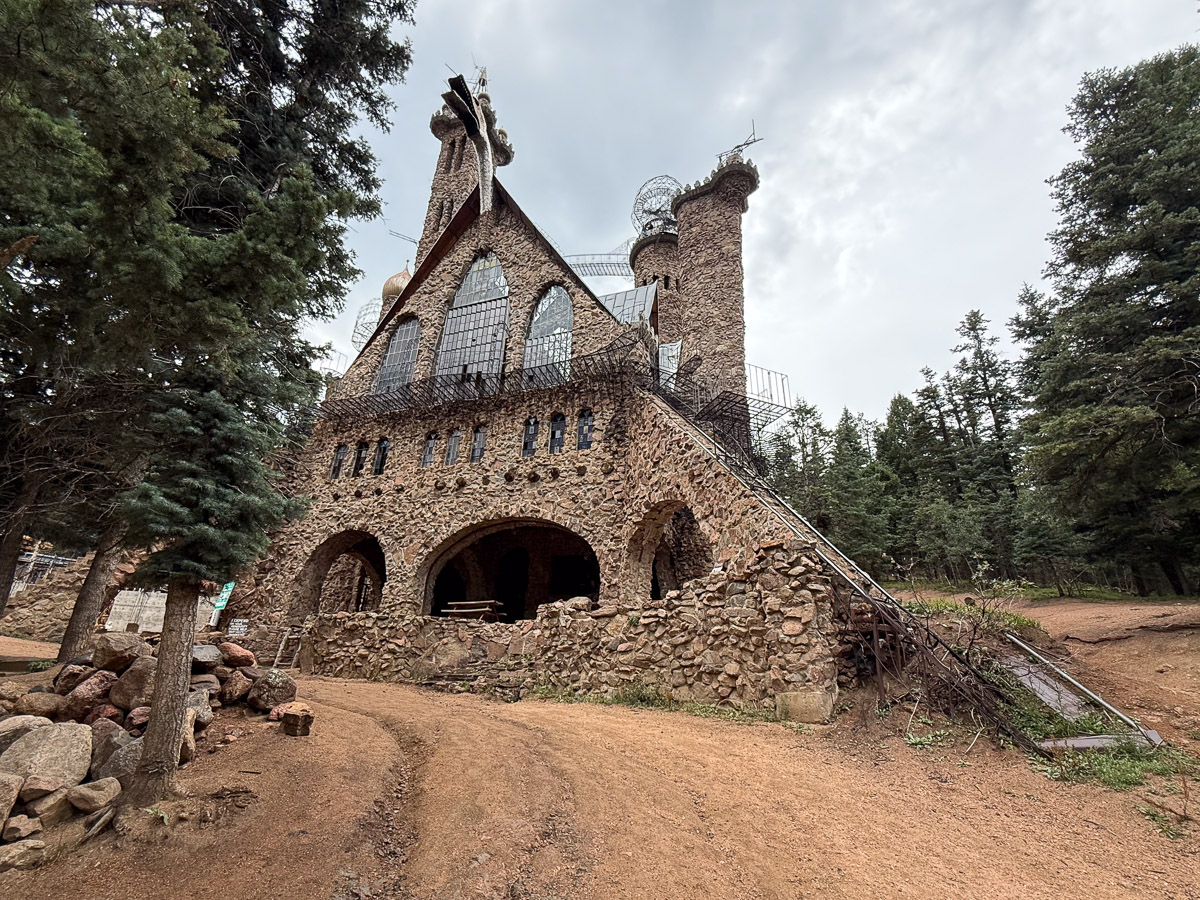
View of one portion of the castle. This project was started by Jim Bishop in 1969 and was a work in progress until he died in 2024. Wikipedia says: “James Roland “Jim” Bishop was born in Honolulu in 1944.[6] He moved to Colorado with his wife, where they raised four children, including a son named Dan.[6] Bishop bought the land for the site for $450 when he was 15, and construction on what was originally intended to be a family project to build a cottage[7]started in 1969.[8] After Bishop surrounded the cottage with rocks, several neighbors noted that the structure looked something like a castle. Bishop took this into consideration and soon began building his castle.

View from another corner. It’s hard to get the whole thing in one shot. The tower is 160 feet tall.

The property is owned by the family and, despite the warning posted, they seem to welcome visitors. There is a gift shop on site as well as a food truck.

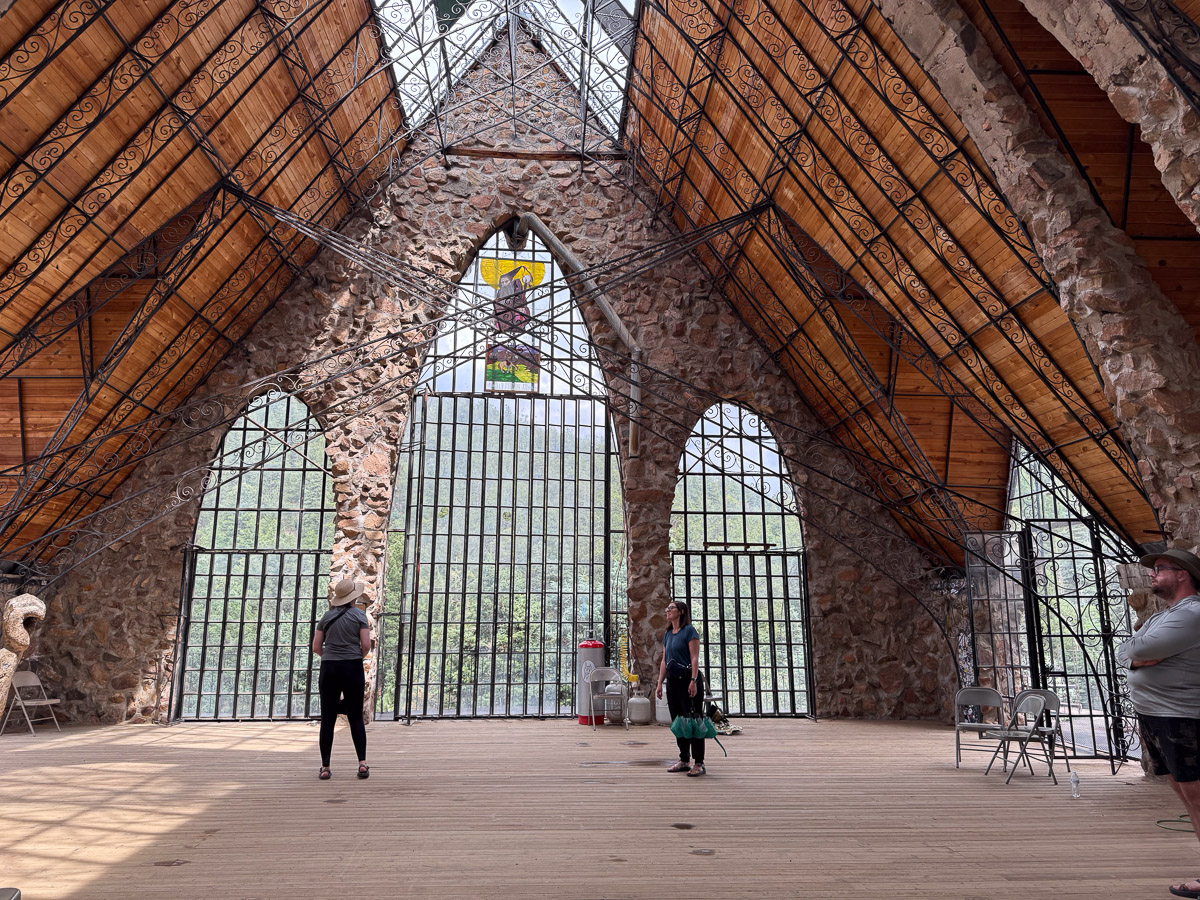
We did not take the winding stairs on the outside or the inside all the way to the top, but we stopped here.

I saw on Instagram that the dragon breathed fire on July 4th and on Halloween.

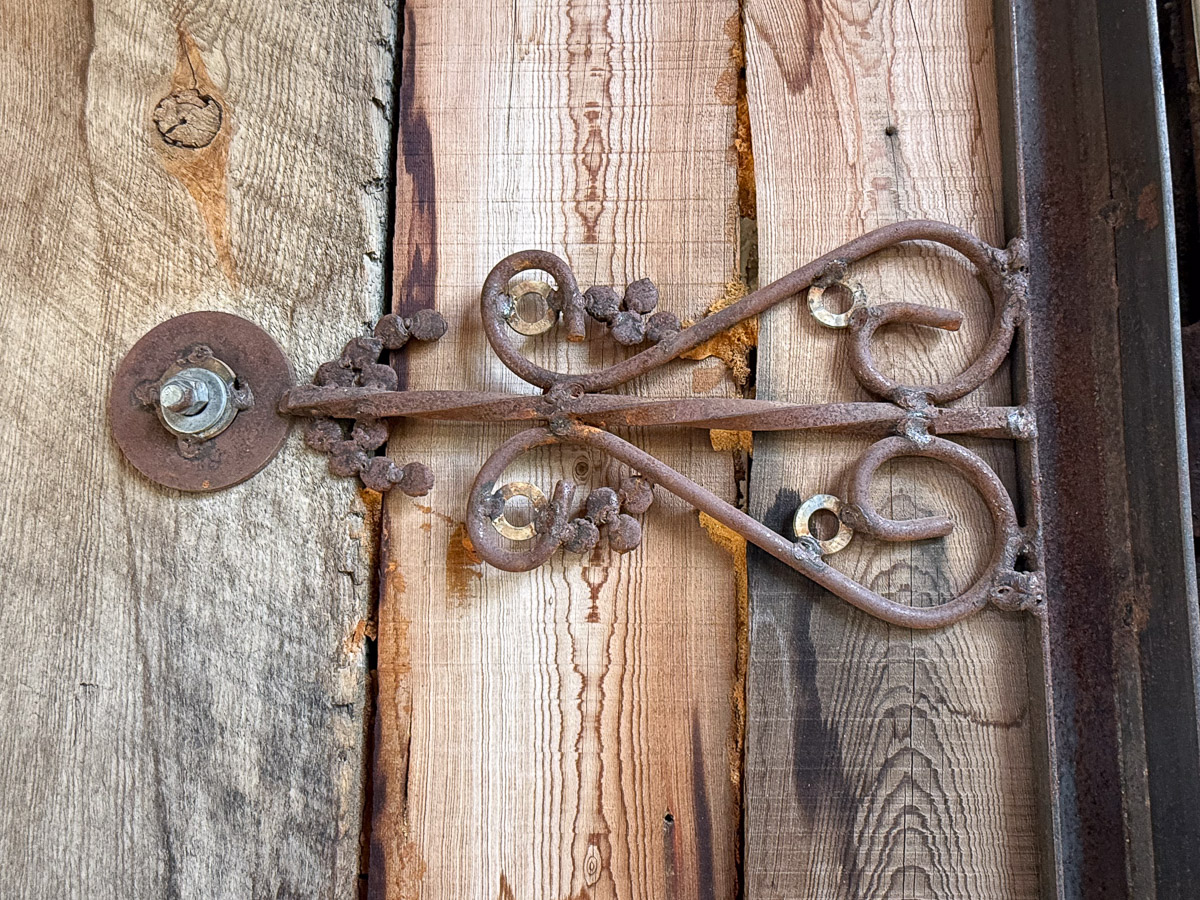
Interesting detail.

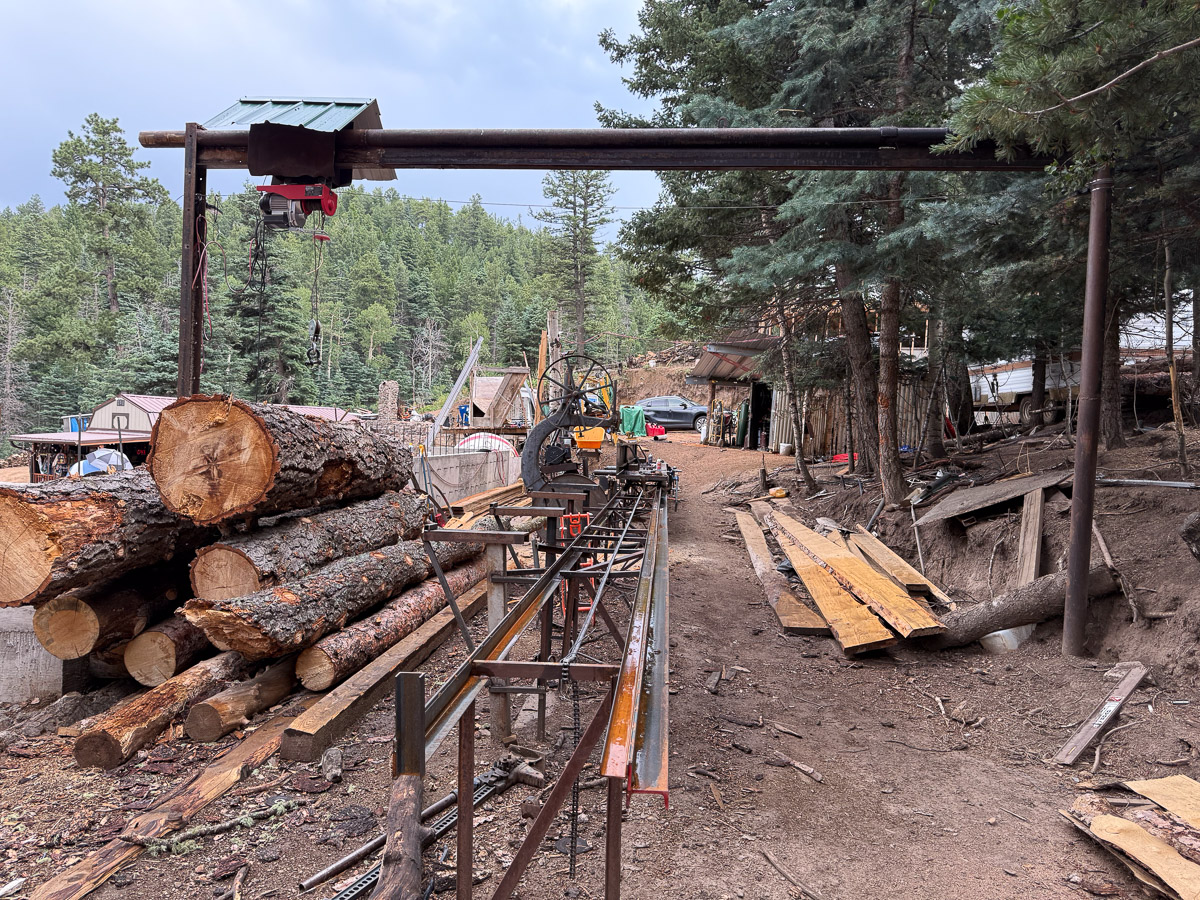
Near the castle are the workspaces where lumber is milled and metal worked.

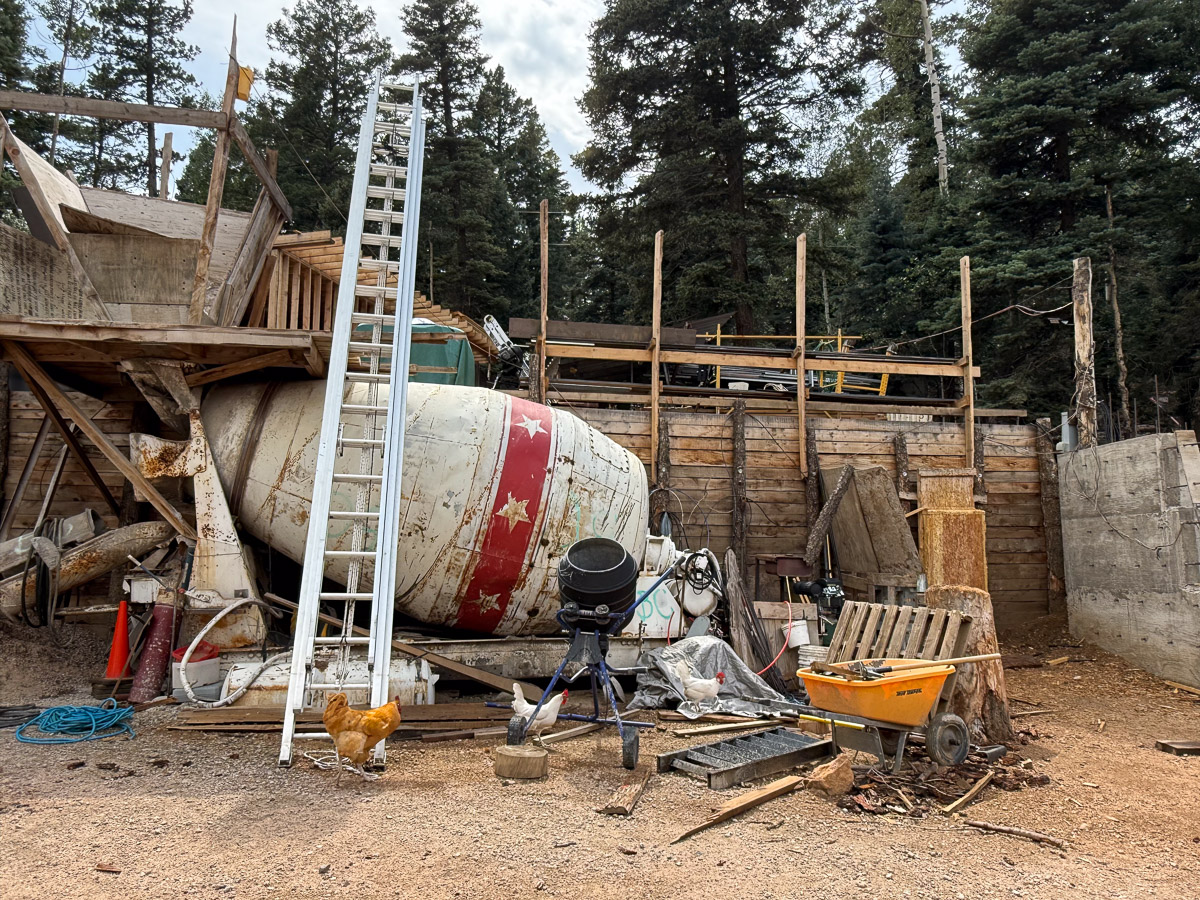
There is also a small cement mixer.

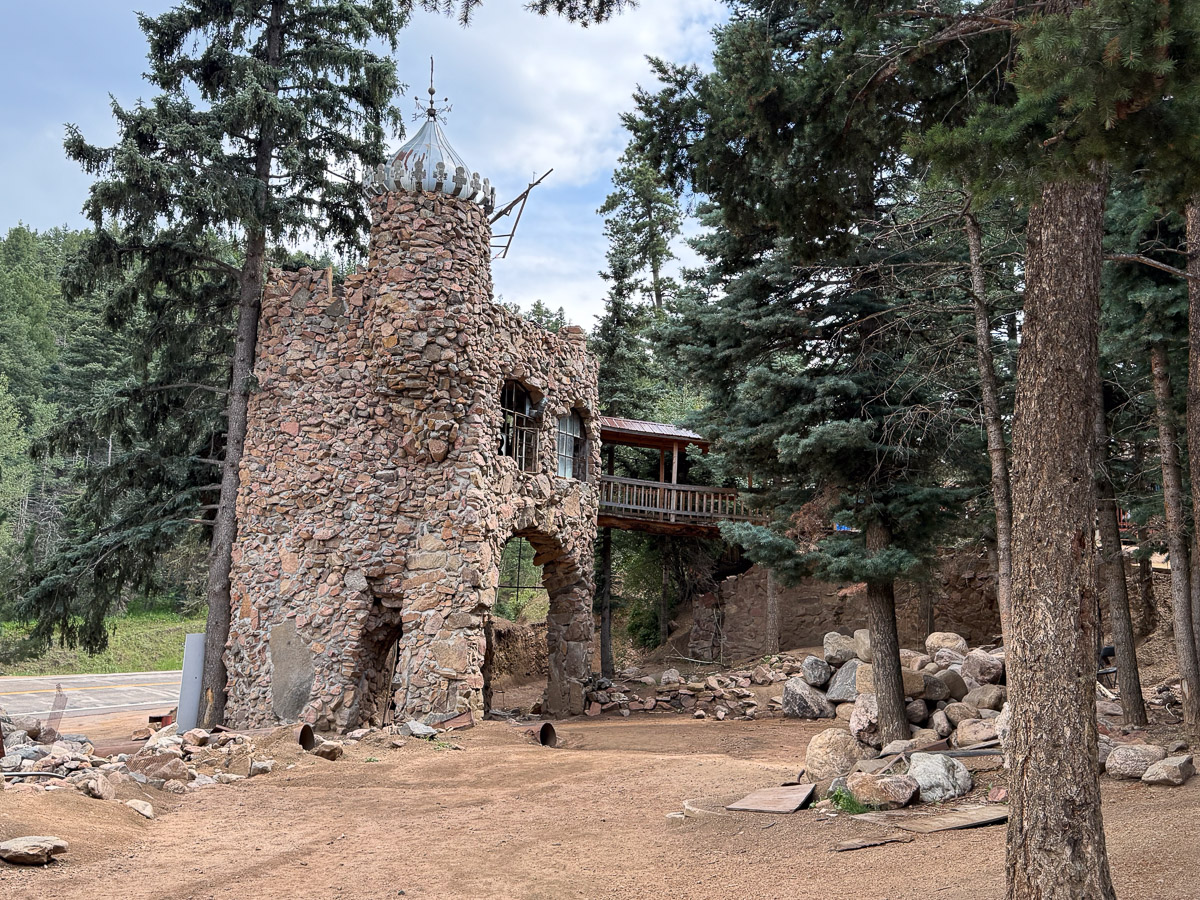
This is the backside of the entrance in the first photo. Bishop Castle is an interesting place to visit. Dan came home with ideas!

Road Trip 2025 – Day 4

This was Friday and the goal was to be in Trinidad, Colorado by the late afternoon. We had time to do a bit of exploring along the way from Montrose to Trinidad. Black Canyon of the Gunnison National Park is very close to Montrose and we thought it would be worth a look. We were there in 2016 but only to camp nearby and drive above the canyon, as described here and here. However the Park was closed due to recent wildfires. We continued on Highway 50 and I realized that a small corner of the Park was accessible about 20 miles from Montrose.

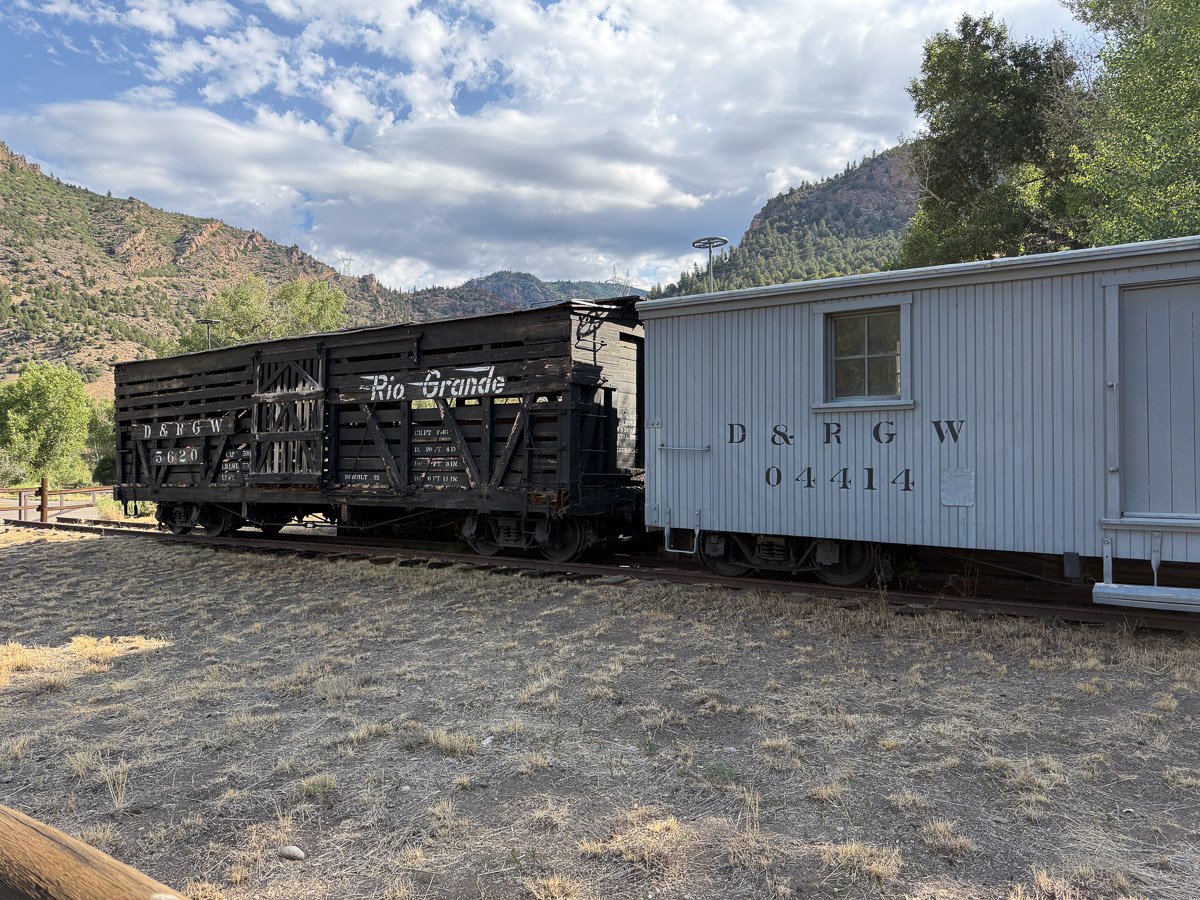
The location known as Cimarron used to be a major hub for sheep and cattle transportation and, later, for tourists. There is a Visitor Center here but it wasn’t open.

We looked around outside and read about the train cars that are here.

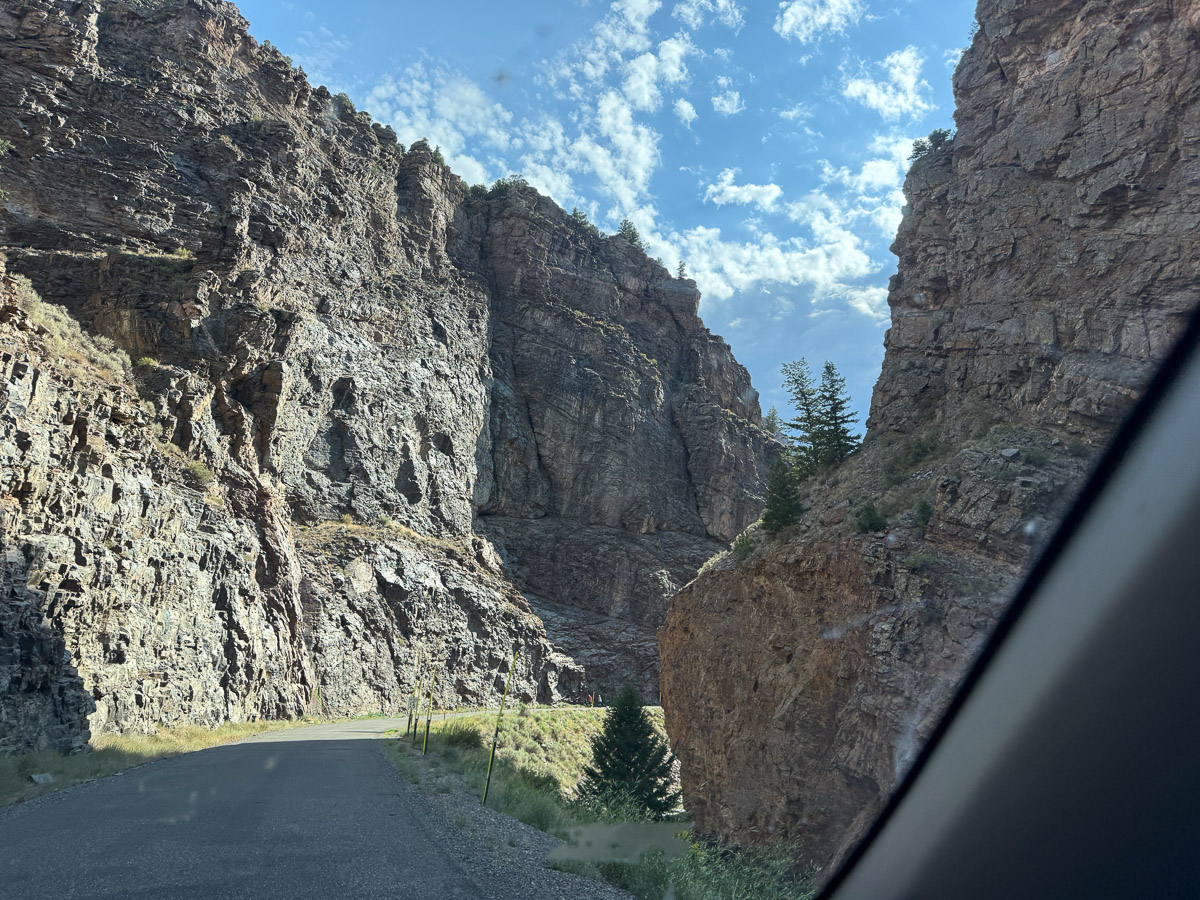
We took a short drive from that location to the canyon.

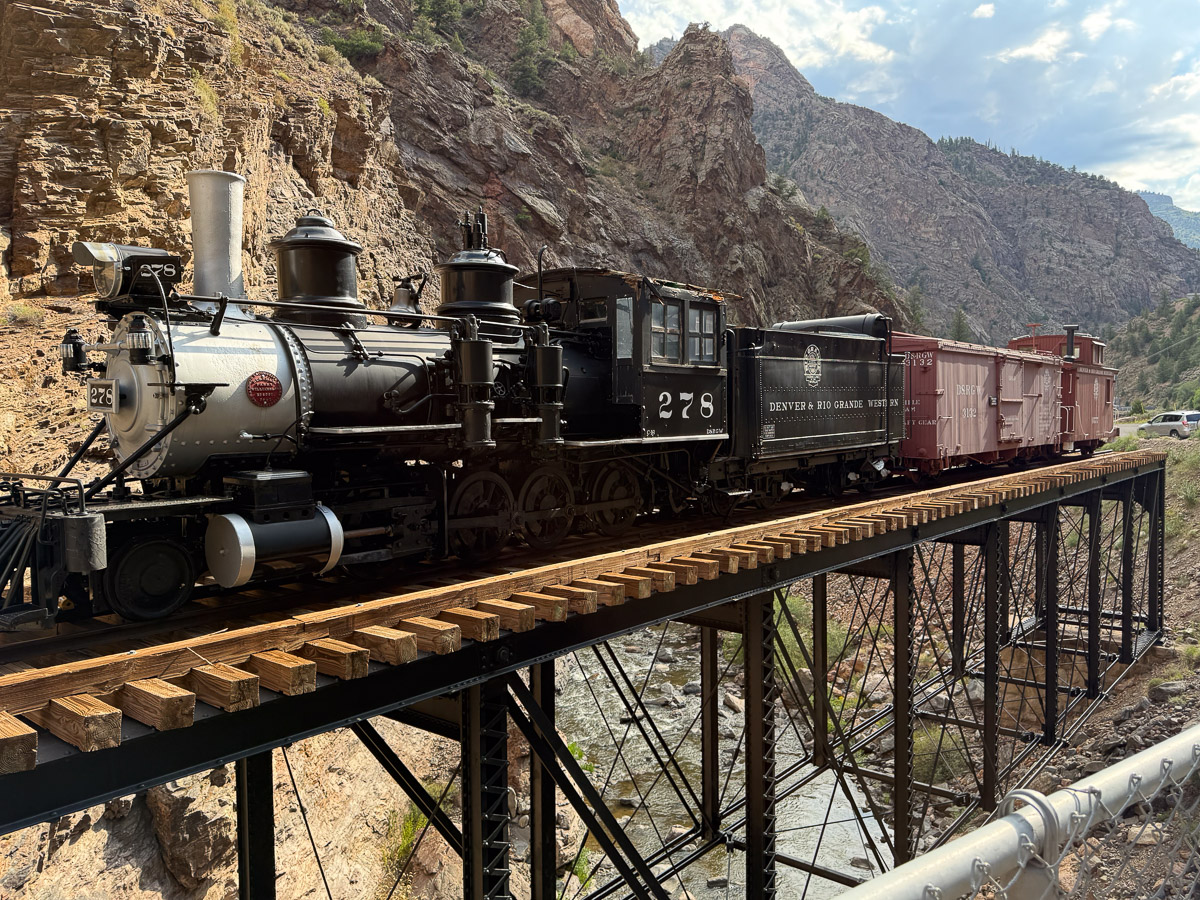
There is a restored engine and cars on a bridge over the Cimarron River which runs into the Gunnison just around the corner.

I had not realized that one of the important aspects of the narrow gauge railroad is that the cars are much more maneuverably around bends in the track.

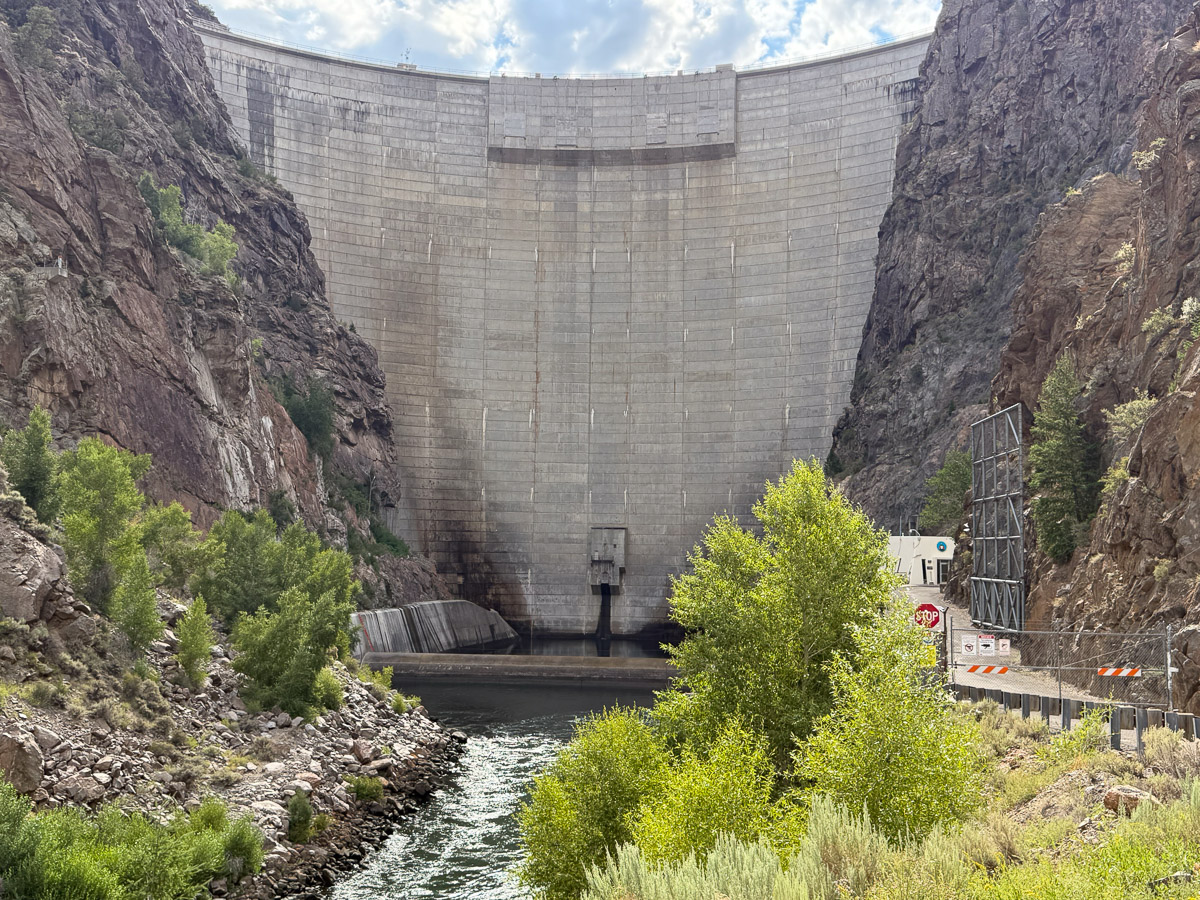
When you look east from the location of the train this is the view. This is the 468-foot tall Morrow Point Dam.

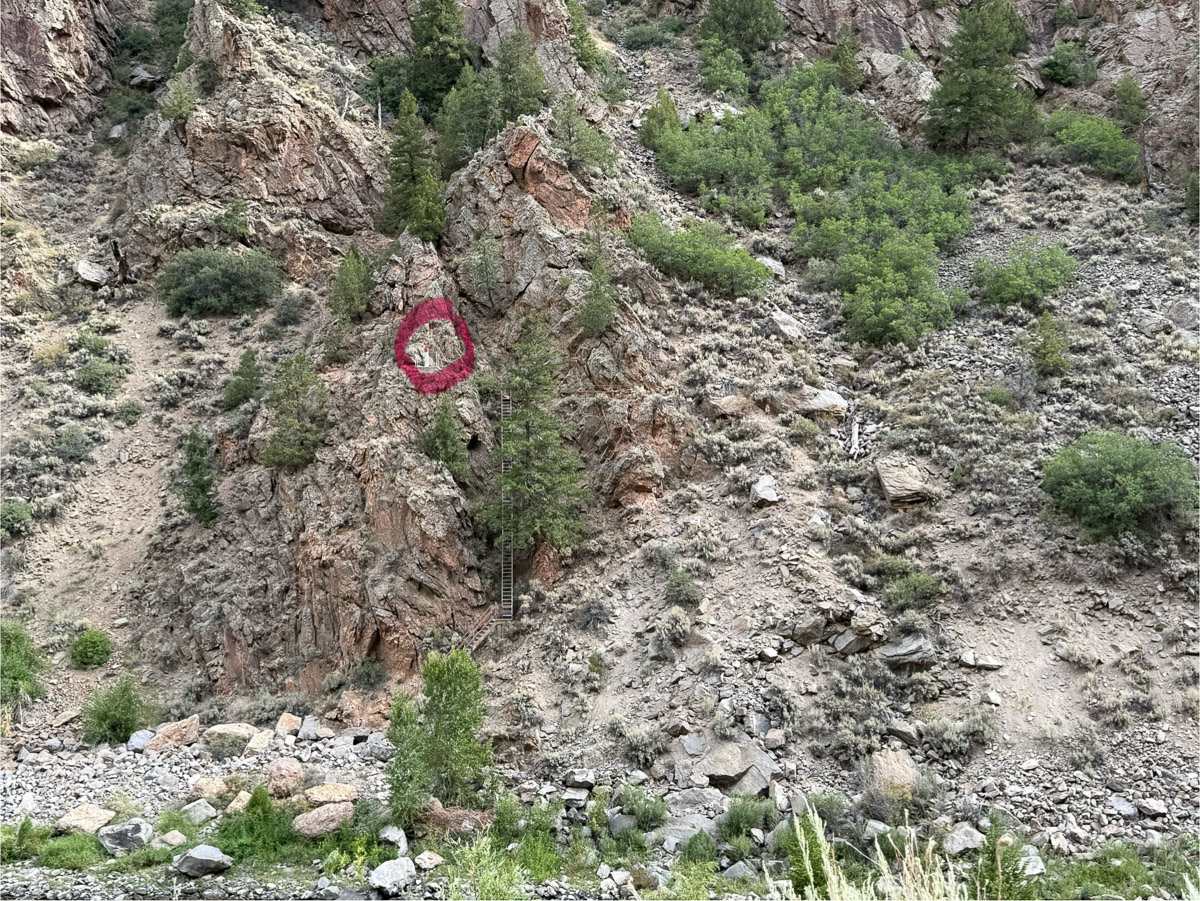
This photo is a view of the north side of the river below the dam. If you enlarge it you will see a ladder that is right next to the large tree in the center. Just to the left of the ladder, circled in red, is an instrument used to measure movements in the earth. It is described below.

We walked over the bridge to a trail on the north side of the river.

There were plenty of interesting plants to photograph, but I have shared only one here. This is poison ivy.

View of the Gunnison River just downstream from the Dam.

UhOh. I can tell already that Day 4 is a three blog post day. Enjoy!

Michigan – Days 3-4-5

I wrote about Day 1-2 in this post.

Sign with JSBS logo that says Annual General Meeting

I got to Michigan on Wednesday. The Annual General Meeting began on Friday.
Handwritten sign to Sheep Barn on a bale of straw.

The meeting was held at the Branch County Fairgrounds in Coldwater, Michigan. First stop was the sheep barn.

Old walking wheel outside the sheep barn with flowers in front.

This old spinning wheel was outside the barn.

Sheep pens in a barn with dozens of Jacob sheep.

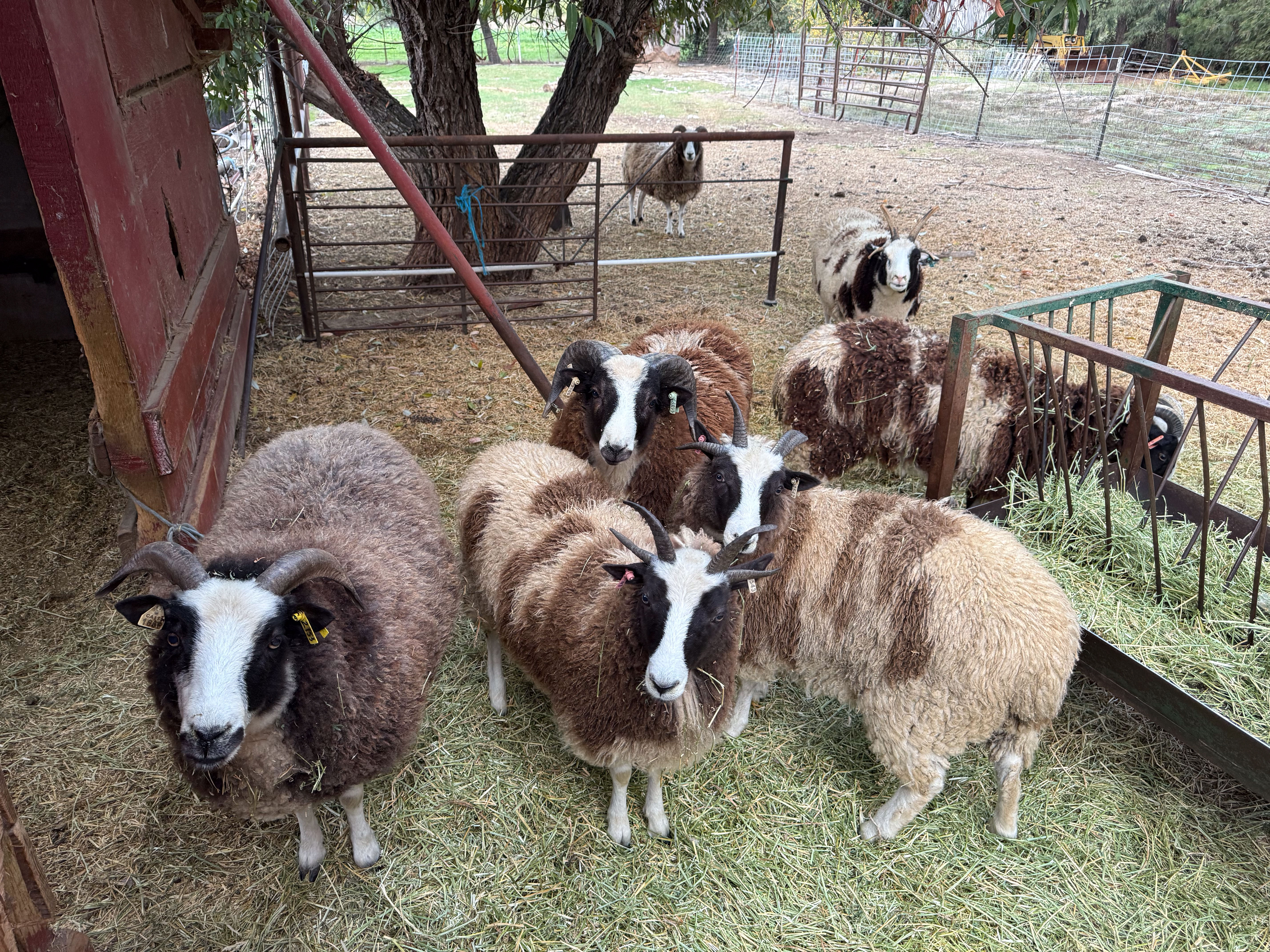
It was sure fun to see this many Jacob sheep from different breeders in one place.

Jacob ewe in sheep pen

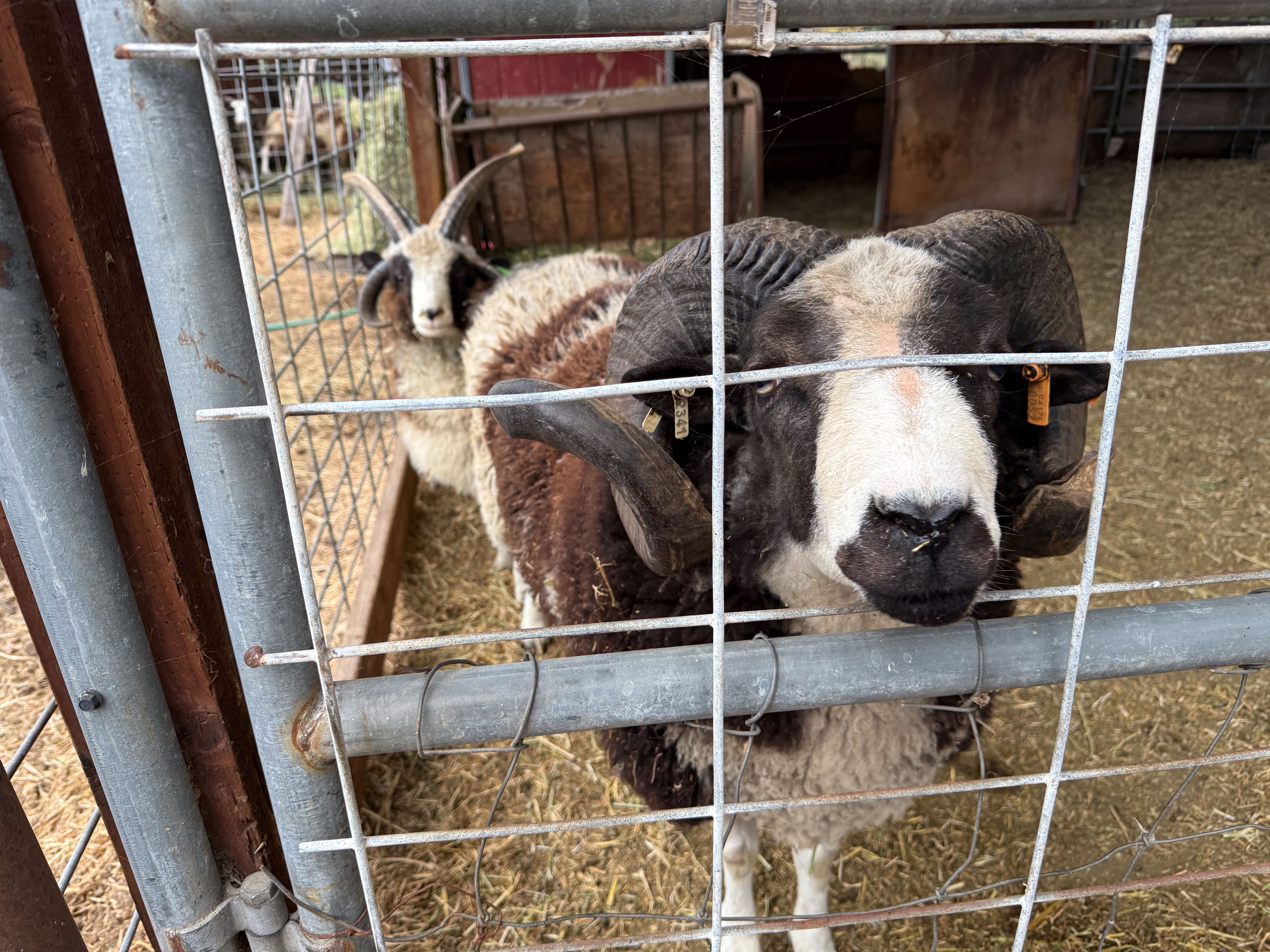
Notice the ear tags including a CA scrapie tag. This is Meridian Saffron who I sold to a fellow Jacob breeder in 2018. I was able to get her to the Maryland Sheep and Wool Festival that year. I just found the blog post about that. I wish I could have participated in some of the fun at AGM–that is buying and selling sheep–not possible when I’m flying.

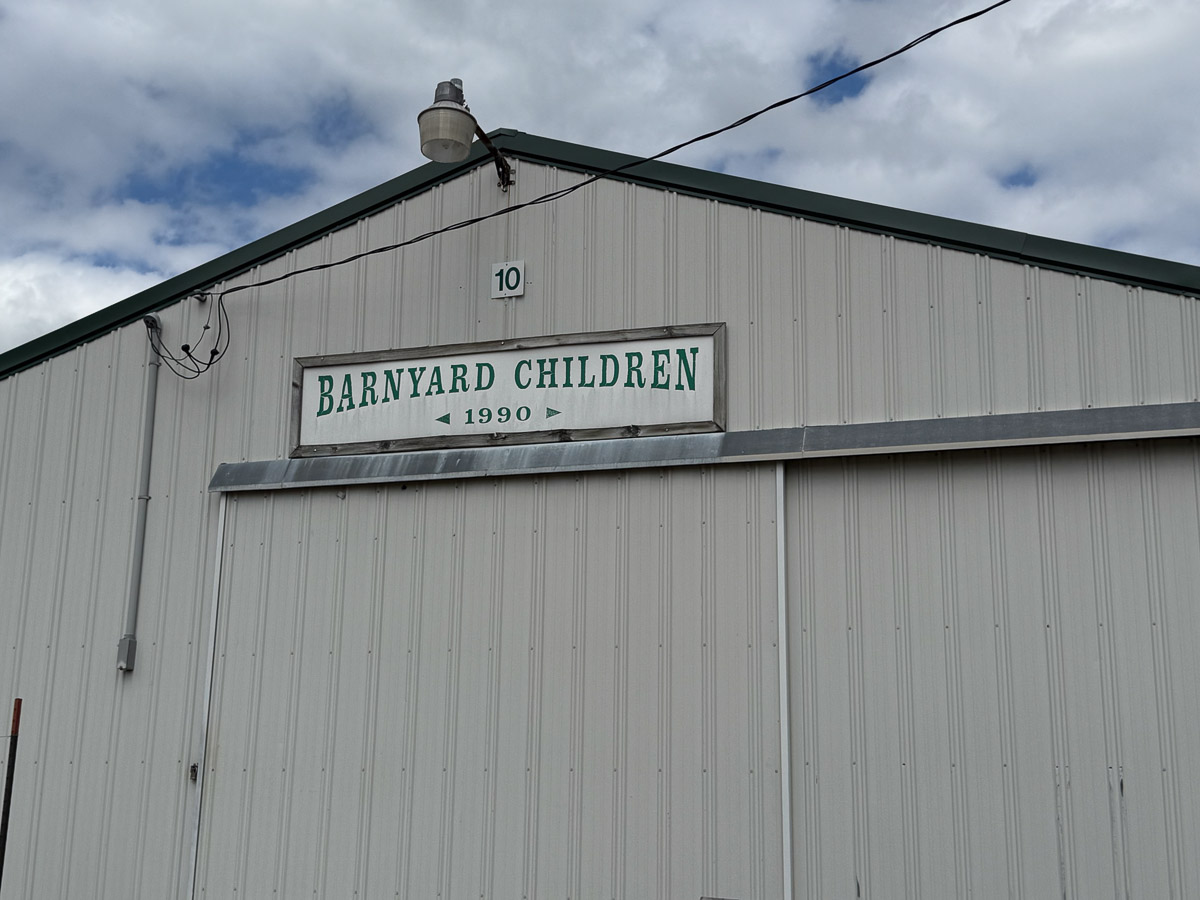
Front of barn with sign that says Barnyard Children.

There are several barns at this fairgrounds. They are labeled sheep, cattle, horses, etc. I was amused by this sign.

Fleeces in bags at wool show with blue and red ribbons.

A wool show was one of the activities at this meeting. Another activity was the sheep show. I don’t have photos of that because I was a judge. I said I’d do it with a partner, not by myself. That was a challenge. I got good feedback, but I don’t want to do it again. Too much stress and it’s difficult to place 10 sheep in a class when they all look pretty good. Fortunately we needed to place only the first four sheep in each class.

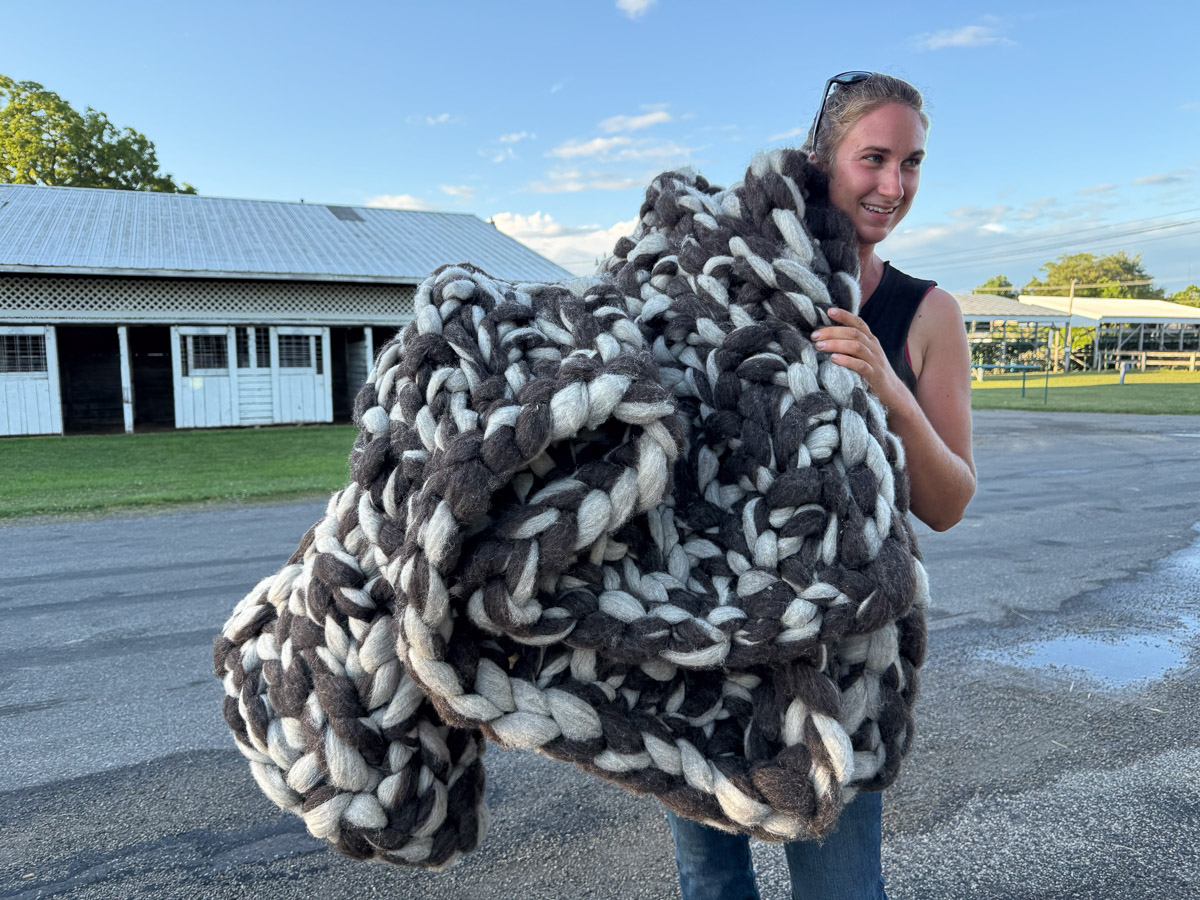
Woman with large blanket knitted with gray and white roving.

One of the participants showed me her “arm-knit” blanket made of roving. It weighs 14 pounds!

Text on slide about mutation causing lilac coloring in Jacob sheep

The presentation I was most interested in was that by Gary Anderson about the study being conducted about lilac Jacobs. Gary showed this slide from a 1995 (I think) paper and noted that they said “the causative mutation” instead of “a”. I think I have written a blog post about the current study in which he involved, but I’m not looking for it now. I’m at the gate for my flight home and want to finish this before we board. I did find this post that is related to the study because of the sheep involved I may have to write more later.

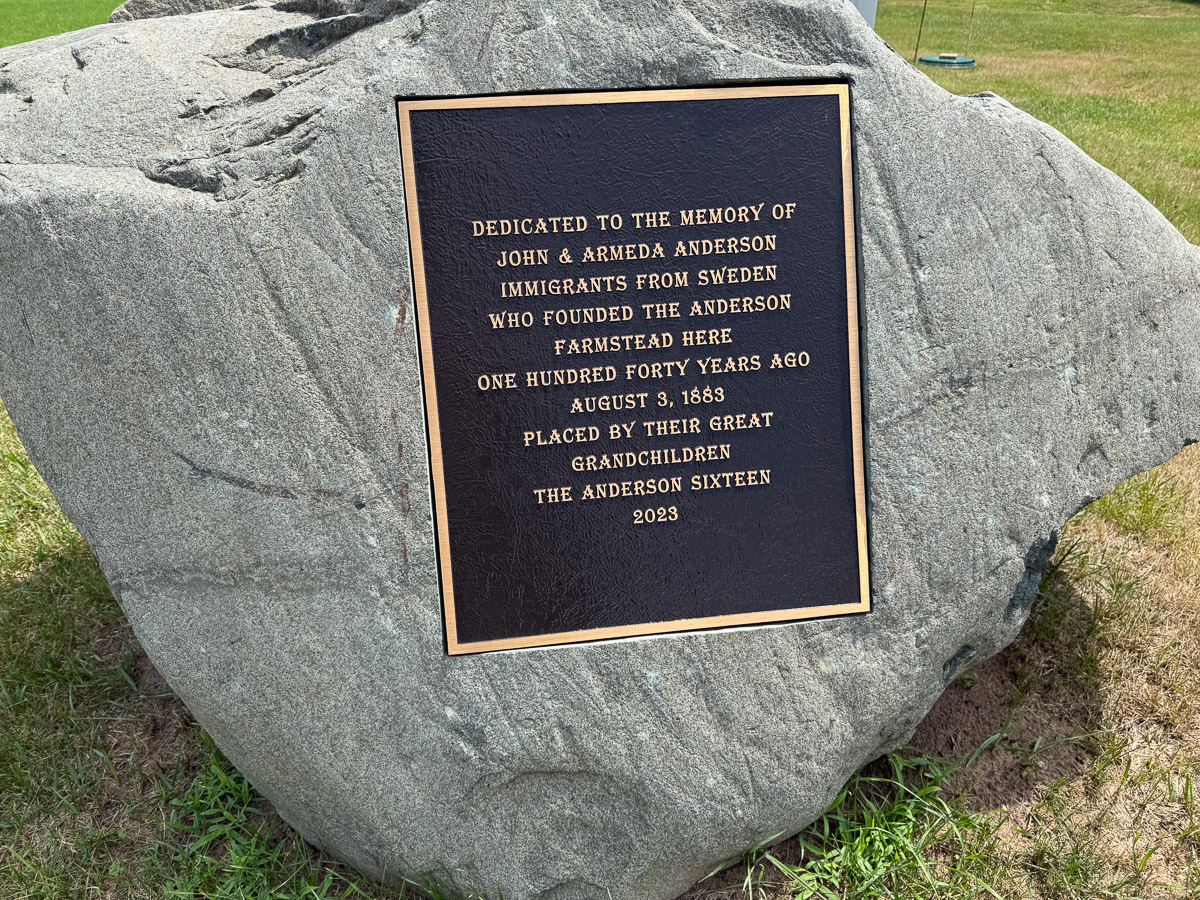
Plaque on large rock about the Anderson Farm in Michigan.

Sunday morning I helped with some sheep loading and a little clean up. Then I got a ride with Gary to his farm in Sparta. My flight wasn’t leaving until 7:30 p.m. so Gary gave me a tour of the area. This is a plaque in place at his original family farm.

Large red barn with two silos  on green hillside .

The gorgeous barn at that farm.

CNCH 2025 – Asilomar

I spent many days (weeks, months?) working towards going to CNCH (Conference of Northern California Handweavers) as one of the teachers at this retreat-style conference held at Asilomar on the California coast. I have taught Learn to Weave many times and can do it without thinking, but the prep is different when I am not teaching at home and when there will be so many people in the class. This is a class presented to people who may have some weaving experience but not enough to warp a loom themselves, people who may have woven long ago but need a refresher, and those who have never woven anything. Many don’t have looms or at least not looms that are portable.

Fifteen people signed up for this workshop. Five of them were bringing looms, five looms were borrowed from local guild members, and I provided five. That’s not just the looms–five warping boards, benches, and all the equipment that goes along with winding warp and weaving. I also supplied yarn, and not being someone who wants to tell people they have to choose only one or two colors, I brought plenty of choices…and in wool or cotton–their choice. This is where I staged what I was to put in the trailer. It doesn’t include the grid wall that was already in the trailer. You’ll see that in use in some of the photos.

I got the classroom set up by Thursday evening. Many thanks go to the person who organized the conference and made sure that I would have two helpers. My two requests for teaching the class were space (this room was great!) and another person (I had two!). With a beginning level class there are a lot of questions along the way one person can’t provide all the answers in a timely manner. There was also the issues of unfamiliar looms getting them set up to work with the class.

Samplers in wool on the left and cotton in the center. On the right are some of my shawls.

One of the perks of teaching this class was staying at Asilomar. My room was at the end of this building.

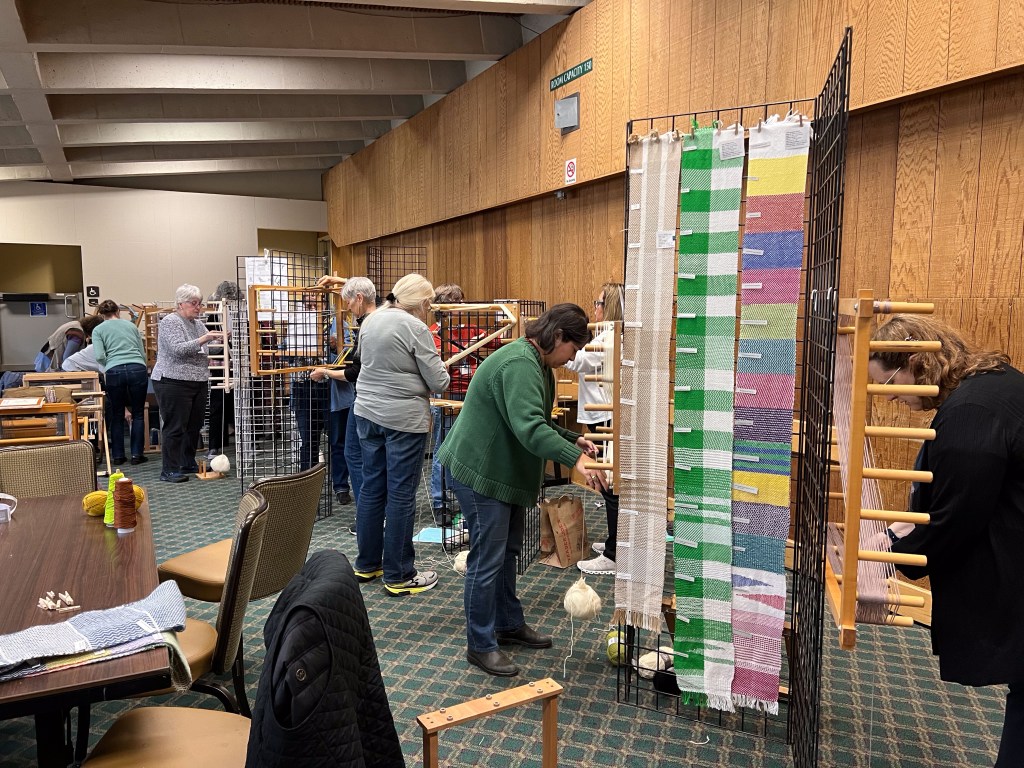
We set up grid wall to hold warping frames on this side of the room.

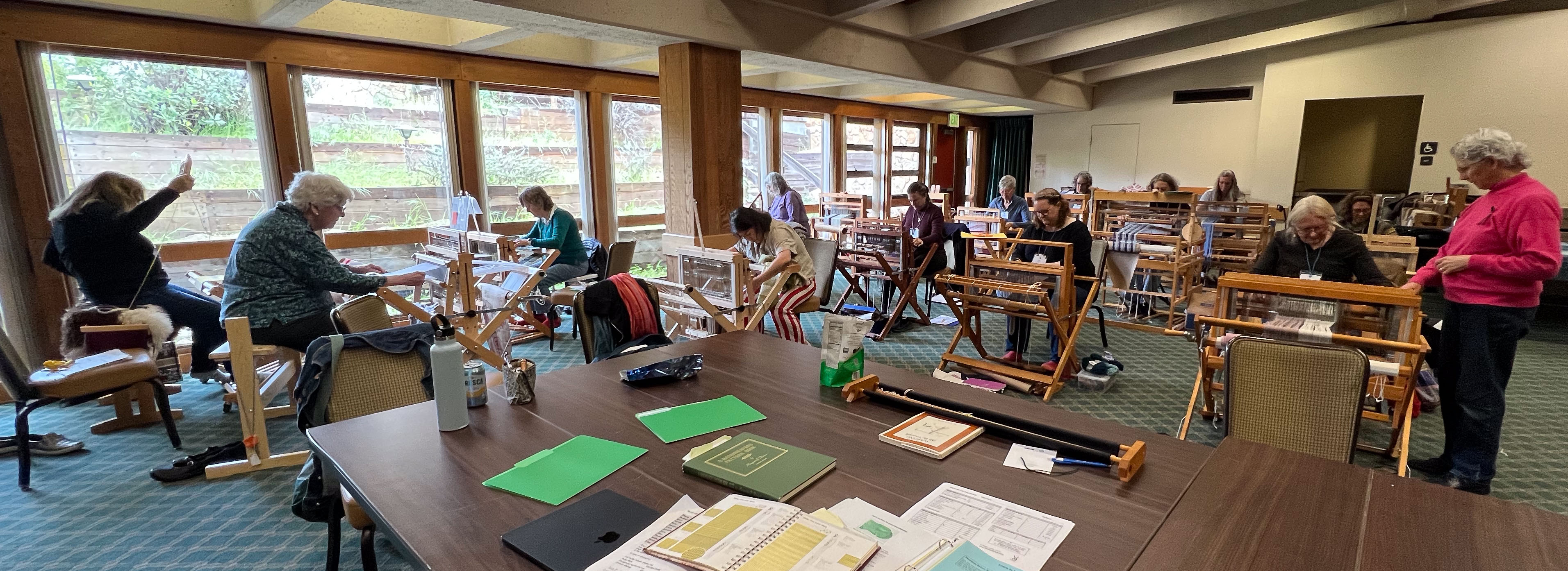
The looms were near windows on the other side.

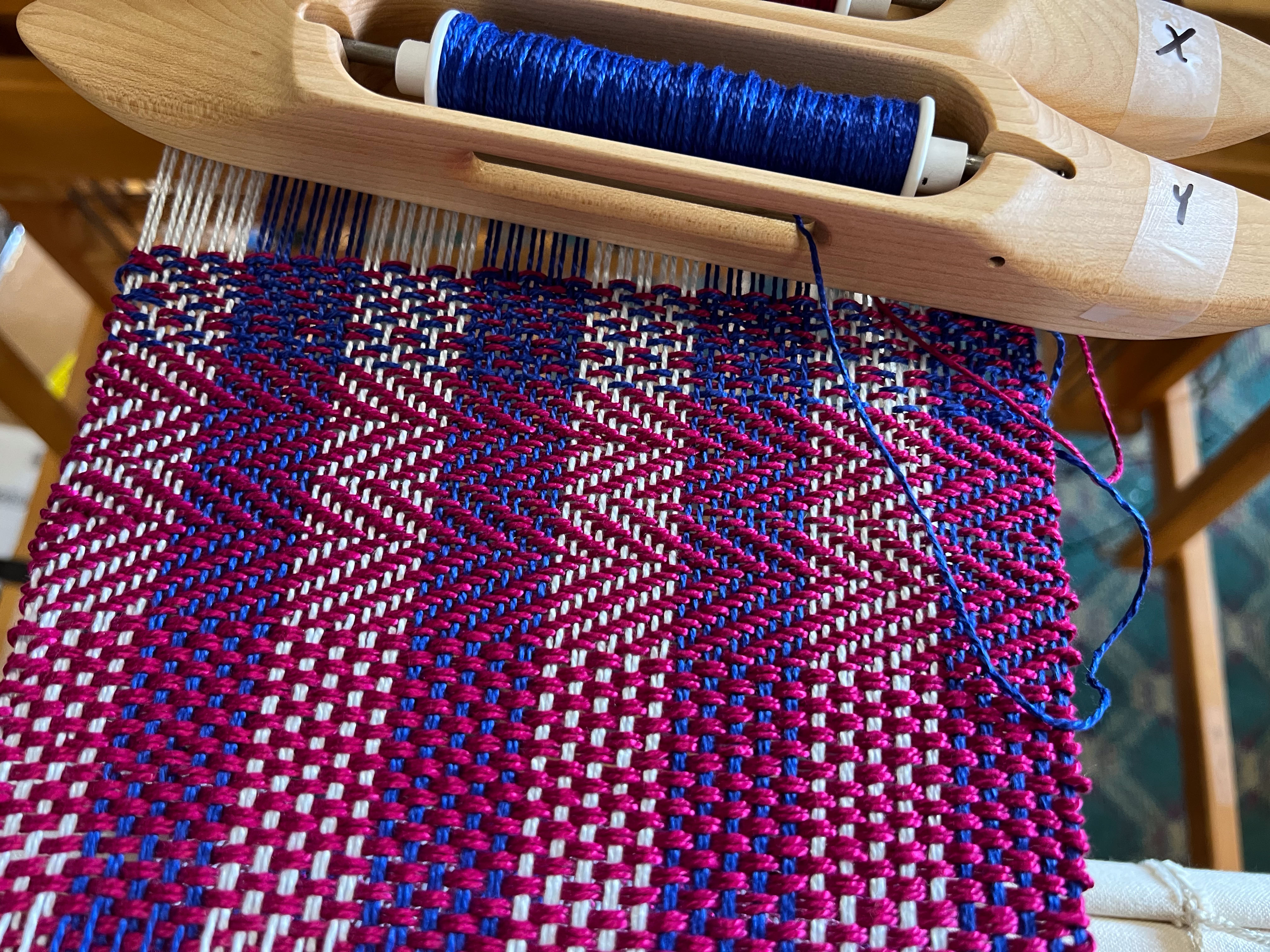
These are only portions of the samplers people could weave.

The workshop was Friday and Saturday with finishing up on Sunday morning.

This is a photo of most of us. Thanks to all of the participants and the helper weavers! I hope to do this again. When I teach this class here at the farm I take three to five people. The class is described here.

Part of the prep for this workshop was planning for farm chores. My husband had a knee replacement only a few weeks before and there were limits to what he was supposed to do. Thanks to a good friend and my brother who handled a lot of that.

When I got home Sunday there was a new lamb which was not a complete surprise, but that’s another story.
A Flannel Barn Jacket

I shared some photos on Instagram a month or so ago about a jacket that I finally mended.

The only thing wrong with this jacket is that I kept catching it on gates and the inner parts of it were getting filled with hay. The top half and the whole back still kept me warm. Why would I throw it away?

I finally fixed it. It’s a relief to not have to worry about getting caught on the gates as I walk through.

Then I decided it was time to mend the overalls. The following post popped on Facebook a couple of weeks ago. Same jacket. I guess no one can accuse me of being part of the fast fashion problem.

Pasture and Irrigation Renovation – Part 11

Yesterday’s post brought us up to November 19 when the work on the irrigation pipeline was almost finished. The field wasn’t yet seeded and significant rain was due that night.

There is a story about the seed. It was a special order to get the quantity and mix we specified. On November 8 we drove to the seed company in Tracy to pick it up to save on shipping cost and so it would be here when Michael was ready for it. The order wasn’t correct so the company was going to ship it to us the following week. It didn’t come on the day it was supposed to, and we didn’t want it to arrive while we were gone. It would be on a pallet which would need to be unloaded and we couldn’t risk the seed getting wet if it rained. So we scheduled delivery for the following Tuesday, the day after we’d be back from Arizona. The shipping company called on Tuesday to say it would be here Wednesday. We needed to get that seed in the ground on Tuesday because of the imminent rain.

Fortunately we were told that the seed could be taken off the truck so we could pick it up. Dan I drove to Sacramento to pick it up at the trucking company location. I texted Michael that the seed we would be back home with the seed by about 2:00.

The air seeder has two long arms that distribute the seeds as it’s being driven.

I don’t know the details of how it is set up but this is a look at the part under the hopper where the seed falls into the black tubes in a measured quantity.

There is a control here where Michael set the amount of seed to apply. He somehow calibrated it to apply 30 pounds/acre when the tractor is driven at 6 mph.

It took only a few hours to apply the seed using this equipment.

This was followed up with ring rollers to help the seed have more soil contact. It was getting dark.

After rolling the main part of the pasture, Michael had to adjust the width of the rollers to squeeze between the new valves that are 30 feet apart. This was to access the north part of the field.

Michael’s son had been riding in the cab while Michael was working. While he adjusted the rollers (and Dan was watching to make sure they cleared the valves) I took Bodie into the barn to feed the sheep with me.

Seeding was just in time. We had almost an inch and a half of rain that night.

The NRCS engineer wanted to certify the pipeline work, but now it was too muddy for people to walk or drive across the field and even on the road to the west. I walked out there by walking on the dried grass to the side of the dirt road west of our property so I could send photos. This shows the work the welder did the previous day when he could drive on that road. He cut out a circle on the horizontal pipe, matched the vertical pipe with another cut, and welded them together.

There is a precisely measured hole in the top of the horizontal pipe. I think the purpose is for air flow to help with water flow.

The finished connections that need to be covered. But, wait, they are not finished. There will be another post that shows a flow meter being installed.

Avoiding the dirt most of the way, this is how my boots looked just….

…walking across the dirt road to get to the corner of the property. I sent the engineers the required photos and these last two to show that it was not a good time for anyone to visit.

A Birthday Hike

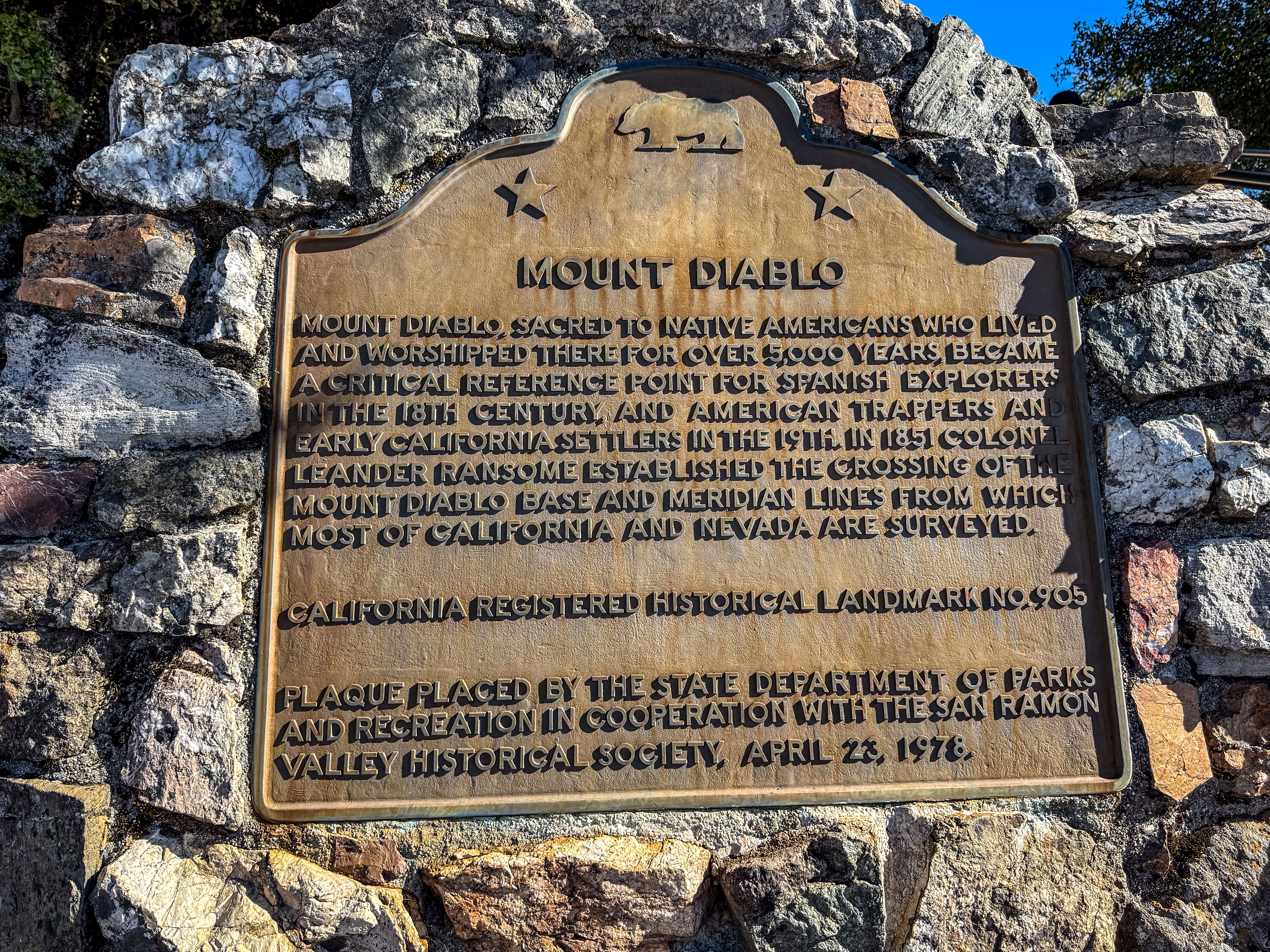
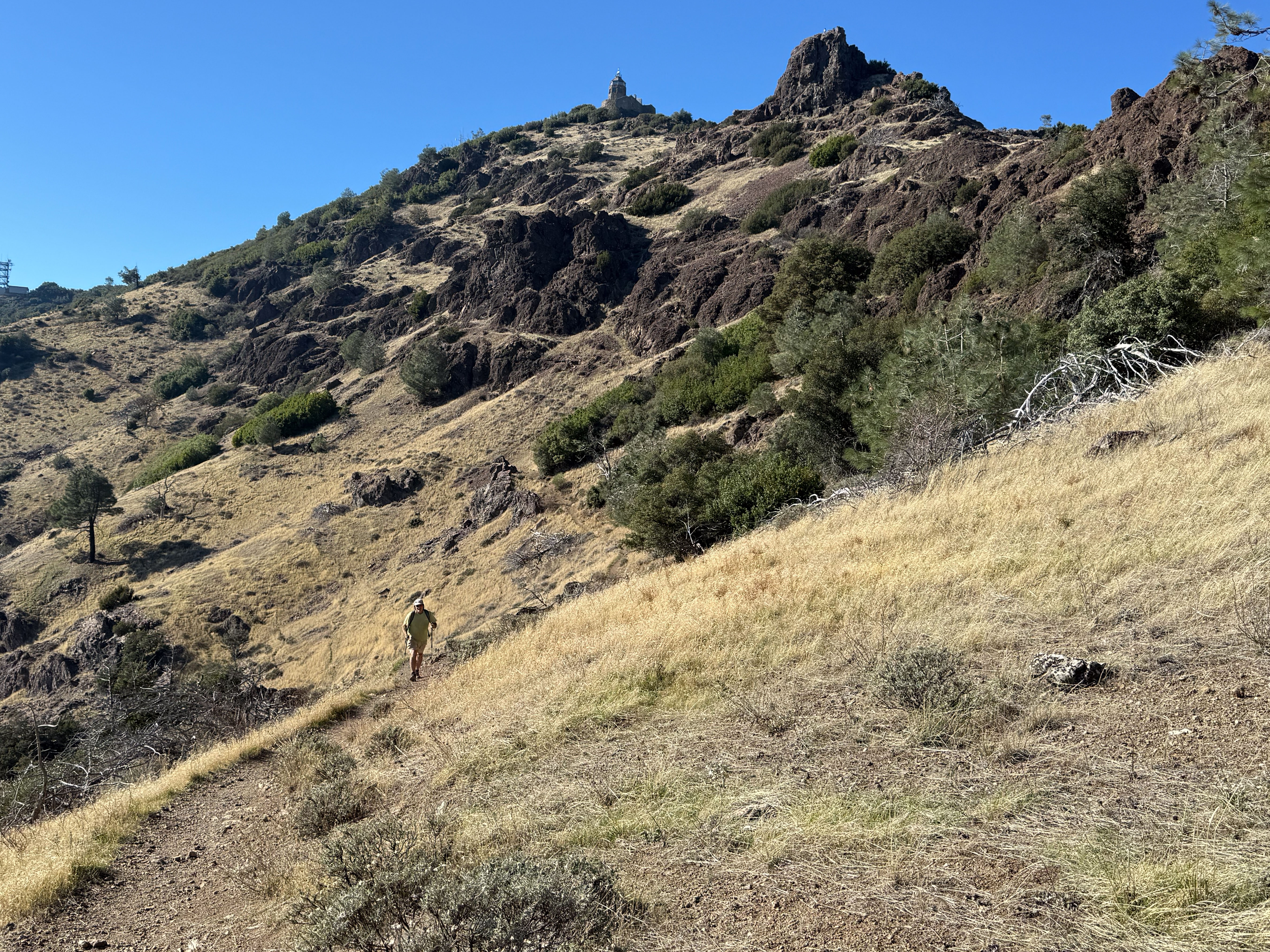
My birthday was last weekend and I wanted to go hiking. I thought about Mt. Diablo or Pt. Reyes or Mt. Tamalpais, all places that I’d like to explore, but the thought of Bay Area traffic discouraged me. Then I realized that I could take advantage of some open space that is closer to home.

Lynch Canyon is in Solano County just north of the freeway between Fairfield and Vallejo. In the 1980’s the property was purchased by a company who proposed a landfill. Thankfully that was rejected by Solano County voters and the land is now owned by Solano Land Trust.

The land is rolling hills dotted with oak trees. We had the first real rain of the season the previous evening so this may start to green up soon. On the morning of our hike the vegetation was all dry.

The trail we chose headed generally west. I wanted to get to the top of the hills for the view.

My brother, Dave, was with us.

This area could be stunning when there are spring wildflowers. The only plant flowering now was tarweed.

The thistles were an interesting contrast.

That’s my brother.

Cattle graze these hills right now.

This was a beautiful day for a hike.

Once we got on top of the hills we had views all around. This is looking southeast over American Canyon and the marsh land where the Napa River ends at San Pablo Bay. If I turned around I could see the windmills along Hwy. 12 to the east.

We could see Mt. Diablo to the south.

An easy 6-mile hike was a good way to spend my birthday.

When I got home I walked Across the Road with Ginny. Do you recognize that mountain in the distance? That’s Mt. Diablo at a little different angle than the phioto from Lynch Canyon.

Granddaughter Visit – Around the Farm

The weeks between Convergence and State Fair were super busy, but I tried to do as many things with Kirby as we could fit it. She learned to spin. As with most beginners the biggest challenge is understanding the relationship between amount of twist necessary to create a stable yarn and the diameter of the yarn. It helps to use fiber that is easy to spin. Carded Jacob fiber fits that criteria.

Of course we spent time with sheep. Jade is always the favorite. We spent every morning that Kirby was here working with the lambs that would be going to the fair. Maybe I didn’t get photos of that.

I wanted to do some dye projects for my fair display. Kirby learned something about preparing indigo for the dye pot.

I do the cold fresh leaf method.

State Fair time is when the blackberries are ripe.

We picked blackberries together.

It is a challenge when we have irrigated because the blackberries are on the other side of the ditch. Its a good thing that I had an extra pair of rubber boots to share.

Kirby and I spent time in the barn sorting and cleaning the horns and skulls to use for our touching table at the fair.

Kirby likes to catch chickens as well as sheep.

Granddaughter Visit – Raptors

The day after I got back from Kansas (see Convergence posts) granddaughter, Kirby, flew in from Texas. We had a two week visit planned that would end with the State Fair and then her tenth birthday.

One of the days Kirby was here, the local library hosted a raptor presentation by the UC Davis Raptor Center. We followed that with a trip to the Raptor Center to see the raptors that are permanent residents there due to injuries or other reasons that prevent them from being released.

We first watched as the handlers worked with two turkey vultures in their enclosure. They are learning to enter dog crates so that they can be taken off site when necessary.

This handler had come to the library presentation but was back at the center to show off a 4-year old bald eagle.

At age 5 his head feathers will be completely white, as in the chart below.

The handlers explained the situation with each bird. Most were brought to the raptor center with injuries. Sometimes injuries are treated successfully, and the bird can be released, but not all of the birds would be able to live on their own in the wild. They are exhibited for educational purposes at the Raptor Center and at presentations like the one we saw at the library.

Some birds are also used for research purposes. This is Jack, a redtail hawk that is a resident. Jack had just completed a flight study, being filmed while flying and wearing sensors, before coming to the library.

This barn owl was injured at a very young age when the palm tree in which she lived was cut and she broke her wing. She is a permanent resident.

Kirby comparing her wingspan with these raptors.

We were lucky to have so many volunteers on-site to talk about the birds and let us see them up close.

Convergence 2024 in Kansas – Day 4

Look here for Day 3 of Convergence. I had not scheduled anything at Convergence for Saturday and looked forward to a day to choose to do anything or nothing. I decided to go to Botanica Wichita, a collection of botanical gardens on 18 acres, not too far from the hotel.

I started with the same route along the river I’d walked the first three days. I got side-tracked by flags along the way. The Wichita Flag Pavilion starts with a plaque about the first “flag”, probably a staff with eagle feathers carried by the Native Americans as a way for tribe members to follow their leader.

There are plaques for each of these later flags starting with the flag that flew over Christopher Columbus’ Santa Maria. There are photos of those plaques at this link.

The Flag Pavilion is at the edge of the Wichita Veterans Memorial Park where there are 21 memorials. I wandered through and found the Vietnam Memorial. I am just young enough that none of my friends were drafted, but I was in high school during the last years of the Vietnam war. I think that the Vietnam era is responsible for the culture in which I grew up. It was notable that the word “war” is not on any of these memorials.

From Britannica.com: “Congress authorized troop deployment in Vietnam, but, because it did not issue a declaration of war on North Vietnam or the Viet Cong, the Vietnam War is, technically speaking, not considered a war in the United States.” Maybe that is why there was such an impact on us. We sent our young men half way across the world to experience atrocities and die for what reason? We were not at risk, and this “conflict” had no bearing on our safety at home…but I digress.

After I left the Veteran’s Memorial Park I continued along the river path following the map in my phone until I saw the marker for the Wichita Gardens,

This marker was deceiving. It is at the edge of the gardens but as I walked along the path that bordered the gardens I found gates closed. The trail looked as though it was going farther away from the garden. I think eventually I would have found a street that brought me to the main entrance, but since I was on foot I wasn’t sure how far afield I should go. I stopped and called the number listed for Botanica. Amazingly, a person answered the phone. She told me I had walked too far, and I went back the way I had come, turning at the Art Museum and worked my way through a neighborhood to get to the main entrance.

To be continued…