Irrigation, Part 2

I left the last post knowing that the irrigation would not be finished by the time the water was shut off Tuesday afternoon. I was able to have the water start again at 6 a.m. I waited for the ditch and pipeline to fill again and went out about 7:30 a.m.

I could tell right away that there was more water flowing in–it had already progressed farther down the checks where the valves were still open than the previous day. The following are the notes I took on my phone that morning. The numbers refer to how far down the field the water is for each check.

7:45 a.m.
13 is 1/2, 14 and 15 are 2/3, 16 is 1/4, 17 and 18 are 2/3, 19 is 1/2
9:20 a.m. 13 and 14 almost finished. 15 over 3/4. 16 is 2/3. 17 and 18 are over 3/4. 19 is 3/4. 20 is 2/3
9:40 a.m. 13 finished. Closed. Opened 21 and 6-7-8
I had to go to Davis and didn’t get back until 12:30
12:30 p.m. 15-16-17-18-19-20 finished. 21 is close to end.
Now only 21 and 6-7-8 were on. Closed 8. 7 is 1/2. 6 is 3/4. Both of these were flowing backwards into the lane a lot. 

The last note is about 21, 6, 7, and 8. Valve 21 was the last one I opened. I had closed 6, 7, and 8 because the water wasn’t flowing enough there and I wanted to make sure all the rest got enough water. It was only after the water was flowing so well and everything else was finished I opened those again.
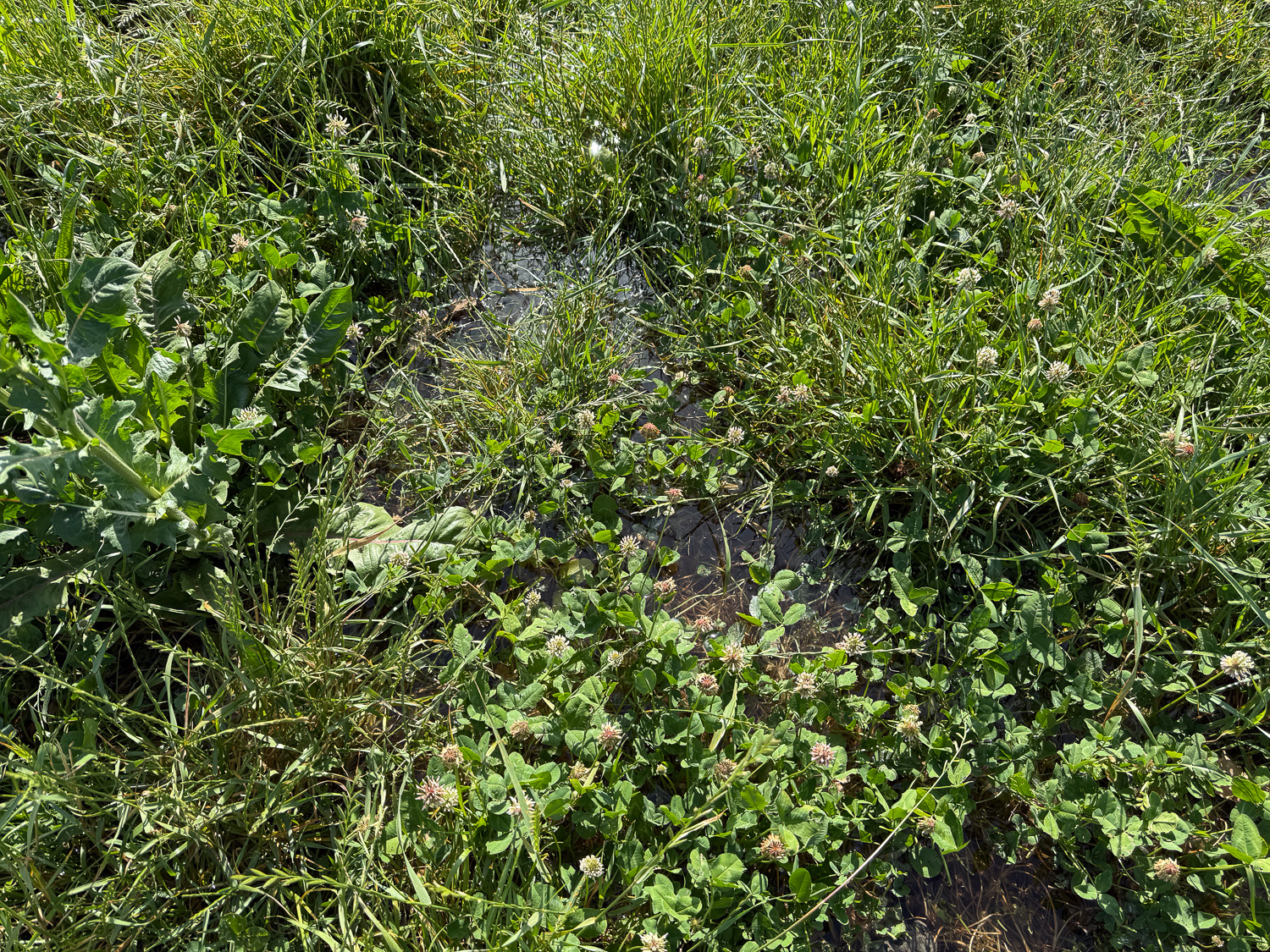
Close up of pasture clover and grasses with irrigation water on the field.

I took this photo in a place where I could actually see the water. Many times I can’t see it because the forage is so thick or tall. In that case I can tell if it’s wet because I can hear the water splashing where I’m walking. I recorded a video to share that, but I can’t upload it here.
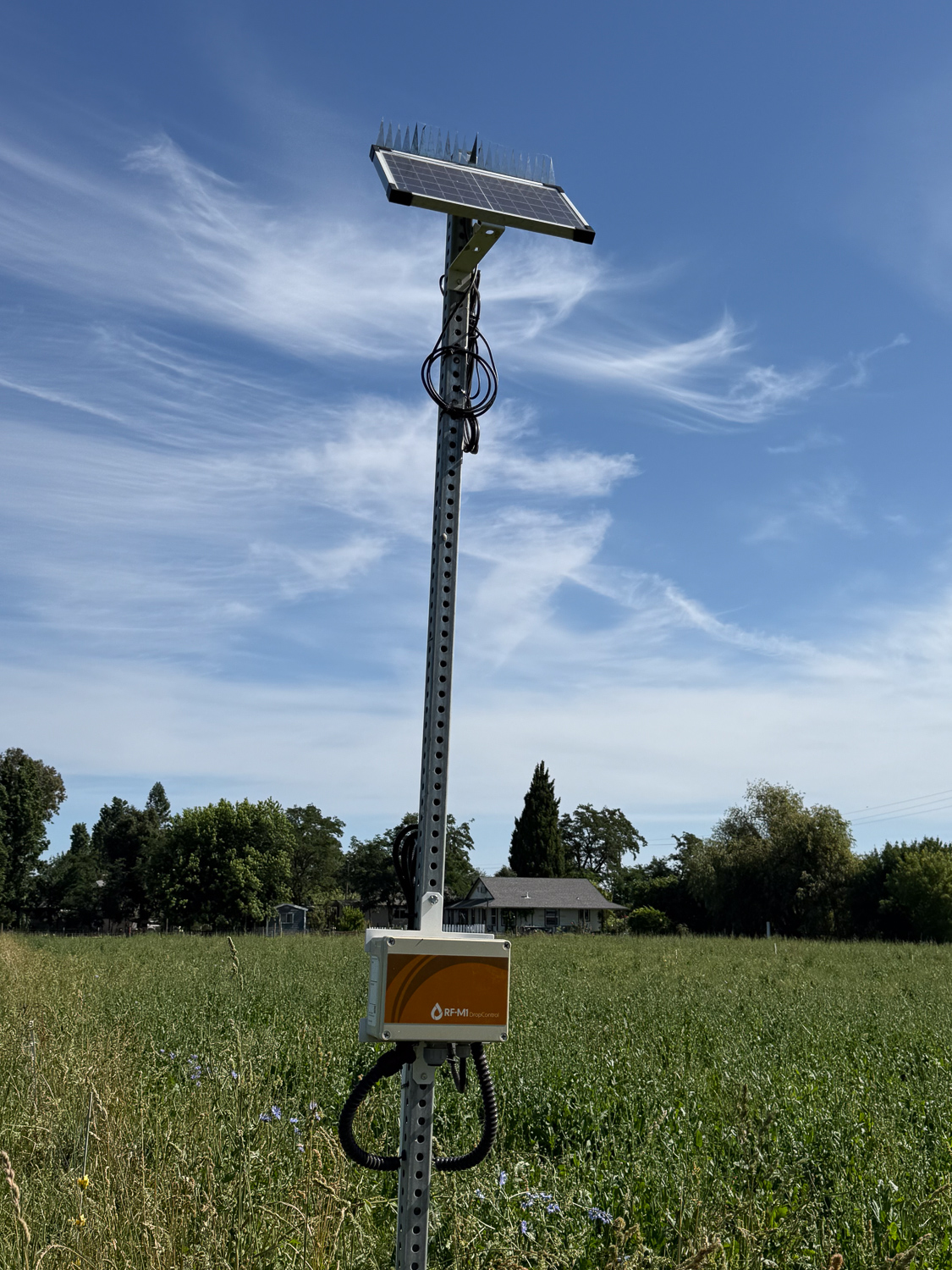
Soil moisture monitor in the pasture.

This is what the soil moisture sensor looks like. I get the graph on my computer or my phone.
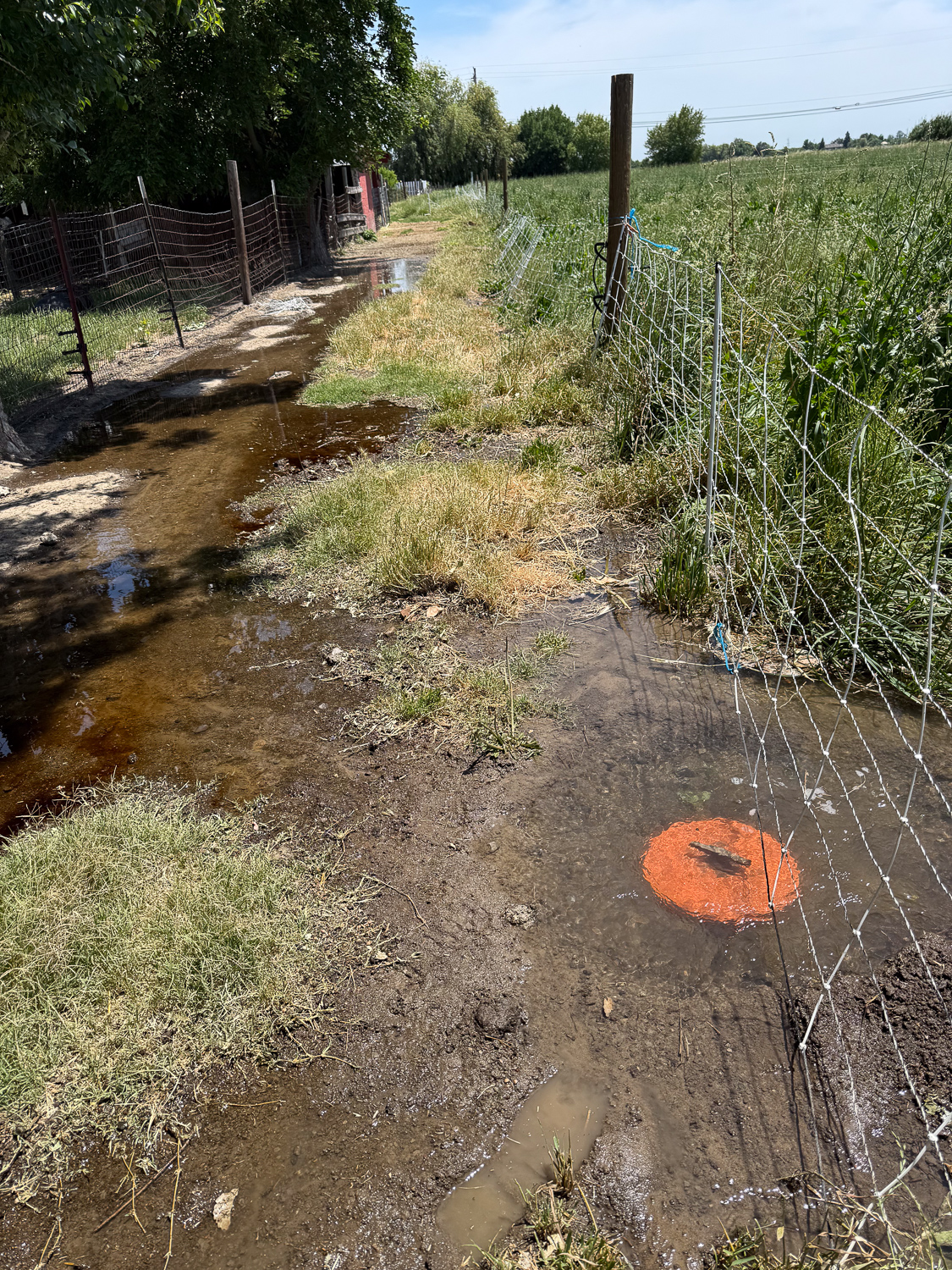
Irrigation valve with water flowing down the lane behind it.

This is what I meant by #7 and #8 flowing backwards. It took only a couple of minutes for the lane to be flooded. Before we irrigate next time we’ll have to pile dirt around those valves.

The red line on the graph below shows that the amount of water was more than twice what I had the previous day. It also shows that the other soil moisture sensor finally measured water. I see an anomaly–that faint blue line that rises as the water is shut off the first time. I think the timing is coincidence, but it shows underground flow that activates that 12″ deep sensor on the east. Flowing through gopher holes?
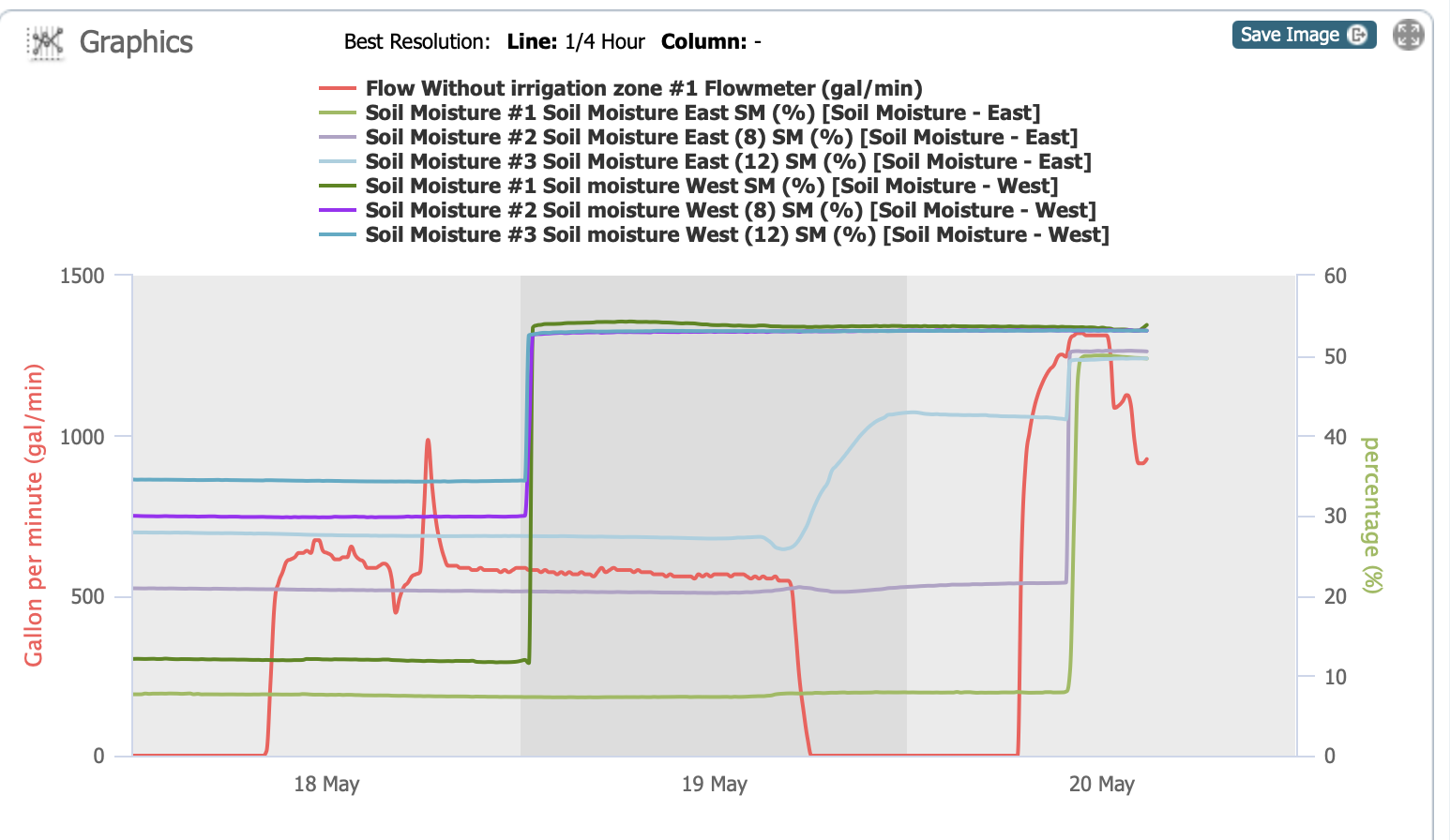
There is a lot to think about before the next irrigation.
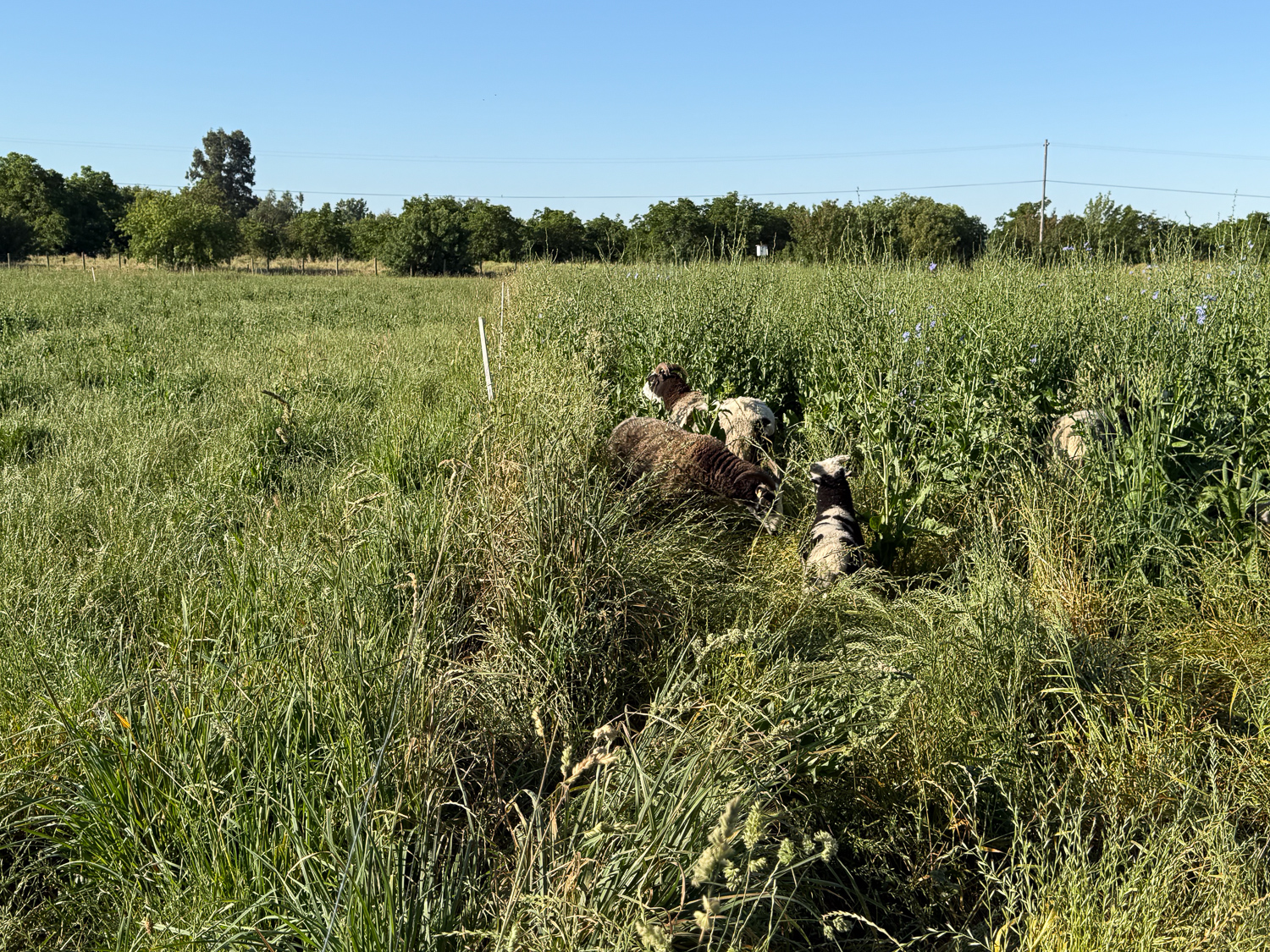
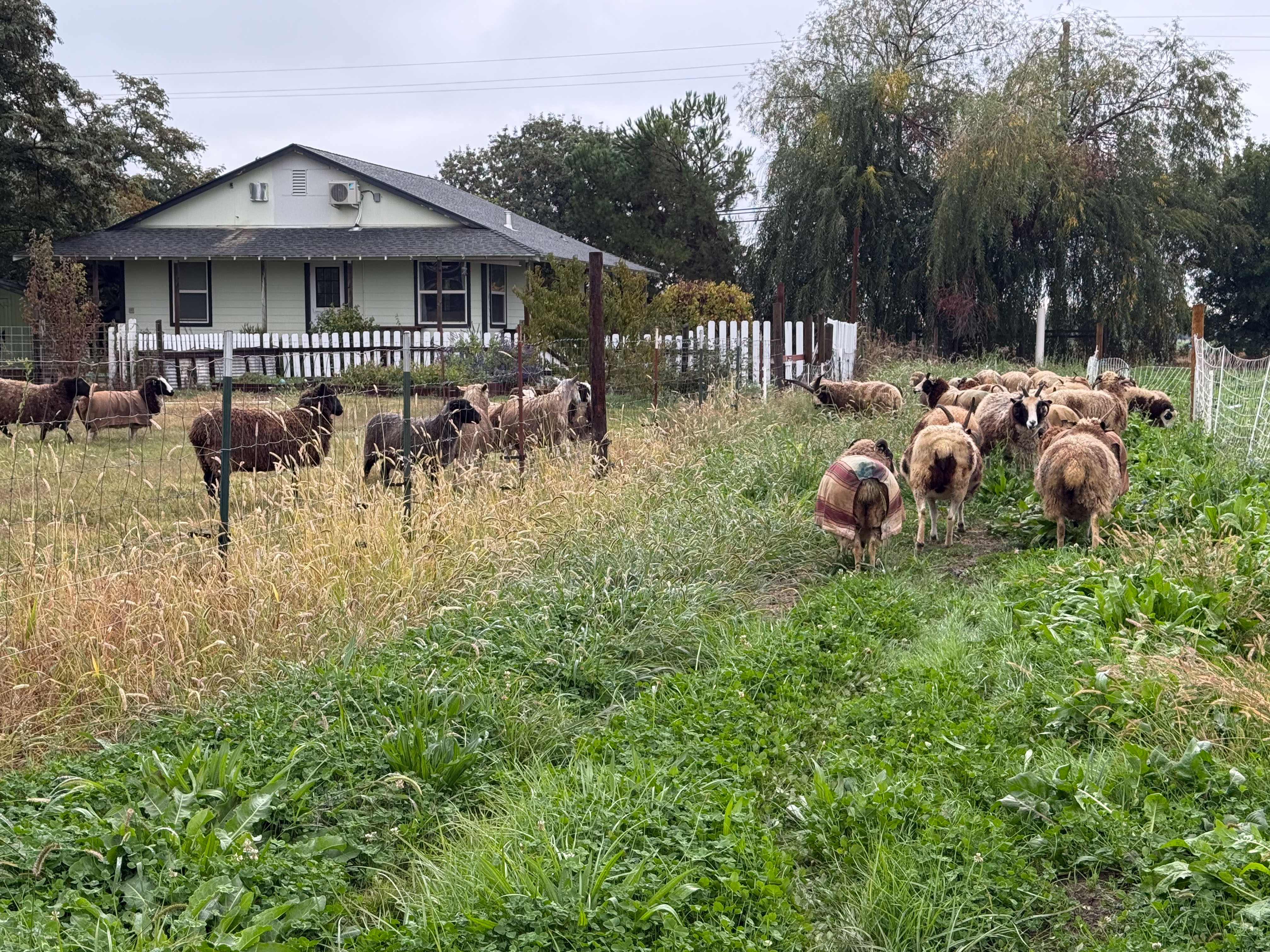
I turned the sheep out this morning. The paddock on the left was last grazed May 1. The sheep moved to the north paddocks after that and then moved from west to east. The one on the right hadn’t been grazed since March 29. The whole flock is out there, but you can’t see them because they are in a jungle of chicory.

Mid-Breeding Season

As I’ve said before Breeding Season is a Season, overlapping the traditional seasons of summer and fall. If defining a Season influences how you live your life, Breeding Season definitely qualifies. It doesn’t take long before I’m ready for it to be over. It’s easier when all the ewes are in one place, the rams are somewhere else, and I don’t have to feed groups differently and watch my back when I’m with the ewes.

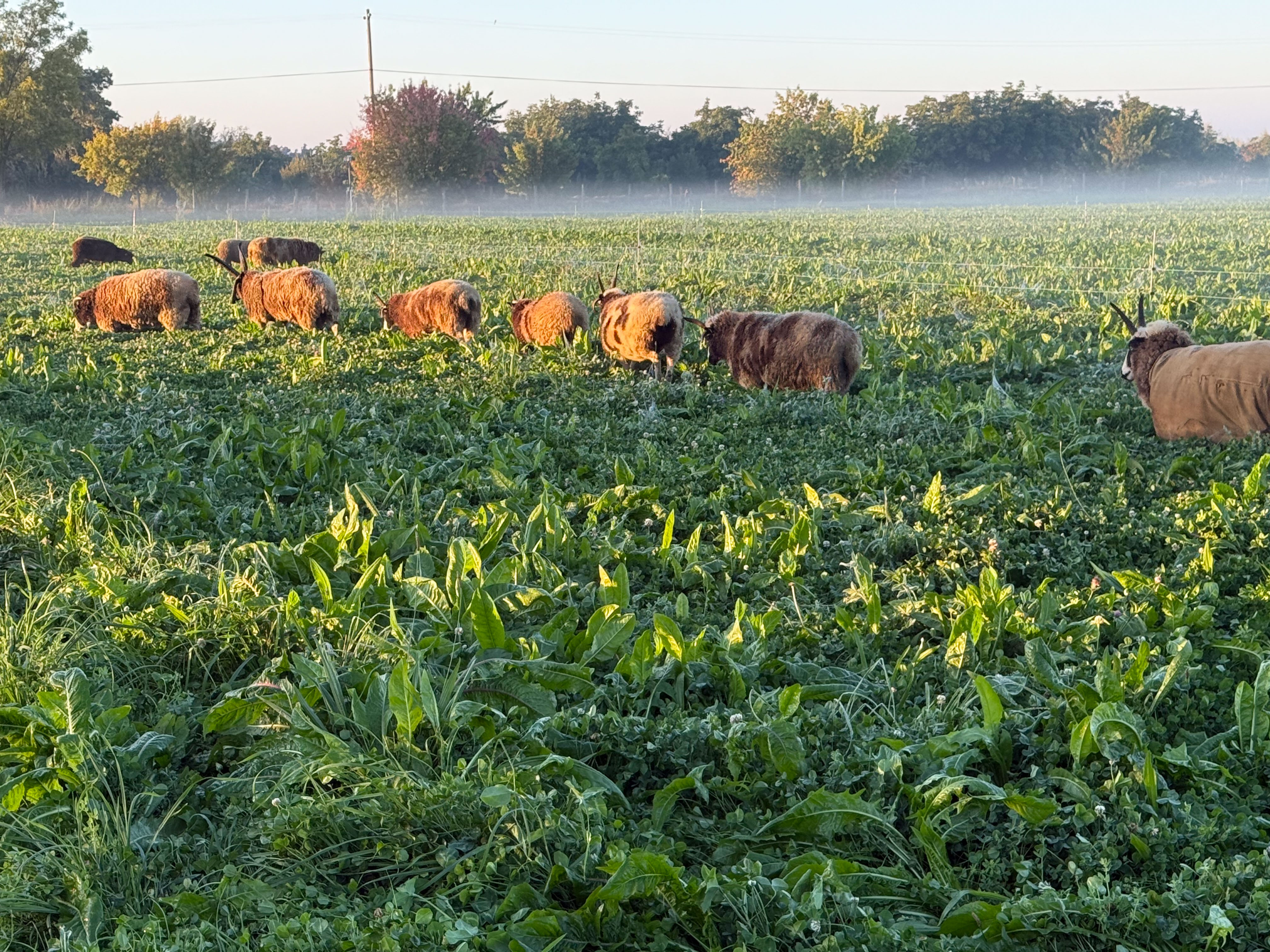
Thick green clover and chicory pasture with Jacob sheep grazing.

We have 4 breeding groups, a non-breeding group (the oldest sheep, Jade, and six ewe lambs), two young rams with potential for breeding (too young and/or small this year), and two older rams who are sold but still here. The breeding group with the most ewes is on the main pasture. Hornblower has about 30 ewes with him. Doesn’t that pasture look great?

Irrigated pasture with two electric net fences separating groups of sheep.

Elvis has eleven ewes and is on the pasture to the north. When I moved the Hornblower group to the next paddock of the south pasture I needed to separate the two groups with more than a single net fence, especially since I’m having some issues with the power to the north one. So I set up two fences and was able to power the north one from the south one.

Those pasture photos were taken October 10. On the 13th it rained. We had 1.6″ the first day and .5″ the second day. A significant rainfall usually marks the end of grazing. It is late in the year and the pasture is depleted or dormant. Also, the land is flat and the water doesn’t drain well. This year is different because the pasture has been renovated and there is a much better stand (mostly clover, trefoil, and chicory). We are not sure how long we’ll be able to graze but it seemed appropriate to continue as long as I moved the sheep to a fresh paddock.

Five days ago I moved Hornblower’s group to the paddock closest to the road.

The lane is adjacent to Clancy’s group. However there is hot wire on both sides of the net fence and there doesn’t seem to be any problem with either ram trying to get through.

You may notice some blue marks on the ewes. Those are more noticeable than the orange marks on several, The rams wear marking harnesses so we have a better idea of when to expect lambs. I hadn’t noticed as many marks lately.

Crayon markers worn by rams in breeding season. Two orange ones are almost empty ad a blue one is new.

Is this why? The rams went in with ewes three weeks ago on September 27. I substituted the orange markers from Clancy and Hornblower with blue markers a week ago. You can see the difference in a new one and the used ones.

Clancy’s group is in the field between the barn and the shop–not one of the renovated pastures. Notice two blue marks. The ewe in the background marked blue was the first one Clancy marked with orange on September 27.

White ewe with orange marker on her rear indicated that she was bred.

So we now know that she was not pregnant after that breeding. If all the ewes in this group are re-marked that would indicate a problem with the ram. Hopefully that is not the case. The other ewe marked blue in the photo above this one had not been marked before. I’ll keep watching to make sure that more of the oranges aren’t also marked blue in the next week.

Jacob sheep walking out into pasture of clover and chicory with morning mist.

This morning’s move to fresh pasture.