Table Rock Hike

Dan and I spent a few nights in Napa last week. It was strange to stay overnight somewhere when we live so close, but the time-share stay was a retirement gift from his co-workers and it was a great opportunity for us to go do some of those things that are “in our own backyard” that we don’t take time to do otherwise.

The weather outlook for Tuesday was dry so we decided to find a place to hike. Many of the state and county parks in the area are closed due to the recent horrific fires. But we found a trail that was unaffected by the Tubbs Fire. We had breakfast in Calistoga and then drove up Hwy. 29 towards Mt. St. Helena.

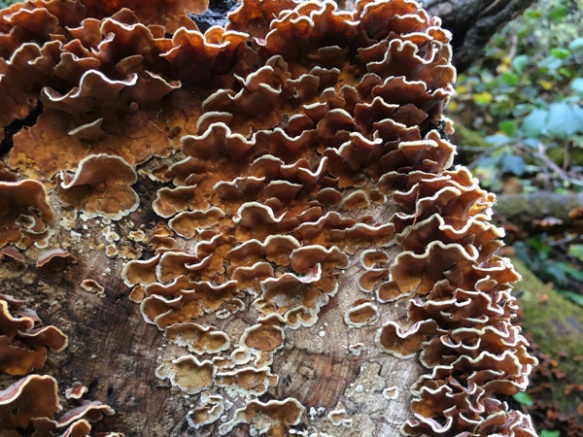
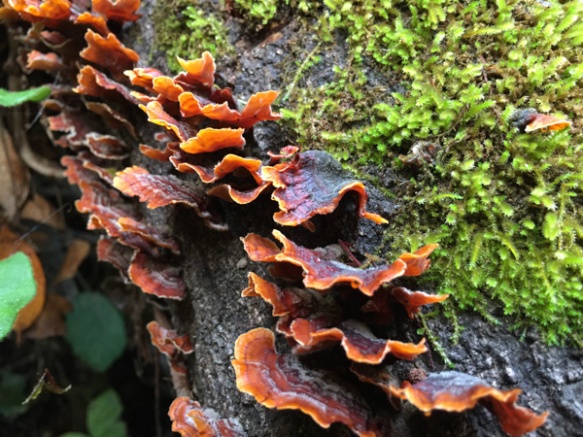
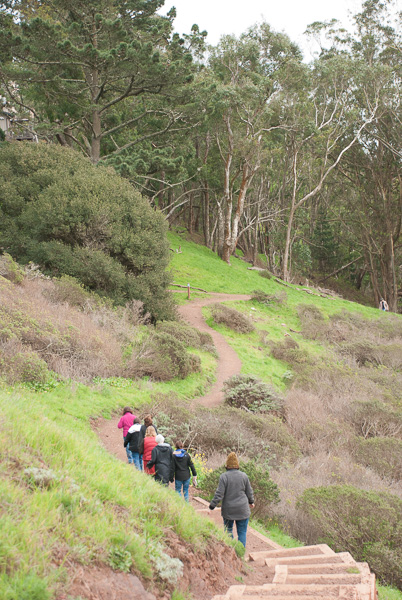
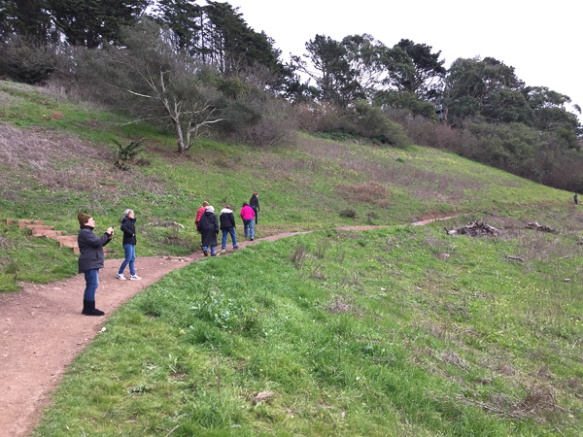
DSC_5384              The Robert Louis Stevenson State Park to the north of the highway is closed but the Table Rock trail is south of the highway.IMG_3323             The trail starts out in groves of oak, madrone, and bay trees. This area was damp from recent rain and the trees looked as though they were covered with green fur.

DSC_5417                                                                A new kind of fir fur tree?DSC_5394       Making things larger than life through the lens.

DSC_5415

DSC_5389               As the trail descended the other side of the first ridge the vegetation seemed more typical of California chaparral. These are the seeds of the California Buckeye.DSC_5391              The California buckeye is one of the first deciduous trees to leaf out in the spring, but it also goes dormant and loses it’s leaves in late summer. Although the “nuts” may seem similar to chestnuts, these are toxic.

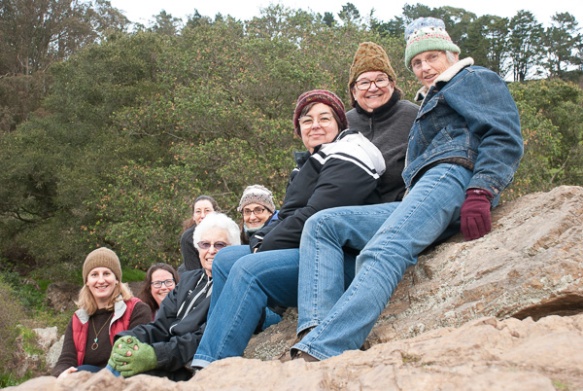
DSC_5410             The trail leads to the western end of a formation called the Palisades, volcanic rock that towers over the northern end of the Napa Valley.IMG_3318            That is the town of Calistoga down below. DSC_5400               We sat on the rocks known as Table Rock for quite awhile, soaking up the sun and watching birds and the beautiful sky. The fire missed this area, but not Mt. St. Helena in the background and the lower area along the highway.DSC_5407               As we sat on the rocks Dan noticed a Cal Fire plane flying around Mt. St. Helena and then saw it drop something–we wonder of that is seed to help stabilize the burned landscape.

IMG_3322

Inverness

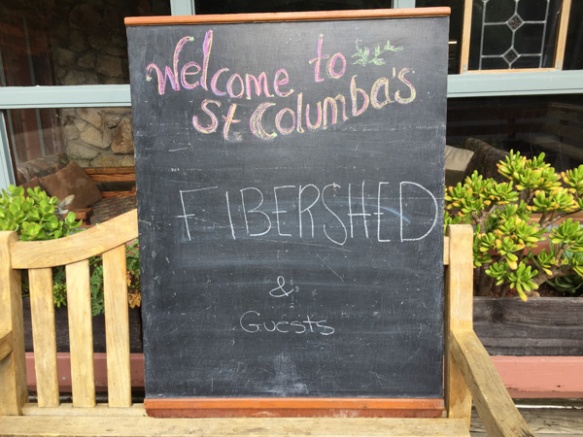
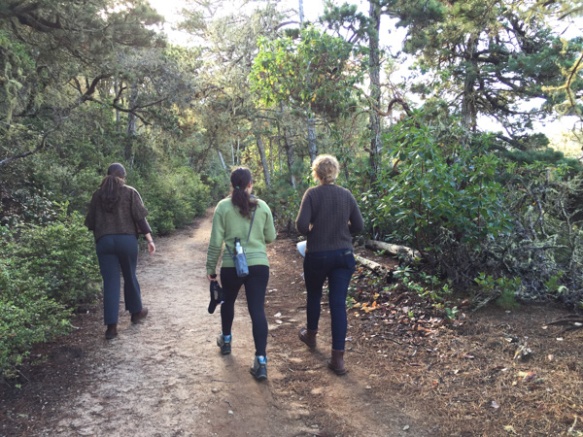
The Fibershed Wool Symposium was last weekend in Pt. Reyes Station. This is one of my favorite events of the year but this year it was more special because I spent the night in nearby Inverness with other Fibershed friends and we had our second Northern CA Fibershed Coop Board meeting on Sunday. Following the meeting four of us went on an impromptu hike on Inverness Ridge.

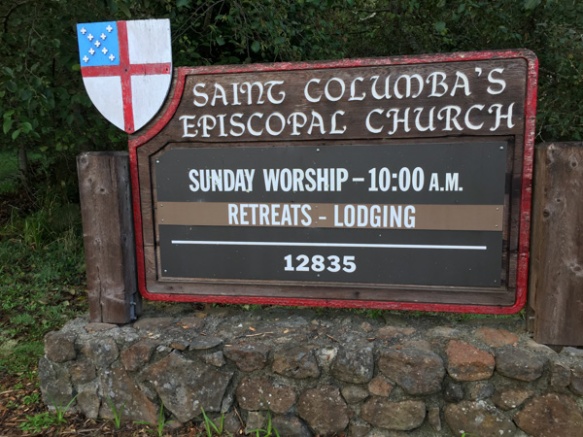
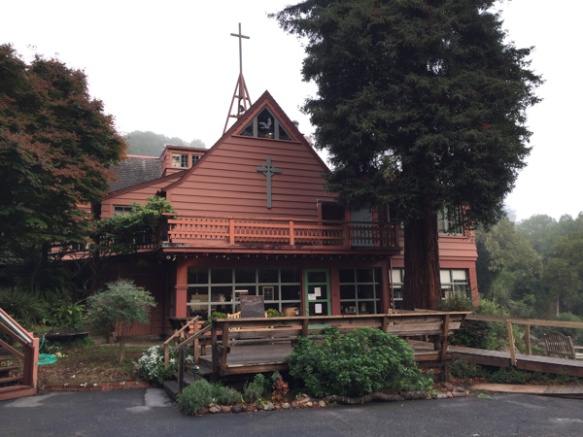
IMG_3248            This local church was booked for any of the Fibershed group who wanted to spend the night after the long day at the Symposium.IMG_3259

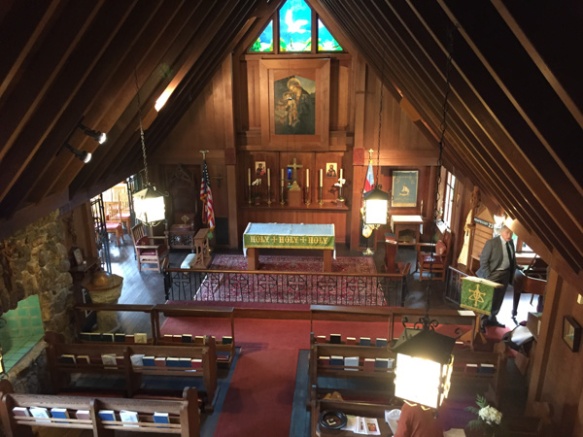
IMG_3236                 It is a great place to stay for anyone traveling in that area.            IMG_3262            This was originally a house that was purchased from the Frick family in 1950 and turned into a church. There is a fascinating multi-level maze of rooms and halls and stairways. This view looks down from the third floor on what was originally the family’s living room.

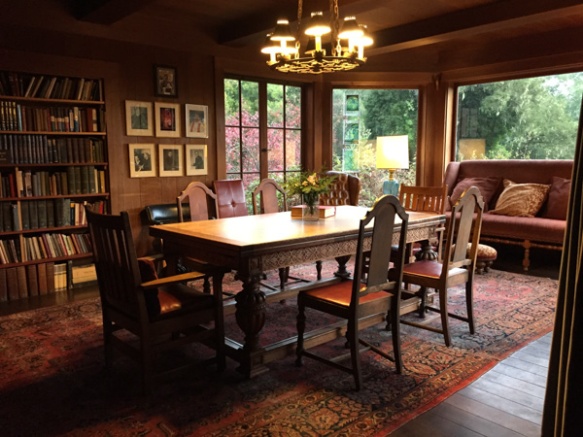
IMG_3233                  I love this dining area, partly because the table is of the same era (at least from looking at some of it’s features) as the table that my mom bought and we still use, although this one is in much better shape than ours.

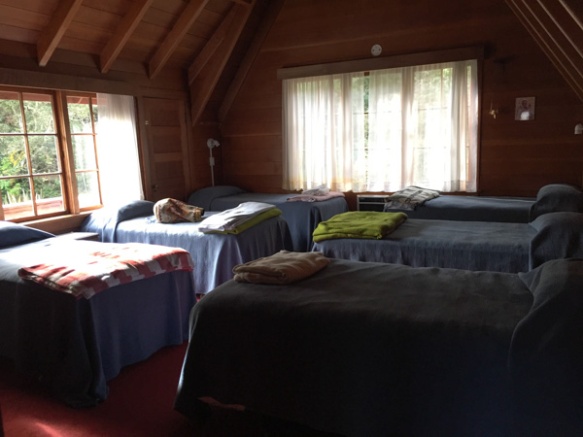
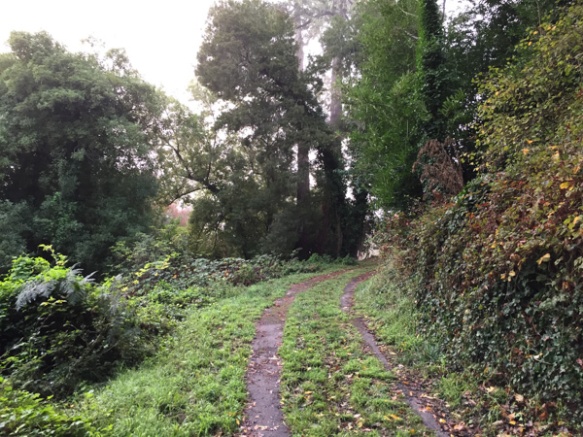
IMG_3264                  I stayed in this bedroom with five other women. There are several bedrooms with different numbers of beds. I think the place can accommodate 36 people.IMG_3238           When I got up on Sunday morning I decided to take a walk before our meeting and headed up a road I found behind the church.IMG_3255                  This is my kind of Sunday morning.IMG_3256

IMG_3258

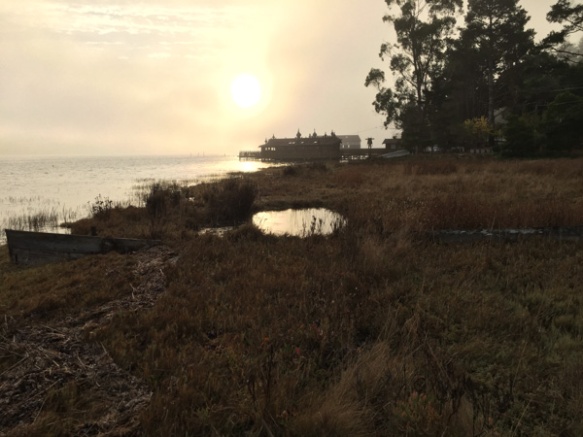
IMG_3246             The road I found led me back down to the main road and Tomales Bay.

It was after our meeting ended at about 1 that four of us set of for a hiking trail.

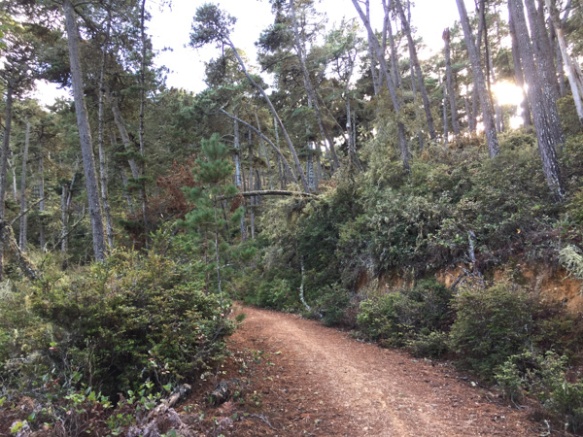
IMG_3294                                                     It is great when you find open space accessible to the public.IMG_3266

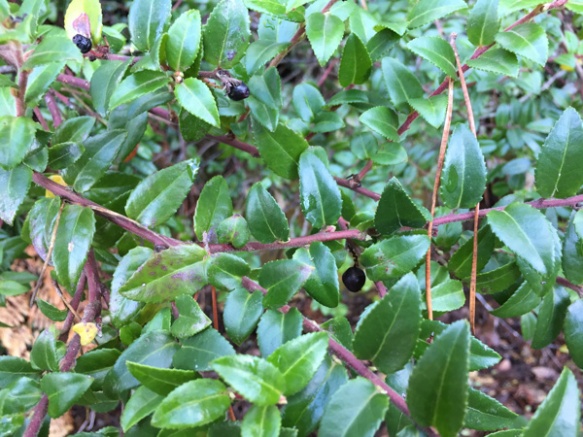
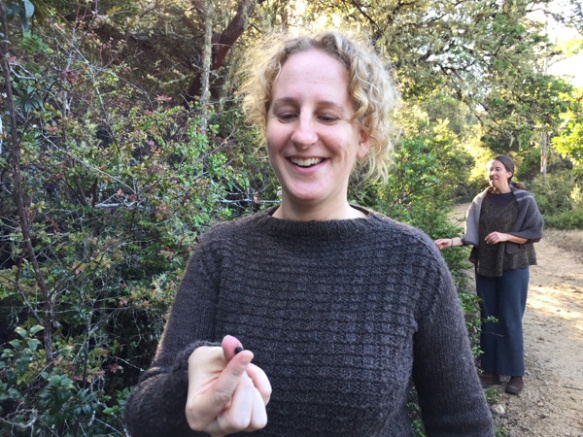
IMG_3270      Rebecca pointed out huckleberries which were still on the bushes, although the normal harvest season was over. I wouldn’t have known and would have avoided these unknown berries.

IMG_3265  Stephanie (wearing her handknit Jacob sweater) ate her share as did the rest of us.

IMG_3275

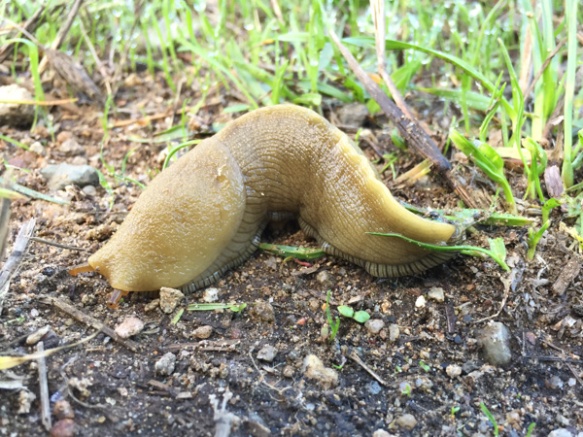
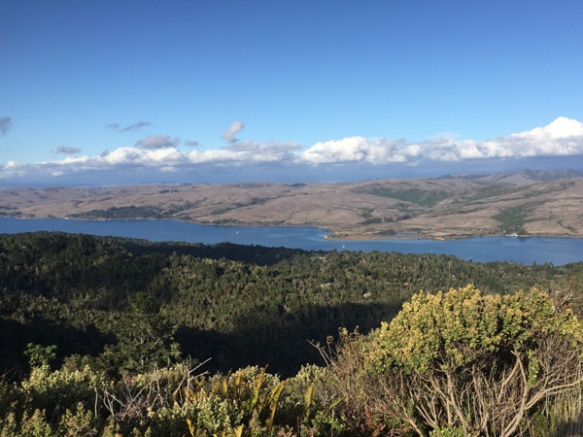
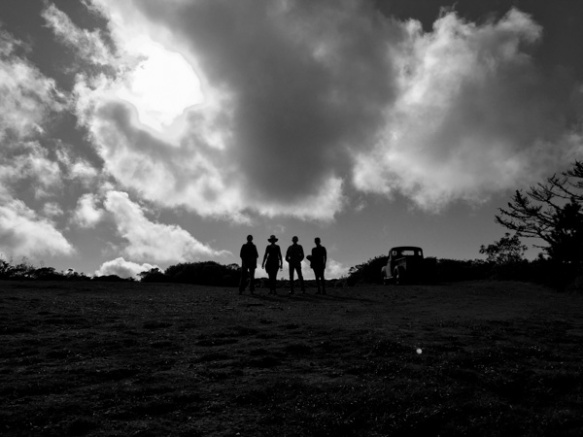
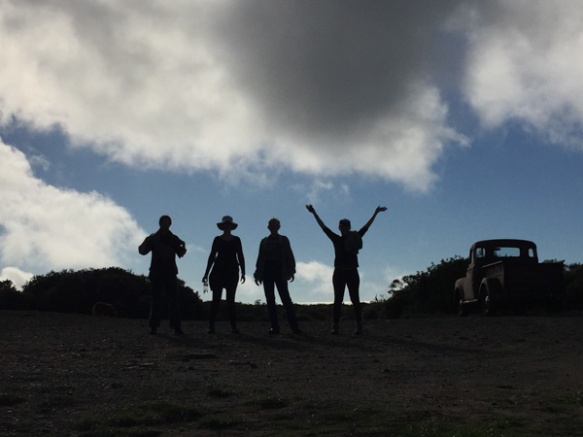
IMG_3293            This is a much wetter area than where I usually find myself and there were still signs of the previous night’s rain.IMG_3276        Another testament to the dampness were the large slugs that we saw.IMG_3292             The view overlooking Tomales Bay. What a beautiful day we had!IMG_3278-2               As we were coming back down from the ridge that has a view of the ocean, another hiker   coming up the hill saw our silhouettes and offered to take our photo. This is the view that she saw.

IMG_3281

IMG_3288

What a great end to an inspiring weekend!


Farm Club in the City Again

I have to look back at my blog posts to know how long it is that Farm Club members have been going to San Francisco for an annual one-night retreat. It seems that the first one was in 2011 so this is the seventh. As always we had a fabulous time.

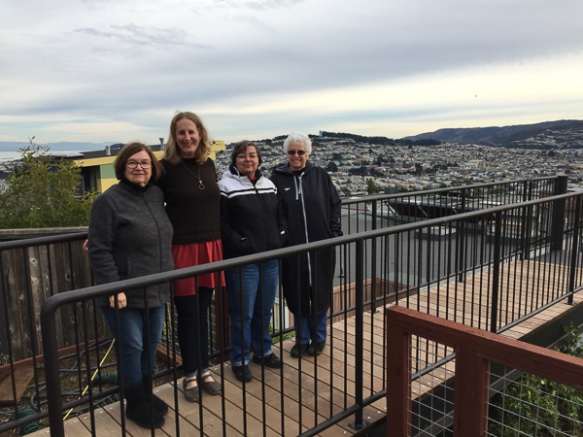
Eight of us met at the NDGW home Friday afternoon (see this post for some views of this fabulous home) and then went to FC member Stephany’s  home in the Glen Park District of San Francisco.

dsc_5635

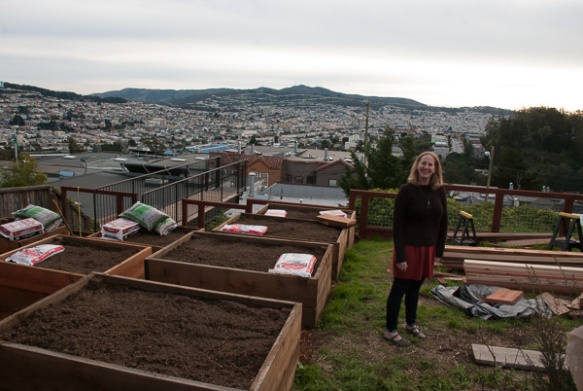
Stephany and Ian invited us to see the recent addition to their yard, half of which has been inaccessible since they have lived there except for going half way around the block and through the property behind them.

dsc_5634

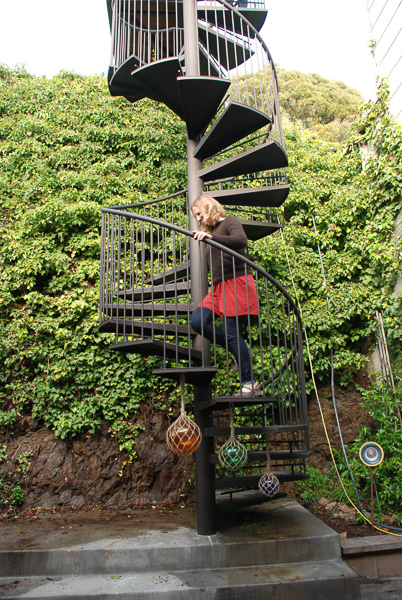
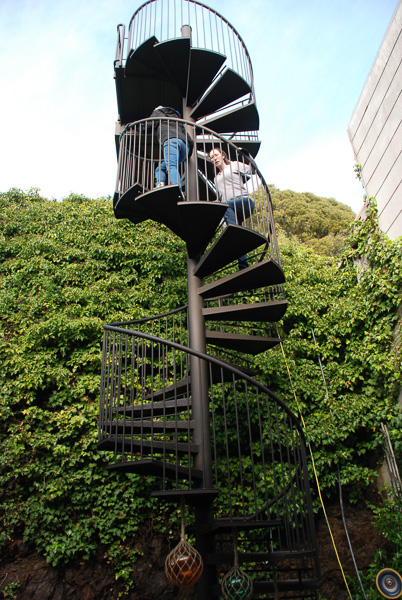
This spiral staircase, which was lifted OVER their house by a crane a couple of months ago, gives them access to the upper level.

img_5922

img_5924

From the top of the staircase you cross this bridge to get to solid ground.

dsc_5638

There is a spectacular view of the city and the bay and Stephany and Ian have a wonderful garden spot with a sunny exposure that is often above the fog line.

dsc_5642

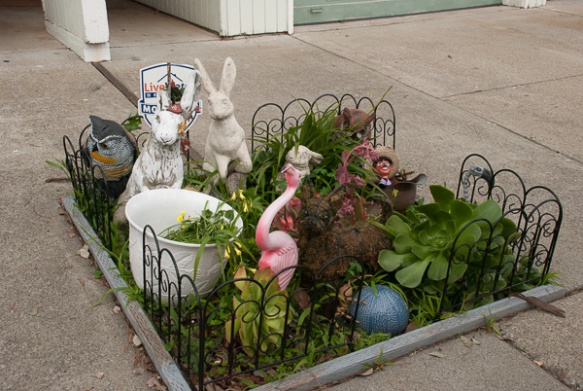
After enjoying afternoon snacks with Stephany she led us on an urban hike. The first point of interest was this tiny garden.

dsc_5644

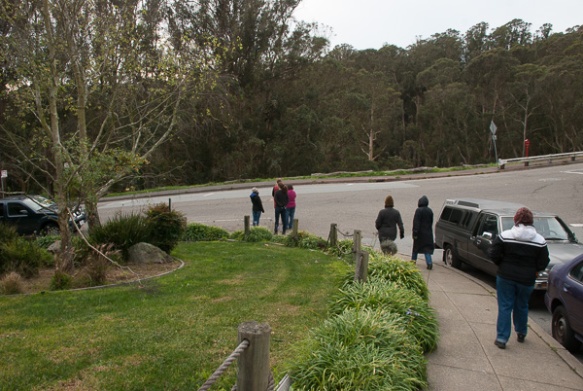
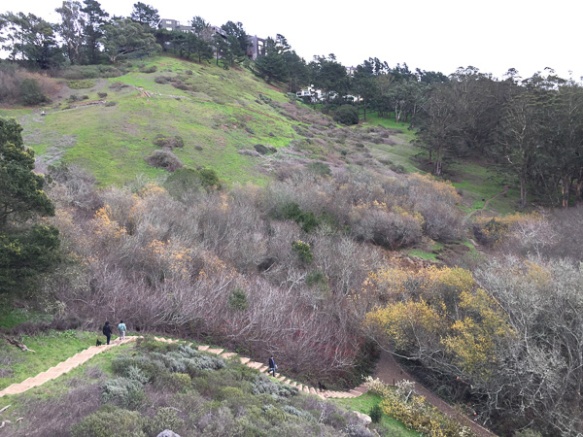
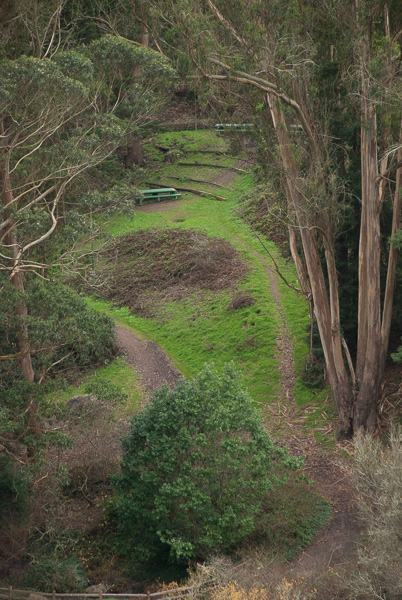
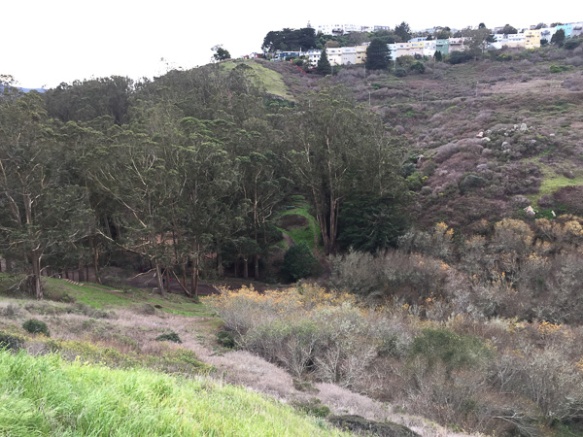
Only two blocks from Stephany’s home we saw the 78-acre Glen Canyon Park.

img_5929

I had no idea that something like this exists in the middle of San Francisco.

dsc_5666

img_5934

dsc_5665

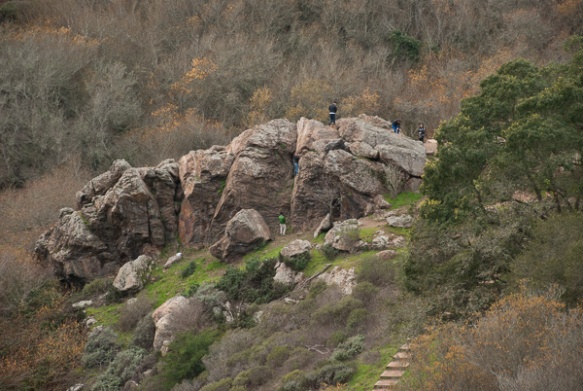
Note the rock climbers on the smooth face of that rock.

dsc_5660

This is us on the other side of that same rock.

dsc_5667

img_5932

We walked a loop trail and returned to Stephany’s for more scones and brownies. We had dinner at Green Chili Kitchen, only a block from the NDGW Home…

img_5938

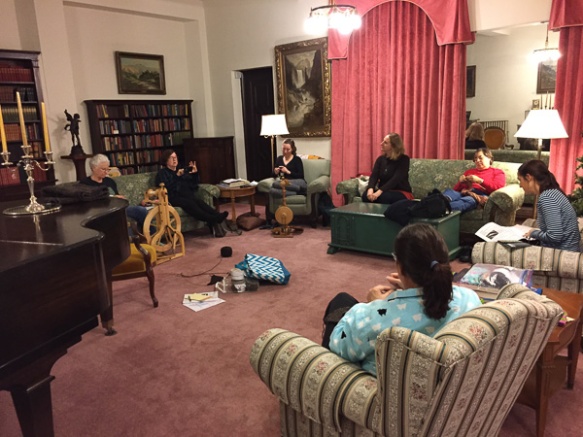
…and spent the rest of the evening knitting and spinning in the parlor.

img_5937

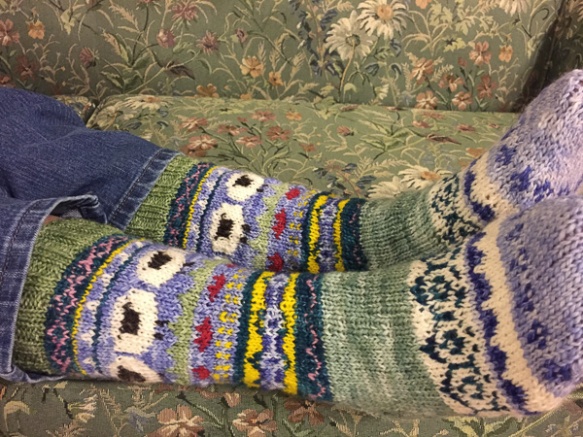
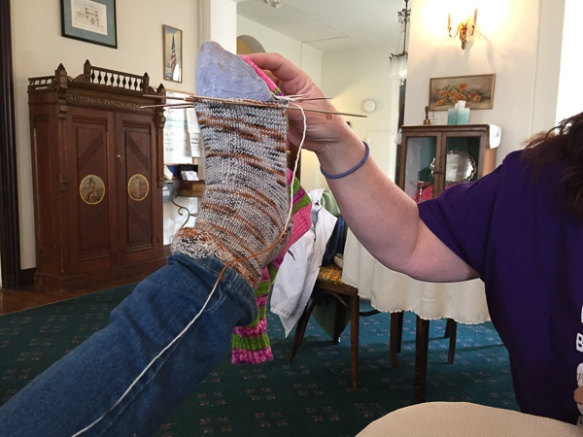
Janis showed off her snazzy handspun/handknit socks modeled after the sheep-motif Baable Hat.

img_5939

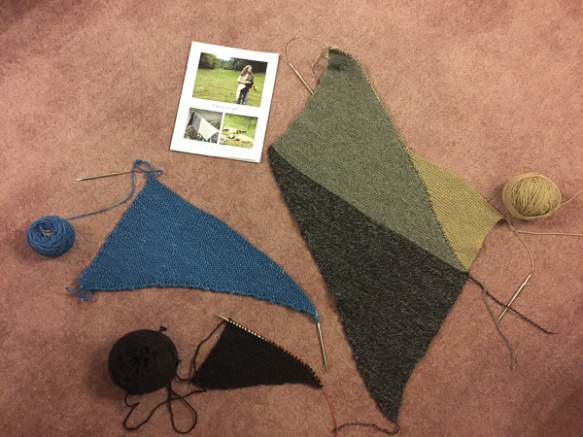
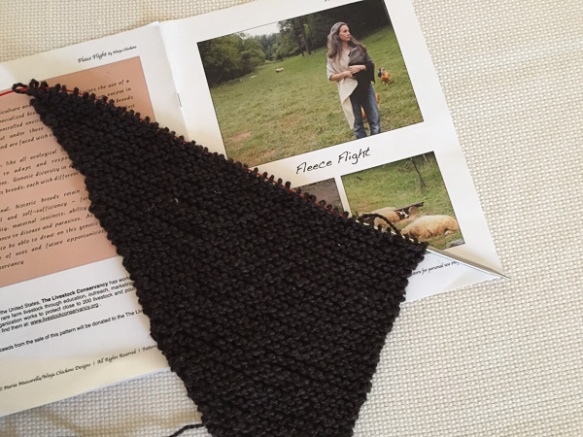
Three of us are knitting the Fleece Flight KAL.  Mary is working on the third triangle. Stephany’s is in blue and mine is the small one in Jacob wool.

Our plan for Saturday was to have No Plan.

img_5943

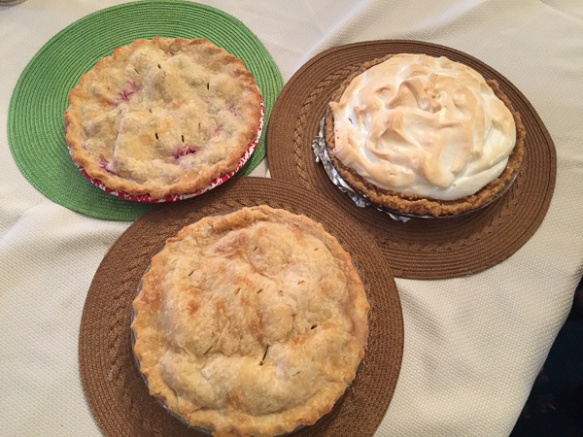
Well, there was one plan. Every year we have lemon pie for breakfast. We have bought pies across the street but this year Janis offered to bake them. I think this is now our regular routine. Lemon meringue, blackberry, and apple. Way to go, Janis!!

img_5946

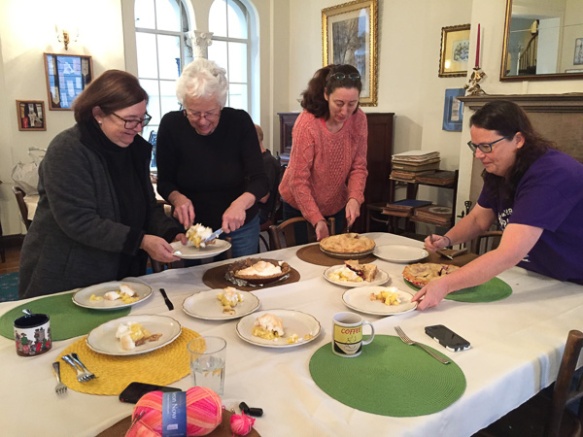
The serving line. We each had a piece of all three pies. Of course.

img_5948

And while not eating pie we chatted and worked on projects. Amy almost finished a sock…

img_5949

…and I made progress on my Fleece Flight shawl.

What an inspiring, fun 24 hours. We may expand this to a whole weekend next year.

Orchard Trails

It’s dry enough now to ride my bike Across the Road. I take Ginny to try and wear her out a bit. Yesterday I took a different route and decided to veer off the road that borders a walnut orchard. I don’t know why I haven’t done that before–veering off the road. Maybe because at other times of the year it’s muddy or weedy (including puncture vine, also known as goats’ head that puncture tires and dog feet) or being harvested. Or because I’m not the sort of person that goes off the trail.

Maybe it’s that I am not a big fan of orchards in this area. Almond orchards seem to be taking over the valley and the landscapes that I love are hidden once the orchard has been in a couple of years.

img_5201

Anyway, it was beautiful view from within the orchard.

img_5199

Peaceful.

img_5200

Colorful.

img_5197

Orderly.

img_5206

img_5211

However, I still love the broad landscape that is outside the orchard. This is one of the few black walnut trees remaining around the fields.

img_5217

The mountains are almost obscured by the young almond orchard  that is across the big canal but at least I can still see the sunset.

Two Sides of the Road

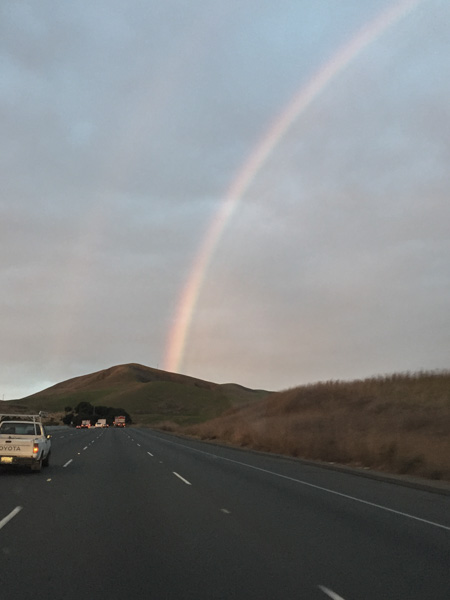
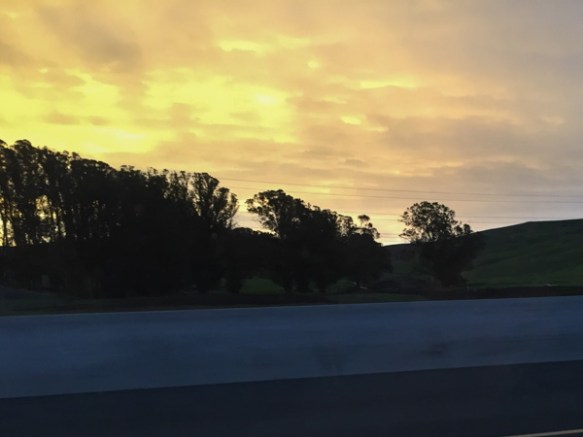
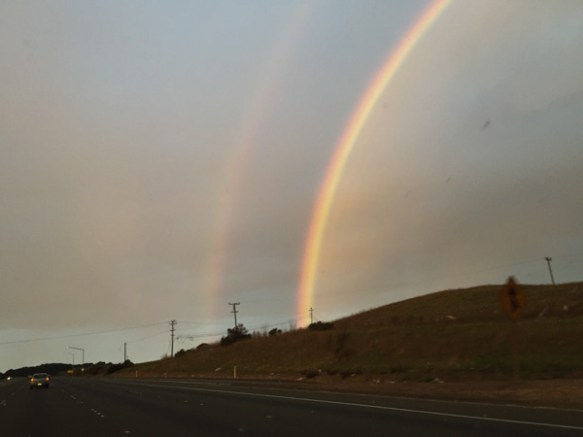
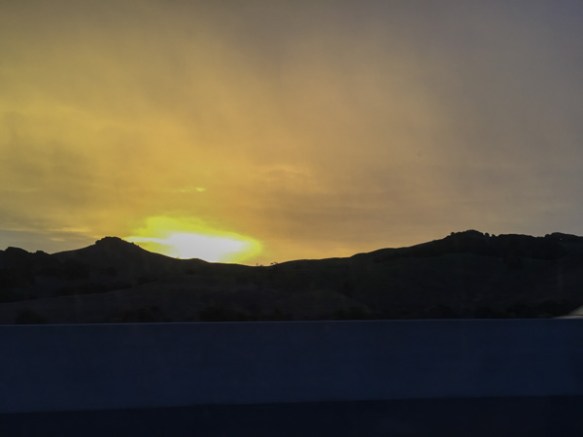
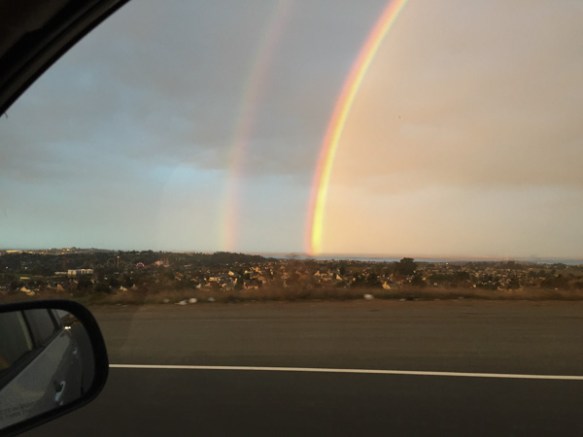
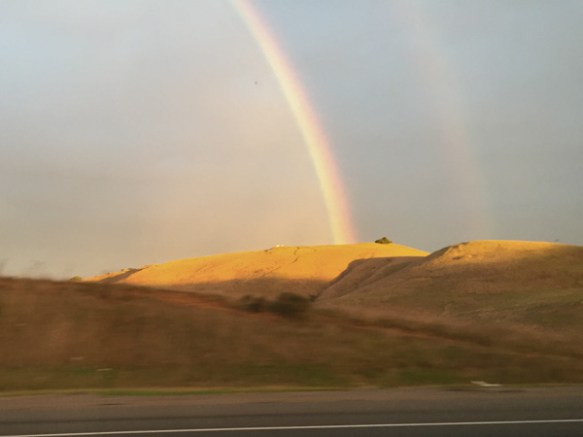
On Saturday I left before dawn to get to Pt. Reyes Station for the annual Fibershed Wool Symposium, one of my favorite events. I was driving through the hills towards Vallejo as the sun was coming up. Here are the views to the east and the west as I drove.

img_4972

Please look past the dirty car window.

img_4975

It was so beautiful I wanted to watch both sides of the car. But I really needed to watch the road instead so I just held the phone up and clicked to get these photos.

img_4973

img_4977

img_4978

img_4981

img_4985

img_4986

img_4984

This was a complete rainbow but I couldn’t capture that with the phone, and not while I was driving.


A Retreat

Some friends and I had planned a retreat for a few days last week–a get-away to a house in the mountains with as many craft projects as we could fit in our cars. As it turns out it was also a retreat, albeit briefly, from the political scene. We watched, stunned, on Tuesday, but then were able to postpone thinking about it for the most part while we enjoyed friendship and fiber and walking in the woods.

Some of us brought dogs.

dsc_4273

Ginny will write her own post about the week.

dsc_4242

I debated taking a dog. Rusty couldn’t go because he would have had a difficult time with all the stairs in the house where we were staying. Maggie wouldn’t be my first choice because she gets car sick. Ginny is the one that would be going stir-crazy left home while Dan was at work all day. So Ginny came with me and I’m glad I brought her. Having her there made me get out and walk at least twice every day. It would have been very easy to just stay inside and work on my projects, but I’m glad that I didn’t miss the beautiful woods. The weather was fabulous, although a bit scary to have summer-like weather in November. Of course I had my camera with me on some of the walks.

dsc_4264

dsc_4267

dsc_4271

dsc_4297

dsc_4299

dsc_4301

dsc_4300

dsc_4308

The walks were refreshing (and necessary for Ginny), but most of my focus was spent on my projects. I didn’t get to everything but made a valiant effort, staying up late every night. We shared the cooking so I only spent one evening in the kitchen and that was making an easy batch of mac and cheese.

img_4907

It might be hard to tell what this is from the photo. When it is delivered to my granddaughter in December it will have a covered mat on the floor, a hula-hoop supporting the scalloped roof and be supported from the ceiling. It has windows (thanks for demonstrating, Mary), inside pockets, and a door with glittery decorations. If I have time I will weave a rag rug with the leftover material. This is soooo cute, but it took soooo long to sew…and I’m not quite finished.

img_4912

This is a photo of all my projects for the 3-1/2 days. You can see on the pattern envelope how the canopy looks when it is set up. From bottom left and around: a batch of 41 dryer balls ready to be felted, a rag runner woven on the Cricket loom, a baggie of walnuts ready for the freezer (those weren’t mine because I didn’t get to cracking any that we didn’t eat–I need to finish this at home), Ginny 🙂 , six chenille scarves fringed (half of the 12 that I brought), and a warp wound for two ponchos. Not shown is the painted warp that I did that was in a plastic bag ready to come home and be rinsed.

dsc_4317

I drove home Friday, but not before stopping at the lake. It doesn’t seem right to go to Lake Tahoe and not actually go to the lake.

img_4915

Ginny learned quickly that she could retrieve her ball from the lake but she’ll tell you about that in Rusty’s blog.

Sunflowers – June Through August

I have too many sunflower photos for one post so I split them up into yesterday’s post and this one.

20160615-dsc_0222

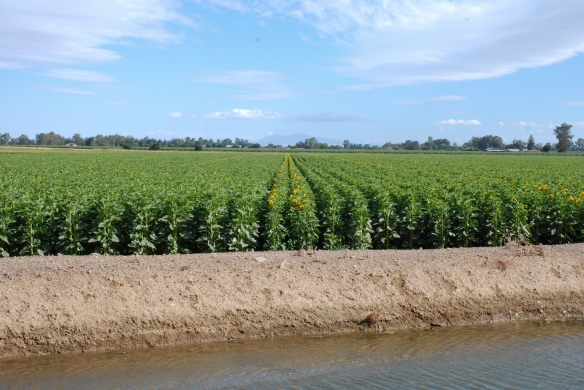
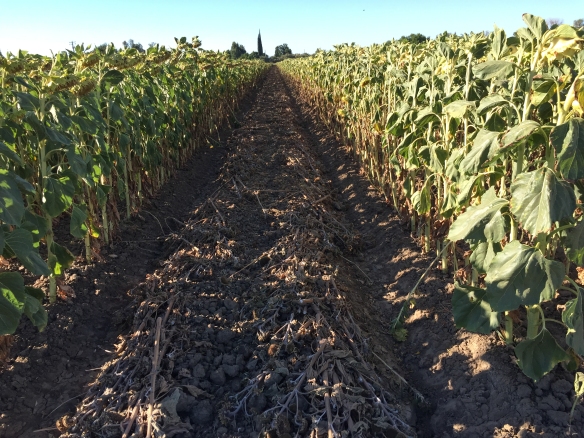
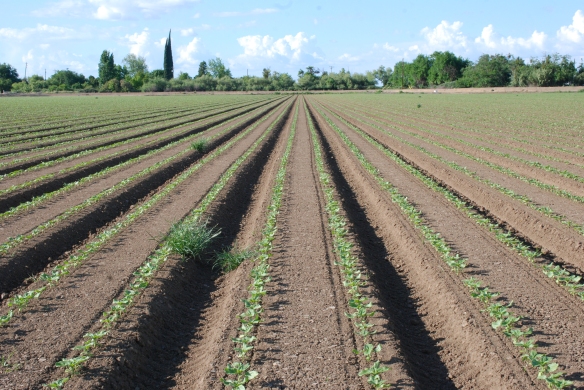
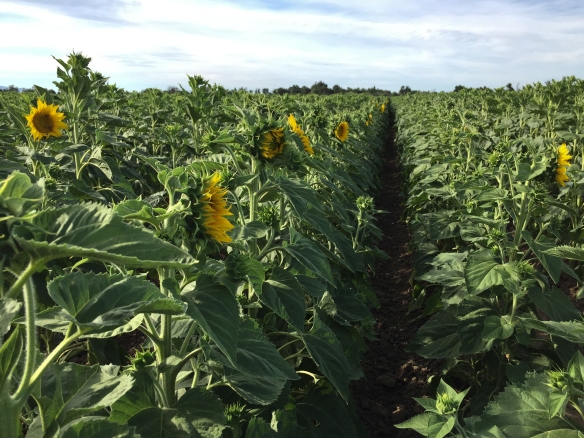
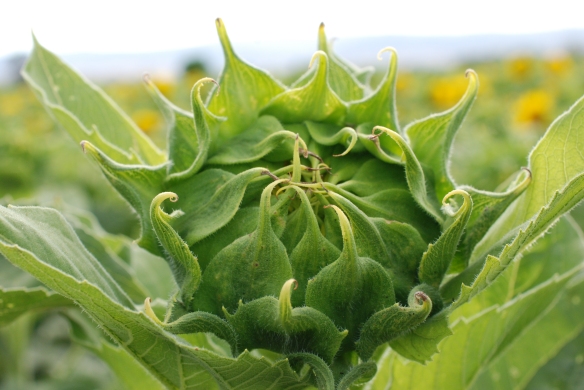
Do you see the flowering sunflowers in the center of the photo? If you count 10 rows to each side you’ll see (barely) that every 10th and 11th row there are flowers in bloom. The field was planted with two varieties of sunflowers, a smaller one that bloomed earlier and the larger variety. The following is from Wikipedia:

Typically, sunflowers tend to be self sterile. But for a sunflower to produce seeds, it needs pollen from a different sunflower. This is also known as cross-breeding, or in this case, cross-pollination. Occasionally, a sunflower can self-pollinate. Self-pollination produces an inbred line which, when bred with a separate inbred line, will result in a hybrid flower.”

20160620-dsc_0335

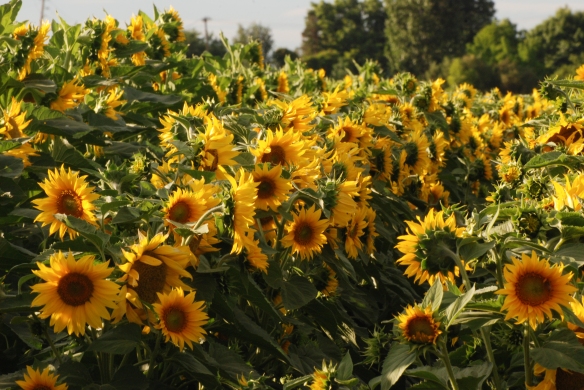
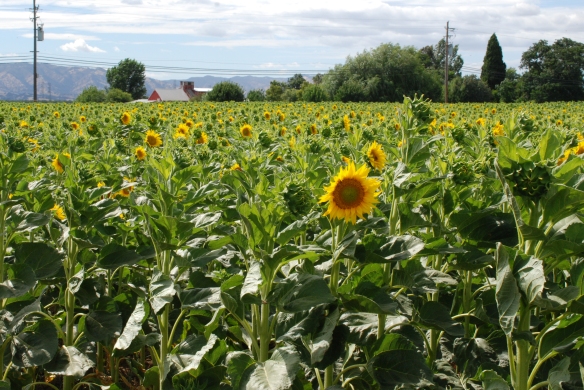
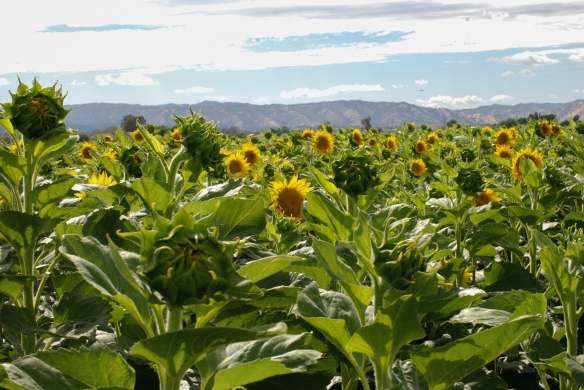
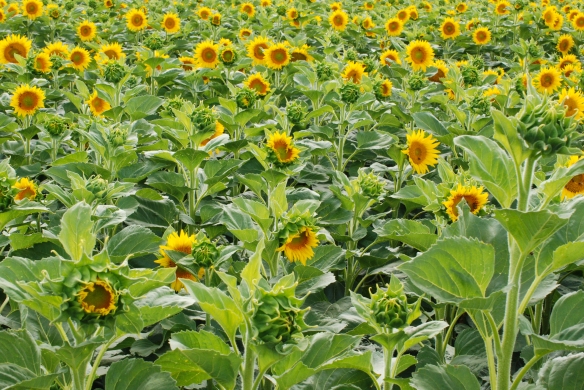
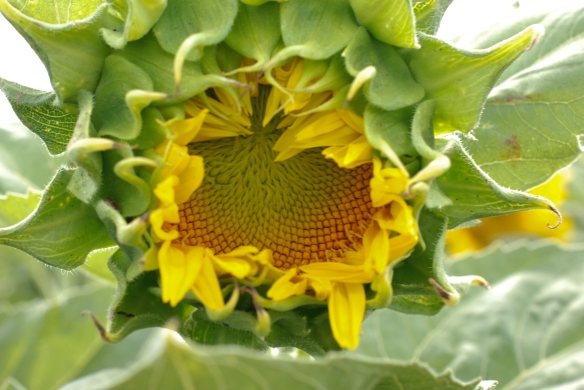
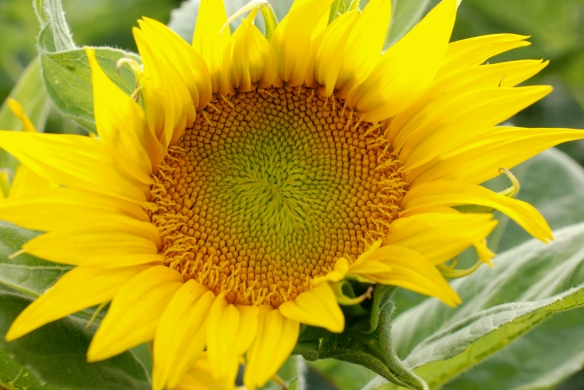
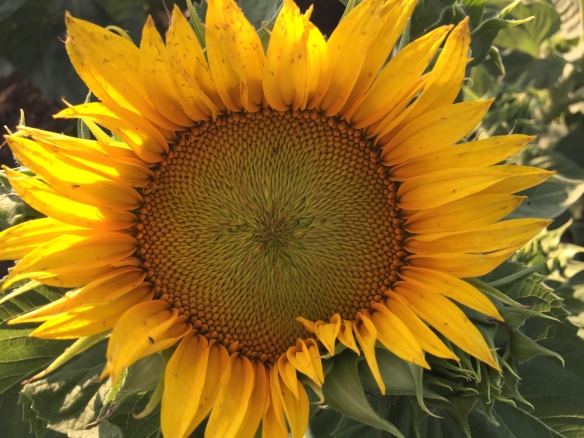
This is two of the shorter rows in full bloom. The taller sunflowers are also blooming. I assume that these are two varieties that (with probably a male-sterile flower on the larger plants) produce a hybrid seed. At harvest time I talked to a representative of the buyer who was out in the field and she said that this was a seed crop that was going to Europe to be planted for oil production.

20160616-img_1876

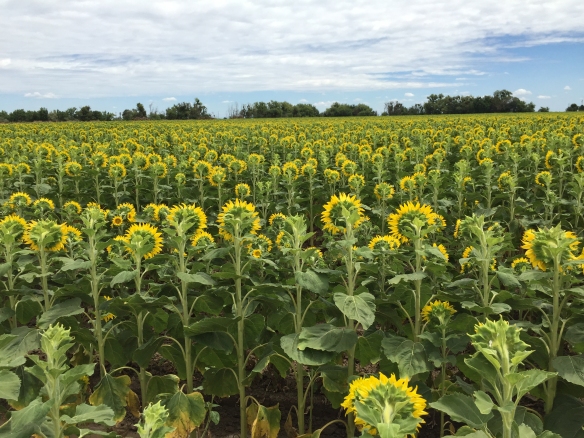
Sunflowers typically follow the sun, but when they get large the heads don’t move anymore. This was the view from my house –all the flowers facing east. If I wanted to see the pretty faces I had to walk around the field. Do you want to know more about this? Here is an article from the New York Times that explains why and how the sunflowers move to face the sun. This is an excerpt from it:

The answer was in their stems. Like those of other plants, the stems of young sunflowers grow more at night — but only on their west side, which is what allows their heads to bend eastward. During the day, the stems’ east side grows, and they bend west with the sun. Dr. Atamian collected samples of the opposite sides of stems from sunflowers periodically, and found that different genes, related to light detection and growth, appeared active on opposite sides of the stems.”

Isn’t that amazing? And isn’t it cool that there is so much to be learned about the seemingly most mundane things in our world? I’m all for promoting science to explore ideas and not just to solve a problem. But I digress…20160615-img_1868

20160620-dsc_0339

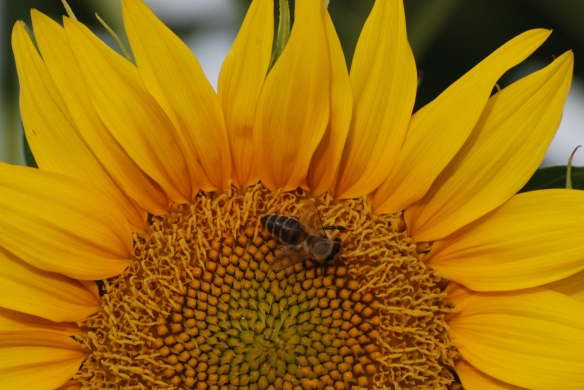
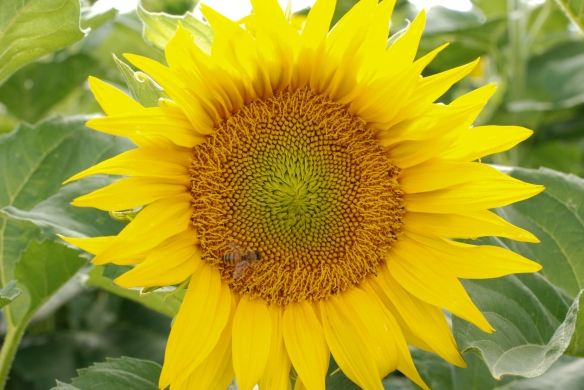
You saw bees on the sunflowers in the previous post.20160620-dsc_0370

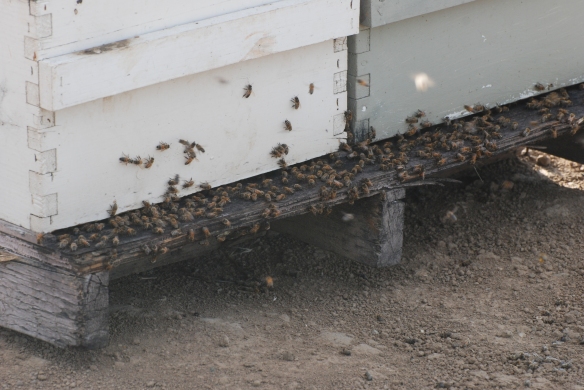
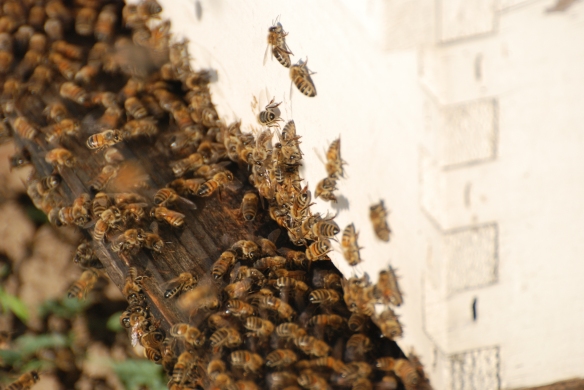
Here they are at their hives. Hives were placed all around the field.20160620-dsc_0390

Here is another interesting article–this one about the bees that pollinate sunflowers. “In sunflower hybrid seed production, pollen from a male row of sunflowers must be moved by bees to a female (male-sterile) row. Growers typically use honey bees to accomplish this task. However, most honey bee workers specialize as either nectar or pollen foragers. Nectar foragers tend primarily to visit female rows, while pollen foragers visit male rows. If few bees cross between rows, growers can experience poor seed-set.” The article goes on to say that native bees  collect both pollen and nectar and by chasing the honeybees from row to row they make the whole process more efficient in terms of getting the 100% pollination. Therefore growers should encourage native bee populations.

20160629-dsc_0563

The photos above were all taken in June.

20160718-img_3086

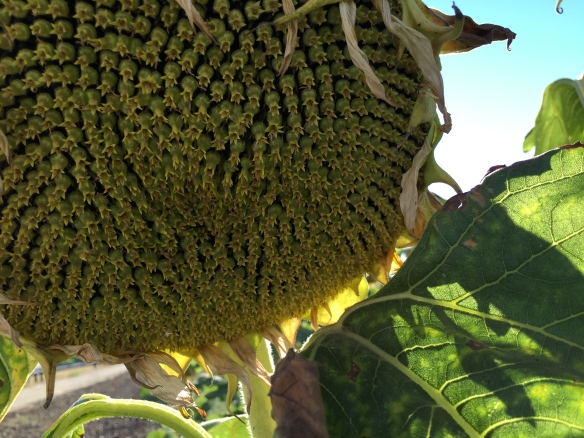
By mid-July the heads were drooping and the two rows of smaller plants were cut. The sole purpose of those sunflowers was to provide half of the genetics of the hybrid seed to be harvested from the larger plants.

20160718-img_3087

20160812-dsc_2070

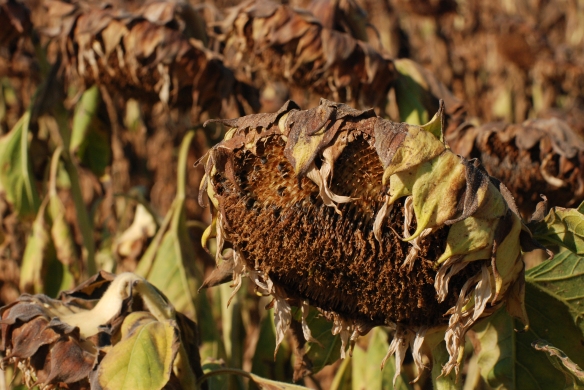
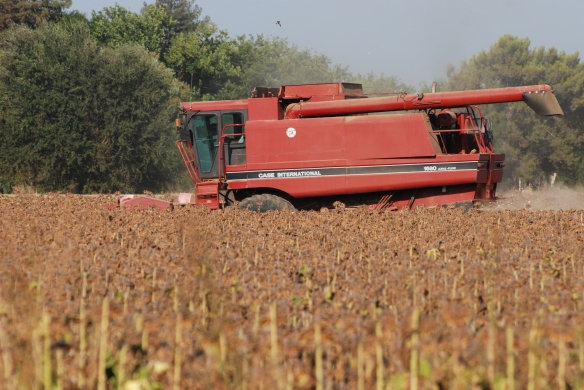
The seed was ready to harvest in mid-August.

dsc_2054

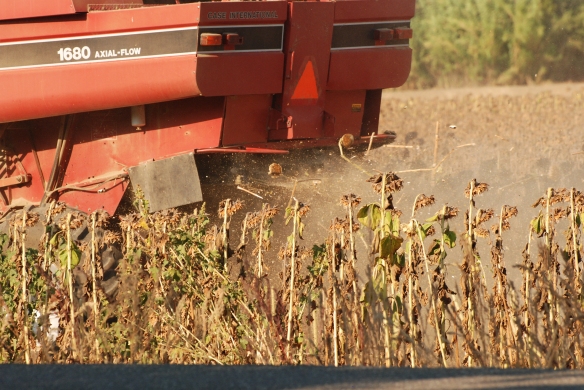
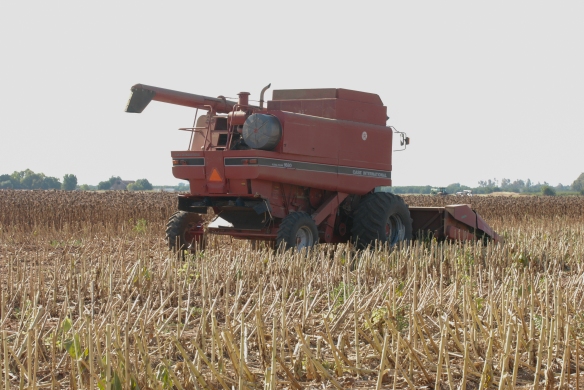
The harvester drove through the field, cutting the plants,…dsc_2061

…sorting out the waste,…dsc_2055

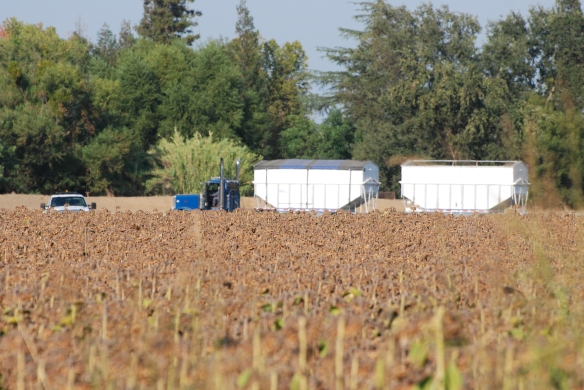
…and periodically dumping the seed into a waiting truck.

20160812-dsc_2071

20160812-dsc_2092

20160812-dsc_2135

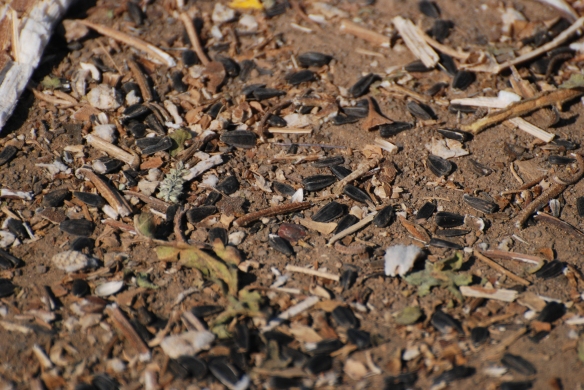
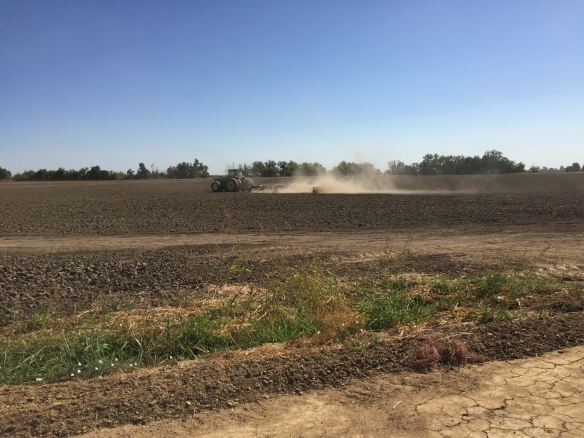
But the job isn’t over. While plants were being harvested in one part of the field the other part was being disked.

20160812-dsc_2136

20160825-img_3826

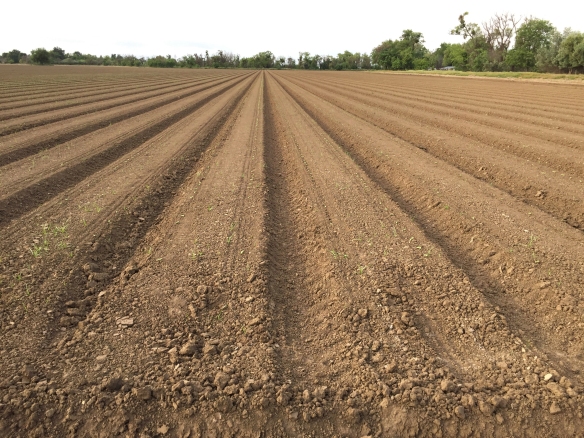
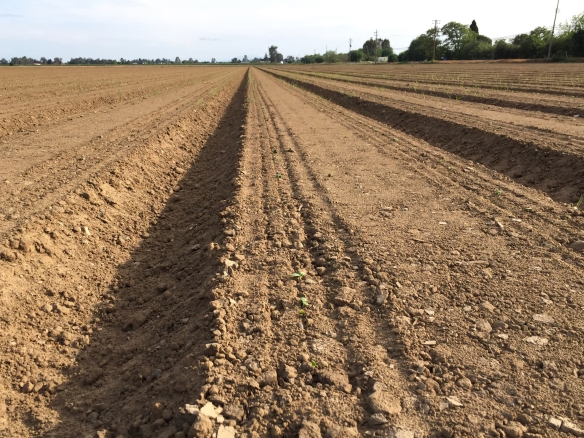
A month later the field is still being prepped to get ready for next year’s crop–tomatoes.

Sunflowers-April through June

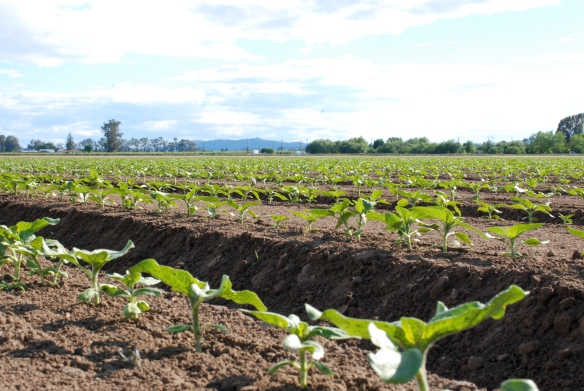
We have only 10 acres here, but having the field Across the Road makes it seem as though we have much more. We are careful to be good neighbors and we are grateful that we have permission to spend time exploring that property. So I feel kind of like the crops grown there are mine although I have none of the work involved.  This summer’s crop was sunflowers–one of my favorites. I have way too many photos so I’ll break this into two posts.

img_0682

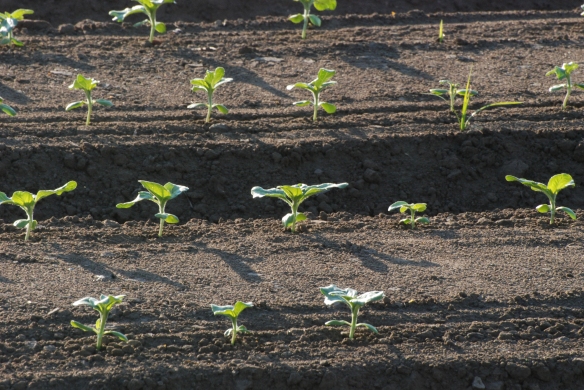
April 12. You can just see the tiny plants.

sunflowers-sprouting

dsc_8711

April 27

dsc_8423dsc_8669dsc_8674

20160502-img_1064

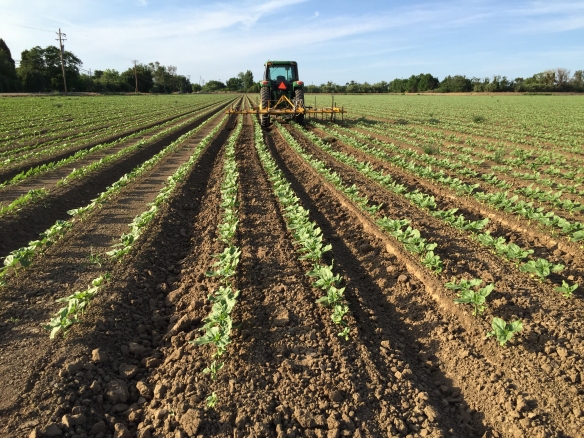
May 2. Cultivating.

20160611-img_1797

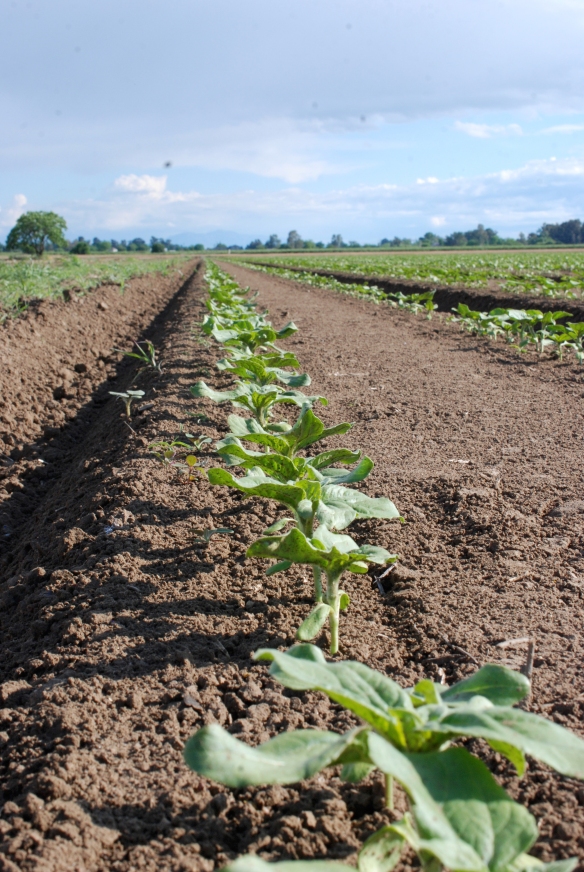
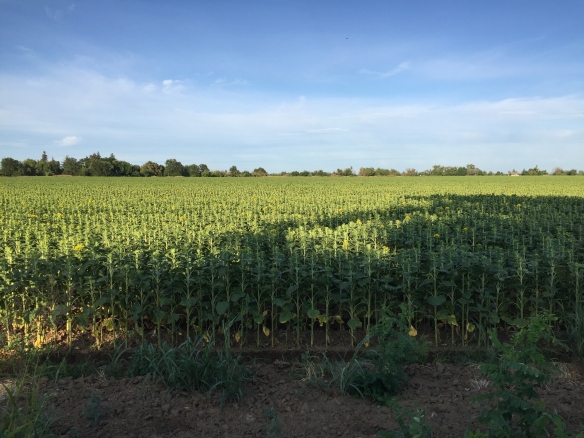
June 11. They’re growing up. I sound like a proud parent.

20160611-img_1799

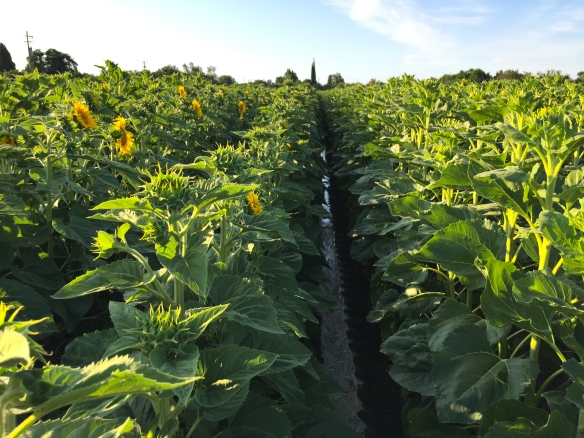
The rest of the photos in this post were taken throughout June.

20160608-img_1758

20160615-dsc_0162

20160615-dsc_0193

20160615-dsc_0203

20160615-dsc_0206

20160615-dsc_0207

20160615-dsc_0208

20160611-img_1807

20160615-dsc_0209

20160615-dsc_0210

A Sheep Adventure – Part 2

I forgot to put a couple of photos in the last post. Besides the BearFest that was going on through the summer in Grants Pass, there was also a Fifties celebration the week we were there. There was a car show that evening and here are some cars that we saw in the motel parking lot.

IMG_3258

I have no idea what they are but I took these photos to show my husband.

IMG_3260

IMG_3261

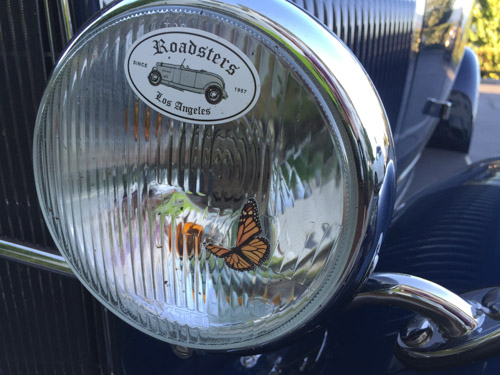
This is not how butterflies normally look on my headlights.

We got on the road about 7:30 and drove to Selma, Oregon where Jackie’s sheep had been delivered the day before. She was picking up two English Leicesters that came from Michigan.
IMG_3266

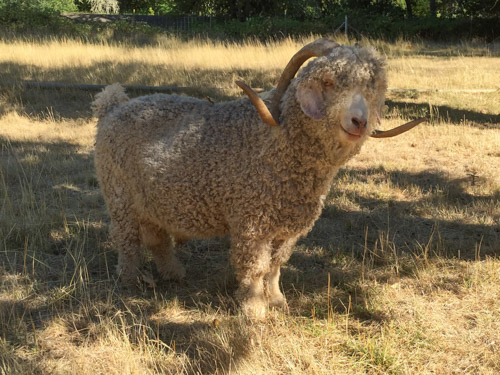
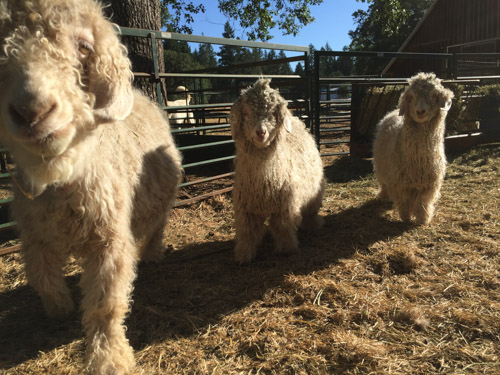
Carol Ronan graciously took time to give us a tour of her beautiful farm. She raises Angora goats (above) and Gotland sheep (below). Information about her sheep and goats (and the beautiful farm which is for sale) is at this link.

IMG_3276

IMG_3278

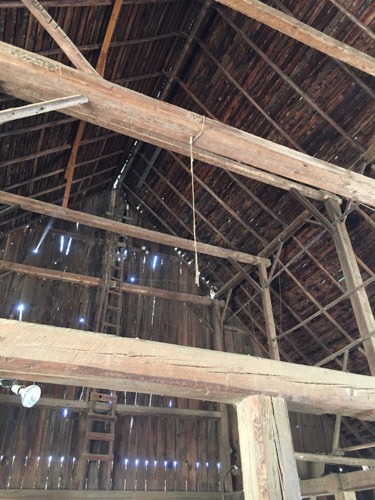
The animals have access to this 100+ year old barn that has been reinforced and given a new roof (which will probably give it another 100 years).

IMG_3281

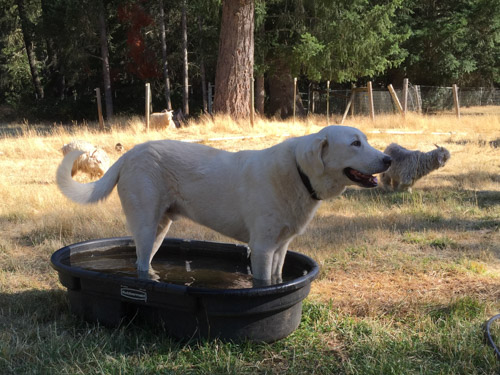
I don’t remember the dogs names but this was an older one who put up with the nosy sheep.
IMG_3284

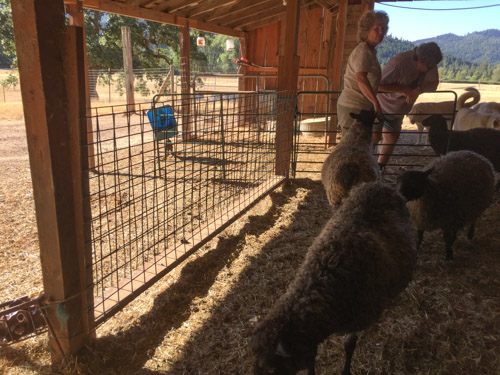
I took this photo because I wanted to remember this oh-so-simple feeder idea. That welded wire panel is not a fence. There are two panels attached to a 2×6 at the bottom and to posts with slightly tapered pieces of wood on the sides. Perfect for dropping in a flake of hay and feeding on both sides.

IMG_3290

We walked to the field with the bucks…IMG_3292
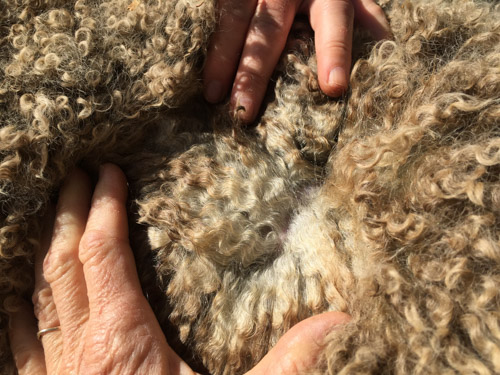
…and examined fleeces.

IMG_3295

IMG_3297

IMG_3298

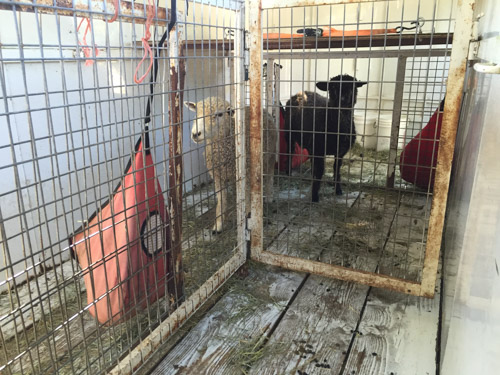
Here are Jackie’s new sheep who had been housed in the trailer overnight.IMG_3299

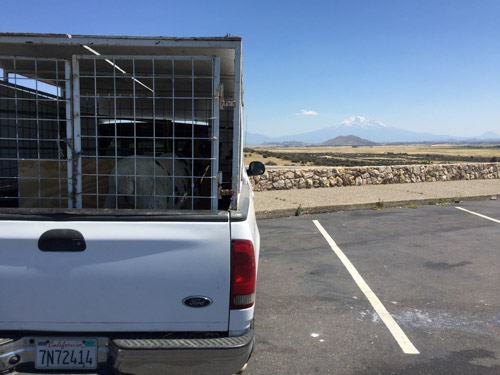
They were easily switched to my truck and we got on the road. There are not too many photos of the part of the trip that became more of an adventure. I didn’t want to backtrack to Grant’s Pass and I-5. BORING. If you take Hwy. 199 south from Selma you can turn off onto a road that winds its way through the rugged Siskiyou Mountains to Happy Camp. It wasn’t a good idea for me to be taking photos while driving on this road that was full of switchbacks and Jackie probably would have thrown my camera out the window. We didn’t stop because we had spent a lot of time at Carol’s and had planned to make the next stop by mid-morning (weren’t going to make that) and get home in the afternoon, trying to avoid being on I-5 through Redding at the hottest part of the day.

IMG_3307

At Happy Camp we turned east onto Highway 96 and watched for landmarks until we got to this sign and across the road…

IMG_3306

…this bridge where we crossed Horse Creek and drove north along hillside edging a green valley . We were supposed to go 2 miles and find the correct street address for the farm where my ram would be. We saw a few numbers on mailboxes, passed what should have been the right place, found a place to turn around and chose a driveway that seemed to be in the right place. We drove in past barns and farm equipment but didn’t see a house, sheep, or any signs of someone looking for sheep buyers who were late. We drove out of the driveway, down the road and chose another driveway with the number that would be the neighbors to the place we were looking for.

As I drove down the steep driveway, several large dogs ran out barking. However I saw someone looking through a window and waited for him to come out. He wasn’t happy about seeing us and told us to go back up the road and take the driveway with “the lifetime gate”. “Can I drive forward and turn around down there?”, I asked. “No” was the answer. OK then. I’ll back up the steep rocky driveway that has a sharp turn onto the road and a steep drop-off to the side, while trying to see the end of my truck through the plywood sheep crate on my truck. I did that with several back and forths and only one minor mishap.

IMG_3302

Finally backing into the road in the wrong direction we drove down it again, passing this sing, turned around and came back. (Note: When my sons have fought fires in these mountains they have been turned away from entering access roads to the forest by surly land-owners. The firefighters are warned by their supervisors to be careful in or avoid areas where they have spotted marijuana or equipment for growing or harvesting.)

So we took the same driveway we had before with the barns and cattle equipment. Steep-Driveway-And-Big-Dogs-Guy was there to meet us, having gone from his house, across the creek, through the barns, to this upper driveway. He pointed and said “no, go back to the lifetime gate”. Lifetime gate? When we looked more closely there was a closed gate down a dirt road that branched off to the right of this main driveway. Jackie opened the gate and we drove into what looked like a little used driveway that stopped before you got to a house where I could hear children. So at least someone was home.

IMG_3303

I found the sheep owner who strapped her baby on her back and we walked out to the barn with other kids running beside us. We arranged bales of hay to create a step up into the truck and loaded the ram. She pointed us out a dirt road that  ends up on a different paved road which seems to be their main access and is “easier”.

IMG_3305

This is the field (sheep in the distance) that Kenleigh’s Legolas left behind.
IMG_3308

We drove east through Yreka to I-5 and headed for home. I always stop for a photo at this overview of Mt. Shasta. We stopped several times to check on the sheep. There was really nothing we could do about the heat but the truck thermometer was showing 108 (or was it 109?) through Redding. It was in the 100’s for most of the trip, but the sheep survived. I didn’t dawdle, wanting to get them out of the truck as quickly as we could.
IMG_3311

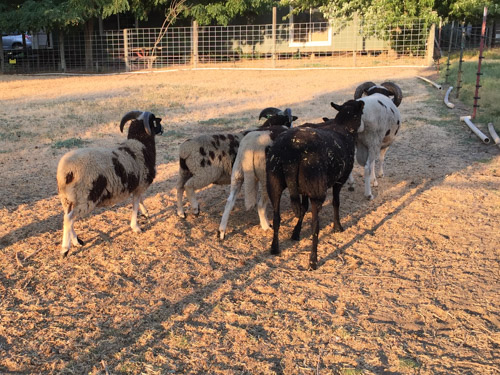
I put Legolas in with the young rams and a wether. They followed him around for awhile.

DSC_1605

There was fighting among themselves, but not with Legolas, because it was obvious that he would be the dominant ram of the bunch.

DSC_1606

This will be the first year that I will breed the bulk of the flock to 2-horned rams. There is Kenleigh’s Legolas (Lego for short), Meridian Catalyst, a 2-horned lilac ram, and bide a wee Buster, the younger ram with 4 horns.
Road Trip to Colorado-Bodie & Beyond

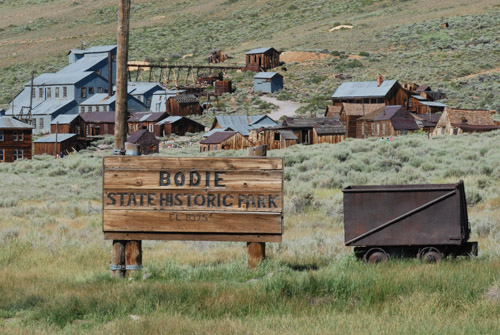
The first post about our trip is here. One the first day we made it to Bodie State Historic Park near the California/Nevada border with about an hour and a half before the park closed.

DSC_0715

W.S. Bodey discovered gold here in 1859 but he died in a blizzard several months later, never seeing the town that was named for him (although spelled differently). A mine collapse in 1875 revealed a rich body of gold and the boom time of the town was during 1877-1881 when there were 30 mines, 9 stamp mills, and 60 saloons. As the boom years ended population declined quickly into the 1900’s. Mining continued until 1942 and the family of the last major landowner continued to protect the town from vandals. In 1962 the CA State Parks purchased the town to protect it. It remains in a “state of arrested decay” without the intent to reconstruct it.  The  non-profit organization, The Bodie Foundation was created with the goal to raise funds to assist with stabilization of structures as well as education.

DSC_0730

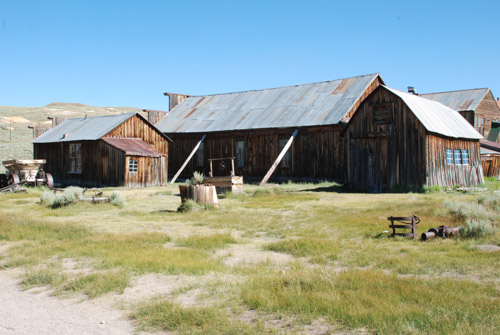
View of what is left of the town from above. At it’s height there were probably 8000 people living here. There is an interesting mix of eras remaining–houses built in the 1870’s, gas pumps from the 1920’s, and a school that was used until 1942. DSC_0725

DSC_0737


DSC_0721

DSC_0717

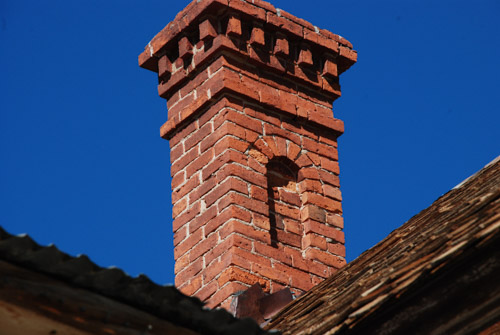
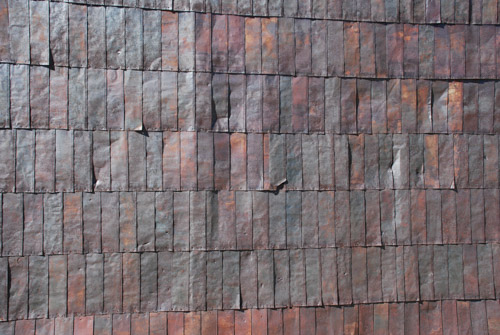
The walls and roofs of many of the buildings are covered with flattened tin cans.DSC_0726

DSC_0736DSC_0157

Dan took this photo because he liked all the different roof lines.DSC_0734

I like the design of the tin here, but I was really trying to take a photo of one of the violet green swallows that were zooming around. I got this one just as it flew into the corner of the roof.

DSC_0734-2

Do you see the wing tips under the roof line?

IMG_2581

IMG_2580

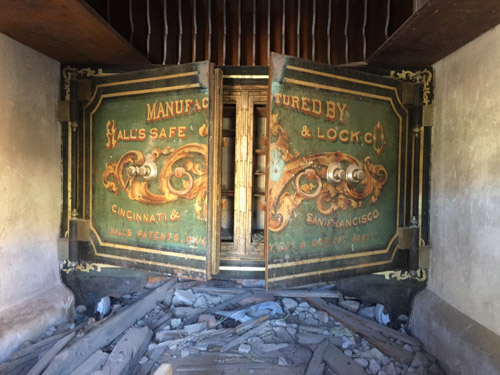
The brick vault is all that is left of the Bodie Bank after a fire in 1932.

IMG_2579

This is the safe inside the vault.

IMG_2577

Due to safety concerns the Standard Consolidated Mining Company’s Stamp Mill and other buildings are not open to the public except by guided tour. It is on the hill above the town and was only one of thirty mining companies in the district.

After our visit to Bodie it was time to get on the road and drive until we found somewhere we wanted to stay for the night.

IMG_2596

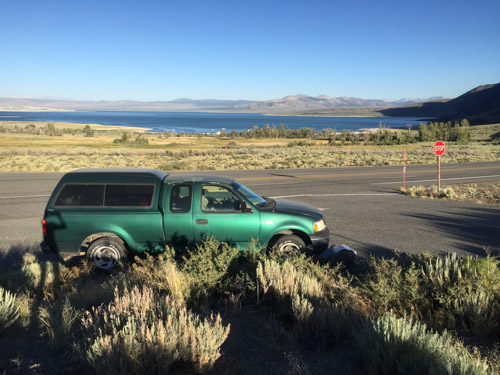
Coming down the mountain towards Mono Lake the truck rattled and shook every time Dan used the brakes. Then we heard a thwump, thwump. One of the front tires was beginning to shred, but fortunately still held air. Dan changed the tire and we knew that we needed new tires. It was too late to find anything near Mono Lake so we decided to continue on. We turned east and spent the night at a rest stop outside Tonopah, NV.

IMG_3063

The lower pink line is the first day of this trip.

Next up: on the road to Arches National Monument.