Day One of our trip to the redwood forest is here. On the second day we drove north to spend time in the redwood parks that are north of Eureka. They are all managed together as part of the Redwood National and State Parks.
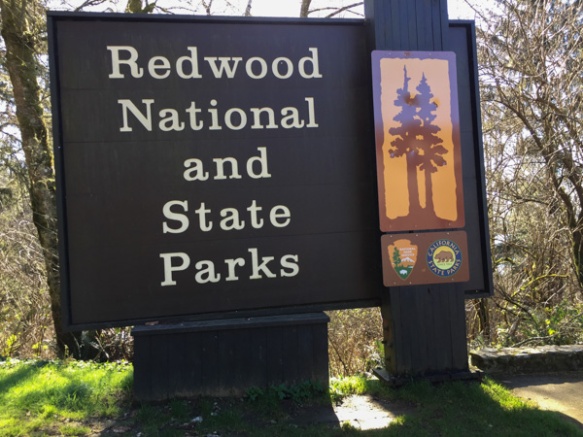 From Wikipedia: “… the four parks, together, protect 45% of all remaining coast redwood (Sequoia sempervirens) old-growth forests, totaling at least 38,982 acres. These trees are the tallest and one of the most massive tree species on Earth.”
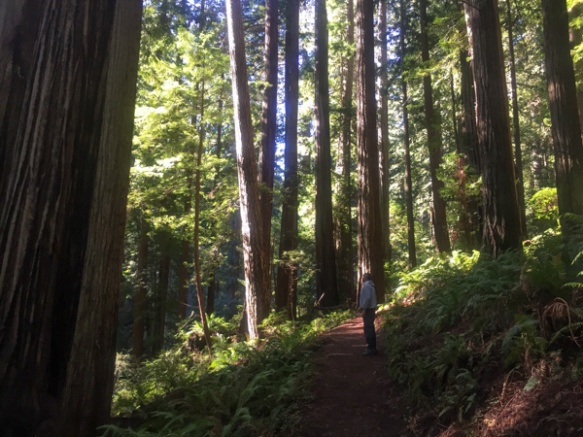 In 1850 there were 2 million acres of redwood forest along the northern California coast. After years of unrestricted logging the Save-the-Redwood League, created in 1918, was successful in establishing three State Parks in the 1920’s.
  Redwood National Park was created in 1968 after 90% of the original redwood trees were gone. Now the State and Federal agencies cooperatively manage the forests and watersheds as a single unit.
 I’ll mention here that all these photos were taken with my iPhone because the previous night I dropped my camera (on the carpet in the motel) and the lens popped off. I couldn’t get it back on and knew that I wouldn’t be able to get it fixed until after I came back from Texas (where I was headed as soon as we returned from this trip).
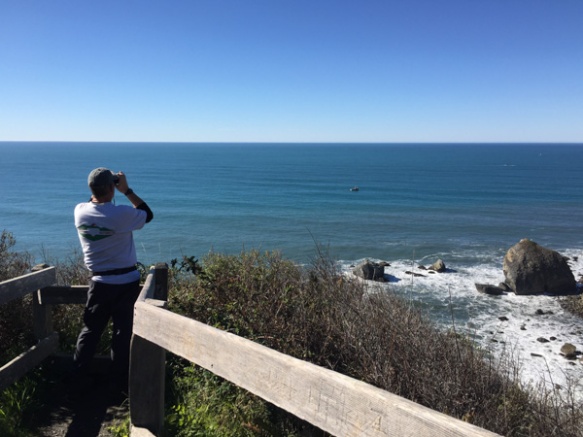 We took a side trip to the spot where the Klamath River flows into the ocean and walked down the steep trail to this overlook. That’s Dan looking across the ocean for Meryl (my DIL who is in Australia right now).
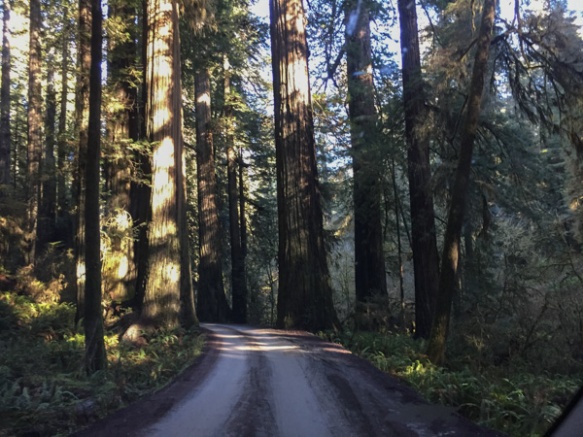 We drove farther north to the Stout Grove in the Jedediah Smith Redwoods State Park.
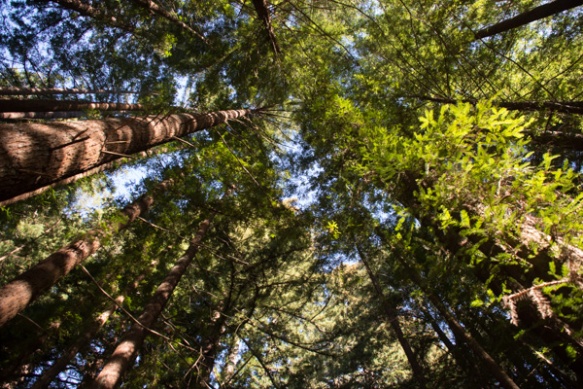
 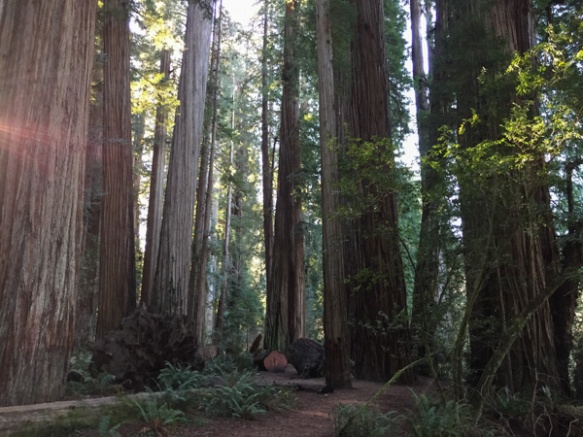 Every time we stopped we continued to be impressed with the grandeur of these trees and the forest.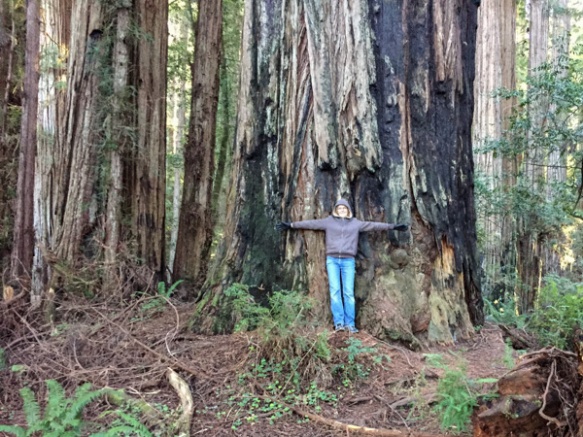
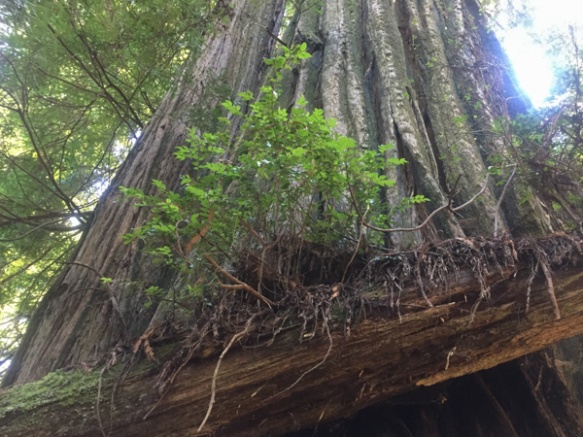
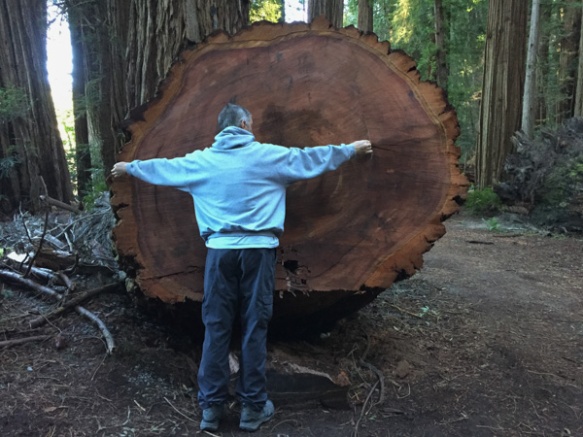 This tree had fallen and then was cut to clear the path.
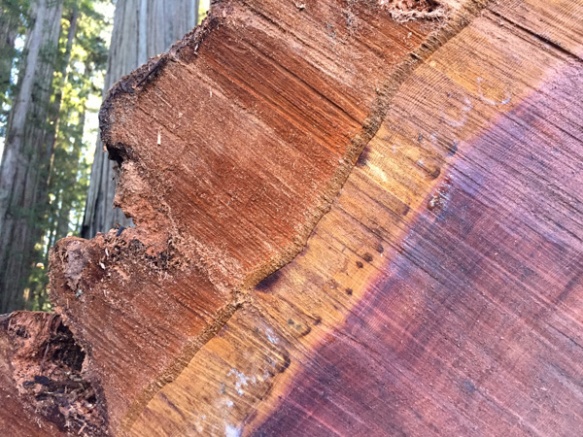 Look at that brilliant color.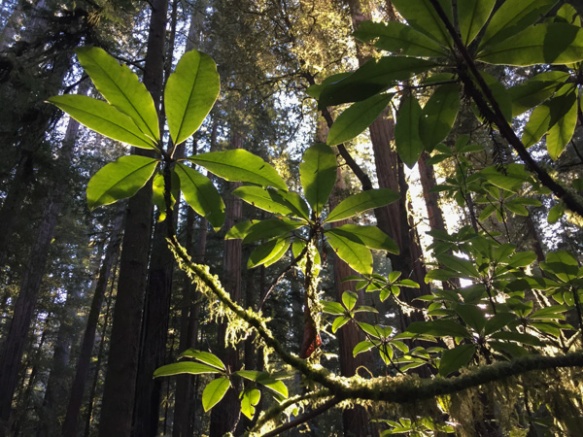
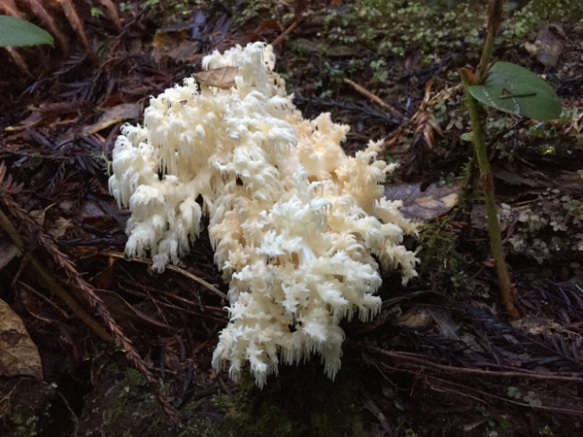 We were surprised that we didn’t see more mushrooms and fungus, but this one did catch my eye. Late in the afternoon we headed toward the coast at Crescent City.
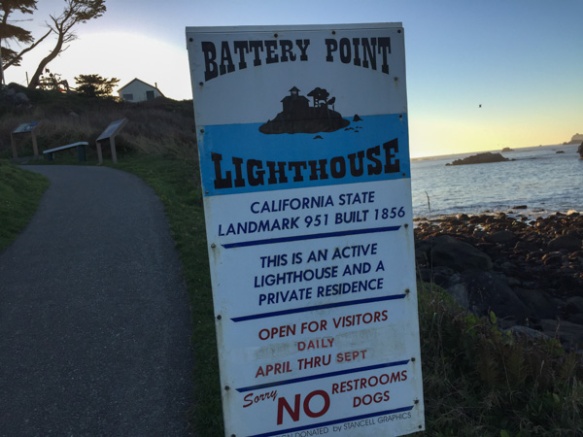 Our map book showed two lighthouses so we started with Point St. George. We found that lighthouse (manned from 1891 to 1975 and abandoned in 1995) but it was 6 miles offshore. The Battery Point Lighthouse is accessible at low tide so we were able to walk to it, but we were too late for a tour.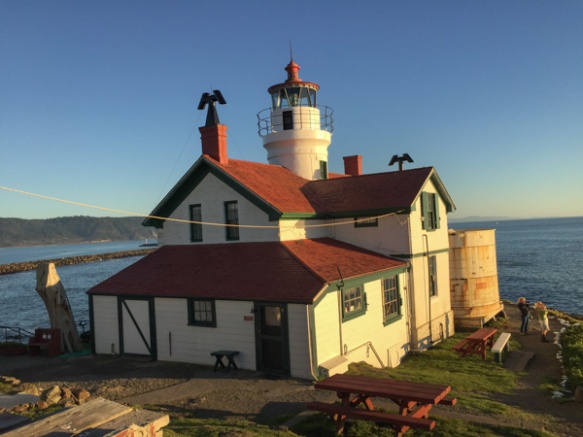
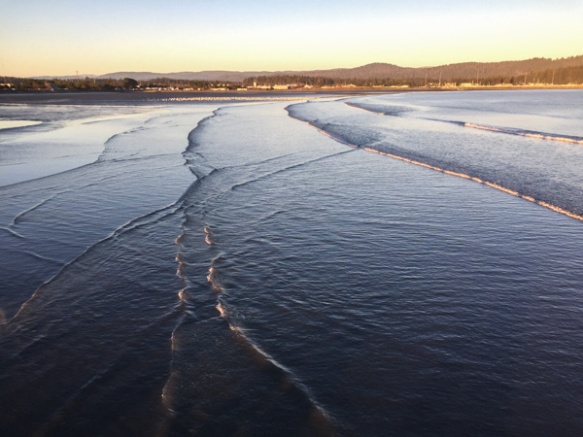 We walked along the breakwater (seen in the lighthouse photo) and then out on a pier. This is a view looking back toward Crescent City.
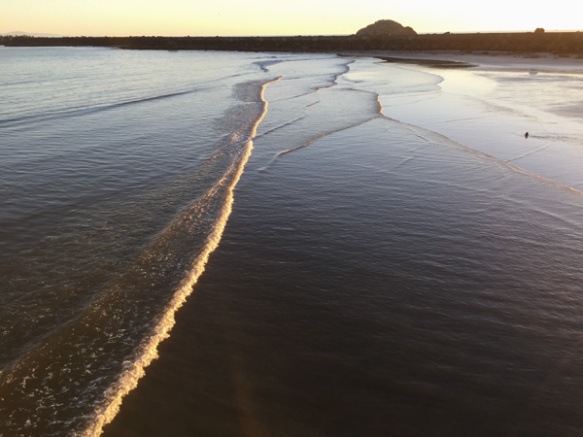 This is the view looking back toward the breakwater and the setting sun.
We headed home the next morning because I was leaving early the following day for Texas. This was a short trip (time-wise), but well worth it.
 Mini Road Trip!
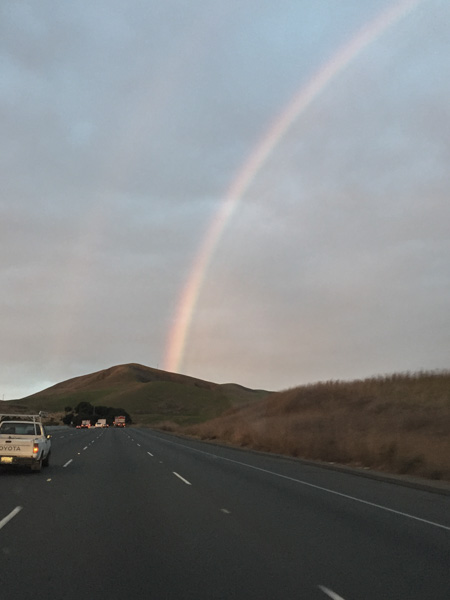
 From the Central Valley you need to drive through the hills to the west. We turned onto Highway 20 at Williams. You can see a slight tinge of green if you look hard but this time of year they should be emerald green. That green is the grass that began to grow after our early January rain. We have had negligible rainfall since and there has been no more growth. This is the time of year that ranchers in the non-irrigated hills count on abundant forage for livestock. Very scary to think of another year of drought to this degree.
 This is a view getting closer to the hills. The almond trees are beautiful this time of year but I am disturbed at how many acres of land all over California have been put into almonds now. That’s a story for another time however. It seems I didn’t take more photos until we got to our first stop.
 From the Humboldt Redwoods State Park website: “In the early 1900s, loggers came to what is now Humboldt Redwoods State Park to cut down lofty ancient redwoods for grape stakes and shingles. The founders of Save the Redwoods League thought that was akin to ‘chopping up a grandfather clock for kindling.’ From the acquisition of a single grove in 1921, the League has raised millions of dollars to build and expand this park. Today Humboldt Redwoods spans 53,000 acres, an area almost twice the size of San Francisco. About one third, or 17,000 acres, of the park is old-growth redwood forest—the largest expanse of ancient redwoods left on the planet.”
 What is special about an old-growth forest?
 The size of the trees.
 The mix of tree sizes. Unlike a reforested clear cut, there are trees of all ages and sizes and this makes for an open forest instead of a monoculture of trees and brush that you can hardly walk through.
 The ecology. When old trees fall they open up space for light to reach the forest floor and opportunity for new growth of other species.
 The grandeur.

 We ended the day at the beach.
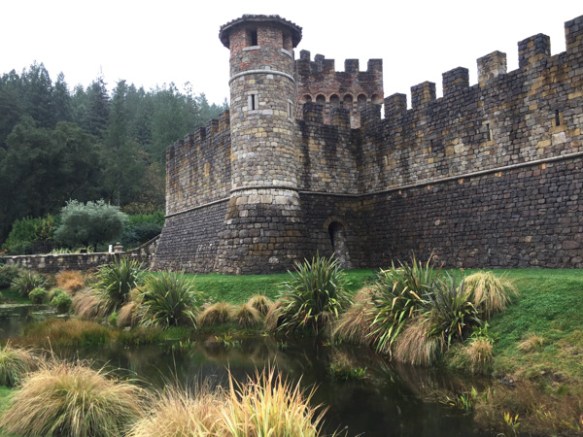 The Castle was designed by Dario Sattui who modeled it after European 13th Century castles that fascinated him.
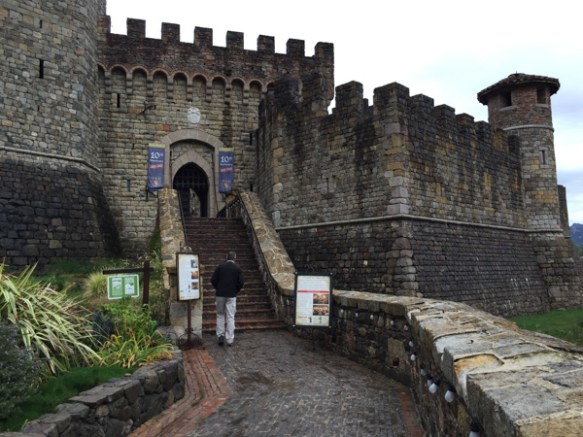 His
His 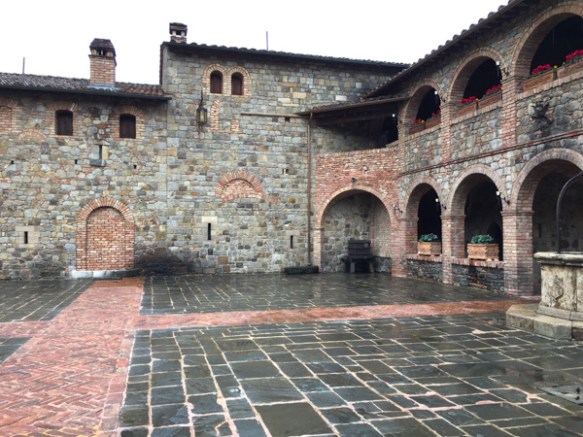 Sattui brought builders, brick-workers, and others from Europe and shipped containers full of old bricks, doors, hardware, and all kinds of other building materials that had been sourced from old castles in Europe.
 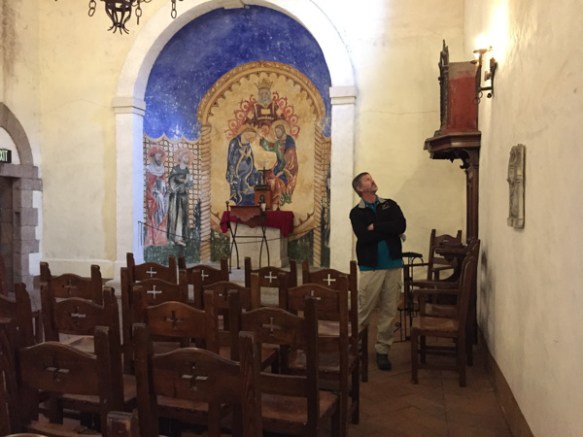 Although my first thought when I heard about this place was that I would the resent pretentiousness of spending this much money and “showing off”, but this is a fascinating place and it is very cool to visit it.
 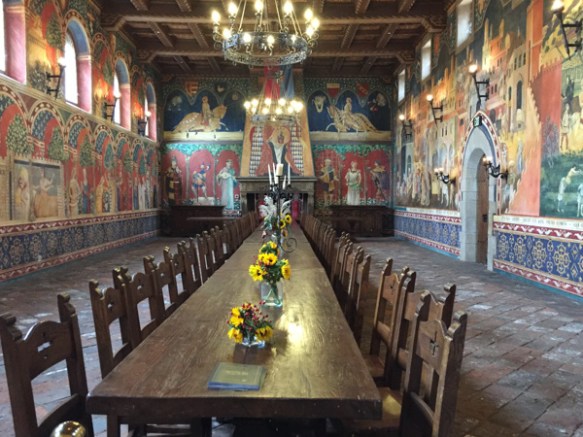 The Great Hall.
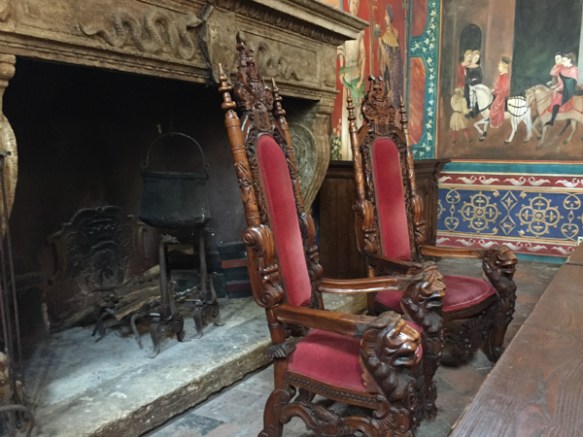 There is an authentic 13th century fireplace at the end of the Great Hall. The guide told us that those two chairs are “authentic replicas”–they were left behind by a movie company who used this setting.
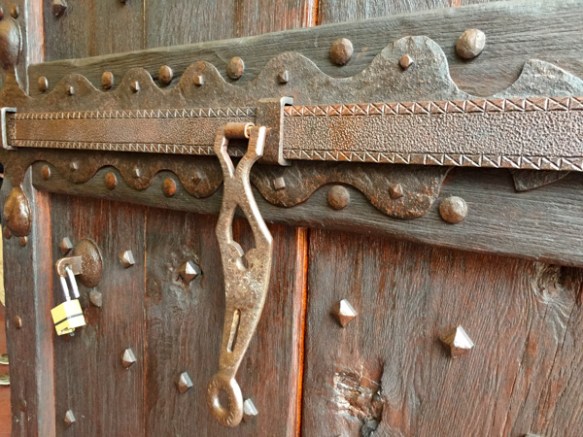 Dan noticed all of the iron work. All of it, including the bolts and nails was hand made.
 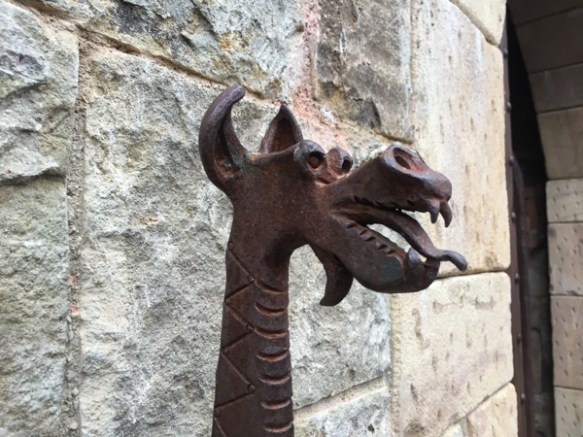 Stone is all hand-chiseled.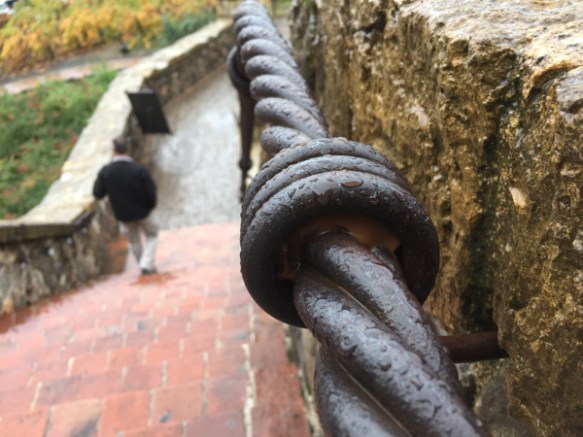
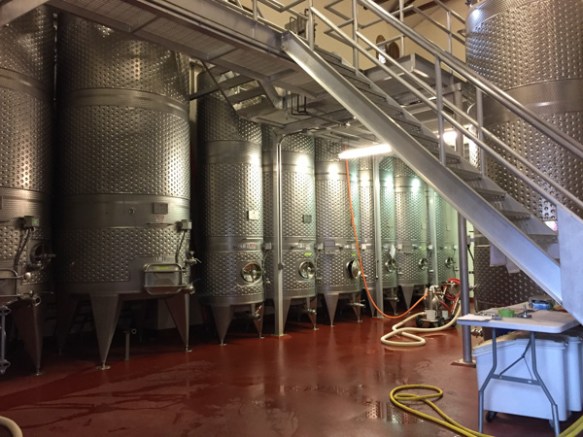 After walking through some of those ground-level rooms we saw the equipment that is used in modern wine-making.
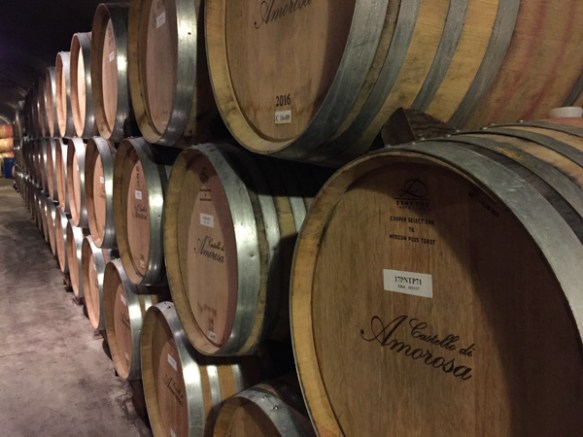 But then we went downstairs into the lower levels.
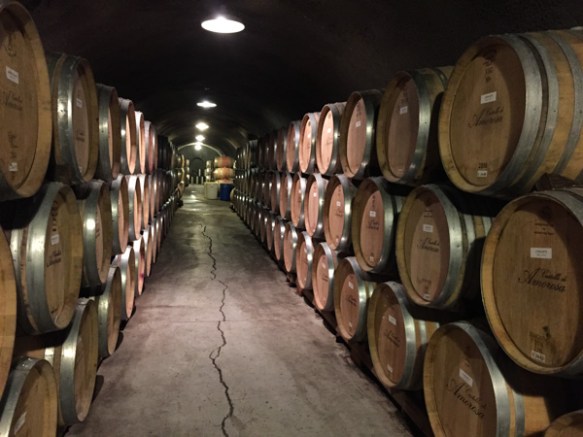 There are 900 feet of caves in four levels.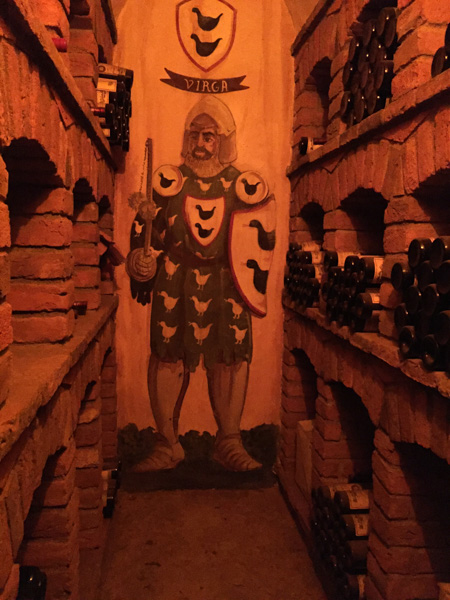
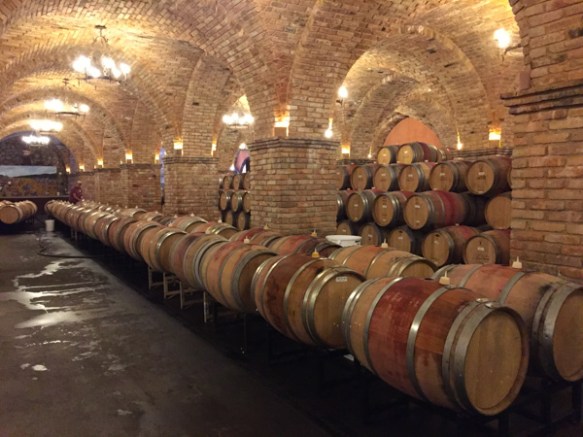 This barrel room is constructed with impressive brick Roman cross-vaulted ceilings.
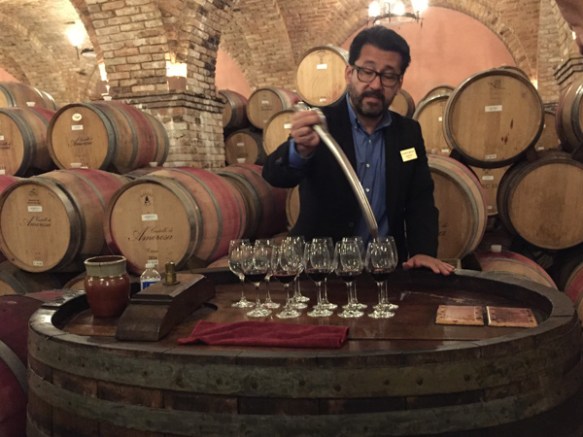 Barrel tasting in the barrel room.
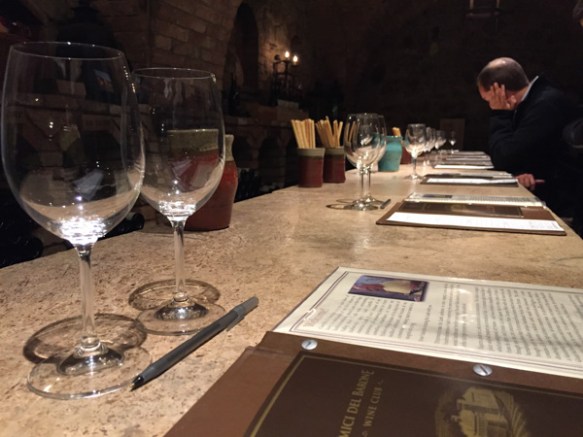 I will admit here that I am not a wine drinker. Dan and I were both more interested in the tour than the wine tasting but we stayed for that too. There were only about a dozen of us and the guide-turned-wine-expert poured about 8 or 9 different wines to sample.
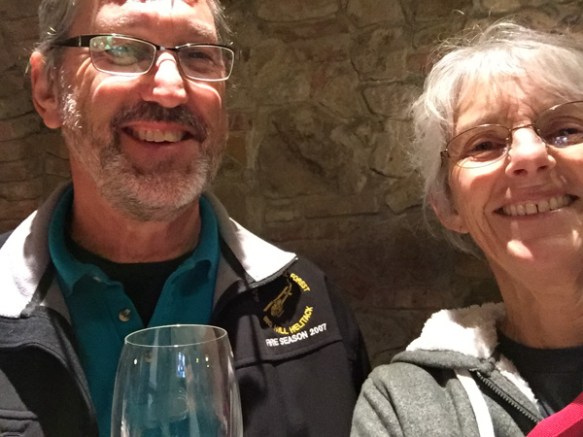 I finally found a wine that I liked…
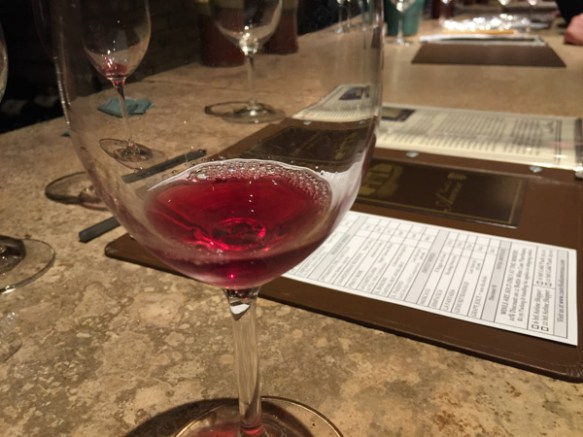 … and I’ll admit that it’s sweet and a little fizzy so I might as well just buy fizzy juice at Safeway, right?
 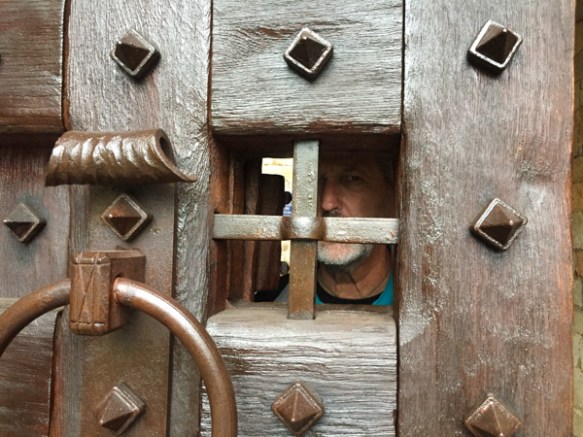 Leaving the castle. This door reminds me of the one in the Wizard of Oz moviewhere the wizard opens the little panel to look through at Dorothy.
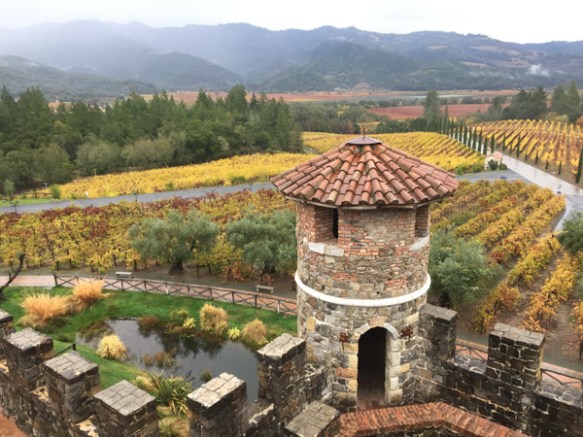 View from the Castle to the hills where we hiked the day before.
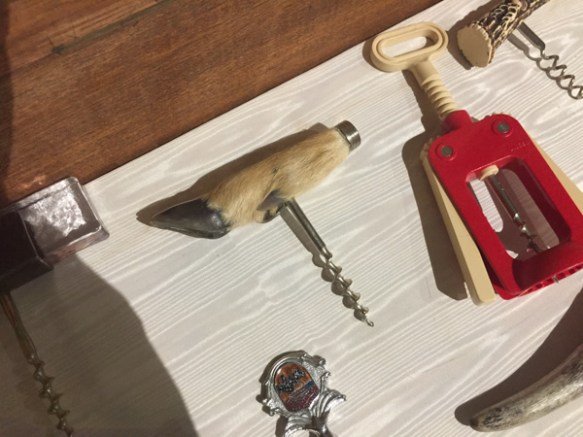 I took one photo and then my phone died. So this is it–one of hundreds of odd corkscrews and other wine related gadgets. You know, the feet are some of the few parts of the butcher lambs that aren’t used at this time. Could this be in my future?
 The Robert Louis Stevenson State Park to the north of the highway is closed but the Table Rock trail is south of the highway.
 The trail starts out in groves of oak, madrone, and bay trees. This area was damp from recent rain and the trees looked as though they were covered with green fur.
 A new kind of
  Making things larger than life through the lens.
 As the trail descended the other side of the first ridge the vegetation seemed more typical of California chaparral. These are the seeds of the California Buckeye.
 The California buckeye is one of the first deciduous trees to leaf out in the spring, but it also goes dormant and loses it’s leaves in late summer. Although the “nuts” may seem similar to chestnuts, these are toxic.
 The trail leads to the western end of a formation called the Palisades, volcanic rock that towers over the northern end of the Napa Valley.
 That is the town of Calistoga down below.
  We sat on the rocks known as Table Rock for quite awhile, soaking up the sun and watching birds and the beautiful sky. The fire missed this area, but not Mt. St. Helena in the background and the lower area along the highway.
 As we sat on the rocks Dan noticed a Cal Fire plane flying around Mt. St. Helena and then saw it drop something–we wonder of that is seed to help stabilize the burned landscape.
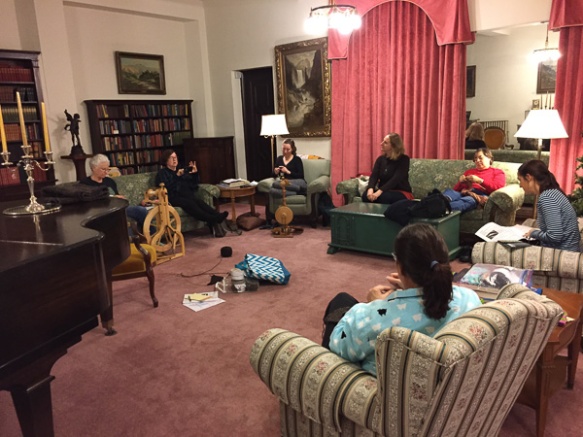
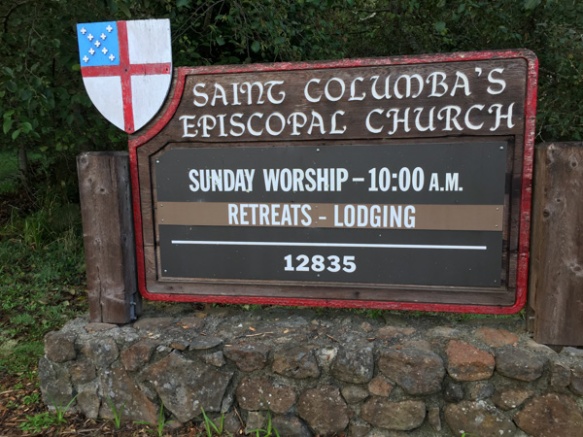 This local church was booked for any of the Fibershed group who wanted to spend the night after the long day at the Symposium.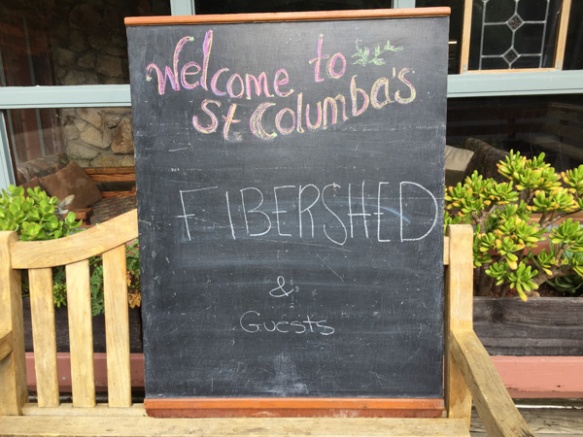
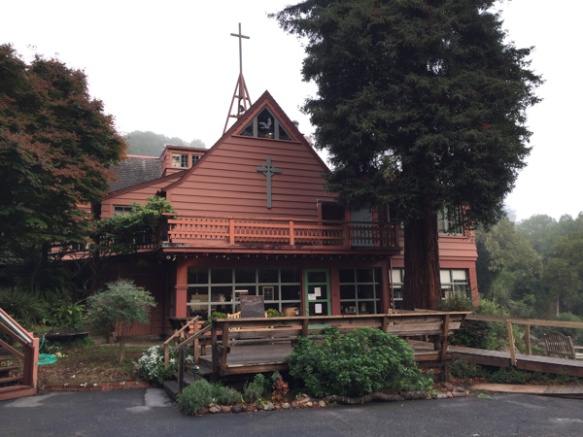 It is a great place to stay for anyone traveling in that area.
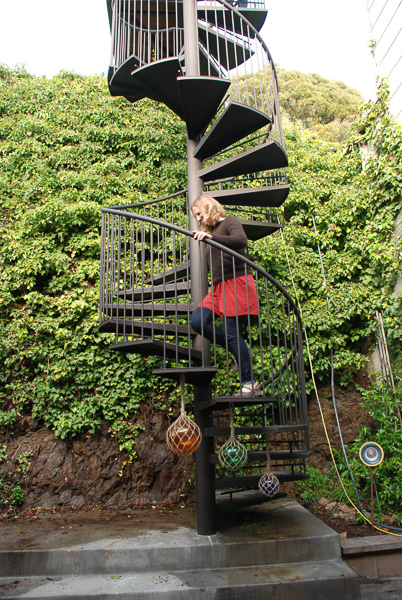
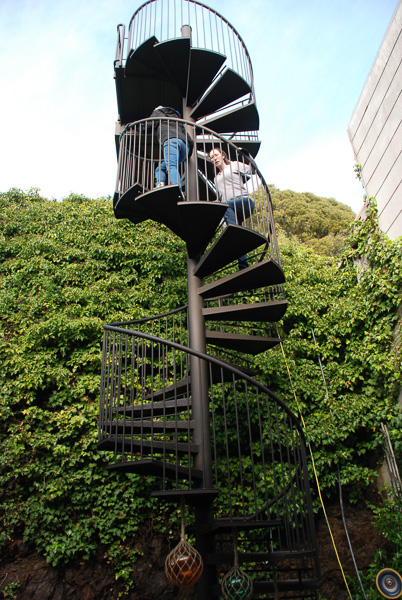
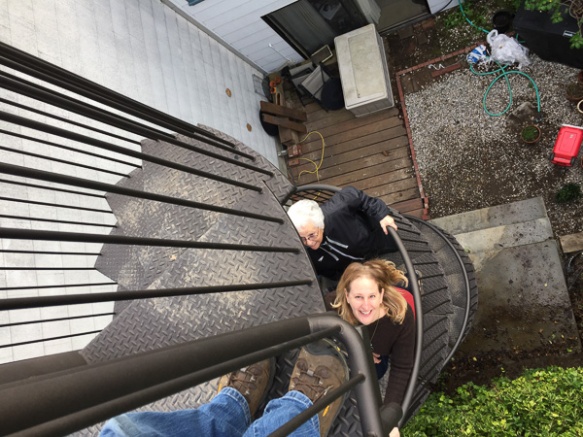
 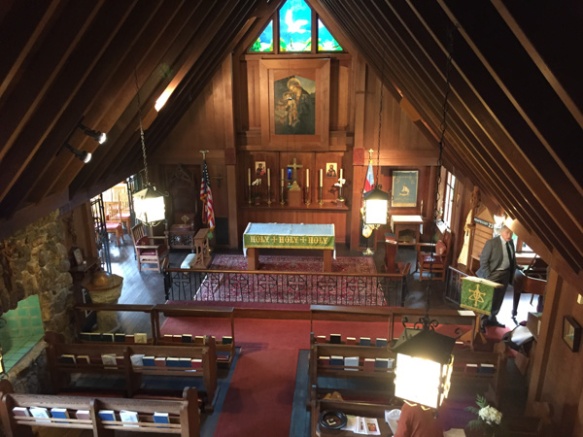 This was originally a house that was purchased from the Frick family in 1950 and turned into a church. There is a fascinating multi-level maze of rooms and halls and stairways. This view looks down from the third floor on what was originally the family’s living room.
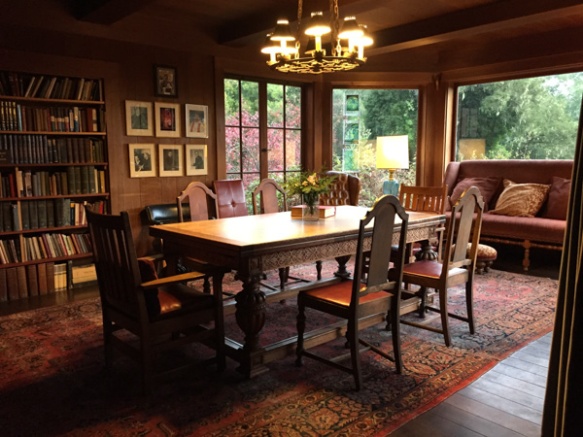 I love this dining area, partly because the table is of the same era (at least from looking at some of it’s features) as the table that my mom bought and we still use, although this one is in much better shape than ours.
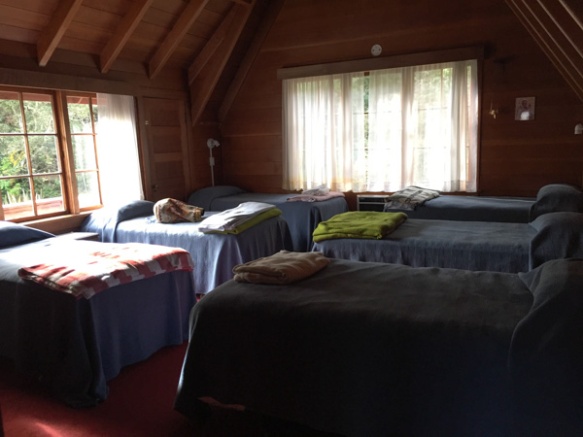 I stayed in this bedroom with five other women. There are several bedrooms with different numbers of beds. I think the place can accommodate 36 people.
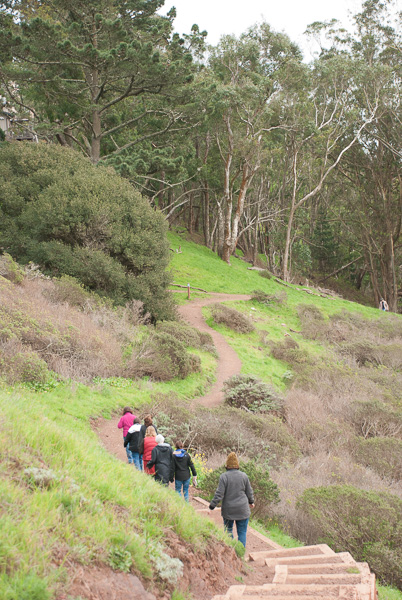
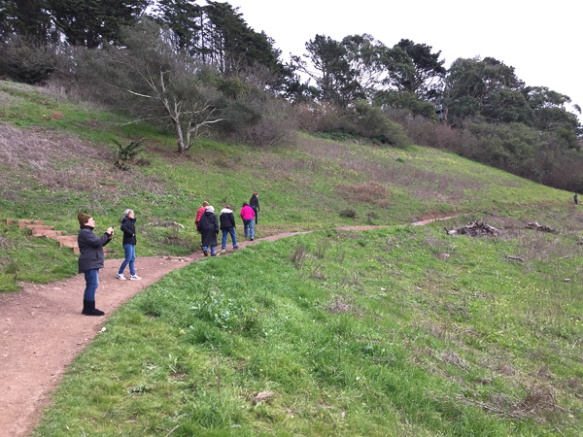
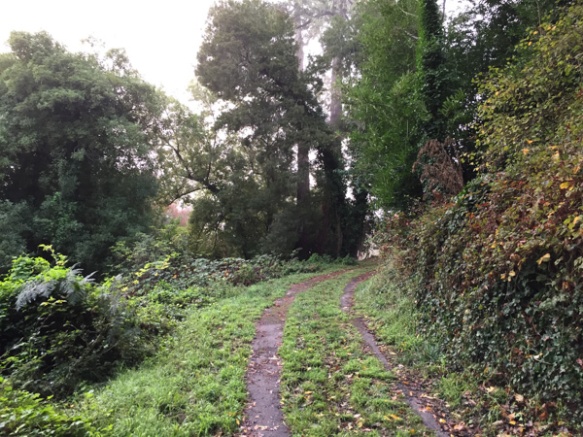 When I got up on Sunday morning I decided to take a walk before our meeting and headed up a road I found behind the church.
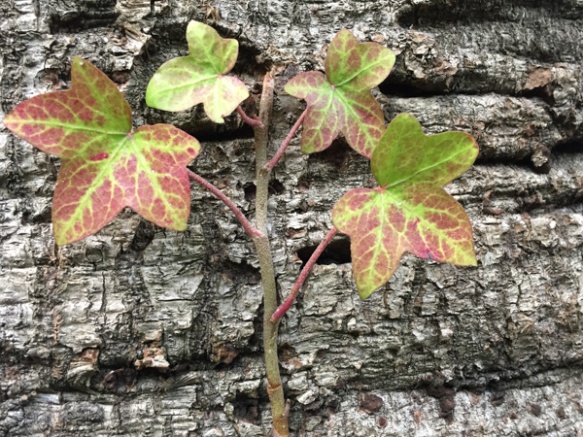 This is my kind of Sunday morning.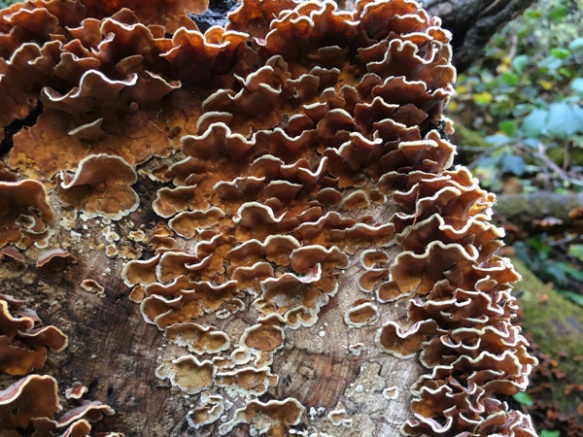
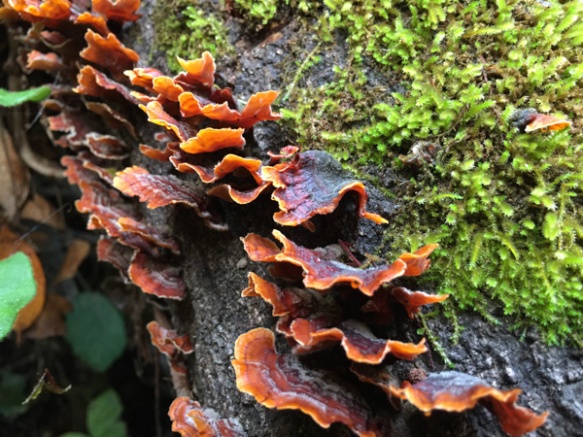
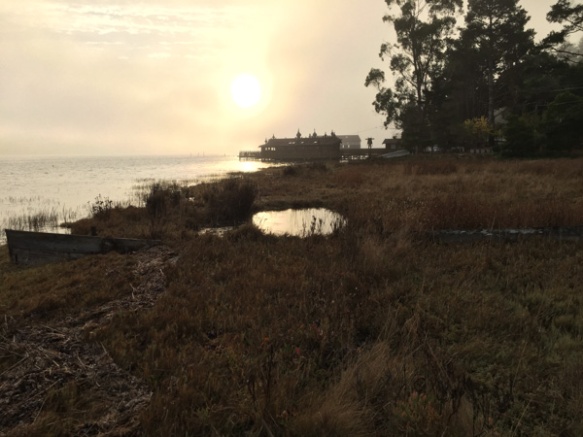 The road I found led me back down to the main road and Tomales Bay.
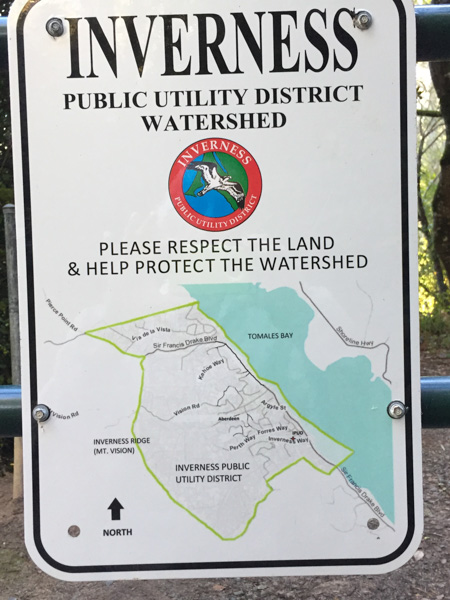 It is great when you find open space accessible to the public.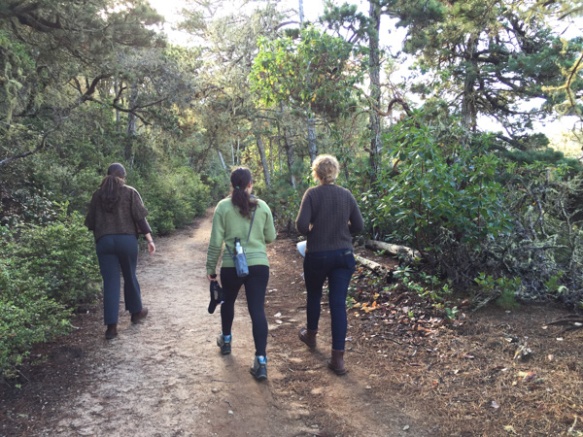
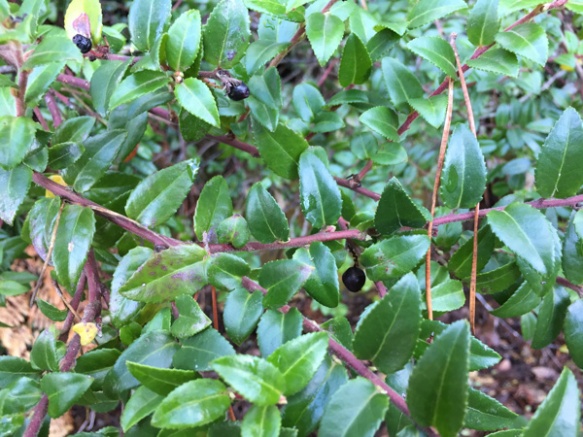 Rebecca pointed out huckleberries which were still on the bushes, although the normal harvest season was over. I wouldn’t have known and would have avoided these unknown berries.
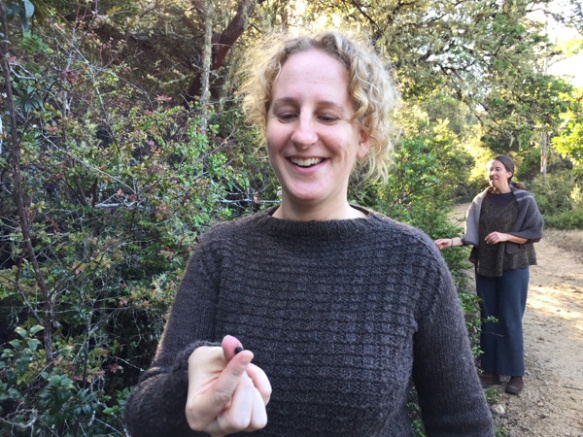 Stephanie (wearing her handknit Jacob sweater) ate her share as did the rest of us.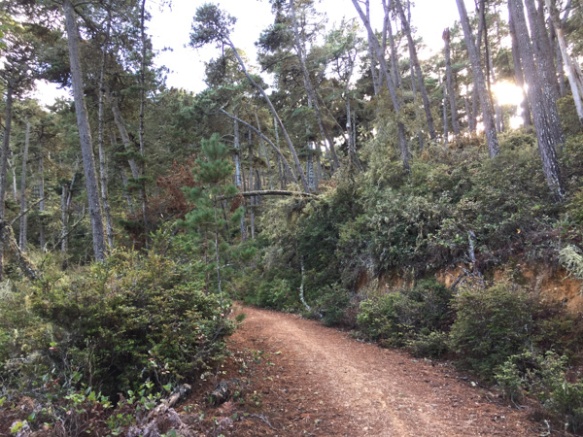
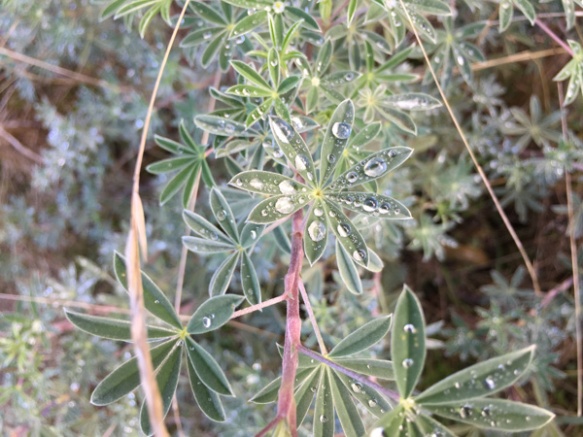 This is a much wetter area than where I usually find myself and there were still signs of the previous night’s rain.
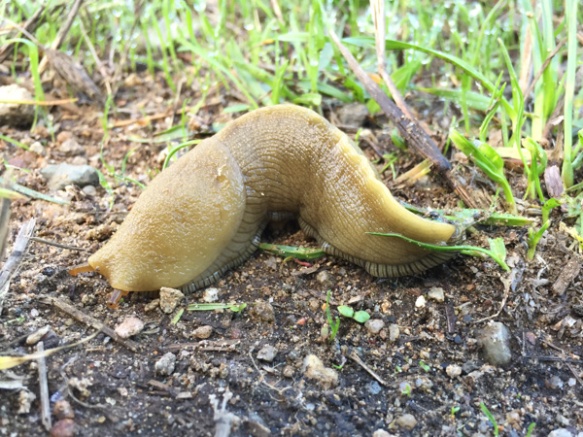 Another testament to the dampness were the large slugs that we saw.
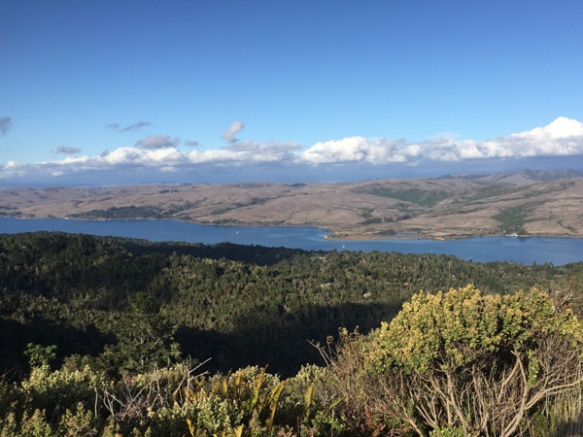 The view overlooking Tomales Bay. What a beautiful day we had!
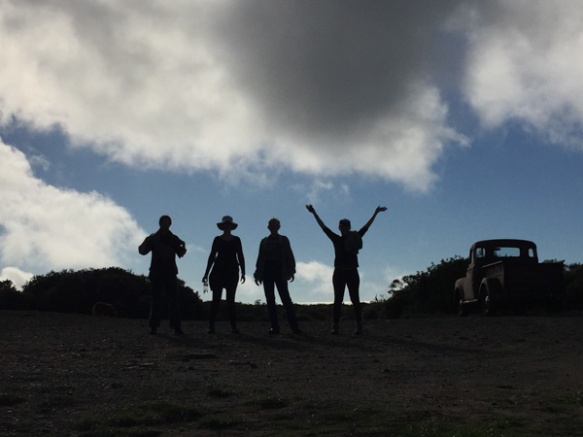
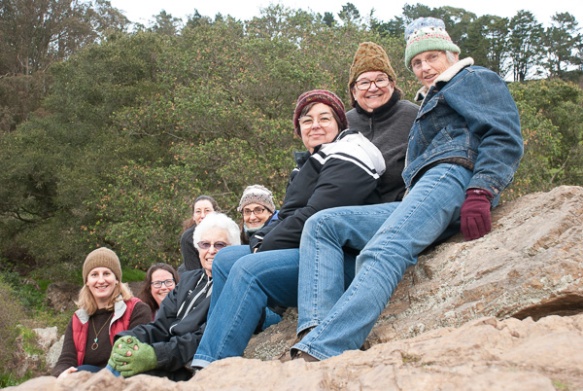
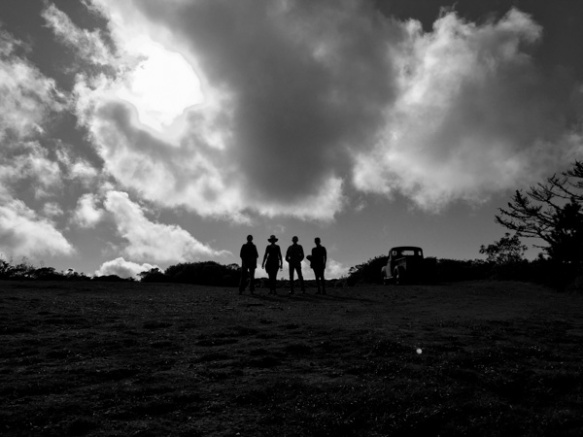 As we were coming back down from the ridge that has a view of the ocean, another hiker coming up the hill saw our silhouettes and offered to take our photo. This is the view that she saw.